

Luxury yachting in 2026 is no longer being driven simply by size, spectacle, or the old shorthand of excess. The more interesting story lies in the way the market has matured. Charter clients still want beautiful boats, generous deck space and seamless service, but they now evaluate a yachting experience through a more layered lens: privacy, itinerary intelligence, wellness, digital reliability, sustainability, security, and the feeling that time on board has been curated rather than merely sold. That shift matters for Croatia because the country’s opportunity is not to imitate the French Riviera or compete on inherited glamour alone. It is to position the Adriatic, and especially the southern Adriatic, as a sharper, calmer and more flexible proposition for the next cycle of luxury demand.
In practical terms, the 2026 market is defined by selective confidence. Wealthy travellers remain willing to spend, but they are asking harder questions. They want more clarity on what a charter week genuinely delivers. They want a vessel that feels contemporary not only in finish but in flow. They expect a broker or charter platform to understand family dynamics, dietary needs, wellness routines, air access, border convenience, and the rhythm of the destination itself. The yacht is still central, but it has become part of a wider luxury operating system in which marinas, airports, provisioning, onshore partners, dining culture and crew capability all shape perceived value.
That is why the Mediterranean hierarchy is shifting in a subtle but meaningful way. The traditional icons remain powerful, yet they no longer monopolise aspiration. Croatia has benefited from this reordering because it offers what many 2026 charter guests increasingly prioritise: navigable distances, a large cruising canvas, a strong mix of town and anchorage experiences, relatively efficient access, and a sense of elegance that is more understated than theatrical. In a season when many affluent travellers are seeking quality without overexposure, the Adriatic looks increasingly well timed.
The market is not shrinking. It is becoming more discerning.
One of the mistakes often made in travel commentary is to confuse a more selective customer with a weaker market. They are not the same thing. Luxury yachting in 2026 continues to benefit from structural demand among high-net-worth and ultra-high-net-worth clients who value privacy, control and flexibility. Yet the mood has changed from the post-pandemic scramble for availability. Guests are no longer booking in pure reaction mode. They are comparing. They are editing. They are asking whether a charter is the right answer for a specific holiday objective, and when they decide that it is, they expect a much more exacting standard of relevance.
This creates a premium on fit. A yacht with excellent volume but poor crew chemistry will underperform. A destination with beautiful water but weak arrival logistics will lose favour. A glamorous marina that cannot translate berth infrastructure into genuine hospitality will feel incomplete. For brokers, operators and destinations alike, 2026 is a year in which detail compounds. The operators who win are the ones who can remove friction before the guest notices it.
In 2026, a successful charter is judged less like a floating asset and more like a privately run boutique hotel that happens to move.
That distinction is crucial. Traditional measures of desirability such as length, brand name and toy inventory still matter, but they no longer settle the conversation on their own. Guests want beach clubs, certainly, but they also want proper shade, acoustics that allow conversation, cabins that feel restful rather than over-designed, children’s arrangements that do not leave grandparents exhausted, and itineraries that recognise the emotional tempo of a holiday. This is one reason quieter forms of luxury have gained ground. The best charters now feel edited, not overloaded.
What the market wants now
Volume, yes. But human-scale volume.
Recent charter demand has favoured yachts with more liveable space, yet what guests mean by space is changing. They want broad aft decks, usable beach clubs, flexible dining positions, and cabins that offer privacy without severing the social rhythm of the trip. A yacht can be enormous and still feel awkward. Conversely, a well-laid-out vessel in the 30 to 45 metre range can feel remarkably complete if the circulation, service points and guest areas are intelligently designed. This is one reason the practical sweet spot remains so commercially potent: it balances indulgence with manageability.

The most successful yacht products in 2026 tend to privilege easy occupancy. Guests want to move effortlessly between swimming, lunch, reading, spa treatment, tender transfer and dinner. They want a charter that works whether the group is a couple, a young family, a multigenerational reunion, or a blended group of friends and business associates. This emphasis on flexible use has clear design consequences. Convertible cabins, better sound insulation, improved air handling, shaded observation points and more thoughtful crew circulation are all becoming more relevant than one additional talking-point toy.
Wellness is no longer an add-on.
There was a time when wellness on yachts was discussed as a spa menu, perhaps with a massage table on an upper deck and a few pressed juices on the morning itinerary. In 2026 that looks shallow. Wellness now means sleep quality, light, ventilation, movement, nutrition, recovery and emotional ease. Clients want room for trainers, yoga, cold-water swims, sober or low-alcohol programmes, family-friendly menus, and a crew culture that can handle these requests with grace rather than surprise. The strongest yachts do not bolt wellness onto a conventional charter product; they build around it.

This evolution benefits destinations such as Croatia, where the environment itself supports the proposition. The Adriatic offers short hops, sheltered bays, clear distinctions between lively and quiet stops, and a landscape that invites swimming, walking, paddleboarding, casual hiking and long lunches ashore rather than relentless event consumption. For charter guests who have grown weary of performative summer circuits, that balance feels increasingly sophisticated.
Privacy has become a harder currency.
The modern luxury traveller is more visible than ever, which is precisely why invisibility has become more valuable. The ability to arrive discreetly, move smoothly and occupy beautiful space without constant social exposure is one of yachting’s greatest strengths. Yet privacy in 2026 is not merely about avoiding crowds. It is also about controlling pace. Guests want fewer compulsory moments, fewer fixed scripts, fewer packed itineraries. They want the option to pivot because the weather changed, because the children are tired, because lunch was so good it deserves to turn into the afternoon.
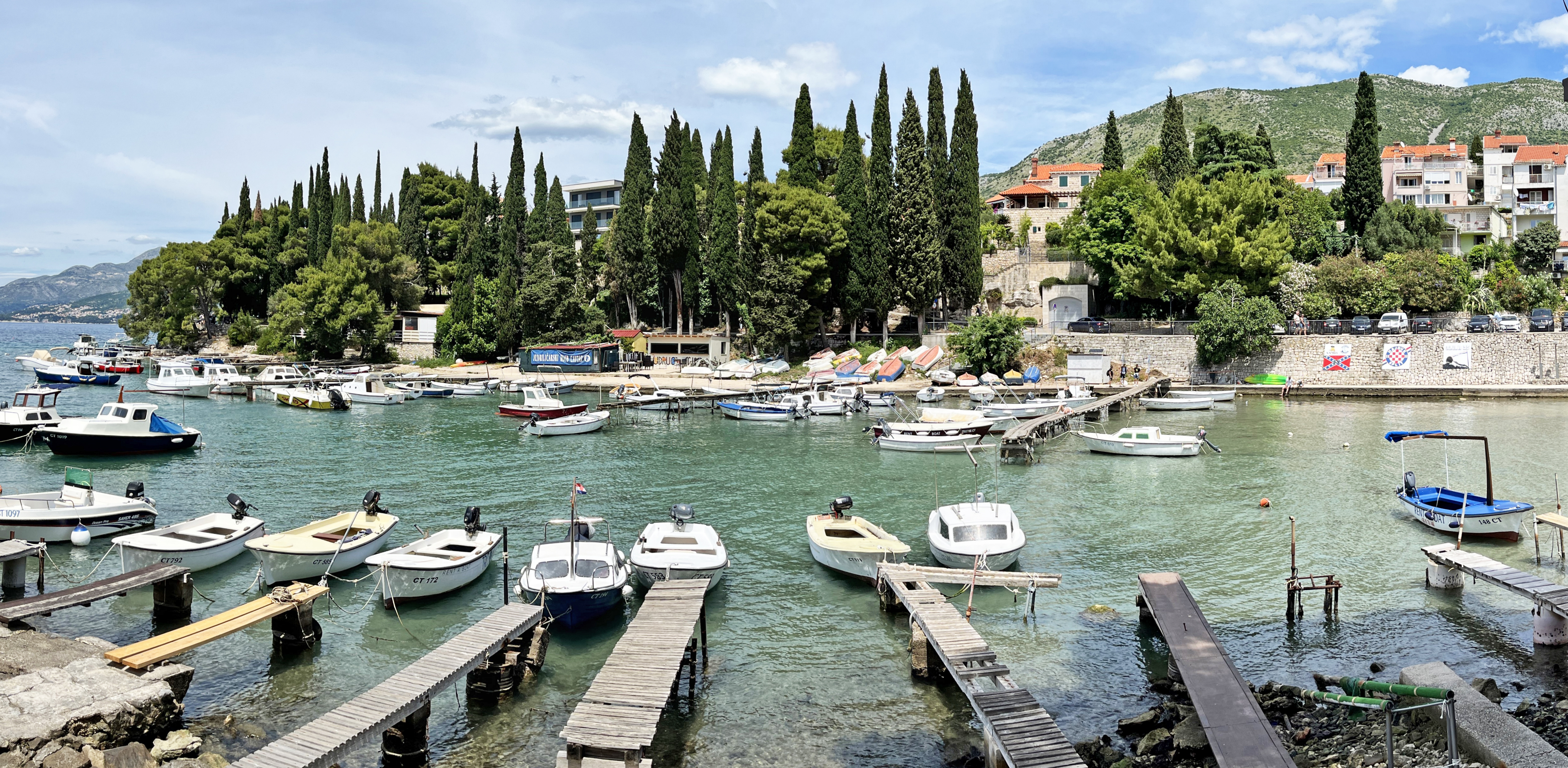
This is a competitive advantage for the southern Adriatic. Around Dubrovnik and Cavtat, the contrast between cultural gravity and immediate maritime escape is unusually powerful. One can dine, tour, or arrive via a globally legible destination, then retreat into a yachting rhythm that feels far more personal. That duality is commercially compelling because it lets Croatia serve both first-time luxury guests and repeat charterers who want a more private expression of the Mediterranean.
Croatia’s position inside the 2026 charter logic
Croatia is no longer merely the destination that over-delivers for the price. That framing undersells the country and will become less useful as the market continues to stratify. The more accurate description is that Croatia occupies a strong middle and upper-middle position in the Mediterranean luxury map, with clear potential to move further up if service, marina product and high-end hospitality continue to mature.
| What affluent guests assess in 2026 | Why it matters | Croatia’s current advantage |
|---|---|---|
| Cruising efficiency | Less wasted time between stops | Dense island geography and short passages |
| Arrival simplicity | Lower travel friction for charter groups | Strong aviation access via Dubrovnik and Split |
| Privacy options | Guests want choice between seen and unseen | Mix of famous towns and quieter anchorages |
| Service culture | Defines whether a week feels truly premium | Improving, but still uneven at the top end |
| Marina ecosystem | Berthing, technical support and guest comfort | Established network, room for more boutique luxury |
The country’s strongest advantage is compositional. Its coastline allows a charter to feel rich without becoming exhausting. In 2026 that matters more than ever because time is the ultimate luxury metric. Guests do not want to spend a week proving how much they can squeeze in. They want a charter that breathes. Croatia, when planned well, does this exceptionally well.
For a broader official framing of the country’s nautical offer, see the Croatian National Tourist Board’s nautical tourism overview. For the southern gateway logic specifically, ACI Marina Dubrovnik remains one of the most relevant pieces of year-round infrastructure.
What Croatia still needs, especially if it wishes to deepen its appeal to higher-spending charter clients, is more consistency at the luxury-service edge. Crew quality on the right vessels is already strong. Certain villas, restaurants and transfer partners are excellent. Marinas such as ACI Dubrovnik provide established infrastructure and year-round presence. But the destination still needs more of the invisible polish that wealthy guests instantly recognise: better transfer choreography, stronger wellness partnerships, clearer premium concierge standards, more mature provisioning ecosystems, and a more coherent story about why the Adriatic is not simply pleasant but strategically desirable.
The yacht is only half the product
The strongest 2026 operators understand that yachting competes not only with other yachts, but with villas, private members’ retreats, branded residences, expedition lodges and bespoke family travel programmes. A charter therefore has to justify itself as a complete luxury solution. That means connectivity for those who work, sufficient privacy for those who do not want to be found, child-friendly flexibility, culinary ambition without theatrics, and reliable land-sea transitions.
This broader framing is particularly useful for Cavtat Guide readers because it explains why Cavtat and Dubrovnik deserve attention beyond postcard value. They sit at the intersection of aviation, heritage, marina infrastructure, hospitality and short-range island cruising. In other words, they are not only beautiful; they are operationally interesting. Readers who have already considered a land-based stay at Hotel Croatia or a practical arrival strategy through the airport transfer lens explored in this Cavtat Guide transfer guide can see how the region already contains the skeleton of a stronger yachting proposition.
That skeleton becomes more valuable as luxury travel fragments. Some guests want high-energy social summers. Some want quiet family reconnection. Some want hybrid leisure and work. Some are using charter as a trial before purchase. Some are simply trying to avoid the friction of conventional luxury hotels during peak season. The destinations that can absorb all of those motives without losing coherence are the ones that gain pricing power.

What 2026 means for brokers, owners and destinations
For brokers, 2026 is a year of sharper matching. The job is less about pushing inventory and more about assembling the right equation of yacht, crew, route and onshore texture. For owners, it is a reminder that modern charter performance depends on relevance as much as pedigree. A yacht that photographs well but does not live well will struggle to retain advantage. For destinations, the lesson is even more direct: luxury yachting is an ecosystem business. A magnificent bay is not enough. An airport is not enough. A fashionable restaurant is not enough. The guest feels the whole chain.
That is precisely why Croatia’s future feels interesting rather than merely promising. The building blocks already exist. The remaining question is how deliberately they are assembled. If the country continues to improve its premium marina offer, technical support, concierge culture and year-round positioning, it will not have to fight for relevance. It will instead become one of the Mediterranean’s most sensible answers to the question many affluent travellers are asking in 2026: where can I spend well, move well, and disappear well?
Conclusion: the market wants maturity
The decisive change in luxury yachting in 2026 is not that clients suddenly want less luxury. It is that they want a more mature form of it. They are still willing to charter exceptional yachts, but they care more deeply about how a week feels, how smoothly it runs, and whether every moving part supports the central promise of time well spent. That makes the winners easier to identify. They are the yachts with thoughtful layouts, the crews with emotional intelligence, the brokers who listen properly, and the destinations that understand that luxury is built out of precision, not noise.
Croatia, and especially the arc from Dubrovnik to Cavtat and outward into the southern Adriatic, is well positioned to benefit from that redefinition. It is not trying to seduce the market with inherited myth alone. It has something more useful in 2026: a compelling geography, improving infrastructure, a recognisable cultural frame, and the capacity to deliver a yachting experience that feels both contemporary and calm. In a market increasingly ruled by discernment, that combination looks less like an alternative and more like the future.


Need help choosing the right experience?
Tell us your budget, dates, and travel style, and Cavtat Guide will help you choose the best yacht charter, tour, property option, or local experience.