

Comparing Croatia and Greece for yacht charters is irresistible because both destinations occupy such powerful positions in the Mediterranean imagination. Greece offers mythic scale, island romance and a long-established charter aura that can feel almost archetypal. Croatia offers a more tightly edited coastline, extraordinary route density and a style of chartering that often feels unusually efficient for the luxury traveler. The right answer therefore depends less on which country is more beautiful than on which one better matches the traveler’s desired ratio of movement, history, harbor life and logistical ease.
For many international clients, Croatia’s strength lies in coherence. Distances between interesting stops can be pleasingly civilized, old towns are woven closely into cruising routes, and the southern Adriatic in particular delivers a strong blend of heritage, swim stops and infrastructure. Greece, by contrast, often feels larger in mythic emotional terms and wider in stylistic spread. It can be more elemental, more archipelagic and, in some cruising grounds, more exposed. This does not make one better than the other. It makes the comparison more useful when it is anchored in travel behavior rather than fantasy.
Croatia often wins on route density
One of Croatia’s biggest advantages is how much contrast can be absorbed in one week without making the trip feel punishing. Historic cities, pine-fringed islands, quiet anchorages and polished harbor towns can all appear inside a compact itinerary. For travelers based around Dubrovnik or Split, this often produces a sense of continuous reward. You move, but never so much that movement becomes the dominant memory of the trip.
That density is a major part of Croatia’s contemporary appeal. Luxury travelers increasingly value how efficiently a destination converts time into varied experience. Croatia does this very well.
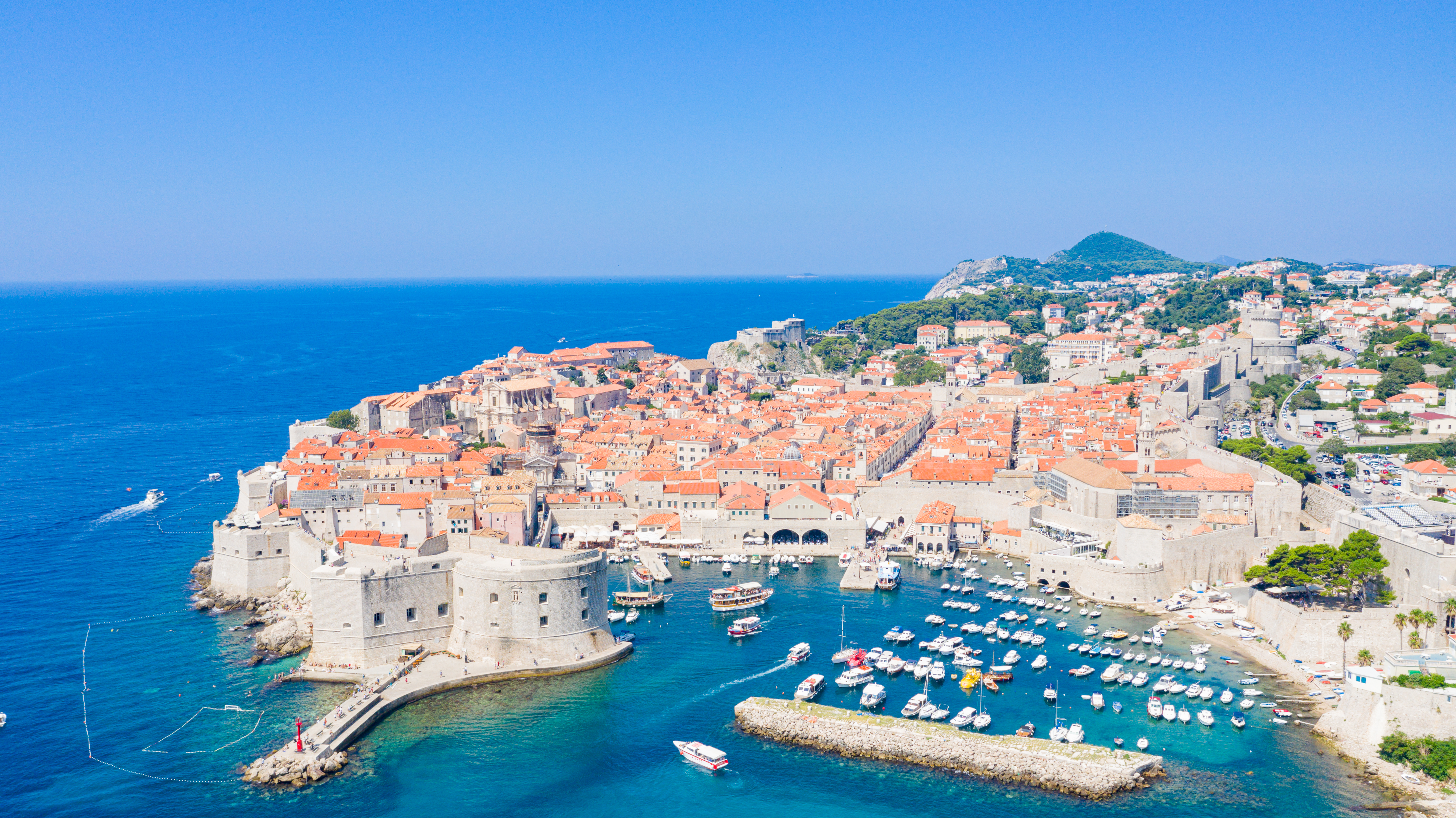
Greece often wins on scale and mythic atmosphere
Greece can feel grander in imaginative terms. Its island groups carry centuries of accumulated cultural projection, and in certain archipelagos the sea and light create a more overtly elemental mood than much of the Adriatic. For travelers who want their charter to feel like an encounter with the classic Mediterranean idea of islands, Greece remains exceptionally persuasive.
But that grandeur can come with longer legs, more exposure depending on cruising ground, and a slightly different relationship between effort and reward. Some travelers adore that. Others discover they prefer Croatia’s denser, more composed route logic.
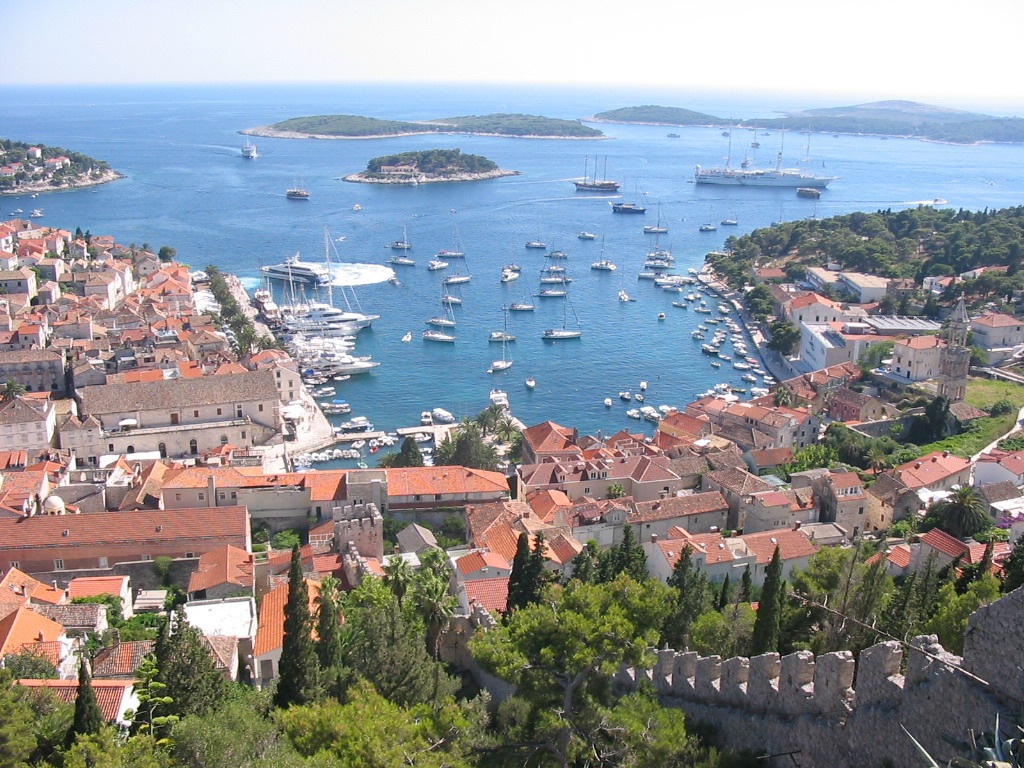
For first-time charter clients, Croatia is often easier to read
Croatia’s marinas, island sequence and general route clarity make it especially appealing for travelers booking their first private or semi-private yacht week. The coast feels legible. A client can understand quickly how Dubrovnik leads to the Elaphiti Islands, to Mljet, to Korčula and beyond, or how Split opens into central Dalmatia. That legibility lowers decision fatigue.
Greece can absolutely work for first-timers, but it sometimes asks for a stronger tolerance of unpredictability or a broader understanding of which island group best matches the brief. Croatia often feels more editorially coherent from the outset.

Pricing is not just about rates, but about how the week functions
Travelers frequently ask which destination is cheaper. The answer varies by vessel class, island group, season and service level, so a universal number is unhelpful. The more important question is which destination delivers more value for the desired kind of week. Croatia can feel particularly strong when travelers want a lot of variation with relatively little wasted transit. Greece can feel stronger when travelers want a more expansive, classically island-driven atmosphere and are willing to structure the week around that.
In other words, value depends on itinerary efficiency as much as on charter fee. Croatia’s compact logic often performs well under that test.

Harbor culture and post-charter life
Another underappreciated difference lies in what happens before and after the yacht. Croatia’s luxury coastline is unusually good at integrating the charter with hotels, airport access, old towns and land-based Riviera life. A stay in Dubrovnik or Cavtat can sit naturally before or after a week at sea without feeling like a separate holiday entirely. This blended experience is one of Croatia’s sharpest competitive strengths.
Greece can certainly offer wonderful land extensions too, but Croatia’s combination of airport practicality, medieval cities and short route transitions gives it a particularly efficient premium ecosystem. For time-sensitive travelers, that matters.


| Decision factor | Croatia | Greece |
|---|---|---|
| Route density in one week | Very strong | Varies more by cruising ground |
| Historic town integration | Excellent | Strong, but different by island group |
| First-time charter legibility | Often easier | Can require more upfront selection |
| Mythic island atmosphere | Strong | Exceptional in the right brief |
| Pre/post-charter land pairing | Especially efficient | Good, but often more segmented |
Croatia often gives more structure per week. Greece often gives more myth per horizon.

Additional planning perspective
Readers comparing Croatia’s luxury travel and property choices should always test the emotional idea against the operational reality. What looks persuasive in photographs or headline pricing can change once timing, logistics, maintenance, marina access, service quality and real daily use are examined closely. The Adriatic rewards that scrutiny because the region is rich in options but not all options solve the same problem. Some are ideal for one extraordinary week; others are built for repeated use over many seasons.
This is also why the wider destination context matters. Good decisions are rarely made in isolation from the surrounding restaurants, roads, transfer patterns, harbor culture, airport convenience and seasonal tempo. The more serious the purchase or holiday budget, the more valuable it becomes to read the setting as carefully as the asset itself.
For Cavtat Guide readers, that means seeing yachts, villas and itineraries as connected parts of one coastal system. A charter may begin at a villa. A second home may become the land component of an annual yachting calendar. A hotel stay may lead to a property search the following season. The Adriatic is increasingly consumed in exactly this layered way, and the best decisions are the ones that acknowledge that complexity rather than simplifying it away.
Which destination delivers more?
If “more” means density, ease and a high ratio of reward to nautical effort, Croatia is hard to beat. If “more” means expansiveness, cultural romance and the sensation of sailing through a more archetypal island world, Greece may win for many travelers. The better destination is therefore the one whose strengths align with the specific emotional architecture of the holiday.
Additional regional context across Cavtat Guide, plus the publication’s sections on Experiences, Tours and Transportation, can help travelers test what kind of Mediterranean week they actually want to buy.
Timing and seasonality
Season changes how every Adriatic decision behaves. In shoulder months, the same harbour can feel spacious rather than performative, the same restaurant easier to enjoy, and the same transfer infinitely calmer. Peak summer brings energy, but also compression. Travelers and buyers should therefore consider whether they are responding to the place itself or to the high-season version of the place. In many cases, the more refined experience arrives just outside the busiest weeks.
This is not an argument against July and August. It is an argument for understanding what those months amplify: demand, heat, marina pressure and the need for advance planning. Some clients thrive in that intensity. Others discover that their ideal Adriatic exists in June or September, when the light is still generous but the coast feels less contested.
Service and operating reality
At the luxury end of the Adriatic market, service determines whether a good asset becomes a great experience. On a yacht that means thoughtful crew, smooth transfers, provisioning that fits the guests and route management that protects mood rather than merely fulfilling a plan. In property terms it means maintenance, housekeeping, caretaker support and the ability to arrive from abroad without inheriting a list of problems. High-end travel and ownership are ultimately judged by how little avoidable friction reaches the guest or owner.
This is why sophisticated travelers ask operational questions early. Who coordinates arrivals? How are changes handled? What standards are dependable rather than merely advertised? Croatia’s best operators and best-positioned assets answer those questions convincingly, and that reliability is now part of the coast’s appeal.
Using the wider Riviera intelligently
The smartest Adriatic plans do not isolate one product from the rest of the region. A hotel stay can improve a charter. A villa can turn a yachting week into a longer lifestyle season. A harbour town can make an airport transfer feel like part of the holiday rather than a necessary interruption. The Dubrovnik Riviera is especially strong when used in this layered way, because distances are manageable and the coast supports multiple modes of luxury at once.
That layered logic is also why editorial destination research is so useful. Understanding restaurants, marinas, driving times, island options and the practical texture of each stop helps travelers and buyers move beyond generic aspiration into decisions that actually hold up in real life.
Timing and seasonality
Season changes how every Adriatic decision behaves. In shoulder months, the same harbour can feel spacious rather than performative, the same restaurant easier to enjoy, and the same transfer infinitely calmer. Peak summer brings energy, but also compression. Travelers and buyers should therefore consider whether they are responding to the place itself or to the high-season version of the place. In many cases, the more refined experience arrives just outside the busiest weeks.
This is not an argument against July and August. It is an argument for understanding what those months amplify: demand, heat, marina pressure and the need for advance planning. Some clients thrive in that intensity. Others discover that their ideal Adriatic exists in June or September, when the light is still generous but the coast feels less contested.
Service and operating reality
At the luxury end of the Adriatic market, service determines whether a good asset becomes a great experience. On a yacht that means thoughtful crew, smooth transfers, provisioning that fits the guests and route management that protects mood rather than merely fulfilling a plan. In property terms it means maintenance, housekeeping, caretaker support and the ability to arrive from abroad without inheriting a list of problems. High-end travel and ownership are ultimately judged by how little avoidable friction reaches the guest or owner.
This is why sophisticated travelers ask operational questions early. Who coordinates arrivals? How are changes handled? What standards are dependable rather than merely advertised? Croatia’s best operators and best-positioned assets answer those questions convincingly, and that reliability is now part of the coast’s appeal.
Using the wider Riviera intelligently
The smartest Adriatic plans do not isolate one product from the rest of the region. A hotel stay can improve a charter. A villa can turn a yachting week into a longer lifestyle season. A harbour town can make an airport transfer feel like part of the holiday rather than a necessary interruption. The Dubrovnik Riviera is especially strong when used in this layered way, because distances are manageable and the coast supports multiple modes of luxury at once.
That layered logic is also why editorial destination research is so useful. Understanding restaurants, marinas, driving times, island options and the practical texture of each stop helps travelers and buyers move beyond generic aspiration into decisions that actually hold up in real life.
Timing and seasonality
Season changes how every Adriatic decision behaves. In shoulder months, the same harbour can feel spacious rather than performative, the same restaurant easier to enjoy, and the same transfer infinitely calmer. Peak summer brings energy, but also compression. Travelers and buyers should therefore consider whether they are responding to the place itself or to the high-season version of the place. In many cases, the more refined experience arrives just outside the busiest weeks.
This is not an argument against July and August. It is an argument for understanding what those months amplify: demand, heat, marina pressure and the need for advance planning. Some clients thrive in that intensity. Others discover that their ideal Adriatic exists in June or September, when the light is still generous but the coast feels less contested.
Service and operating reality
At the luxury end of the Adriatic market, service determines whether a good asset becomes a great experience. On a yacht that means thoughtful crew, smooth transfers, provisioning that fits the guests and route management that protects mood rather than merely fulfilling a plan. In property terms it means maintenance, housekeeping, caretaker support and the ability to arrive from abroad without inheriting a list of problems. High-end travel and ownership are ultimately judged by how little avoidable friction reaches the guest or owner.
This is why sophisticated travelers ask operational questions early. Who coordinates arrivals? How are changes handled? What standards are dependable rather than merely advertised? Croatia’s best operators and best-positioned assets answer those questions convincingly, and that reliability is now part of the coast’s appeal.
Conclusion
Croatia and Greece are both outstanding yacht destinations, but they excel differently. Croatia is the more compressed, legible and often more efficient luxury charter proposition. Greece is the wider, more mythically charged and sometimes more elemental one.
For travelers who want a beautifully edited week with little wasted motion, Croatia often delivers more. For those who want the idea of island sailing in its grandest emotional register, Greece will remain hard to resist. The smart traveler does not ask which country wins in general. They ask which one tells the right story for this particular week.
Need help choosing the right experience?
Tell us your budget, dates, and travel style, and Cavtat Guide will help you choose the best yacht charter, tour, property option, or local experience.