

April and May are not the months most people imagine first when they picture the Adriatic, and that is exactly why they deserve defending. In Cavtat, spring offers something summer often cannot: proportion. The bay is visible again as a place rather than a backdrop for peak-season movement; the promenade regains its civic rhythm; prices and accommodation logic are usually less punitive; and the inland life of Konavle feels close enough to matter. For readers of Cavtat Guide, the value of spring is not that it imitates summer cheaply. It is that it reveals the region in a more articulate state. Light is generous, vegetation is active, walking is pleasant, and the town can still breathe. The question is not whether April and May are “warm enough” in some abstract sense. It is whether they might be the smartest months for travelers who want experience rather than crowd-certified reassurance. In most cases, the answer is yes.
The modern Mediterranean season often trains travellers to think in absolutes. Beach weather or not. Everything open or not. Crowd buzz or emptiness. Spring in Cavtat refuses that crude logic. It gives you enough of what matters while discarding much of what burdens a stay later in the year. The result is not compromise. It is a rebalanced version of the destination, one that suits travellers who enjoy walking, dining, regional excursions, shoulder-season value and the pleasure of seeing a place before it hardens into high-summer routine.
The quality of light and movement
The first argument for spring is visual, though not in a postcard way. April and May light tends to be clearer, longer and less oppressive than deep summer glare. Buildings read better. The sea can still be changeable in colour, moving from polished blue to silver-grey depending on the day. Trees, gardens and inland vegetation bring freshness that August often trades for dust and endurance. The key point is Cavtat is not only a swimming destination. It is also a walking place, an evening place, a place of facades, churches, peninsulas and vantage points. Spring restores all of those dimensions.

Even simple acts improve in spring. The walk around Rat becomes something more than a transit between swimming spots. Coffee on the promenade lasts longer because sitting outside is pleasant rather than punishing. Inland drives into Konavle feel attractive instead of like tactical escapes from beach heat. If your idea of a good Adriatic day includes some combination of sea, culture, lunch and walking, spring is often closer to ideal than high summer.
Weather: the truthful version, not the sales version
Spring has to be defended honestly or not at all. April and May are not guaranteed swim months in the way late July is imagined to be. Sea temperature can feel bracing, especially in April, and weather can shift. A cloudy day, a windier morning or a cool evening is entirely possible. Yet this realism strengthens the case rather than weakening it. When visitors arrive in spring with truthful expectations, they often discover that the region offers far more than weather alone. They also discover that many days are excellent: warm enough for long lunches outdoors, light jackets at night, occasional swimming for the willing, and a much broader comfort window for everything else.

The decisive point is this: spring weather in Cavtat supports varied days. That is often more useful than a season in which every decision is organised around heat management. In April and May you can plausibly combine an old-town walk, a coastal lunch, an inland wine visit and an evening promenade without feeling that you have fought the climate to do so. That makes the destination more elastic and more intelligent.
| Expectation | Spring reality in Cavtat | Why it can be better |
|---|---|---|
| Sea warmth | Variable; some swim happily, others wait for warmer months. | You stop treating the whole trip as a beach test. |
| Walking comfort | Usually excellent in April and May. | The town and region become more explorable. |
| Restaurant atmosphere | Livelier than winter but less pressured than summer. | Meals often feel calmer and more generous. |
| Accommodation value | Often better than peak season. | Budget stretches further or upgrades become thinkable. |
| Regional excursions | Highly workable. | Konavle, Dubrovnik and boat days are easier to plan rationally. |
The case against summer thinking
Summer has prestige, but it also imposes habits that do not suit every traveller. It turns arrival into competition, booking into pressure, and the simplest pleasures into crowded consensus. Spring refuses that inflation. In Cavtat, which is already prized for being gentler than Dubrovnik, shoulder season deepens the town’s natural advantages rather than straining them. The waterfront feels social without becoming saturated. Restaurants can still be selective and composed. Staff are often less harried. The day’s beauty is easier to notice because you are not perpetually calculating around the density of other people.

This is especially important for travellers who say they want “authenticity” when what they actually mean is breathing room. Spring provides that more honestly than most branding language ever will. Local life is still visible. Seasonal preparation is in motion. You feel the destination working, but not yet overwhelmed by its most profitable version of itself.
Restaurants, hotels and the pleasure of less strain
One of the least discussed spring advantages is the mood of service. In shoulder season, hospitality can still feel anticipatory rather than purely reactive. Hotels are active but not mechanically overloaded. Restaurants often have enough business to create atmosphere without reducing every table to throughput. Travelers can read menus, ask questions and choose where to eat without the sense that the whole evening has become a reservation arms race. This suits Cavtat especially well because the town’s appeal depends heavily on promenade life and unhurried dinners.
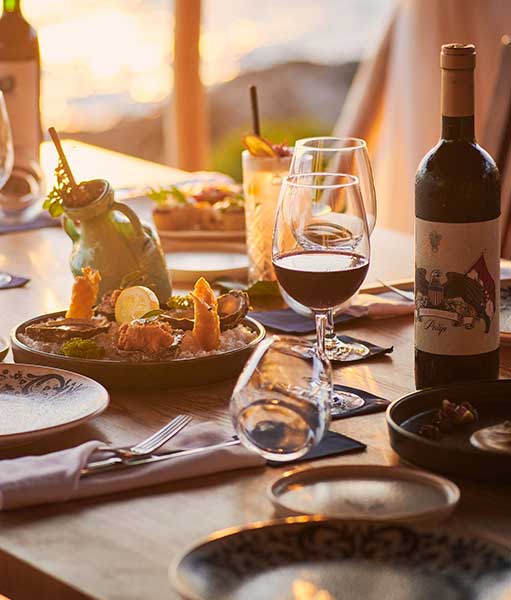
Accommodation strategy also improves. Travellers can often choose location more intelligently in spring because premium walkable properties may be attainable without the punishing summer spread. That can transform the quality of a stay. A room near the promenade, a sea-facing terrace, or a hotel with easier last-minute flexibility matters more than an extra degree of sea temperature on many itineraries. Our own accommodation coverage becomes particularly useful in spring because readers can act on it without the same level of peak-season constraint.
Spring is when Konavle makes the strongest argument
The inland region behind Cavtat is one of the biggest reasons to favour April and May. Konavle in spring looks and feels alive in a way that complements the coast perfectly. Rural routes are green, village excursions are pleasant, producer visits make climatic sense, and longer lunches inland feel like part of the season rather than a retreat from it. This is when our broader editorial map of the region comes together most coherently: Cavtat for base and evening rhythm, Konavle for agriculture and heritage, Dubrovnik for one well-timed city day, and the sea as a recurring but not compulsory protagonist.

Wine visits are an obvious example. As explored in our Konavle wine guide, shoulder season is often ideal for tasting because roads are easier, hosts may have more time for explanation, and the agricultural landscape is visually expressive. The same applies to olive oil and honey routes, rural lunches and village-based cultural detours. A stay in Cavtat during spring therefore tends to become more regionally intelligent almost by default.
What about swimming and boats?
Spring sceptics usually return to water. Can you swim? Sometimes, yes, often enough for confident cold-water or brisk-water swimmers, and increasingly comfortably by late May. Should you plan the whole trip around it? Probably not. That is the wrong question. Better to ask whether sea access, sea views, boat possibilities and occasional swims are enough to satisfy the coastal impulse while leaving room for other pleasures. In spring, for many travellers, they are.
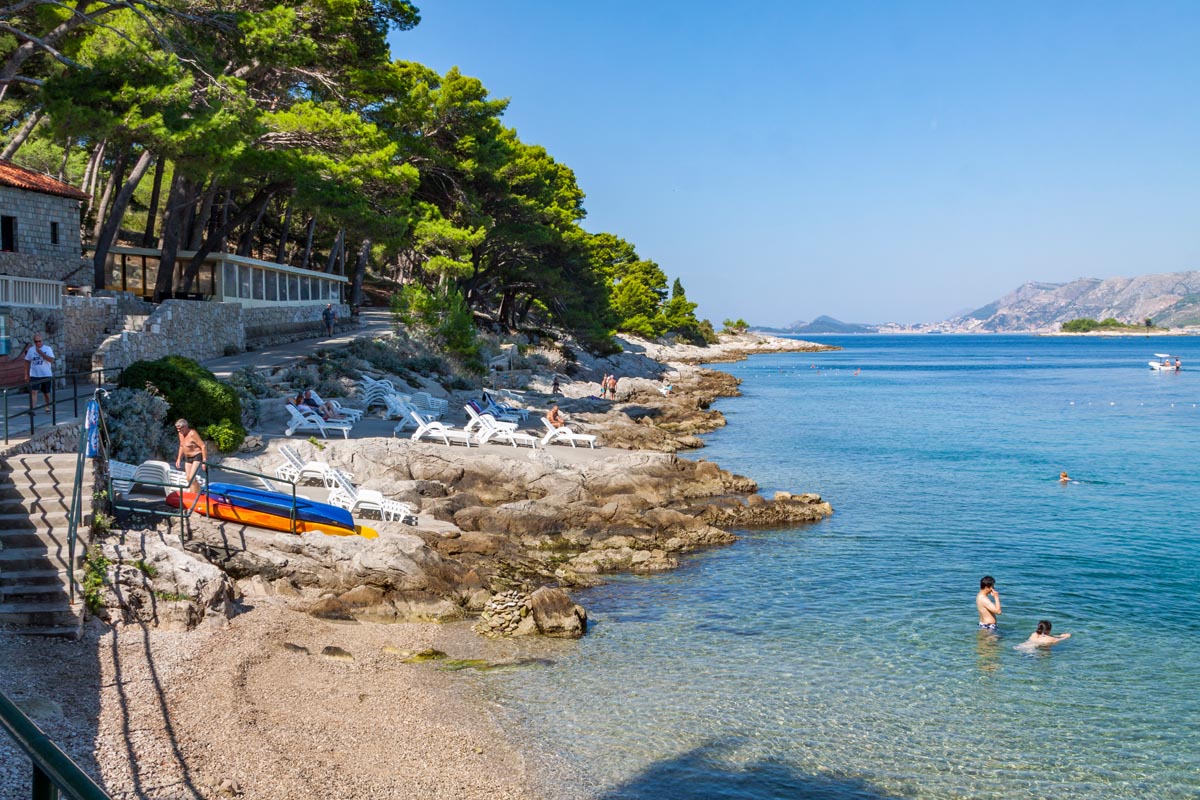
Boats are also more nuanced in spring. A full sea day can be excellent on the right weather window, and shorter excursions may feel especially vivid when the horizon is sharp and the air cleaner. But there is no need to force a maritime identity onto every itinerary. One reason Cavtat works so well in April and May is that it remains recognisably coastal without demanding that the sea be used all day, every day. For travelers interested in lighter maritime options, our practical pieces on local boat trips and the more budget-friendly sea day can help calibrate expectations.
For whom spring is especially good
Couples who like long walks and dinners. Remote workers adding a few leisure days around a stay. Parents with younger children who do not want to fight school-holiday-style peak density. Repeat Croatia visitors who have already done August once and do not need it again. Food-focused travellers. Readers who care about architecture, churches, viewpoints and local rhythm. Anyone who finds themselves exhausted by overbooked summer Europe. Spring in Cavtat is not equally perfect for everyone, but it is remarkably strong for travellers whose interests are mixed rather than monolithic.

It is also good for writers, photographers and anyone who thinks through places by observing them. The town’s scale, colour and timing make more sense before the season’s most intense compression begins. The same is true of nearby Dubrovnik, which can still be visited in spring without the emotional weight of high-summer crowd management.
Costs, value and the relief of rational pricing
Value is not only about lower prices, though spring often helps there. It is also about what your money can buy when the destination is not at its most pressurised. A better room category, a table in a place you actually want to eat, more flexibility in day planning, easier local transport, and less hidden cost in the form of queueing, delays or rushed choices — all of these can make a spring trip feel materially superior. Travellers sometimes fixate on one cheap flight or one summer swim and ignore the broader cost of travelling when everyone else is attempting the same thing.

For a town such as Cavtat, this matters enormously because its pleasures are cumulative. You gain more from ten slightly easier decisions than from one sensational moment. Spring increases the likelihood of those easier decisions.
Conclusion: why April and May deserve to be called the intelligent months
Calling April and May the Adriatic’s intelligent months is not a provocation against summer. It is a defence of proportion, legibility and pleasure without excess strain. In Cavtat, spring lets the place remain itself. The waterfront is alive but not overwhelmed. The inland world of Konavle still feels immediate. Walks are pleasant. Dinners are calmer. Accommodation choices can be more rational. And the traveler is not forced into a single script of what the holiday must be.

That combination is rare enough to be named clearly. April and May are not second-best months waiting apologetically for summer to begin. They are often the season when Cavtat and its hinterland make their strongest, most coherent case. For travellers who value atmosphere, food, movement, regional depth and a holiday that feels composed rather than crowded, spring is not a compromise at all. It is the moment when the destination starts speaking in full sentences.
How to use spring well as a visitor
The practical lesson is simple: build a mixed itinerary. Choose a walkable base in Cavtat, plan one Dubrovnik day rather than three, reserve one inland Konavle day for wine, food or heritage, keep one weather-flexible day for the coast, and allow evenings to remain open. This is where spring rewards intelligence. It lets you improvise without anxiety because the destination is not operating under peak load. A clear morning can become a boat outing; a cooler day can become a cultural or food day without disappointment. When travelers speak well of Cavtat in spring, this is usually what they mean, even if they do not say it directly: the place gives them options without asking them to defend every decision with advance combat planning.
That sense of ease is not minor. It changes memory. People tend to return from spring trips speaking not only about what they saw, but about how the days felt calm, spacious, coherent, civilized. Those are not accidental adjectives. They are seasonal advantages. And on the Dubrovnik Riviera, they are worth travelling for.
Need help choosing the right experience?
Tell us your budget, dates, and travel style, and Cavtat Guide will help you choose the best yacht charter, tour, property option, or local experience.