

A seven-night charter in the southern Adriatic is rarely memorable because of one dramatic moment. It stays with people because of cadence: the way mornings begin quietly, the way landscapes change without strain, and the way a well-run vessel makes movement feel effortless. Between the far south and Hvar, the experience is not best understood as a checklist of stops. It is better read as a sequence of moods, each shaped by route, service, weather, and the social chemistry on board.
Best for: travellers comparing life on board, not just specifications
Main insight: a seven-night Croatia yacht charter is best understood as a progression of atmospheres, not a checklist of stops
What matters most: yacht fit, crew quality, and route rhythm
A week on a crewed yacht in Croatia should be understood practically before it is romanticised. By the time someone is seriously considering a charter here, they are usually past the stage of needing generic assurances about turquoise water and photogenic islands. What they want instead is a more valuable kind of clarity. How does the week actually feel at nine in the morning? When does the vessel feel private and when does it become social? How much of the experience comes from the boat itself, and how much depends on the crew, the route, the breeze, the timing of lunch, and the group’s tolerance for motion, stillness, heat, stimulation, or quiet?
A seven-night passage between the far south and Hvar is not best read as a simple itinerary. It makes more sense as a sequence of atmospheres. One day begins with coffee in glassy water beneath pine-covered slopes, continues through a short passage, and ends with dinner ashore in a stone town. Another remains largely on board: a late breakfast, a long swim stop, children claiming the platform, adults drifting between shade, reading, sun, and aperitifs. The true appeal of the southern Adriatic is not only that it is beautiful. It is that it allows a week to remain fluid without becoming loose or chaotic.
That elasticity is what makes Croatia especially persuasive in the crewed-charter market. Distances are humane. The islands feel distinct rather than interchangeable. Historic towns, protected bays, vineyard slopes, and more social ports all sit within a navigational structure that rarely demands punishing passages. A strong route between the Dubrovnik Riviera and Hvar can therefore feel rich without feeling overdesigned. It offers variety without forcing ambition upon the guests every waking hour.
For first-time charterers, the decisive question is rarely “Which yacht is best?” It is “What kind of week are we actually trying to have?” A honeymoon, a founders’ retreat, a three-generation family holiday, and a celebratory charter for thirty friends may all take place in the same waters, but they do not need the same vessel or the same social rhythm. Croatia rewards specificity. The right yacht does not merely carry guests through the week. It edits the week for them.
That is why names such as Nocturno, Freedom, Premier, Queen Eleganza, Alfa Mario, and Bellezza are useful not merely as status markers, but as reference points. They represent different emotional architectures. One privileges privacy and lower-density service. Another behaves like a floating resort. Another solves the logistics of large-group togetherness without collapsing into something cruise-like. Readers comparing these vessels properly are not really comparing length and rate cards. They are comparing how the week itself is likely to feel once life on board begins.
The charter idea behind the brochure imagery
The first mistake many people make when researching a crewed yacht Croatia itinerary is assuming that the experience is primarily about the vessel. It is not. The boat matters, certainly, but only as one element in a more complex equation involving route design, crew chemistry, weather, the age mix of the group, the desired balance between motion and stillness, and whether guests want to feel hosted, entertained, protected, or largely left to themselves.
Along this stretch of coast, where islands sit close enough together to create real route flexibility, the strongest charters are usually the ones that match the yacht to the group’s rhythm rather than to the aspirational imagery that first sold them the idea. Croatia is forgiving in that sense. A passage can be short. A lunch stop can be extended. A harbour plan can be softened or abandoned. The week can respond to appetite rather than forcing guests into endurance travel disguised as luxury.
A seven-night charter in southern Croatia is therefore less a straight line than a carefully edited sequence of moods, each recalibrated by light, weather, appetite, and the judgement of the captain and crew. The sea is part of the pleasure, but so is proportion. Knowing when to move, when to stay put, and when to abandon an over-serious plan is part of what separates a good week from an expensive but forgettable one.
For first-time charterers, the crucial question is not simply which yacht photographs best. It is what kind of week the group genuinely wants. A honeymoon couple will define success differently from an extended family. A leadership retreat will need different privacy and Wi-Fi logic from a celebratory house-party charter. Croatia is particularly strong because it allows guests to be selective about tone. They can lean toward long lunches at anchor, social arrivals into Korčula Town and Hvar, or quieter routes built around coves, swimming, vineyards, and dinners that begin after the light has gone soft.
That is why vessels such as Nocturno, Freedom, and Queen Eleganza function as useful editorial reference points. Nocturno suggests one style of life on board; Freedom suggests another; Queen Eleganza reveals what happens when large-group practicality is fused with hospitality design strong enough to remain desirable rather than merely efficient.
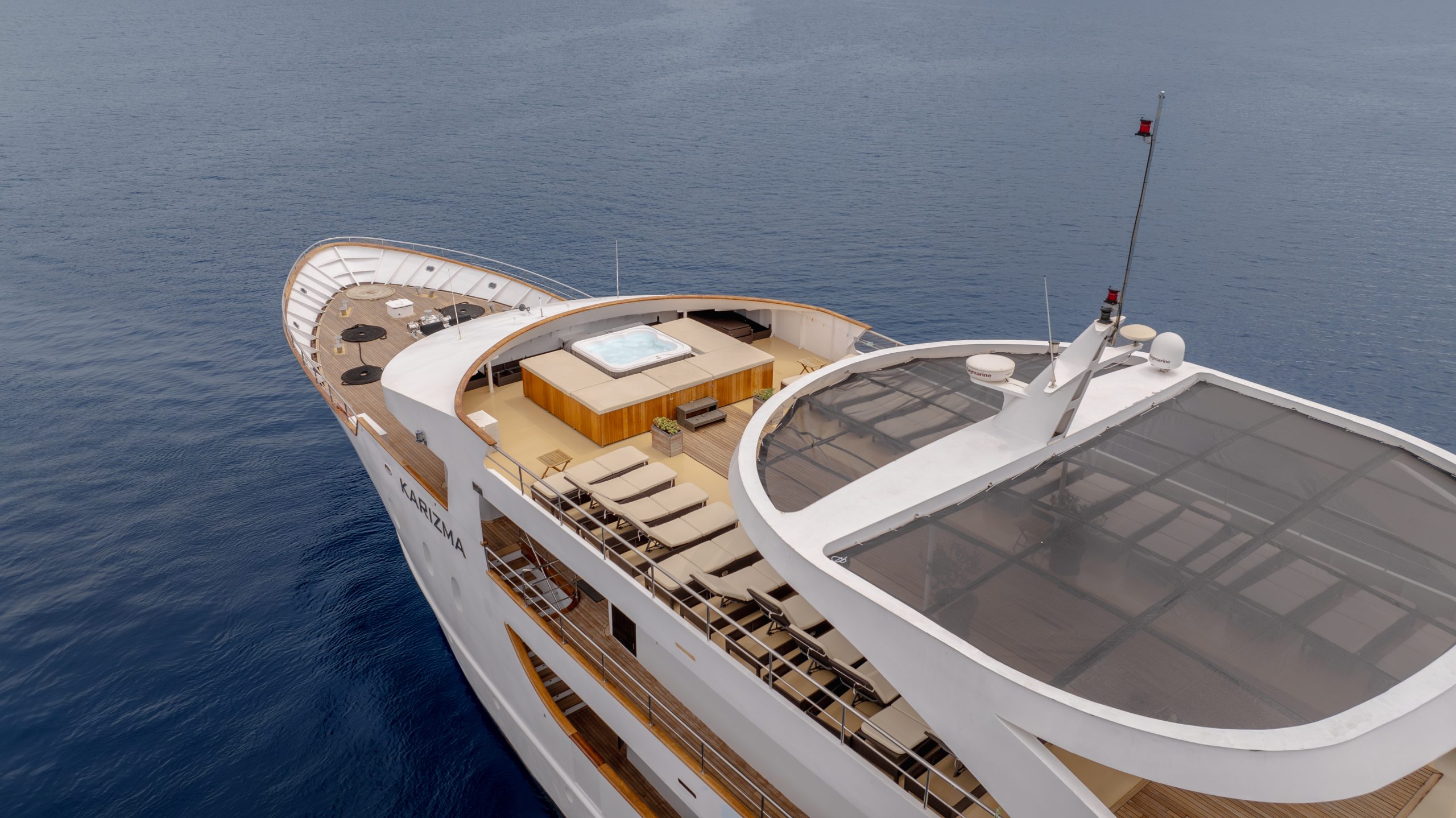
How yacht choice changes the week
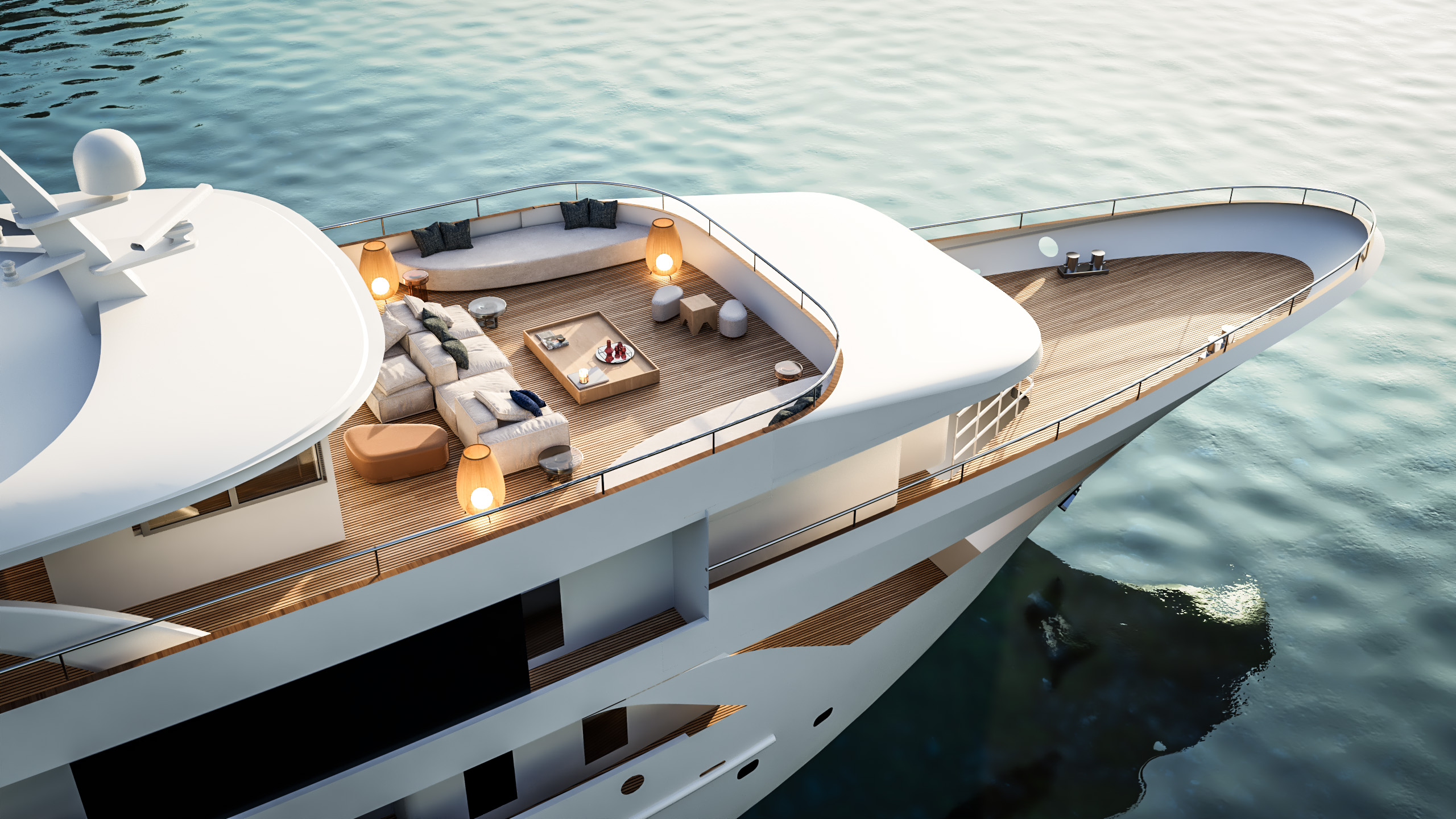
Space on board is never just about square metres. It is about how the day behaves inside that space. On a well-run charter, breakfast may belong to the aft deck, reading to the upper sun deck, children’s energy to the swim platform, and aperitifs to the forward lounge at precisely the hour when the coastline starts to soften. The layout is not passive. It influences behaviour.
This is why a vessel such as Freedom, with its pool, jacuzzi, gym, and spa, appeals to guests who want the yacht itself to function almost as a destination. The onboard program can carry an entire day, which matters in shoulder season, for mixed-age groups, or for parties whose appetite for going ashore is uneven. The value of such a yacht is not just an amenity tally. It is the number of different moods it can absorb comfortably without anyone feeling displaced.
By contrast, a vessel such as Nocturno, carrying only twelve guests in six cabins, makes luxury a question of proportion. Fewer cabins mean quieter circulation, more room per party, and a more intimate service ratio. That changes everything from breakfast tempo to how the saloon feels late in the evening. Guests used to refined hotels often respond strongly to this style of charter because they recognise an old truth of luxury: privacy that does not need to advertise itself is often the most convincing kind.
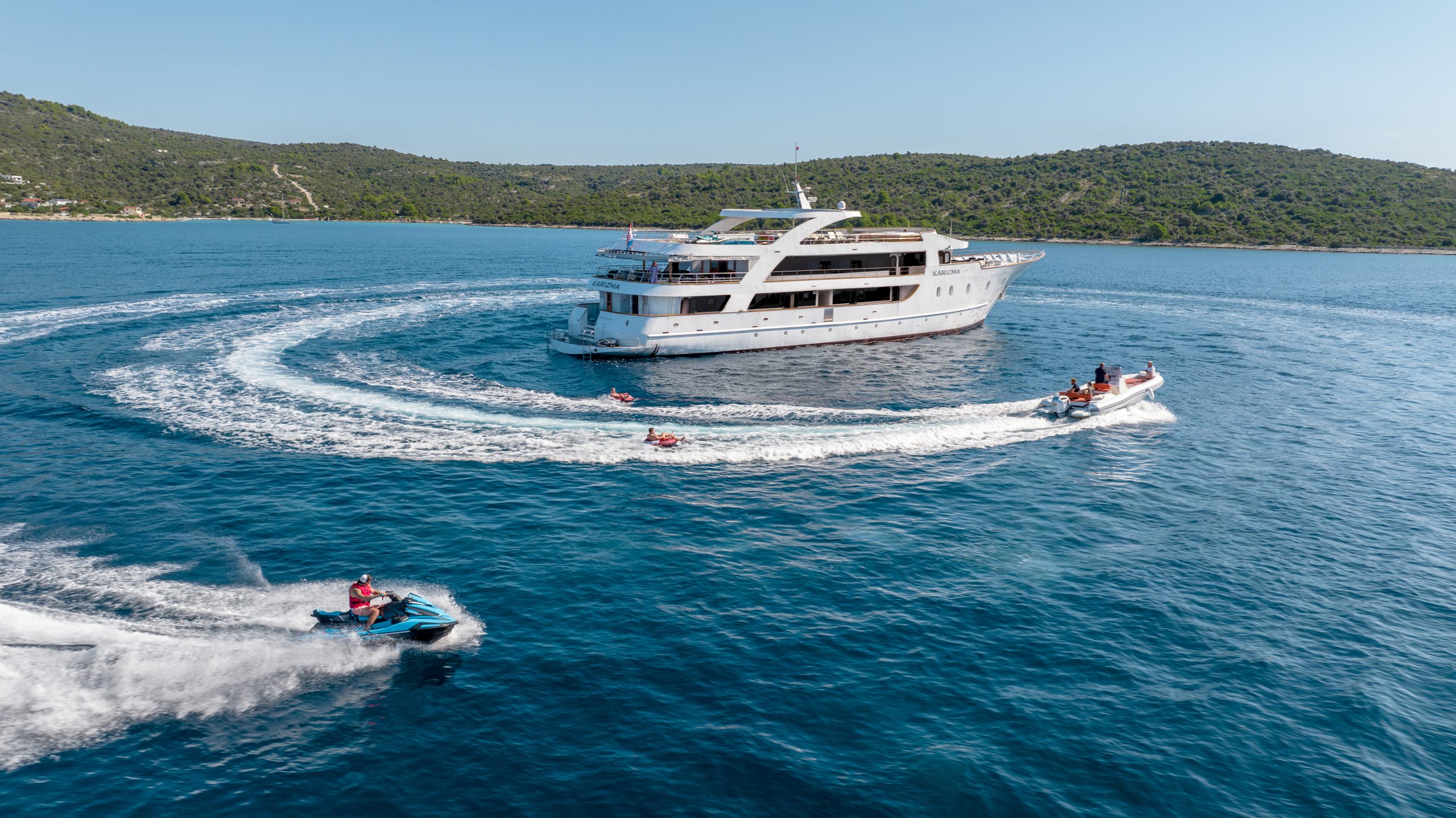
Then there are the larger Croatian statements such as Alfa Mario, Queen Eleganza, Karizma, Bellezza, and Premier. These vessels matter because they solve a longstanding charter problem. Large private groups have often had to choose between splitting across smaller boats or accepting a diluted hospitality experience. Croatia increasingly offers a third answer: large-format private charter with a house-party atmosphere, provided the crew, service ratio, and layout are strong enough to keep the week from feeling crowded.
Reference points from the Croatian fleet
Seen this way, today’s fleet becomes more legible. Freedom sits in a higher tier where amenities become part of the daily script. Nocturno demonstrates how a smaller guest count can intensify privacy without turning the trip stiff or formal. Queen Eleganza shows how the Adriatic has become unusually good at accommodating large celebratory groups without reducing the experience to logistics alone.
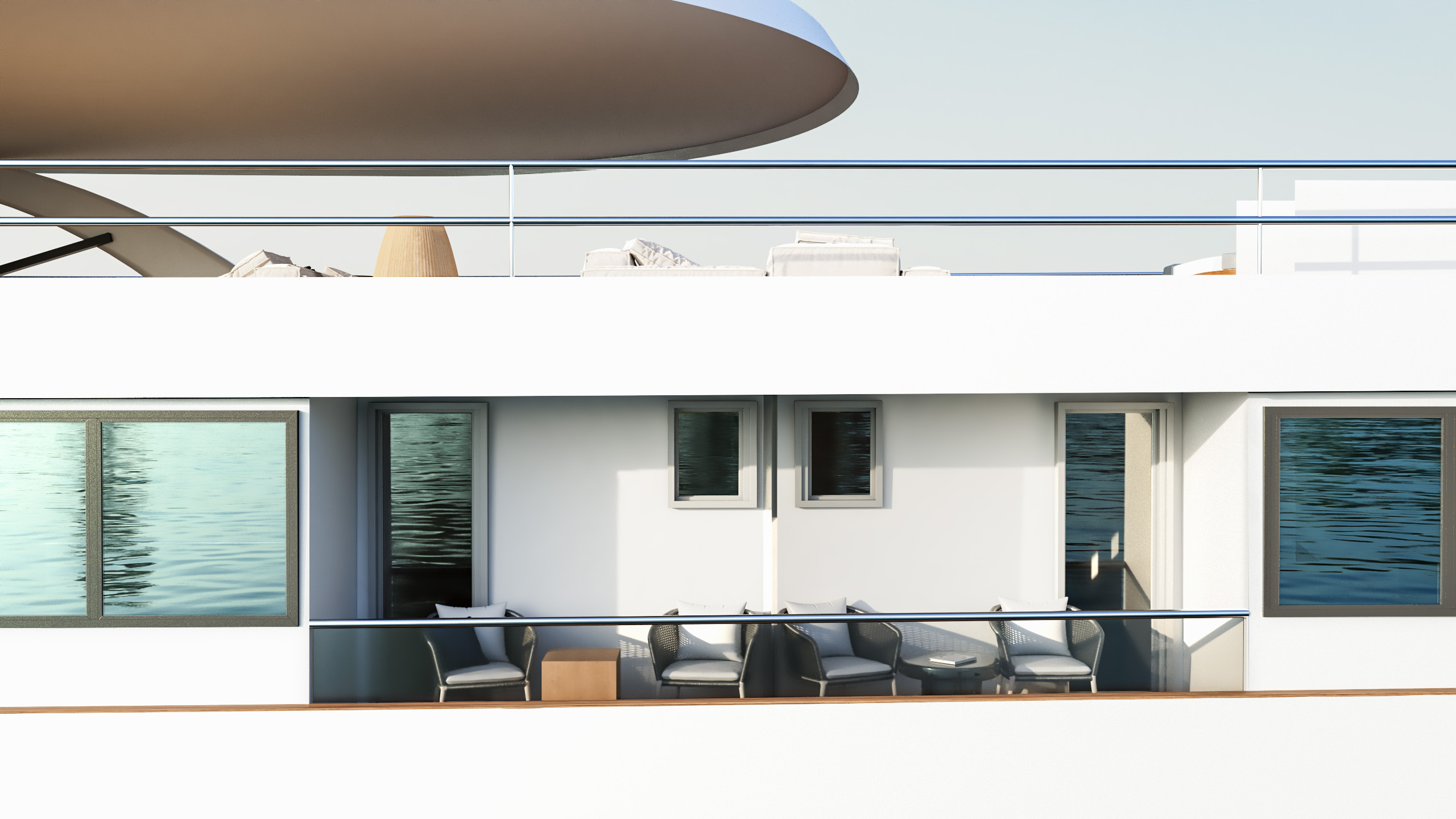
Premier deserves separate attention because a 55-metre yacht with eleven cabins and private balconies in every guest cabin changes the comfort conversation for larger parties. It feels closer to a contemporary private residence at sea than to the older stereotype of a group yacht. Bellezza, by contrast, proves that atmosphere can be an asset in its own right. The timber-rich character of a large custom yacht gives the week a different emotional texture from more standardised luxury environments.
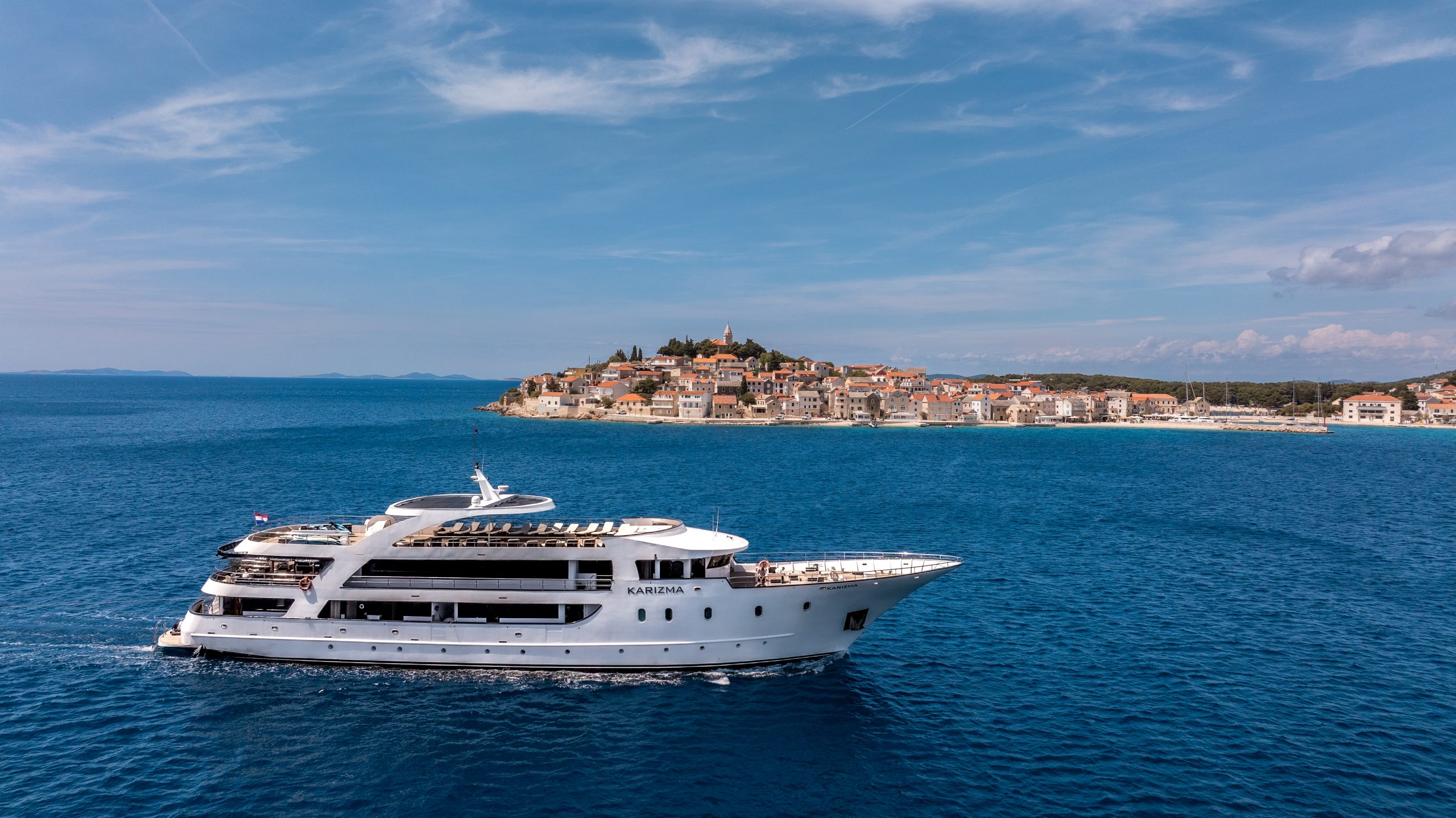
A working comparison for real clients
| Yacht | Guests | Price | Best for |
|---|---|---|---|
| Nocturno | 12 | €85,000–€99,000/week | Privacy, couples, and polished small groups |
| Freedom | 24 | from €120,000/week | Amenity-rich, resort-style charters |
| Queen Eleganza | 34 | from €90,000/week | Large celebratory groups |
| Bellezza | 38 | €55,000–€70,000/week | Character-led large group charters |
Price is the most discussed part of chartering and usually the least well understood. Base rate is only the opening figure. Travellers need to distinguish between the charter fee itself, VAT where applicable, APA, and the spending behaviour of the group once on board. Many Croatian charters sit in the broad €30,000 to €100,000 weekly band, while more ambitious ultra-luxury options rise beyond that. The question is not only whether one vessel is more expensive than another. It is what kind of week that price buys in practice.
Freedom, for example, behaves like a floating private resort for twenty-four guests. Nocturno creates a different value logic built around lower-density service and more intimate circulation. Queen Eleganza makes a persuasive case for large celebratory groups by keeping everyone together on one vessel. Bellezza shows how strong atmosphere and character can still matter for bigger parties who are not searching only for maximalist amenity counts.
Then there is APA, often around 30% on many fully crewed yachts, covering food, beverages, extra fuel, port fees, and variable running costs. None of this should be treated as a deterrent. It is simply the real accounting of private charter. Serious clients usually prefer that transparency because it allows the week to be designed honestly rather than sold as frictionless fantasy.
In Croatia, the right yacht does not simply transport the week. It edits it — compressing logistics, expanding choice, and turning geography into atmosphere.
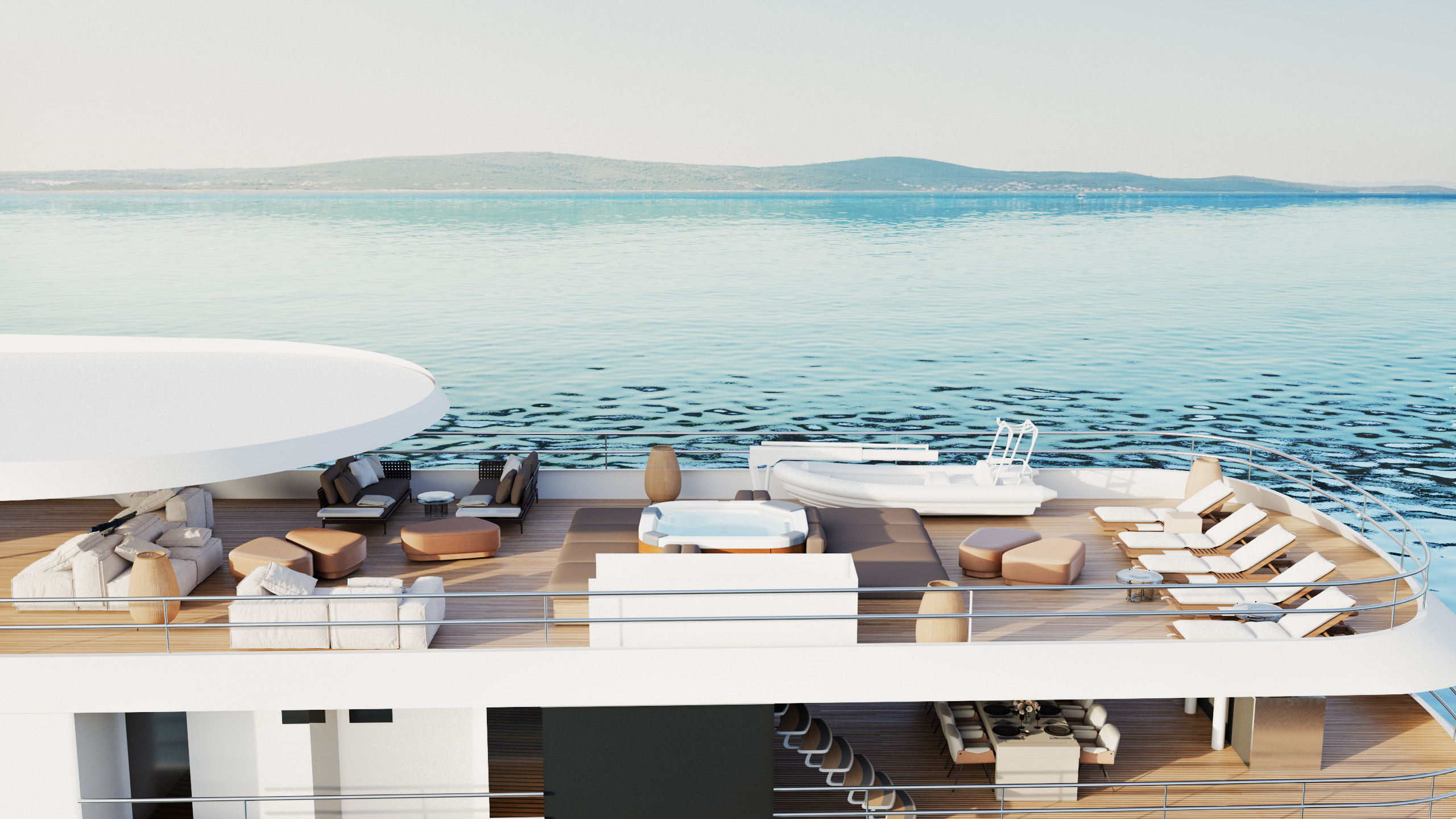
The crew factor: why service ratio matters more than many guests realise
If the yacht is the hardware, the crew is the operating system. The best Croatian charters are remembered less for singular luxuries than for the invisible competence that prevents friction. Luggage disappears without fuss. Towels are refreshed without being noticed. Lunch shifts by fifteen minutes because a cove is too beautiful to leave. The captain quietly avoids a harbour that photographs well but will be unpleasant in afternoon swell. Professionalism at sea is not theatrical. It feels like ease.
The published crew structures on these yachts reveal the seriousness of that infrastructure. Nocturno’s nine-person team for twelve guests signals a highly attentive ratio. Premier’s twelve crew supporting twenty-two guests points to the complexity of running a larger private yacht consistently well. Alfa Mario’s twelve crew and Queen Eleganza’s ten remind guests that big-group charters only feel graceful when housekeeping, deck operations, galley service, and guest-facing hospitality are all properly staffed.
This is also why repeat charterers ask questions newer travellers sometimes overlook. How experienced is the captain on the southern Dalmatian circuit? Can dietary restrictions be handled without making meals feel clinical? How quickly can toys be launched and reset? Can the group stage a calm first lunch on board after staggered arrivals? Is the Wi-Fi genuinely workable for a half-day of calls if someone cannot fully disconnect? The glamour of the Adriatic is real, but smoothness is engineered.
Route design in the southern Adriatic
The Croatian coast has one of the most forgiving route structures in European chartering. With islands, coves, and historic ports sitting close enough together to avoid a transit-heavy week, guests can shape itineraries around appetite rather than endurance. A southern route beginning near the Dubrovnik Riviera or Cavtat can pass through the Elaphiti Islands, Mljet, Korčula, and then lean towards Hvar, with each stop offering a different version of Adriatic life.
Mljet is often where the week recalibrates people. It slows them down. Korčula introduces civic texture and architectural punctuation. Hvar raises the social tempo and adds nightlife, visibility, and a different register of glamour. Dubrovnik and Cavtat, meanwhile, create two different ways of beginning the same regional story: one grander and more symbolically charged, the other calmer and more composed.
A good captain reads not just the weather but also the energy of the group. There is no prize for ticking every famous harbour if the guests would rather spend another slow afternoon swimming off a pine-covered shore. That is the hidden intelligence of a strong Adriatic charter. The route should feel deliberate without feeling rigid.
Yacht choice changes route logic. A toy-heavy vessel such as Karizma Superyacht + encourages longer anchorage time and more platform-centred days. A classic sailing-focused charter such as Angel (Classic Mahogany) + invites guests to pay closer attention to horizon lines and the pleasure of the passage itself. A mid-size option such as Bello Superyacht + can balance comfort and flexibility without tipping into large-group scale, while a smaller private vessel such as Alessandro I Gulet can make the week feel more intimate from the outset. Itinerary design, then, is not merely a map problem. It is a vessel problem first.
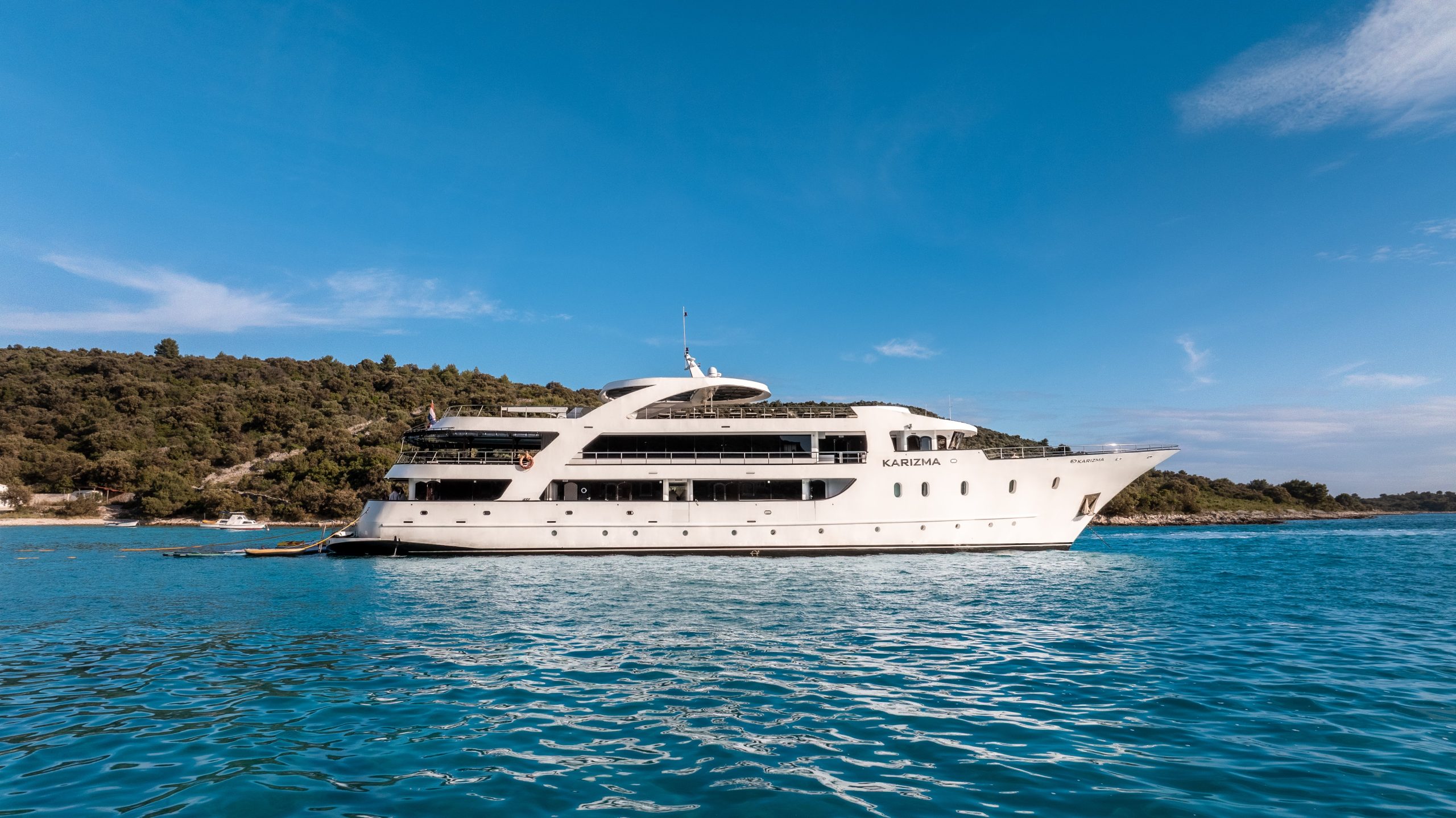
Why Dubrovnik and Cavtat shape the beginning differently
For Cavtat Guide readers, the Cavtat dimension matters. Cavtat is not merely the quieter neighbour of the old city. It is one of the most civilised thresholds into this part of the Adriatic. For some clients it functions as a decompression port: less pressure, easier first-night pacing, and a more gracious entry into the week. From there, a charter can still use the region’s air access and prestige while avoiding the sense that embarkation must begin with urban theatre.
This distinction matters for luxury travellers. Many do not want their week afloat to begin with crowds, bottlenecks, and over-programmed energy. They want to arrive, breathe, and slide into the trip. Cavtat does this elegantly. It can also work well as a final-night strategy, especially for guests who prefer one polished dinner ashore without immediately returning to the busier rhythm of the old city’s orbit.
In editorial terms, Cavtat is best understood as a gateway of tone rather than scale. It reminds readers that the Croatian charter market is not a single experience. It contains not only famous embarkation points, but also softer staging grounds and those softer staging grounds often determine how luxurious the first and last days actually feel.
What sophisticated travellers often get wrong
Travellers used to villas or five-star hotels sometimes approach yacht selection as if it were a property decision. They look for the single most visually dramatic option and assume everything else will arrange itself. Yet yachts are operational environments. A party of twelve that values quiet, reading space, and long lunches may be much better served by Nocturno than by a larger, more theatrical vessel. By contrast, a family celebration or wedding-adjacent gathering can become vastly simpler on Queen Eleganza, Karizma, Bellezza, or Premier because the logistics of keeping everyone together are solved from the beginning.
There is also a recurring misunderstanding around sailing itself. Some clients imagine that choosing a more sailing-oriented charter automatically produces a more authentic Adriatic week. Sometimes it does. Sometimes it simply means they have chosen a romance whose practical consequences they do not actually enjoy. The honest answer is that the most memorable charters usually sit at the intersection of desire and tolerance: how much motion, schedule flexibility, toy usage, shore time, and service theatre the group genuinely wants.
That is why published specifications are useful but not decisive. Freedom’s spa and cinema are facts. Premier’s private balconies are facts. Alfa Mario’s gym, jacuzzi, sauna, and large-capacity layout are facts. But only the traveller can decide whether those facts translate into delight or into excess once placed inside a real week at sea. The work of good editorial guidance is to help make that translation before any contract is signed.
Using Cavtat Guide as a planning lens
Readers exploring Cavtat Guide are often moving between inspiration and transaction. They are not yet asking for a contract, but they are close enough to charter reality that details begin to matter: airport transfer times, embarkation mood, whether Cavtat Guide’s yacht coverage explains vessel differences clearly enough, and how a week afloat can sit alongside the experiences section and other Adriatic pleasures such as island dining, wine touring, and quieter final nights ashore.
This is where editorial content earns its keep. It turns luxury from a blur of aspiration into a sequence of intelligible decisions. For this readership, the Croatian market is especially compelling because it does not force a crude choice between high style and navigational practicality. Distances are humane. The islands remain culturally legible. The food is strong. The scenery changes quickly. Charter becomes not a niche indulgence, but one of the rare premium travel formats that can satisfy both the guest who wants to switch off entirely and the guest who wants every day to feel distinct.
And because the market now includes yachts as different as Freedom, Nocturno, Premier, Alfa Mario, Queen Eleganza, Karizma, Bellezza, Bello, Alessandro I, and Angel, travellers can approach Croatia not as a one-size-fits-all yachting destination but as a place where the fleet itself has matured enough to meet genuinely different desires.
Conclusion
A seven-night charter in southern Croatia is less a linear trip than a progression of moods, each adjusted by water, weather, appetite, and the judgement of the crew. That is the deeper reason the region continues to attract serious charter interest. It offers more than beauty. It offers workable luxury. A traveller can begin near the old city or in Cavtat, move through islands that feel close yet distinct, and do so on a vessel whose size, design, and service ratio genuinely match the ambitions of the group.
For some, that vessel will be Nocturno, where intimacy and polish shape the week. For others it will be Freedom, a floating resort confident enough to keep guests happily on board for long stretches. Large groups may find their answer in Queen Eleganza, Alfa Mario, Karizma, Bellezza, or Premier, each solving the challenge of scale differently. The point is not that one yacht wins universally. It is that the Adriatic has become one of the few charter regions where the right answer can be genuinely specific.
That specificity is what turns research into readiness. Once travellers understand the difference between platform space and passage pleasure, between resort-style amenities and classic sailing atmosphere, between old-city theatre and Cavtat composure, they are no longer just browsing. They are choosing. And in yachting, that is when the real journey begins
Need help choosing the right experience?
Tell us your budget, dates, group size, and travel style, and Cavtat Guide will help you think through the best yacht charter, route structure, and Adriatic experience for your week.