

Updated for 2026
Chartering a yacht in Croatia can mean anything from a relatively lean skippered week to a fully crewed private floating residence with serious operating costs behind it. The mistake most first-time clients make is to focus on one advertised number and assume the rest of the week will fall neatly into place. In reality, the final cost is shaped by charter type, season, route, fuel appetite, marina choices, and how much service you want built into the experience. This guide breaks the pricing structure down properly so you can understand not only what Croatia yacht charters cost in 2026, but what those budgets actually buy on the Adriatic.
Main takeaway: The price of a yacht charter in Croatia depends less on one advertised number than on charter format, season, route, fuel appetite, marina choices, and service expectations.
Best budgeting logic: start with the kind of week you actually want, then work backwards into the right yacht type and cost structure.
Best value windows: May, early June, and late September often deliver the strongest balance of weather, service, and price.
Anyone searching for the price of a yacht charter in Croatia is usually asking two different questions at once. The first is practical: what will the invoice actually look like? The second is strategic: what standard of week does that budget truly buy on the Adriatic? Croatia is broad on both fronts. A licensed sailing charter can begin at a relatively approachable level in shoulder season, while a prime-summer crewed yacht operating between Dubrovnik, Korčula, and Hvar can move quickly into serious luxury.
The gap between those experiences is not cosmetic. It reflects crew, fuel use, berth preference, route flexibility, provisioning standards, and the extent to which the yacht is functioning as transport, hotel, restaurant, and private retreat all at once. That is why the smartest charter clients do not begin with a number in isolation. They begin with the shape of the holiday they want to buy.
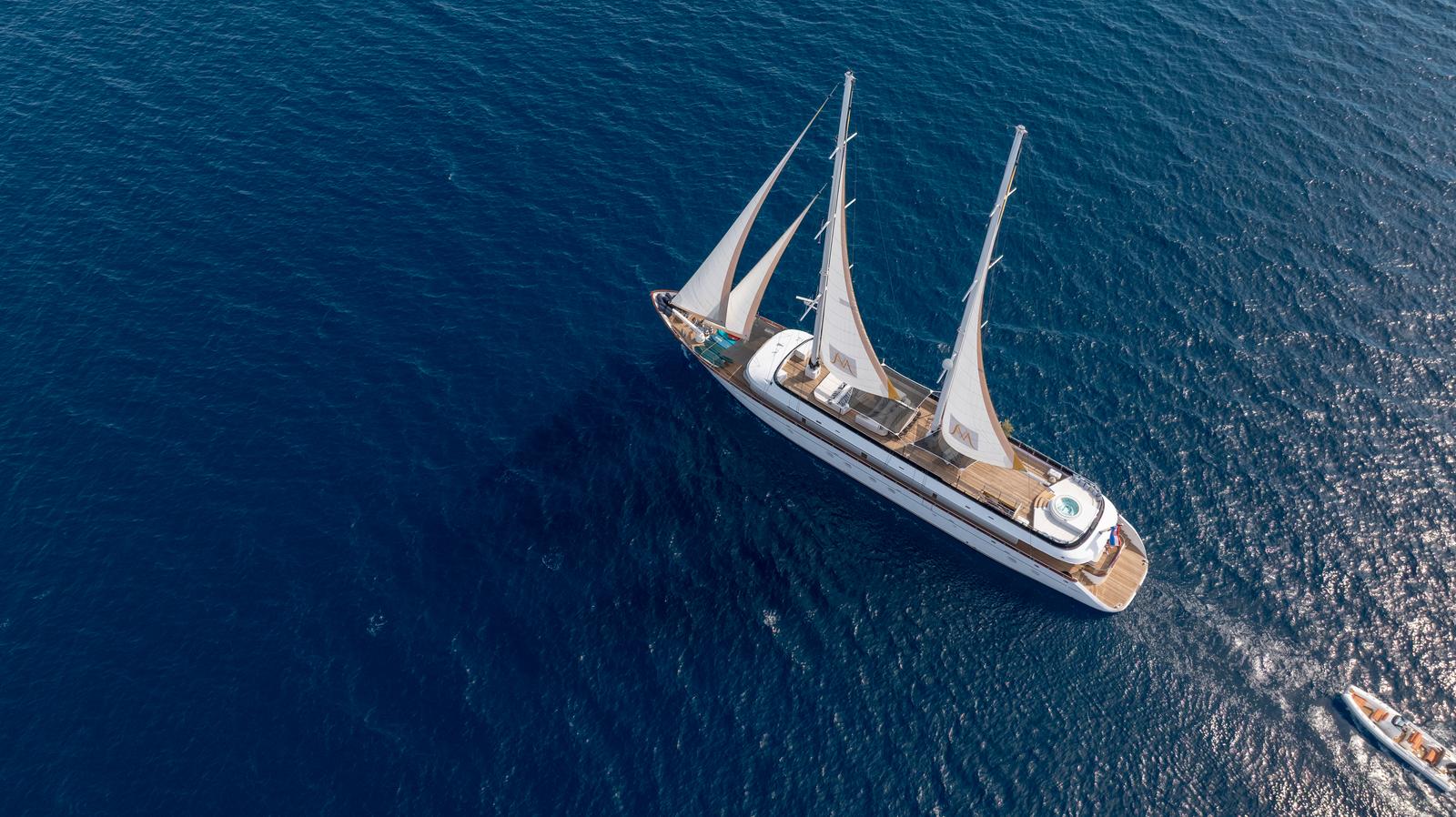
Croatia rewards that kind of clarity. The coastline is legible, the island network is dense, distances work well for one-week charters, and the southern Adriatic lets travelers combine old port towns, quiet anchorages, and more social summer stops without turning the whole route into a race. Cost, then, is never just a headline rate. It is the sum of vessel type, season, route, privacy expectations, and how much friction you want removed from the week.
For Cavtat Guide readers, especially those beginning around Dubrovnik or Cavtat, the question becomes more useful when asked properly. Not “what is the cheapest yacht in Croatia?” but what does it cost to charter the right yacht in Croatia for the week I actually want? Those are very different searches, and they usually produce very different holidays.
Most important correction: a yacht charter budget only becomes meaningful when it is tied to format, season, and the actual style of week you want to buy.
The first price distinction is not luxury, but charter format
Many new clients assume the market is divided simply between cheaper sailing boats and more expensive motor yachts. In practice, the first and most decisive split is between bareboat, skippered, and fully crewed charter. A bareboat booking places navigation and boat handling responsibility on the guest, so the base price can look attractively lean. A skippered charter adds professional route intelligence and removes stress, but it also changes both the social dynamic and the budget. A fully crewed charter goes further still: the yacht becomes a staffed travel product, closer in spirit to a private villa with propulsion.
This matters in Croatia because the destination functions well at several levels at once. A confident sailor can have an excellent week moving through the Elaphiti Islands or central Dalmatia on a bareboat or skippered yacht. But a couple travelling for a milestone anniversary, or a family that wants hospitality as much as navigation, often discovers that crew is not indulgence but protection. The more carefully timed your holiday is, the more valuable professional handling becomes. Clients paying for a short August week usually regret false economies far more than they regret strong crew.
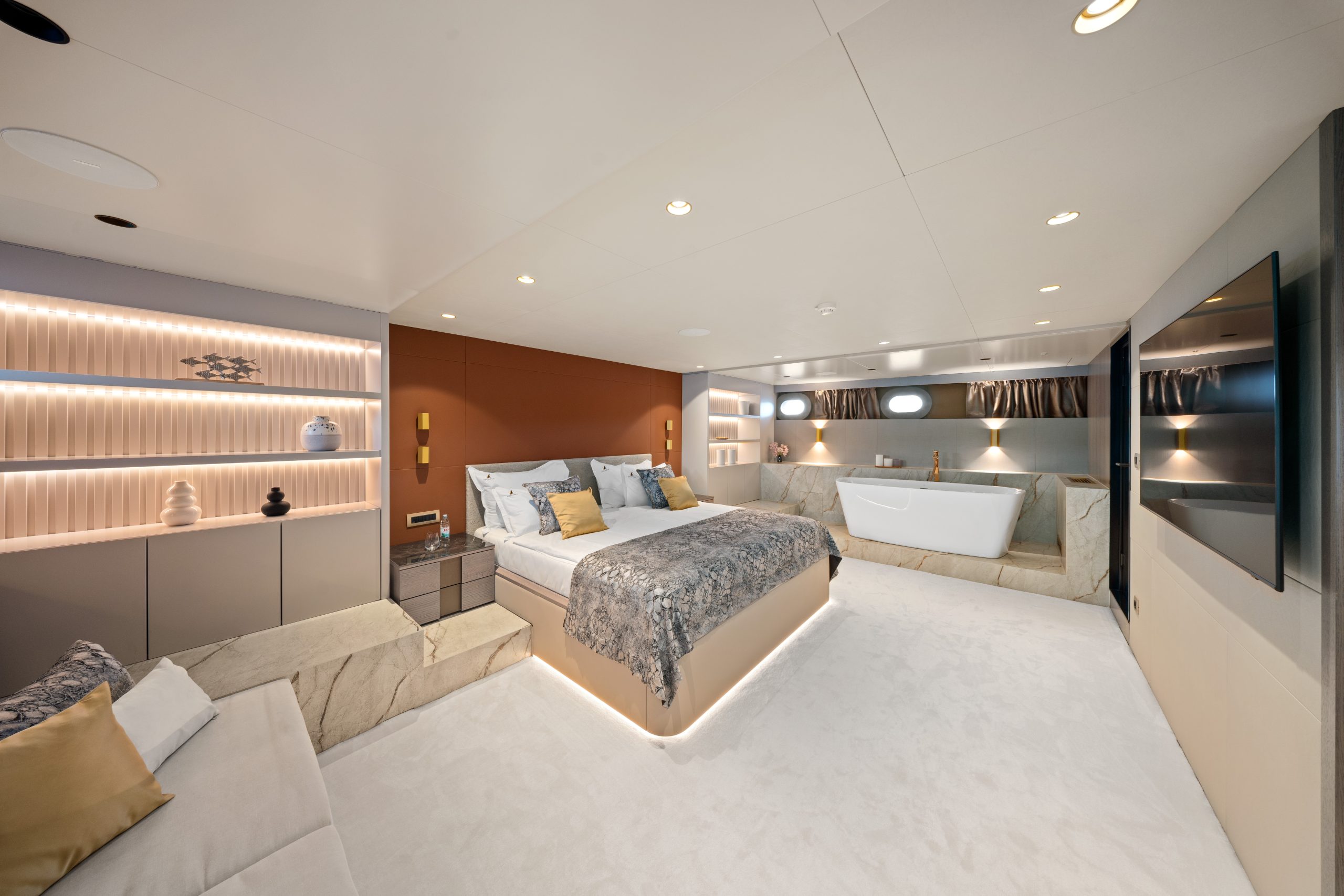
That also means price cannot be separated from emotional expectation. A bareboat charter may be cheaper, but it assumes the guest wants active responsibility. A skippered yacht costs more, but often buys better use of time. A fully crewed charter sits higher again, but can consolidate multiple luxury functions into a single moving platform. Until a client knows which of those experiences they want, the headline budget remains only partially useful.
What the base price includes and what it never does
The most common misunderstanding in yacht search behavior is to treat the advertised weekly rate as the total cost. It is only the opening figure. In Croatia, the quoted charter fee usually secures the yacht for a defined period, but the final spend is shaped by compulsory and semi-optional extras: transit log, cleaning, tourist taxes, skipper and hostess fees where relevant, provisioning, fuel, marina charges, water toys, one-way fees, and, at the top end of the market, APA.
The practical result is that a yacht appearing to fit one budget can become a noticeably different proposition by the time the itinerary is actually financed. This should not be read as a trap so much as a planning discipline. Extras are not random. Fuel rises when speed rises. Marina costs increase when you insist on fashionable berths at peak times. Provisioning rises when guests want restaurant-grade ingredients served onboard. Crew gratuities reflect the quality of service the week actually receives.

A credible charter conversation therefore separates fixed costs from behavioural costs. The yacht may have one price. Your version of the holiday has another. Getting those two figures aligned early is the difference between a relaxed booking process and a frustrating one.
Seasonality is the decisive lever in Croatia
Croatia’s charter market runs on a strong seasonal curve. July and August are not simply warmer months; they are the point at which inventory tightens, marinas grow busier, and the same vessel can be priced on materially different terms than it would be in May, early June, or late September. For clients focused on value rather than absolute heat, the shoulder season is often the more elegant answer. The sea is pleasant, restaurants are open, and the southern Adriatic retains its texture without forcing every anchorage and waterfront into a contest for space.
The cost logic is especially important in Dubrovnik-led charters. The city’s international visibility attracts both land-based luxury travellers and sea-based charter traffic, and that concentration tends to harden prices at the height of summer. A client who insists on a high-spec catamaran or sleek crewed motor yacht for a prime school-holiday week is not merely paying for weather. They are paying for scarcity. Move the same trip to late June or the second half of September and the equation often improves noticeably, sometimes without sacrificing the character of the route at all.
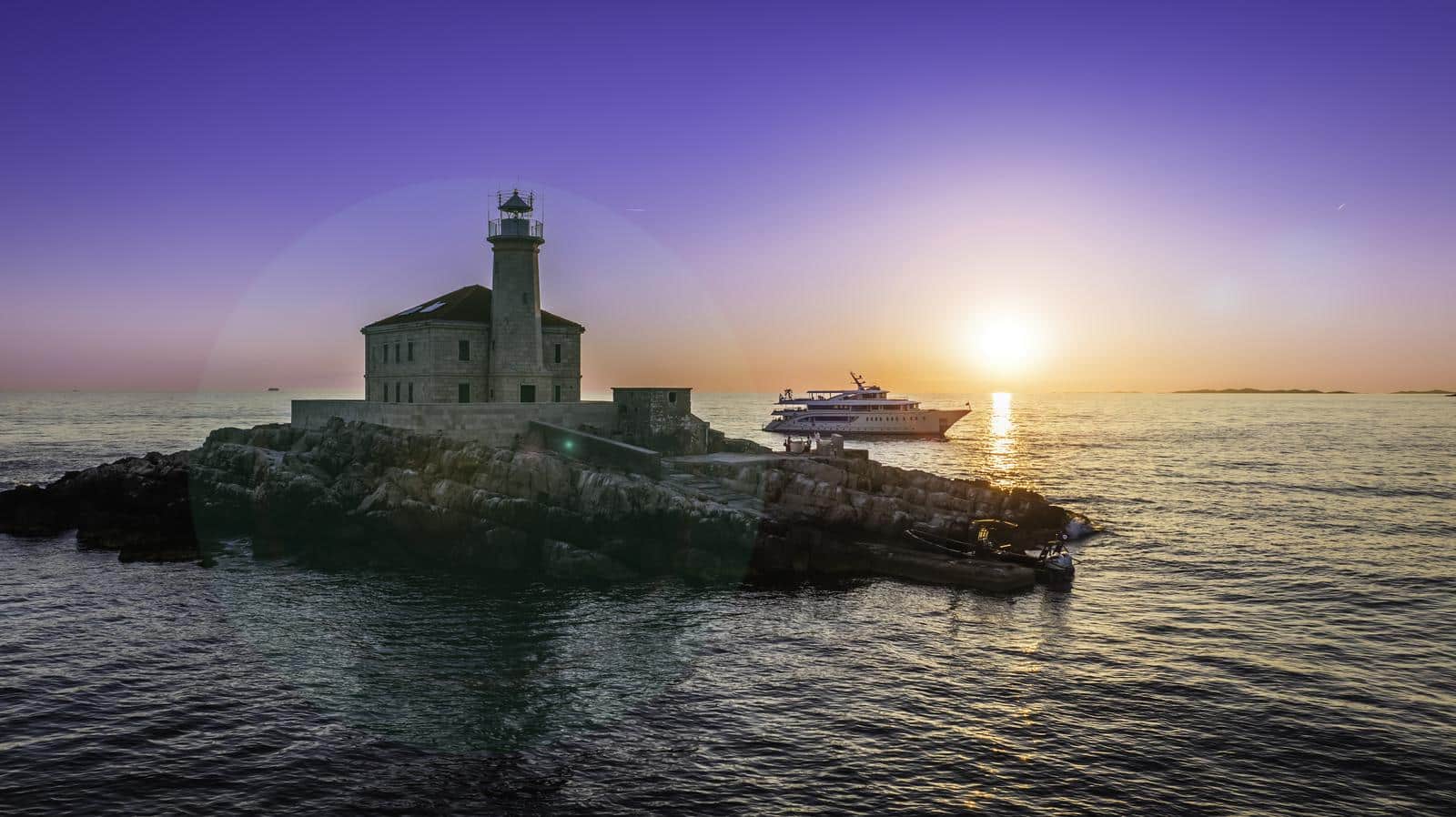
How season changes the feel of the same route
A May itinerary from Dubrovnik to Mljet, Korčula, and Šipan can feel contemplative, with easier restaurant bookings, calmer harbors, and a stronger sense that the yacht is delivering access. The same route in high summer becomes more social and more kinetic. There are more boats, more tender traffic, more reservations to manage, and more visible energy in the ports. Neither version is inherently better. But clients should understand that price follows atmosphere. Peak-season premiums are not buying a better map; they are buying access to the same map when the world most wants it.
Choosing between catamaran, sailing yacht, and motor yacht
In Croatia, boat type is less about status symbolism than about how you want the week to unfold. Catamarans are popular because they are spatially efficient and socially forgiving. They offer generous beam, large lounging areas, and a stable platform for families or mixed groups. Their cost tends to sit in a useful middle zone: above simple monohull sailing in many cases, below the top levels of crewed motor-yacht consumption. They are often the best answer for travellers who want a recognizably premium week without stepping fully into the economics of high-powered luxury.
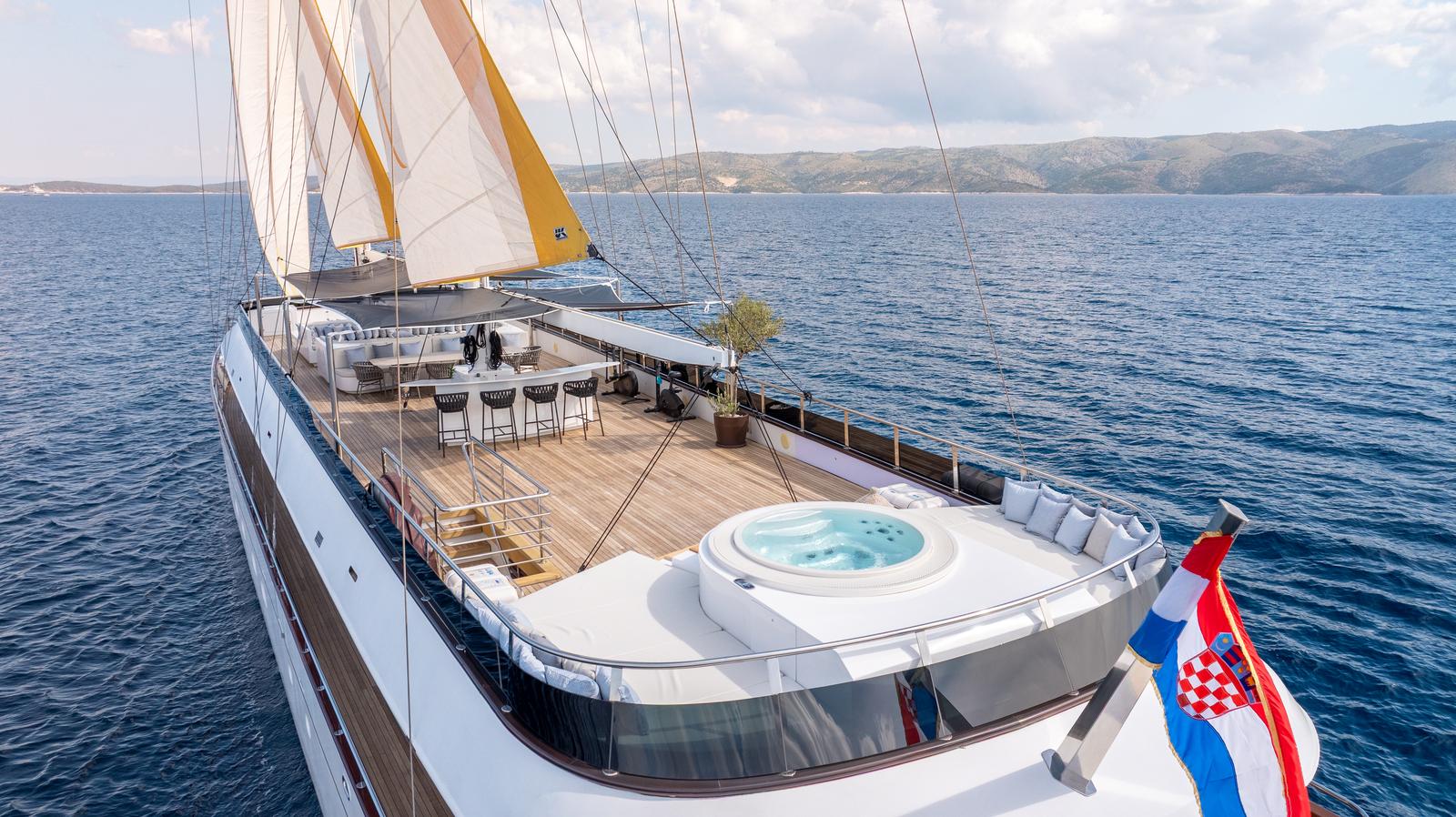
Monohull sailing yachts appeal for different reasons. They can offer a stronger sense of passage, a more traditional maritime atmosphere, and, in the lower and mid-market, some of the most approachable ways to experience Croatia from the water. For guests who want to feel the sea rather than simply observe it from a floating terrace, the format still has real appeal. They are not always the easiest answer for mixed-age groups or nervous first-timers, but for the right clients they can feel more elegant and more convincing than larger, more obviously luxurious alternatives.
Motor yachts solve another problem: time. They compress distance, protect the day, and allow guests to hold together a more ambitious itinerary without spending so much of the week under sail. That convenience carries a price. Fuel use can be substantial, berth preferences tend to be more expensive, and the whole product usually lives in a more service-intensive tier. Yet for guests who are not interested in the mechanics of sailing and want to move elegantly between Dubrovnik, Cavtat, Mljet, and Korčula with minimal friction, the premium is often rational. They are not paying only for speed. They are paying for control over the day.
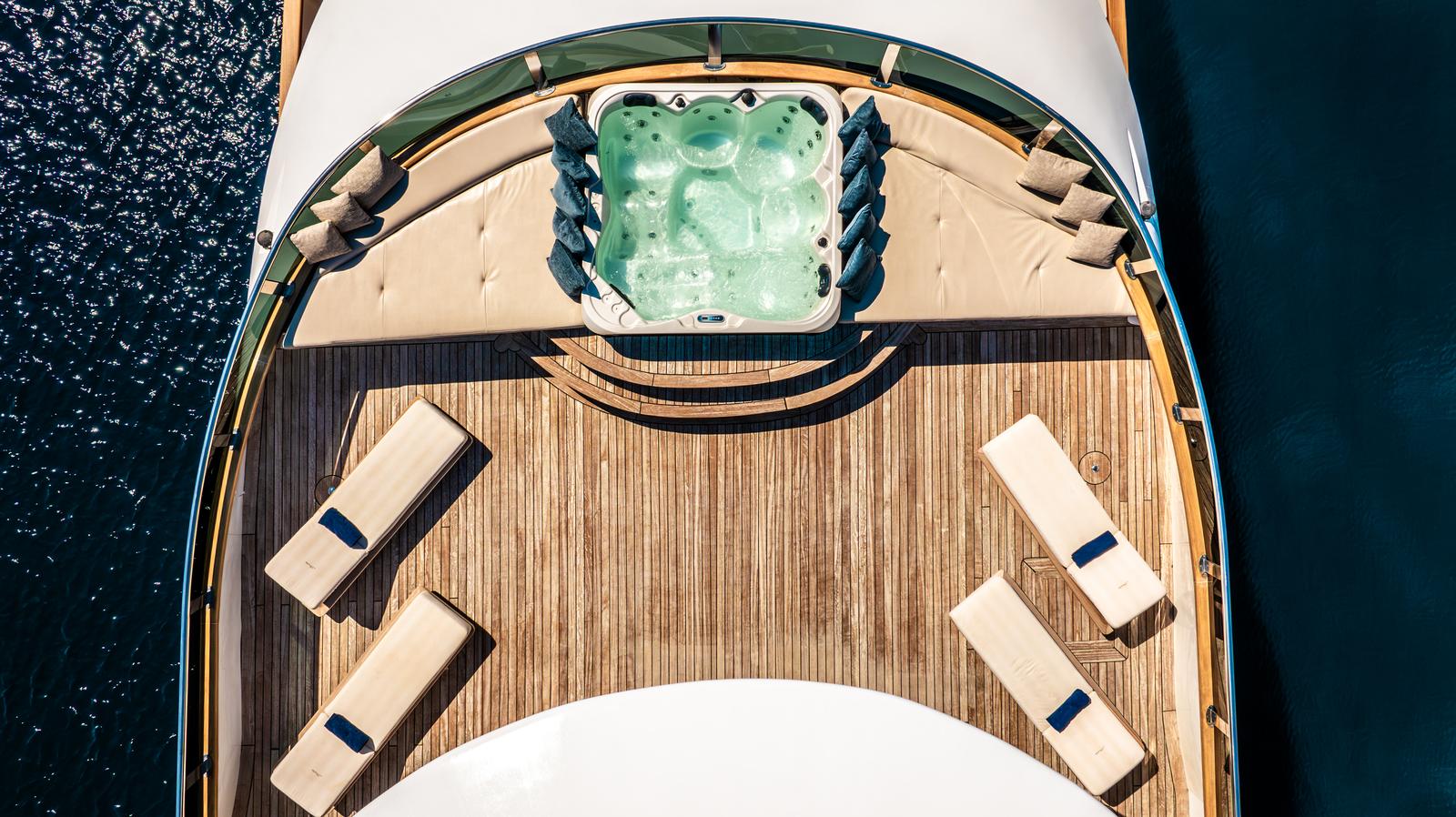
Dubrovnik versus Split bases why the departure port affects value
Although this guide is Dubrovnik-facing, anyone comparing Croatia charter prices should remember that not all bases behave identically. Split usually offers the broadest fleet depth in the country, particularly in bareboat and skippered categories. Dubrovnik tends to feel more pointed, more strategically southern, and more naturally aligned with itineraries that include Mljet, the Elaphiti Islands, Korčula, and optional Montenegro extensions. That may suit clients who value a certain sense of arrival, but it can also create a different pricing environment because fleet density and one-way logistics are not identical from one region to another.
For luxury travellers, the correct question is not merely where a boat is cheapest. It is where the chosen base reduces waste. If your ideal week begins with a couple of nights near Cavtat, proceeds to island days off Mljet, and ends with dinner ambitions in Dubrovnik, a southern start can be worth a premium because it reduces transfer fatigue and awkward routing. Price should therefore be judged against efficiency. A cheaper weekly rate in the wrong base can cost more once transport, repositioning, and time loss are taken seriously.
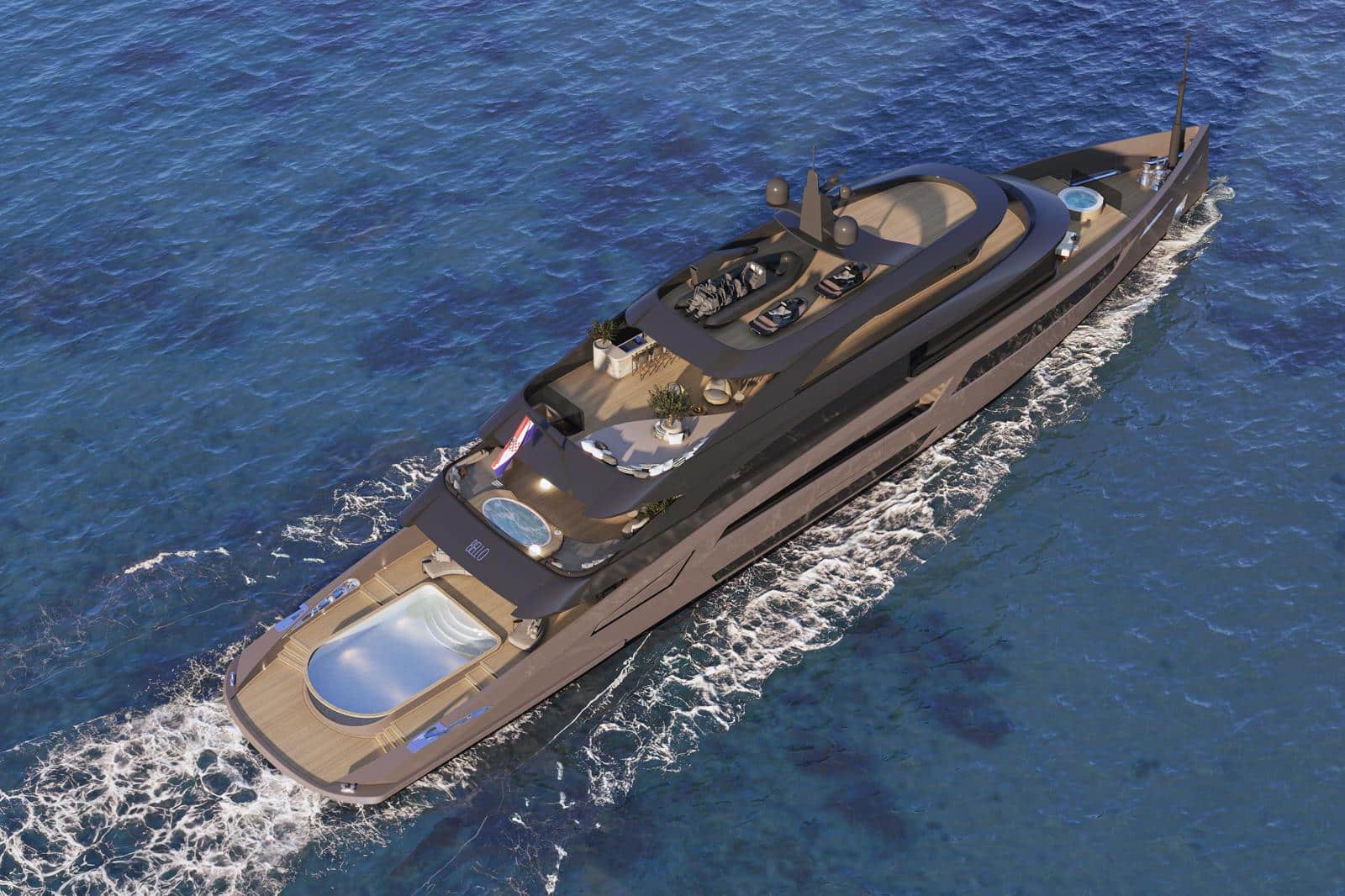
This is where route clarity saves money. Too many clients compare quotes without comparing the underlying map. A better-located yacht at a slightly higher rate can outperform a cheaper alternative if it eliminates one-way fees, extra transport, poor embarkation timing, or wasted charter days spent merely getting into position.
What affluent charter clients typically underestimate
High-intent searchers who are comfortable spending on travel often underestimate the operational costs attached to decisiveness. The moment a group wants guaranteed stern-to berths in sought-after ports, restaurant reservations that match the calibre of the yacht, standby water toys, premium provisioning, and a route with weather flexibility rather than strict compromise, the budget should be treated as a living number. This is not because Croatia is unusually expensive by Mediterranean standards. It is because the best version of the Adriatic is curated rather than accidental.
There is also a psychological adjustment at the top of the market. Once a guest moves from “renting a boat” to “buying private time on the water,” the arithmetic changes. The charter is no longer compared only with another boat. It is compared with a suite at a leading hotel, a villa with staff, multiple restaurant bills, private transfers, and the cost of structuring movement through a destination in peak season. On those terms, a well-chosen yacht can become surprisingly competitive particularly for families or groups because it consolidates several luxury expenses into one platform.
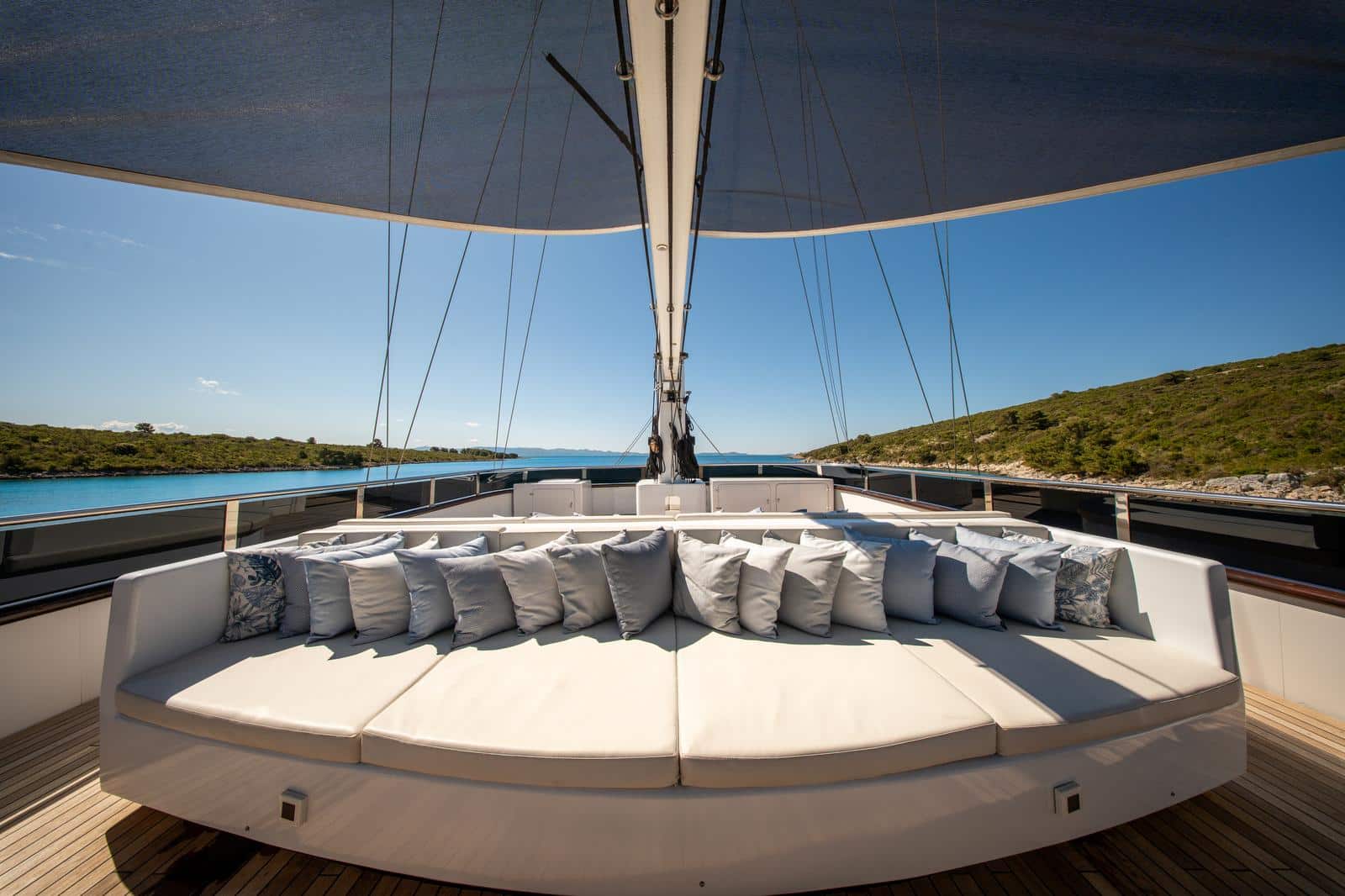
This is why the affluent client who asks the best budgeting questions usually gets the best outcome. Instead of asking only “how much?”, they ask what kind of time, privacy, and movement is this budget really buying? That shift in thinking is what separates a transaction from a well-composed Adriatic week.
The real question is never just what a yacht in Croatia costs. It is what kind of time, privacy, and movement your budget is designed to buy.
A realistic decision framework for budgeting the week
The cleanest way to budget a Croatian charter is to think in layers. Layer one is the vessel and format: bareboat, skippered, or crewed. Layer two is timing: shoulder season or prime summer. Layer three is behavioral: fuel appetite, marina appetite, food and wine expectations, staffing, and toys. Layer four is ambition: how many places you insist on seeing in one week. This layered model turns a vague search into a usable travel plan. It also helps brokers and charter planners show you relevant yachts instead of wasting time with boats that fit the headline budget but not the real brief.
For many Cavtat Guide readers, the ideal answer lies in the premium middle. A well-run skippered catamaran or a refined smaller crewed motor yacht can unlock the southern Adriatic beautifully. It gives enough comfort to feel indulgent, enough flexibility to move intelligently, and enough privacy to distinguish the experience from a hotel circuit. That bracket will not be the cheapest option on the coast, but it is often the point where Croatia’s value proposition becomes clearest: dense cruising geography, handsome towns, reliable service culture, and a route that feels rich without being exhausting.
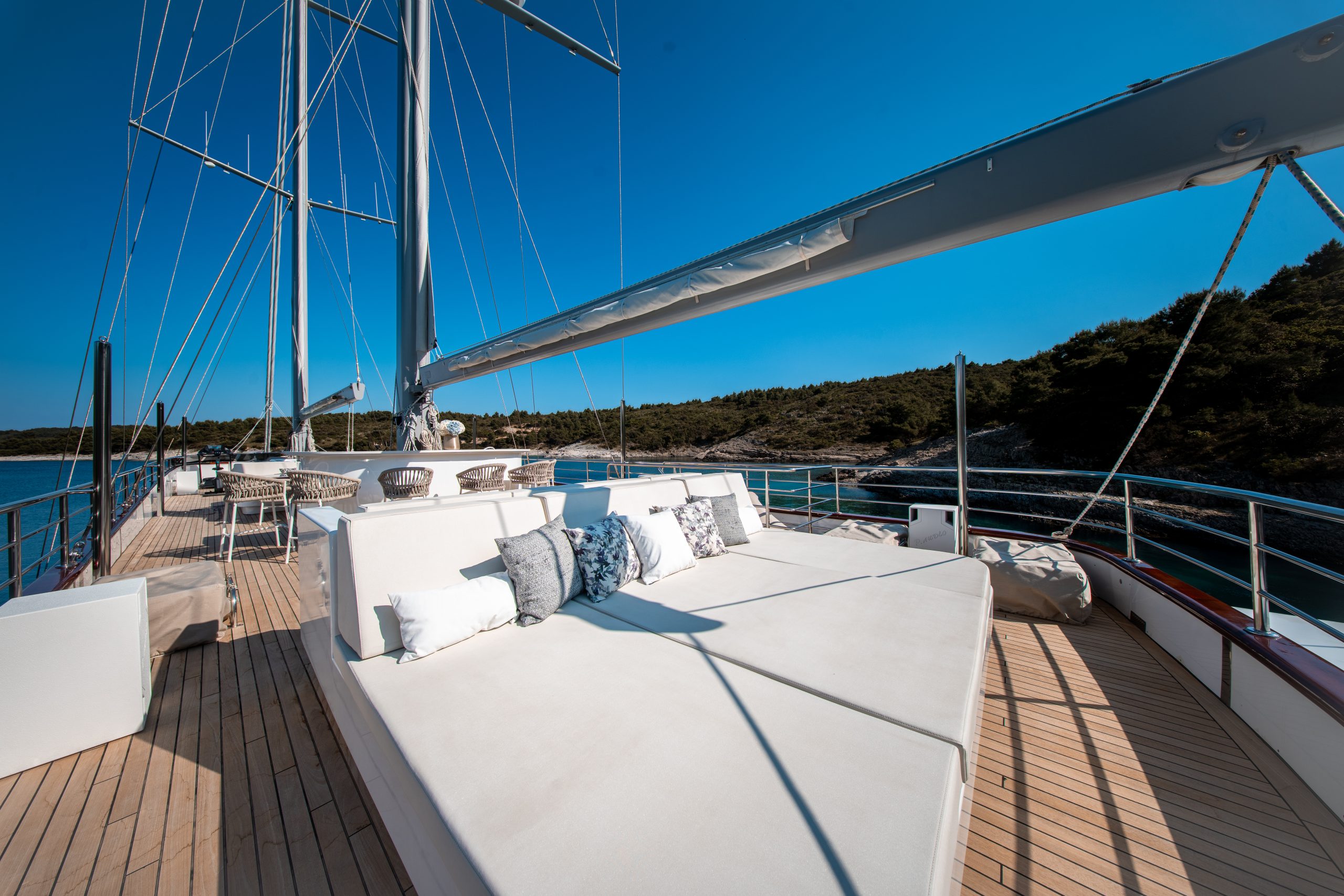
| Charter type | Typical weekly starting point | Who it suits | Main cost driver |
|---|---|---|---|
| Bareboat sailing yacht | Entry-level to mid-market | Experienced sailors with licences | Season, size, and base marina |
| Skippered catamaran | Mid-market to premium | Groups wanting comfort and deck space | Seasonality and model age |
| Crewed motor yacht | Premium luxury | Couples or families prioritising service and speed | Fuel, crew, and APA |
| Ultra-luxury superyacht | High luxury and above | Travellers wanting privacy equal to a villa | Brand pedigree and operating profile |
Where to research next before you book
Before committing, clients should compare three things in writing: the full charter estimate, the preferred route logic, and the service standards that matter most to them. That means asking whether restaurant reservations are actively assisted, whether provisioning is curated or simply delivered, how fuel is budgeted, and how weather alternatives are handled if a favourite stop becomes impractical. It is also worth exploring the wider Cavtat Guide ecosystem, especially the main publication and destination-led coverage across Experiences, Tours, and Transportation. A good charter week does not begin on the gangway. It begins with a route and a standard of service that already make sense on paper.
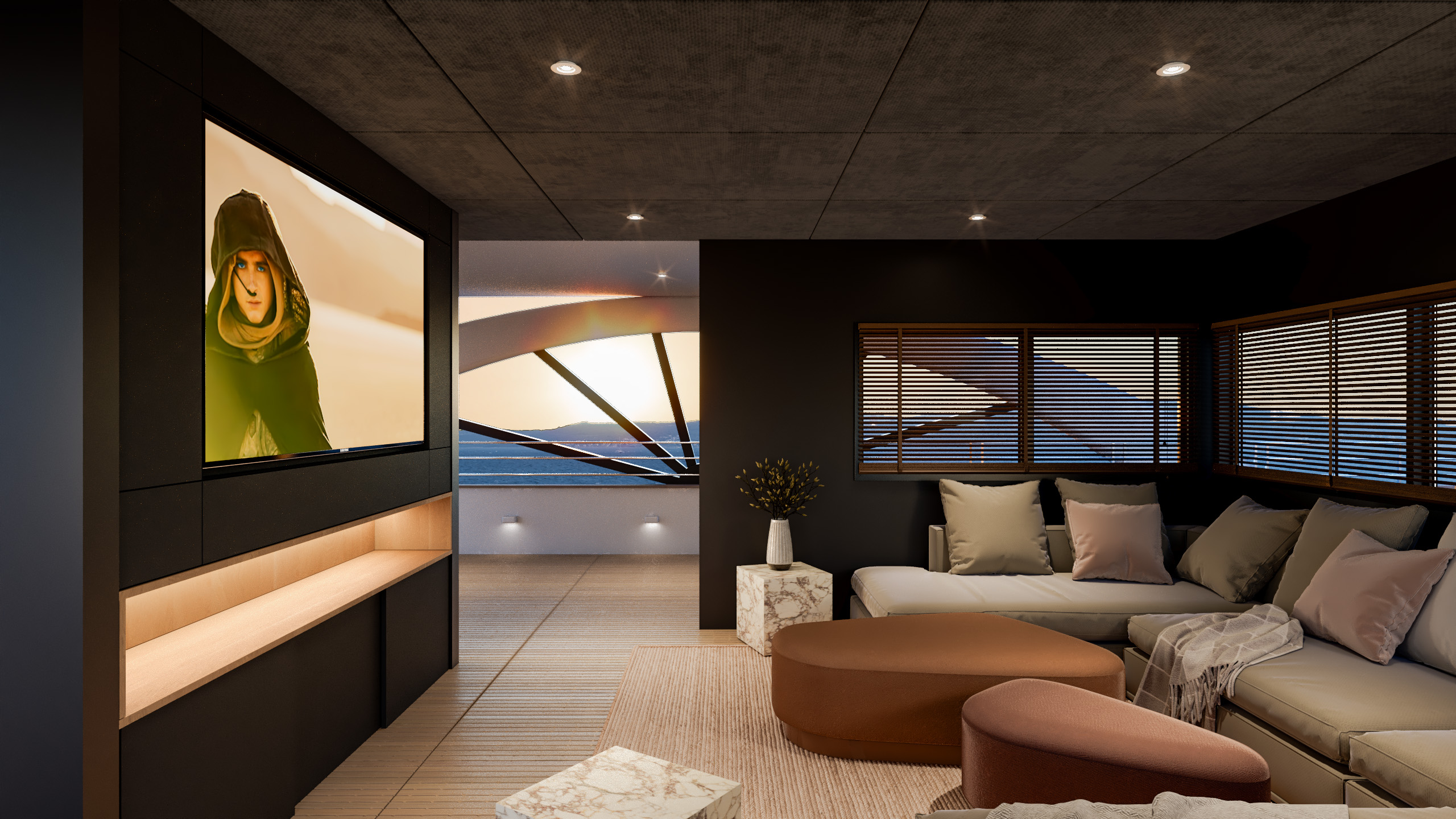
That is also why price comparisons only work when the boats being compared are truly equivalent. A newer catamaran with thoughtful maintenance, stronger charter management, and a better home marina may deliver more value than an apparently cheaper alternative. Likewise, a smaller but well-run crewed yacht can outperform a larger vessel with weaker service. Croatia’s market is deep enough to reward discernment. The more precisely a client describes the desired week, the easier it becomes to distinguish apparent savings from genuine value.
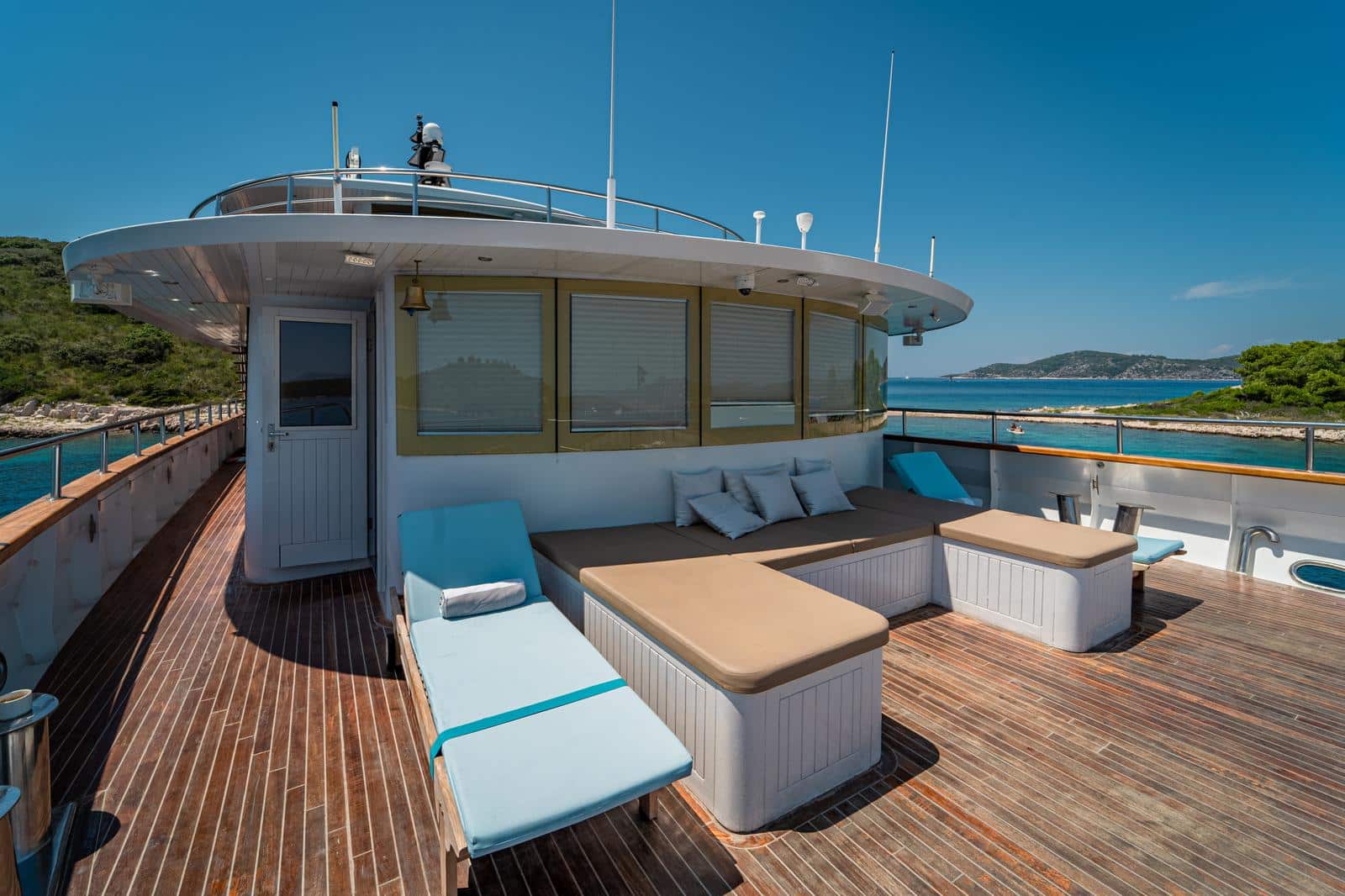
Conclusion
How much it costs to charter a yacht in Croatia depends less on a single tariff than on the kind of holiday you are trying to stage. The Adriatic can be accessible, but it can also be highly rarefied. A client looking only at the lowest advertised number will miss the operational truth of the week. A client who understands format, season, route, and behavior will usually buy better. Croatia rewards that seriousness because it offers a rare balance: enough infrastructure to make luxury easy, and enough coastline to keep it feeling exploratory.
For travelers beginning in Cavtat or Dubrovnik, the market’s appeal is obvious. You can move quickly from a medieval city to pine-fringed national-park water, from a polished marina lunch to a quiet anchorage, from hotel logic to a floating address. When the budget is built honestly, a Croatian charter becomes easier to assess. It is not cheap for its own sake, nor expensive merely for prestige. At its best, it is coherent: a travel product in which the price reflects the elegance of how the Adriatic is actually experienced.
Need help choosing the right experience?
Tell us your budget, dates, and travel style, and Cavtat Guide will help you choose the best yacht charter, tour, property option, or local experience.