

Updated for 2026
Buying land on a Croatian island is one of the Adriatic’s most seductive property ideas, but it is also one of the easiest to misunderstand. A beautiful parcel may still fail as an investment if zoning is weak, infrastructure is costly, or access undermines the eventual life of the house. The strongest island land opportunities are not the plots with the loudest views. They are the ones where planning, logistics, and long-term use already align.
Main takeaway: buying land on Croatian islands only becomes compelling when zoning, infrastructure, access, and long-term use are clearer than the view itself.
Most important rule: planning clarity first, logistics second, design ambition third.
Best-fit buyers: those seeking architectural control, long-term lifestyle alignment, or disciplined development logic rather than fast or emotional land purchases.
For many international buyers, the idea of owning land on a Croatian island begins with a simple image: a hillside above the Adriatic, a quiet approach road, and a future villa facing open water. The fantasy is understandable. Croatia’s coastline remains one of the Mediterranean environments where architectural authorship is still possible. Instead of inheriting someone else’s design decisions, a buyer can still begin with terrain, orientation, and horizon.
Yet the romance of land ownership on the Adriatic rarely survives first contact with planning documents. In reality, island land purchases are less about imagination and more about zoning, infrastructure, and long-term development logic. The real value of a parcel lies not in how it looks from the road, but in what can actually be built, permitted, serviced, and inhabited over time.
Across the southern Adriatic particularly around Cavtat, Dubrovnik, and the surrounding islands the most successful land acquisitions follow a careful sequence: planning clarity first, logistics second, design ambition third. When approached this way, island land can become one of the most interesting property opportunities in Croatia.
That sequence matters because land is different from almost every other coastal purchase. A finished villa is judged through immediate experience. A plot is judged through future possibility. Buyers are not only acquiring a view or a location; they are acquiring a chain of decisions that has to remain coherent through permitting, infrastructure, design, construction, and eventual use. The stronger the logic at the beginning, the more persuasive the opportunity becomes later.
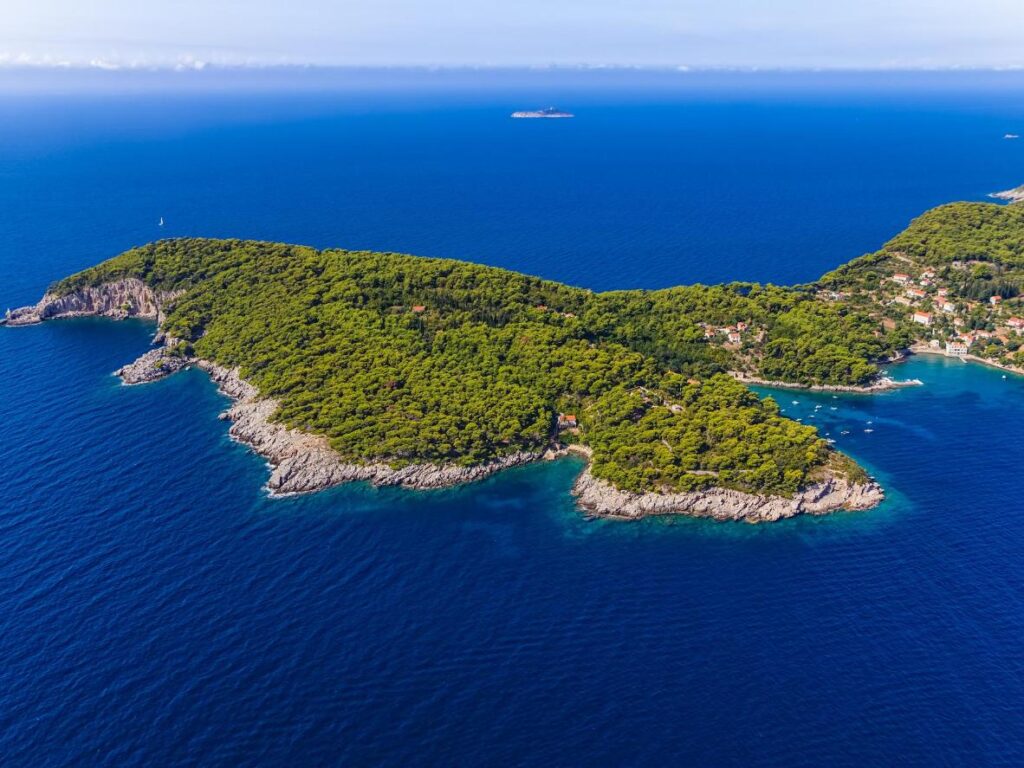
Why strategic buyers continue to study island land
Well-positioned land parcels offer something increasingly difficult to find in finished coastal properties: flexibility. A buyer who begins with a plot avoids many of the compromises that come with older houses structural limitations, awkward layouts, poor terrace logic, or architecture that does not fully exploit a sea view. In markets where finished villas often price in scarcity as much as build quality, land can sometimes represent a cleaner route into a prime coastal zone.
That does not mean land is simpler. It means the value sits in a different place. A finished property concentrates worth in what already exists. A plot concentrates worth in what can be credibly created. For some buyers, especially those who care about architectural control, privacy, or long-term family use, that can be extremely appealing. Instead of adapting to another owner’s decisions, they can shape the relationship between house, land, shade, access, and horizon from the beginning.
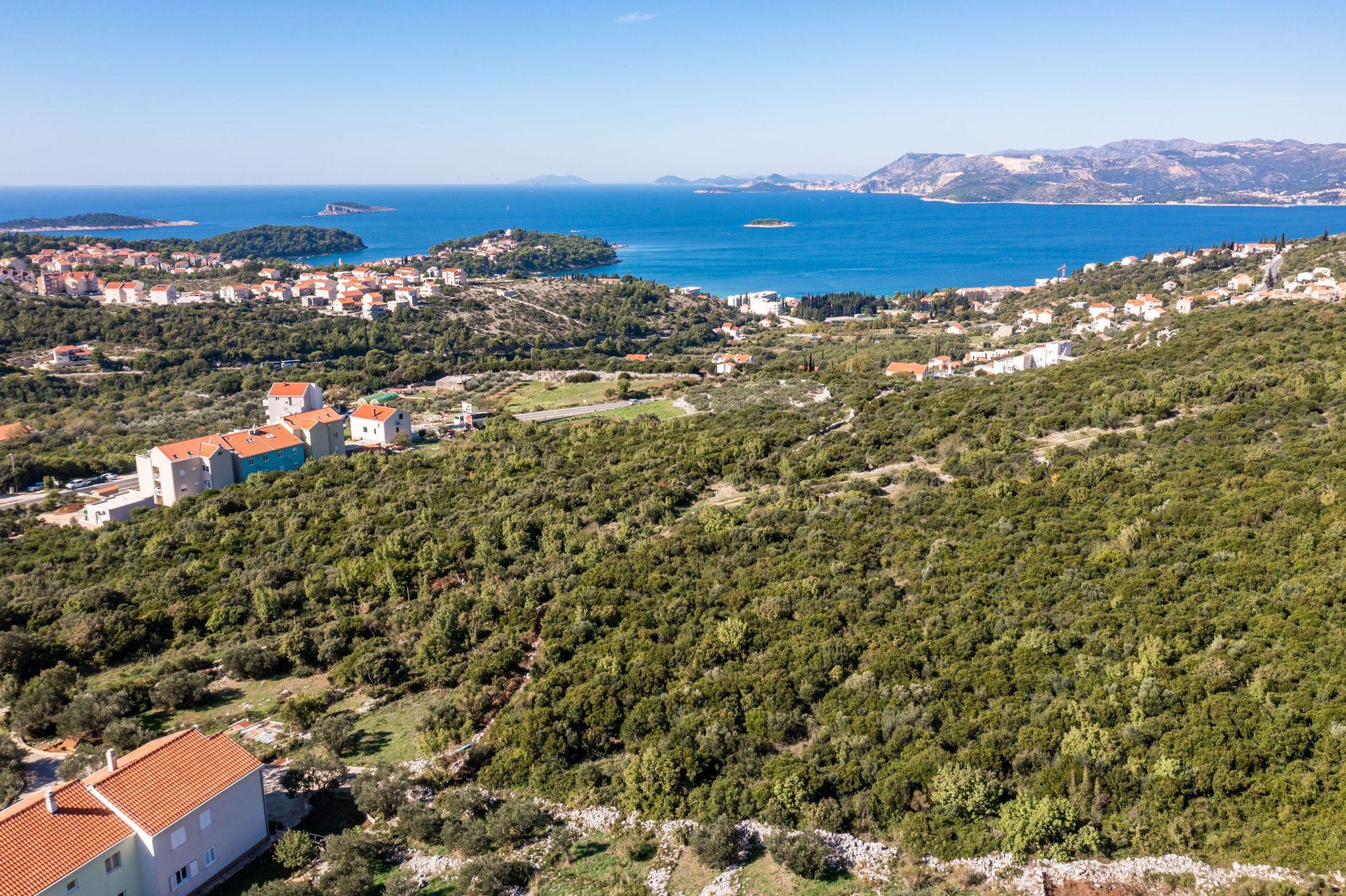
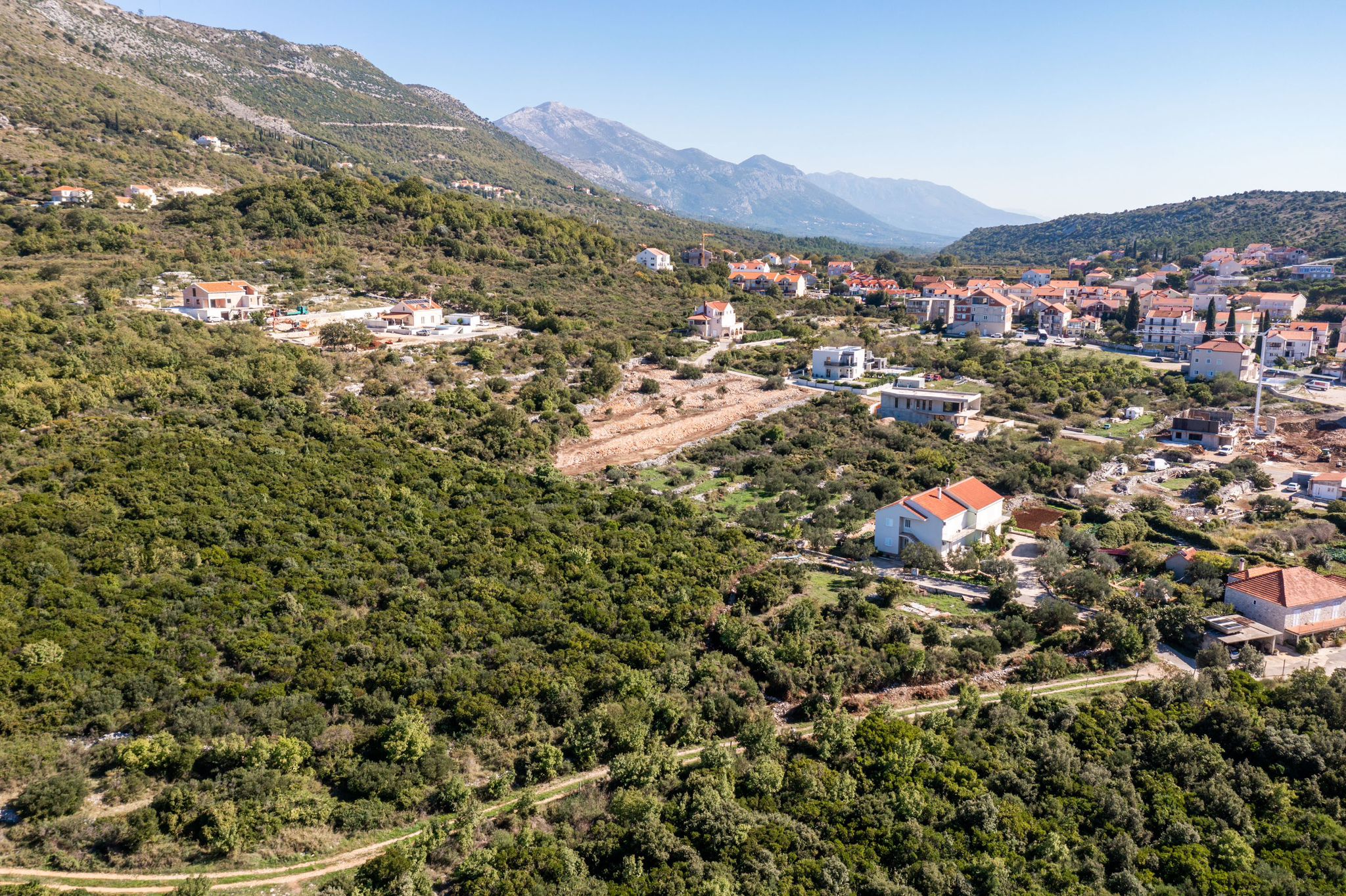
Two examples show how different land logic can be even within the same region. A mainland sea-view parcel near the Dubrovnik airport corridor is often defined by accessibility, utilities, and year-round practicality. A plot on an island such as Koločep introduces a different calculus entirely. The planning position may be decisive, but so are delivery routes, material access, construction timing, and long-term serviceability. In both cases, however, the same rule applies: the real strength of the land lies in what the planning framework already allows, not in what the buyer hopes might be possible later.
Useful correction: scenic land and strategically useful land are not the same thing. The stronger parcel is usually the one whose planning status, access, and infrastructure logic are already legible.
Zoning comes before views
Many buyers begin with the horizon. Professionals begin with zoning maps.
Before developing any emotional attachment to a parcel, a buyer needs clarity on several planning realities:
- Is the land inside a construction zone?
- What building volumes and heights are permitted?
- Are there coastal or environmental restrictions?
- Are heritage or landscape protections in place?
- How close can a structure be built to the shoreline?
These questions are not technical footnotes. They define the investment. A parcel advertised as ideal for a luxury villa may in fact sit outside a development zone. Conversely, a visually modest plot with clear building approval can become far more valuable once the regulatory groundwork is understood. In this segment of the Adriatic market, certainty often matters more than seduction.
This is especially true on islands, where planning limits tend to matter more sharply. The more visually sensitive the environment, the more likely it is that restrictions, setbacks, or service limitations will shape the project. Buyers who begin with legal clarity usually spend more intelligently later. Buyers who begin with imagination alone often discover that the most beautiful parcel on first inspection is not necessarily the strongest parcel on paper.
Approved land is not effortless land
Even parcels with favorable planning positions require careful execution. Construction on Croatian islands introduces additional steps that mainland buyers often underestimate. Surveys, geological assessments, utility planning, and contractor logistics all influence feasibility. Planning approval removes uncertainty. It does not remove complexity.
That distinction is crucial. A parcel with an approved villa position may still involve a technically demanding slope, expensive retaining works, or complex access for materials. None of that necessarily undermines the opportunity. It simply means that approved should be read as a strong beginning, not as a guarantee of effortless delivery.
Infrastructure is the hidden cost of island building
One of the most common surprises for foreign buyers is how much development cost sits outside the purchase price of land itself. Infrastructure considerations include road access, electricity connection distances, water supply, waste systems, slope stabilization, drainage, and the practical ability to move machinery and materials to the site. The more dramatic the terrain, the more carefully these elements must be evaluated.
A spectacular Adriatic viewpoint can sometimes conceal a technically demanding hillside beneath it. On smaller islands, this is rarely impossible, but it must be budgeted honestly from the beginning. A plot that looks attractively priced may cease to be attractive once the cost of access, retaining structures, or utility extension is fully modelled. Conversely, a seemingly more expensive parcel with clean access and established infrastructure may prove the stronger investment once total development cost is understood.
This is why serious buyers increasingly study island plots as infrastructure packages rather than as scenic opportunities. The sea view may start the conversation, but road logic, power availability, and drainage strategy often decide whether the project deserves to continue. On the Adriatic, this is not pessimism. It is sophistication.
Island ownership is as much logistics as romance
The Croatian islands have a rhythm shaped by ferry schedules, construction seasons, and local infrastructure capacity. Owners quickly learn that logistics influence daily life as much as scenery. Transporting building materials, coordinating contractors, or maintaining a property through winter months all require planning. Even seemingly small questions such as where equipment can unload, how vehicles reach the plot, or when work can realistically be staged become significant on islands where road networks are limited or settlement patterns are old.
For this reason, experienced buyers evaluate island land as part of a broader operating system. They ask how the plot functions not only during construction, but after the villa exists. How easy will the house be to service? How naturally can guests arrive? Does the site invite repeated use or will every visit require management effort? These questions are just as important as pure development logic because a house that proves difficult to live with may weaken the long-term value of even a beautiful location.
This is especially relevant for buyers who imagine a second home rather than a speculative development. The finished house must not only be buildable. It must also be inhabitable with grace. That is why the romance of island land becomes stronger, not weaker, when the logistics are fully understood. Practical clarity protects the fantasy rather than destroying it.
On the Adriatic, the best land purchase is rarely the parcel with the loudest view. It is the one where zoning, access, and ambition align cleanly enough to survive reality.
Development opportunity versus lifestyle ownership
Not every piece of land should be evaluated through the same lens. Some parcels are genuine development plays, where the objective is to create a finished asset with clear resale logic. Others function better as lifestyle projects, where the owner values design freedom above financial efficiency. Confusion begins when buyers apply the wrong framework.
A professional developer may reject a site whose build complexity a private owner would happily accept because the future house is intended as a family seat rather than as a commercial product. Conversely, a parcel that feels emotionally compelling may prove commercially impractical if the infrastructure burden is too heavy or the planning profile too narrow. The most successful buyers know which category they belong to before they begin. They understand whether they are buying for margin, for authorship, or for long-term personal use.
This distinction matters because it shapes what counts as a good deal. A lifestyle buyer may accept a longer timeline and more complex execution in exchange for a rarer outcome. A development-minded buyer may value clean planning, easier build sequencing, and stronger exit logic above emotional uniqueness. Both approaches can work, but they should never be confused with each other.
Building Plot on Koločep — Approved Villa Position
A clear example of how island land becomes compelling when the planning position is already legible and the project logic is stronger than the fantasy alone.
Building Land with Sea View — Obod / Dubrovnik Approach
Shows the difference between island-style view logic and mainland practicality, particularly for buyers who want cleaner airport access and easier year-round servicing.
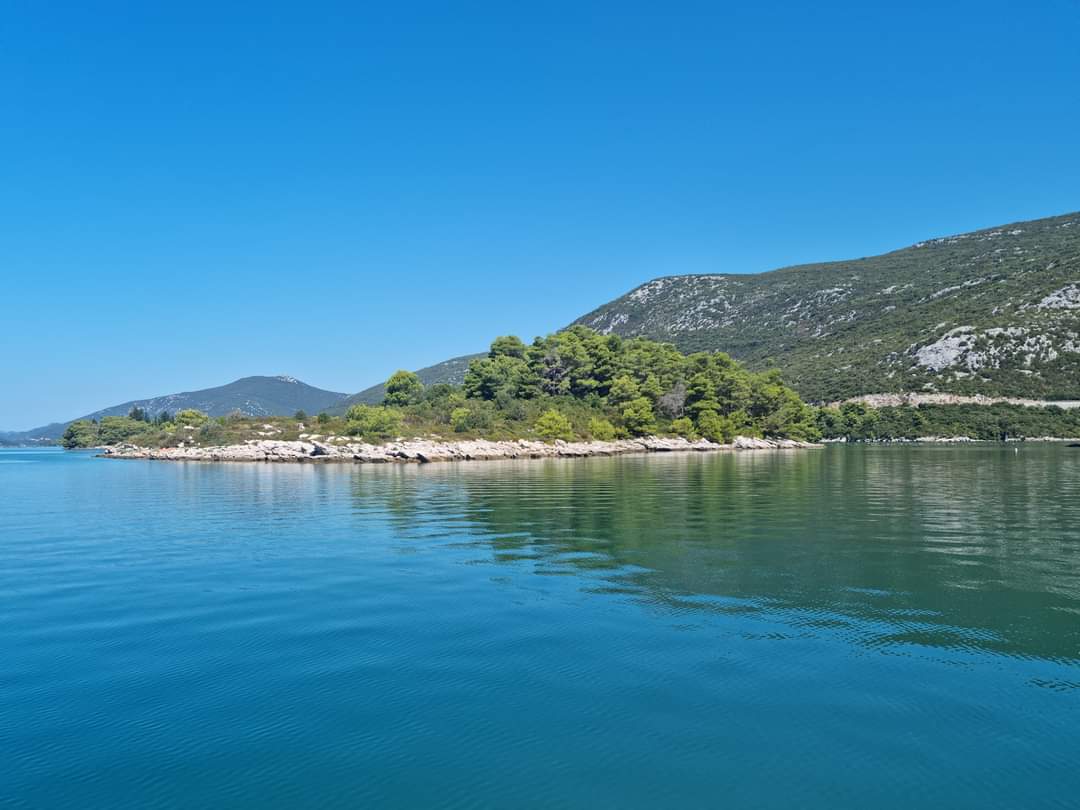
Private Island Opportunity — Dubrovnik Region
An extreme case, but a useful one. It demonstrates how development value can sometimes be inseparable from total landscape control rather than from a conventional parcel alone.
When buying island land actually makes sense
Land acquisition on Croatian islands tends to work best when four conditions align:
- The zoning position is fully understood.
- Infrastructure costs are realistically assessed.
- The buyer’s objective, development or personal use is clear.
- The location offers genuine scarcity.
When these conditions come together, land can become one of the most rewarding forms of property ownership on the Adriatic. It allows buyers to shape architecture directly in response to landscape rather than adapting to an existing structure. It also allows for a cleaner fit between property and life. Orientation, outdoor rooms, guest independence, sea relationship, and privacy can all be resolved more elegantly when they are designed rather than inherited.
However, land is rarely the correct choice for impatient buyers. Development timelines, permit processes, and construction logistics require a longer perspective. The best parcel is not the one that simply flatters the imagination, but the one that continues to make sense once consultants, contractors, access studies, and seasonal building windows have entered the picture.
Understanding the wider environment
Another factor often overlooked by first-time buyers is the surrounding context. Land ownership does not exist in isolation. Questions worth asking include what development is possible on neighbouring parcels, whether access rights or easements already affect the site, how active construction is in the surrounding zone, and how the municipality reads future development pressure. Island communities in particular tend to maintain a long memory for poorly considered projects. Developments that respect landscape scale and local character tend to perform much better over time.
This wider reading matters because the finished value of a house depends partly on what remains around it. A parcel with excellent outlook today may not feel so protected if neighbouring land is also likely to be built. Equally, a site in a more carefully controlled environment may prove more defensible over time even if its first visual impression is less dramatic. Serious buyers therefore assess not only the parcel, but the future behaviour of the landscape around it.
How buyers approach the Croatian island market today
In recent years, international buyers approaching the Croatian market have become more analytical. Rather than chasing views alone, they increasingly examine airport access, marina proximity, planning clarity, and year-round usability. This has made the southern Adriatic especially interesting. Locations near Dubrovnik and Cavtat benefit from strong international connectivity while still offering island-style landscapes and lower-density development opportunities.
For some buyers, yacht access even becomes part of the ownership logic. Properties within reach of marina infrastructure tend to be used more often, and land near those networks can become much more valuable once the future house is imagined as part of a broader coastal lifestyle rather than as an isolated object. This is one of the reasons smaller islands near Dubrovnik remain so compelling. They combine separation with operational viability, which is one of the most desirable pairings in the Adriatic market.
Readers who are also comparing development logic with finished assets may find it useful to explore broader property listings across Croatia, editorial takes on coastal experiences, and curated current offers that help place land decisions inside the wider Adriatic ownership landscape.
| Factor | Key question | Why it matters |
|---|---|---|
| Zoning | Is the parcel inside a construction zone? | Determines whether development is legally possible. |
| Infrastructure | How will water, power, and road access function? | Hidden infrastructure costs can alter feasibility. |
| Topography | What does the terrain imply for construction? | Slope and drainage influence building difficulty. |
| Permits | What approvals already exist? | Separates realistic opportunities from speculation. |
| Objective | Is the purchase for development or personal use? | Defines acceptable risk, budget, and timeline. |
The long view of Adriatic ownership
Land ownership on Croatian islands remains one of the Adriatic’s most intriguing property strategies, but only when imagination is disciplined by planning reality. The best parcels are not merely scenic. They are buildable, serviceable, and aligned with the buyer’s true purpose. When those elements come together, island land offers something finished villas cannot: the chance to shape architecture directly from terrain, creating a property that belongs uniquely to its landscape.
That is why land remains so compelling despite its complexity. It offers control. It offers authorship. And in the right location, it offers a route into prime coastal ownership that may ultimately feel more exact and more personal than any finished house available on the market. But it only works when the buyer respects the order of things. Planning first. Logistics second. Design third. Not the other way around.
Frequently Asked Questions
Is buying land on a Croatian island better than buying a finished villa?
It depends on the buyer’s goal. Land can offer more architectural control and a cleaner fit with long-term lifestyle needs, but it also introduces planning, infrastructure, and construction complexity that a finished villa may avoid.
What is the first thing to verify when buying island land in Croatia?
The first thing to verify is zoning. A beautiful parcel means very little if it sits outside a construction zone or carries restrictions that weaken the intended development logic.
Why are infrastructure costs so important on islands?
Because access, water, power, drainage, and delivery logistics can significantly change the real cost of the project. A cheaper parcel can become more expensive overall if infrastructure is weak or terrain is demanding.
Does an approved building position guarantee an easy project?
No. Approved land reduces planning uncertainty, but it does not eliminate complexity. Slope, retaining works, construction access, and servicing still need to be assessed carefully.
Why are islands near Dubrovnik and Cavtat especially attractive?
Because they combine separation with operational viability. Buyers can access island-style landscapes while still benefiting from airport connectivity, service density, and marina-linked coastal living.
Exploring opportunities around Cavtat and Dubrovnik
Visitors considering property or development opportunities near Dubrovnik often begin their research through regional resources such as Cavtat Guide. Alongside travel experiences and yacht routes, the platform also follows the evolving property landscape of the southern Adriatic, where land, architecture, and maritime lifestyle increasingly intersect.
You can also explore experiences around Cavtat and Dubrovnik, browse broader Croatia property listings, or review curated offers that help place land and development decisions inside the wider Adriatic setting they are meant to serve.
Exploring land or development opportunity on the Adriatic?
Tell Cavtat Guide your budget, location priorities, and ownership goal, and we will help you think through the right plot, the right development logic, and the right regional fit.