

UPDATED FOR 2026
Fifteen minutes inland from Cavtat, the whole logic of the day changes. The sea stops being the main subject, lunch becomes slower and more serious, and southern Dalmatia begins to explain itself through mills, vines, smoke, water, and long rural tables. Konavle is not the loudest day trip in the region. It is one of the most convincing.
Main takeaway: the best Konavle day trip from Cavtat is not a rushed checklist of stops, but a slower inland rhythm built around landscape, craft, wine, and one serious lunch.
Best way to structure the day: river first, table second, wine third.
What makes it special: Konavle explains southern Dalmatia through its mills, vineyards, rural kitchens, and the calmer pace that the coast sometimes hides.
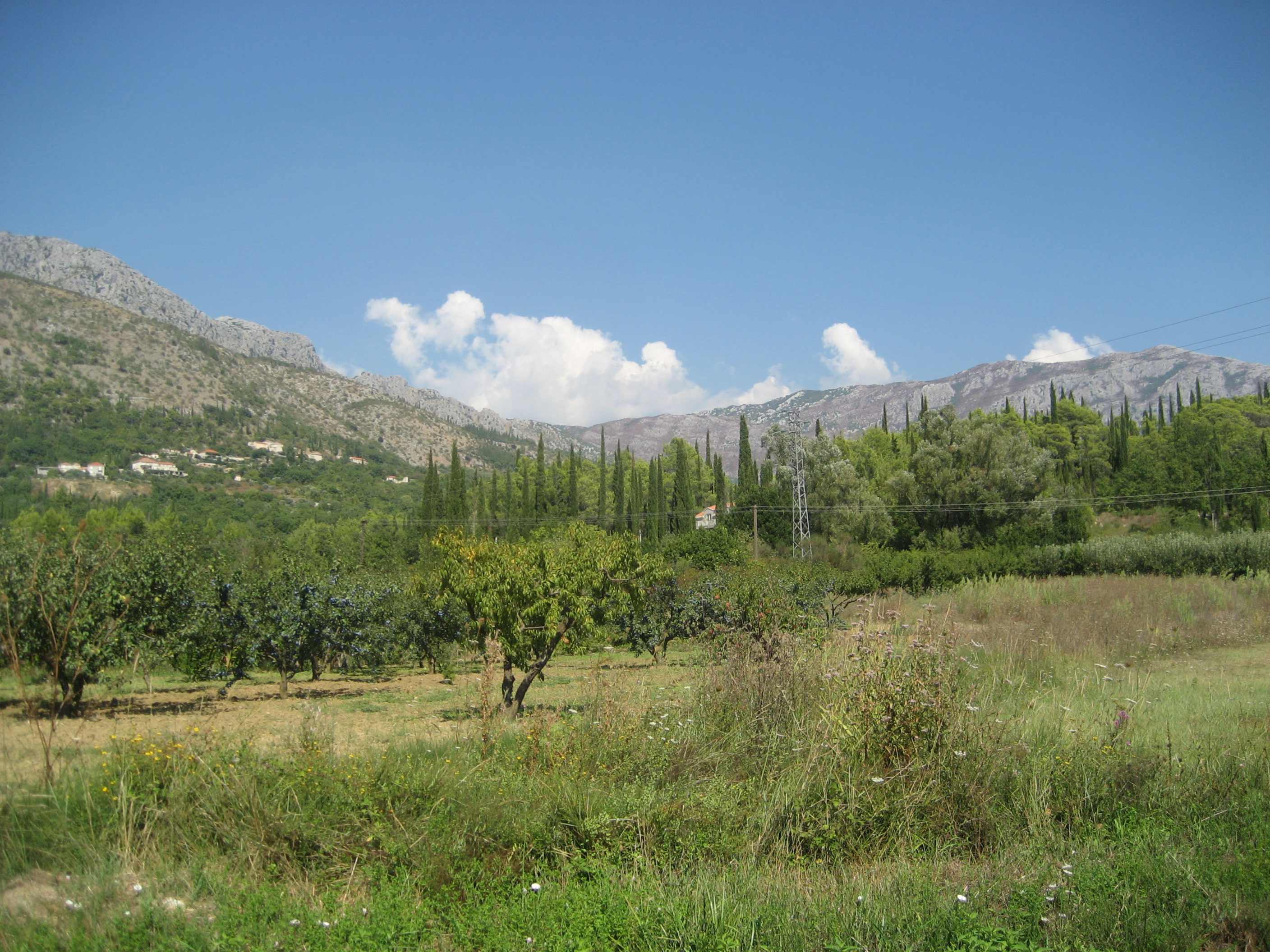
Start here
Official destination guide: visitkonavle.croatia.hr
Best mindset: do less, stay longer, and let the countryside set the pace. Konavle works best when it is treated as a half-day reset rather than a frantic inland detour.
The case for leaving the coast for a day
Most travellers arrive in Cavtat or Dubrovnik expecting the highlight to come from the sea. Sometimes it does. But one of the southern Adriatic’s smartest counter-moves is to leave the coastline entirely and head inland into Konavle, where the mood changes almost immediately. The air is softer, the pace is slower, and the landscape begins to explain the food in a way the waterfront never fully can.
This is not a region that performs itself loudly. Konavle does not win through spectacle. It wins through coherence. Rivers, mills, vineyards, orchards, village kitchens, and long tables still feel connected here. That is what makes the day so satisfying. You are not moving from attraction to attraction. You are moving through a working countryside that still makes sense as a whole.
For travellers based in Cavtat, that proximity is part of the luxury. You can leave the harbor after breakfast and be in a completely different environment in under half an hour. That makes Konavle one of the highest-reward inland day trips on the Dubrovnik Riviera: low logistical effort, high atmospheric return. It also gives visitors a more complete understanding of the region. Read only the coast and southern Dalmatia can seem all stone, sea, and hotel terraces. Add Konavle and the picture becomes much more intelligent: grain, vines, smoke, water, mills, and the inland labor that long sustained the coast.
This is one reason Konavle pairs so well with a stay in Cavtat. The harbor gives you one version of southern Dalmatia: maritime, elegant, outward-looking. Konavle gives you another: agricultural, slower, and more rooted in land than horizon. The two belong together.
The right way to structure the day
Think of Konavle as three experiences in sequence: landscape, craft, and table. If you try to do everything, you will do nothing well. The better move is to build a loop that gives you one memorable stop in each category and enough time between them for the region to work on you.
1) Landscape: the valley and the first change in rhythm
Start late enough that the day feels civilized, but early enough that lunch does not become a rescue mission. A 10:00 or 10:30 departure from Cavtat is usually ideal. The roads are manageable, the distance is short, and you still arrive with enough morning left to experience the region as place rather than simply as appetite.
Konavle’s beauty is not dramatic in the Dubrovnik sense. It is agricultural, river-fed, and quiet. You hear water, birds, distant work, and very little else. That change in sound is part of the appeal. Coastal tourism tends to flatten your senses into light and movement. Konavle broadens them again. The field, the tree lines, the villages, and the river zones begin to explain how this region fed and sustained the Dubrovnik world long before modern tourism.
What matters here is not to rush through the valley as if it were only the road to lunch. The valley is the first course. If you are driving, stop once simply to look. Five minutes is enough. The point is not to create a mini-photo itinerary. It is to register that the day has changed its register completely.
2) Craft: river mills, oil, and the older mechanics of daily life
The Ljuta River remains the strongest single cultural anchor for a Konavle day because it connects landscape directly to labour. The restored and remembered mills on the river are not just a heritage stop. They show the region in operational terms. Water is not decorative. It powers grain, labor, and food. Once you see that, Konavle stops feeling like a scenic afterthought to the coast and starts feeling like a system.
Even if you are not usually drawn to heritage sites, the mills are unusually easy to understand. You do not need specialist knowledge to appreciate what is happening. Water becomes flour, labor becomes food, and the countryside stops feeling abstract. One of the reasons Konavle works so well as a food destination is that the link between production and table has not disappeared completely behind the performance of hospitality.
This is also the right part of the day to buy one edible souvenir that actually belongs in your suitcase. Olive oil, honey, wine, or another local product will tell you more about the region later than a generic object ever will. Konavle rewards purchases that continue the logic of the day rather than interrupt it. You are not collecting things. You are taking home evidence of the landscape.
Best correction to make early: Konavle is not “the countryside behind Dubrovnik.” It is a full rural world with its own logic, and the mills are one of the clearest places to feel that immediately.
3) Table: peka and the logic of a long lunch
Here is the only real rule: if you want peka, commit in advance. Good peka is not a dish for the indecisive. It needs time, and the kitchens that do it properly usually want notice. That is part of the point. The meal asks the guest to behave more intelligently than the average holiday lunch demands.
When it lands well, peka tastes like the countryside itself: smoky, herb-rich, concentrated, and slow by design. Lamb, veal, octopus, potatoes, bread: all of them change character when cooked under the bell, and all of them ask you to stop rushing the day. In a region where many meals are increasingly built for fast visual impact, peka still insists on time.
This is why Konavle lunch should be treated as the anchor of the day rather than as one stop among many. A good rural lunch inland is not merely about hunger. It is the moment when the whole landscape resolves into something legible. The field, the mills, the smoke, the wine, the herbs, the bread, the slower service all of it belongs together.
If peka is not available, the day does not fail. Grilled meats, local vegetables, cheese, house bread, and simpler rural dishes can still give you the same deeper pleasure if the table is right. The real luxury here is not a single recipe. It is the permission to sit still long enough for the region to do its work.
The wine question, kept human
Konavle is absolutely a wine region, but not in the over-polished, tasting-room-first sense that some visitors expect. Local wine matters here because it belongs to lunch, to land, and to the regional identity of the Dubrovnik hinterland. The most useful grape to know is Malvasija Dubrovačka, the regional white most closely associated with the area. It is a practical name rather than a performance name. Learn it once and the rest of the lunch becomes easier.
That matters because it gives the Konavle table a real local axis. You are not choosing any convenient coastal wine; you are drinking something that belongs to the broader Dubrovnik-Konavle world. Malvasija Dubrovačka is often the natural place to start if you want a local white with freshness and regional identity. If you prefer reds, be honest about your taste rather than trying to perform expertise. The right bottle is the one that fits the meal and the mood of the afternoon.
You do not need to memorise grape names to enjoy Konavle properly. Ask for a local white that works with lunch and you will usually land in a good place. Ask for a red if you want something slower, darker, or more structured. The point is not to pass a tasting exam. The point is to drink something that belongs to the table you are sitting at.
- With peka: a red can be excellent, but a structured local white can work beautifully too, especially if herbs and vegetables carry part of the dish.
- With grilled vegetables or lighter meat dishes: local whites often shine.
- With cheese or late-afternoon tasting: choose pleasure over correctness.
A straightforward Konavle loop from Cavtat
The simplest successful version of the day looks like this:
| Part of the day | Best timing | Why it works |
|---|---|---|
| Leave Cavtat after coffee | 10:00–10:30 | Late enough to feel relaxed, early enough to preserve lunch rhythm. |
| Scenic valley stop | 10:30–10:45 | Lets the landscape change register before the day becomes about eating. |
| Ljuta River or mill stop | 11:00–12:00 | Connects countryside, water, and production in one easy cultural stop. |
| Long lunch | 12:30–14:30 | Anchors the day; pre-book peka if that is the point of the trip. |
| One wine or producer stop | 15:00–16:00 | Keeps the day specific without turning it into a tasting marathon. |
| Return to Cavtat | 16:30 onward | Leaves enough energy for an evening swim, promenade walk, or light dinner. |
That loop works because it respects the region’s natural pacing. It gives the river enough attention, the table enough time, and the return to Cavtat enough softness that the day does not end in fatigue. It also helps prevent one of the classic mistakes of Riviera travel: overloading an inland day until it begins to feel like transport management rather than rural pleasure.
Practical logistics from Cavtat
- Timing: leave around 10:00–10:30 for the cleanest lunch rhythm.
- Driving: roads are straightforward, but the whole point is to avoid treating the countryside like a transit zone.
- Non-drivers: taxis can work, but arrange the return in advance rather than trusting the countryside to solve it for you.
- Families: Konavle works surprisingly well with children because the day is outdoors, slower, and less rigid than a city programme.
- Best complement from Cavtat: a light evening back on the promenade rather than another heavy planned activity.
For travelers staying several days in Cavtat, Konavle often works best on the second or third day rather than the first. By then you have already absorbed the harbour rhythm and can enjoy the inland contrast more fully. It also pairs well with broader regional reading on Konavle’s historical role in the Dubrovnik Republic and the quieter cultural logic of the southern Dalmatian countryside.
Why Konavle feels luxurious without trying
Luxury is often sold through surfaces: marble, imported lighting, polished lobbies. Konavle’s luxury is older and more convincing than that. It is the luxury of land, distance, time, and ingredients that have not been processed into blandness.
Once you leave the coast, the region changes your nervous system. You stop hearing rolling suitcases and start hearing water and birds. Meals taste more specific. The air feels less hurried. Even the wine seems less performative and more truthful. That is why a Konavle day works even for people who say they are “not into wine” or “not really countryside people.” It is not about expertise. It is about atmosphere and tempo.
In that sense, Konavle offers one of the smartest kinds of day trip: the kind that does not merely entertain, but recalibrates. After a few hours inland, Cavtat feels different when you return to it. The harbor becomes sharper, lighter, more maritime. The contrast makes both places stronger.
For families, older travelers, and low-energy days
Children often do well in Konavle because the day is outdoors and the rhythm is forgiving. Choose one river or mill stop and one lunch. That is already a full day. Anything beyond that should feel optional, not mandatory. Bring snacks, water, and patience. The best family countryside days are the ones where nobody is forced into hunger or hurry.
For older travelers especially, the smartest version of Konavle is the light version: one gentle stop, one long meal, one easy return. The region does not demand aggressive scheduling in order to feel rewarding. In fact, it usually punishes it. Mobility-conscious travelers should choose the calmest access and the fewest transitions rather than trying to sample the whole region in one go.
For couples or solo travelers using Konavle as a restorative day, the same logic applies. This is not a place that becomes better with pressure. It becomes better with space.
Common mistakes
Trying to do Konavle and Dubrovnik Old Town in the same day. Leaving too late and arriving hungry, which makes everyone resent slow food. Driving too fast through the valley, as though the scenery were incidental. Booking nothing at all and then being surprised that a countryside lunch cannot materialize at the exact minute your appetite does.
The deeper mistake, however, is conceptual. Many visitors still treat inland southern Dalmatia as filler between more glamorous coastal experiences. Konavle works best when given its own dignity. It is not the supporting act to another day. It is one of the clearest explanations of the region itself.
The frictionless checklist
Before you leave Cavtat, decide what a good day means for you: rest, food, scenery, movement, or family calm. Most travel disappointment comes from trying to have all versions of the day at once. Then remove one thing from the plan. The Adriatic rewards space in the schedule. Overloaded itineraries make every place feel smaller, louder, and less beautiful than it really is.
- Book: one key lunch or tasting, not five moving parts.
- Buffer: keep at least 30–60 minutes for detours or lingering.
- Water: carry it, even in shoulder season.
- Walking: comfortable shoes will outperform aesthetic shoes every time.
- Phone: use it for navigation, not as the emotional center of the day.
Evening back in Cavtat
After Konavle, the right Cavtat evening is light by design: a short swim, a promenade walk, and a simple dinner. This countryside-to-sea combination is one of the region’s best hidden luxuries. Two ecosystems, one day, no need to force the ending. Travelers already exploring the best walks in and around Cavtat or considering a quieter waterfront evening after an inland lunch will find that this contrast is part of what makes the wider Riviera so satisfying.
That is the whole point of Konavle. It is not there to impress you in the loud way. It is there to steady you. And for many visitors, that ends up being the deeper memory of the day.
Frequently Asked Questions
Is Konavle really worth a day trip from Cavtat?
Yes. It is one of the easiest and most rewarding inland day trips from Cavtat because the distance is short but the change in atmosphere is significant. You move from harbor rhythm to countryside rhythm in under half an hour.
Do I need to book peka in advance?
Usually yes, if peka is the specific reason for the trip. Good peka takes time, and many kitchens prefer advance notice rather than last-minute requests.
What wine should I try in Konavle?
Start with Malvasija Dubrovačka if you want a local white with strong regional identity. After that, choose according to lunch and taste rather than trying to perform expertise.
Can I do Konavle without a car?
Yes, but it works best if transport is arranged thoughtfully. Taxis can be practical for a simple river-plus-lunch itinerary, especially if the return is organised in advance.
What is the biggest mistake people make with a Konavle day?
Trying to fit too much into it. Konavle is strongest when the day is built around one landscape stop, one lunch, and one optional tasting or producer visit.
Need help choosing the right experience?
Tell us your budget, dates, and travel style, and Cavtat Guide will help you choose the best yacht charter, tour, property option, or local experience.