

Cavtat is one of the rare Adriatic towns that genuinely rewards walking at almost every energy level. Its best routes are not heroic hikes but well-judged sequences of harbour, pine shade, low climbs, cemetery viewpoints, and coastal edges that reveal the town gradually rather than all at once. What matters most here is rarely distance alone. It is timing, light, and choosing the route that matches the mood of the day.
Main takeaway: Cavtat is best understood on foot because its pleasures unfold at a human scale harbour, pines, viewpoints, sea edges, short climbs, and easy Riviera extensions.
Best overall route: the Rat peninsula loop is the strongest all-round walk for shade, atmosphere, and coastal beauty.
Best first-day walk: the harbour and old-core circuit gives the clearest orientation with the least effort.
Cavtat is one of the easiest places on the southern Adriatic to understand on foot. That does not mean every walk is identical, nor that the town should be reduced to a single seaside circuit. What makes Cavtat special for walkers is variation at a human scale: harbour frontage and old-core lanes, shaded peninsula loops, short climbs to cemetery viewpoints, swim-friendly coastal stretches, and easy onward movement into nearby parts of the Dubrovnik Riviera. For travelers who prefer self-guided discovery, walking is not a secondary activity here. It is the main way the place gives itself up.
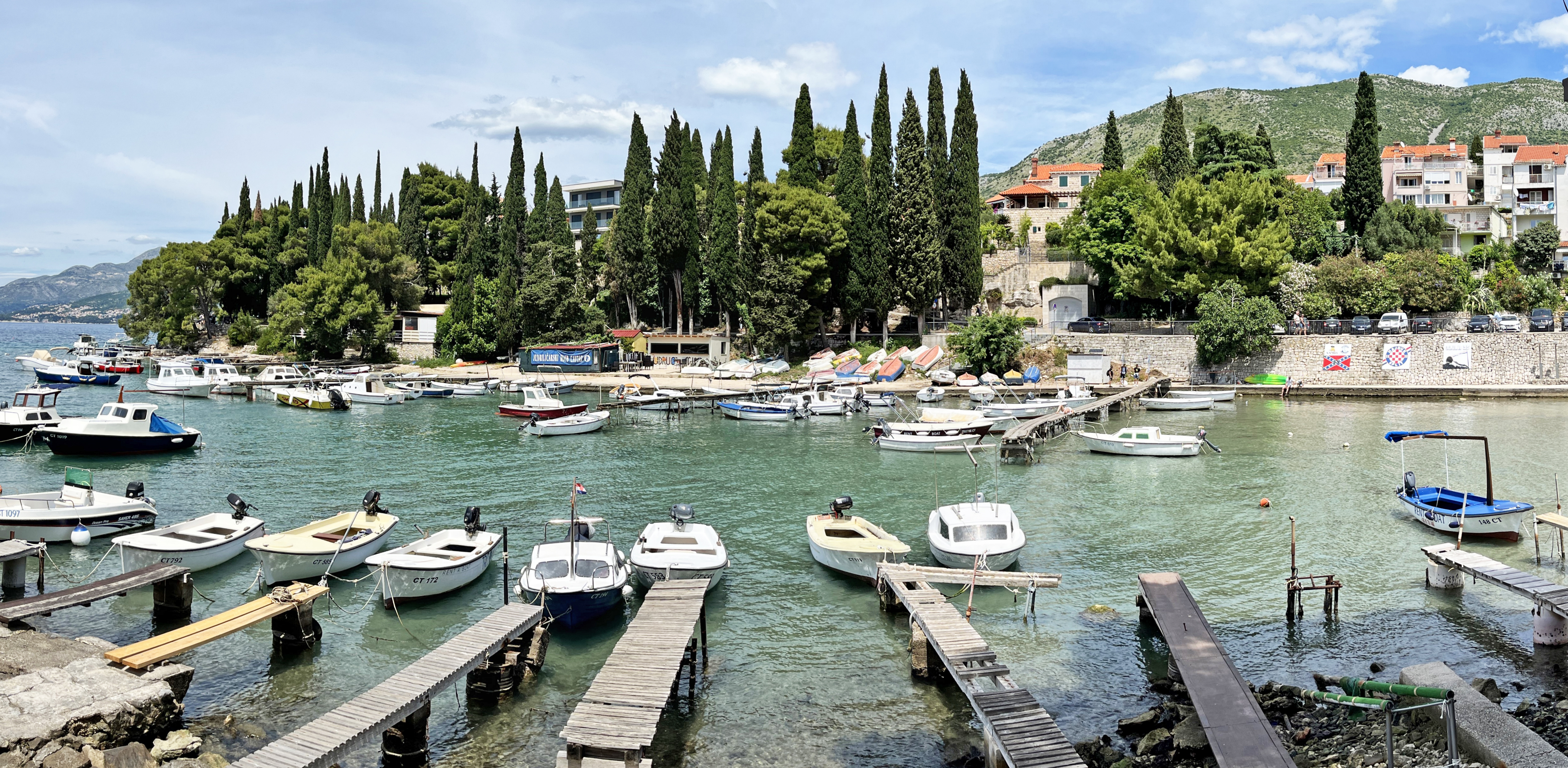
Walking also reveals something important about Cavtat’s personality. The town is calm but not inert, polished but not overworked, scenic without demanding athletic effort. Most routes are less about conquest than about choosing the right pace. Shade, bench placement, sea breeze, gradient, and time of day matter more than dramatic mileage. This makes Cavtat unusually good for repeat walkers, families, and travelers who want movement built into ordinary sightseeing rather than carved out as a separate expedition.
It also means that Cavtat rewards walkers who pay attention to mood rather than distance alone. A short walk at the correct hour can be more memorable than a longer route taken at the wrong moment. The harbor has a social intelligence in early evening that it does not have at noon. Rat has a filtered, pine-scented beauty in later afternoon that is easy to waste in the hottest part of the day. The cemetery rise has one meaning for photographers at first light and another for slower travelers who arrive toward sunset. Cavtat is easy to walk, but it is best walked thoughtfully.
Best walking principle: in Cavtat, route quality depends less on mileage than on timing, shade, and how well the walk matches your energy and purpose.
Walk one: the harbor and old-core circuit
This is the route almost everyone does, but not everyone reads properly. Begin along the harbour, let the line of boats, cafés, facades, and church towers settle into view, then move into the old-core streets around St Nicholas. The terrain is gentle, the surfaces mostly straightforward, and the rewards immediate. Early morning gives the clearest architectural reading; late afternoon gives the warmest social atmosphere.
This is the best route for first-day orientation, low-energy mornings, and travelers with limited time. It is also the route most likely to mislead you into thinking Cavtat has no other walking personality. That is why it should be treated as an introduction rather than the whole story.
The harbour circuit works especially well because it joins together almost everything a first-time visitor needs to grasp: waterline movement, church presence, café rhythm, moored boats, and the compact elegance of Cavtat’s centre. You can do it in half an hour and feel oriented, or stretch it across a whole morning through coffee stops, short lane detours, and pauses by the water. Families usually find it forgiving. Older travelers often appreciate its mild gradients. Solo visitors often use it as a first mapping exercise before choosing where to swim, dine, or return later in the day.
It is also a useful route in less-than-perfect conditions. If you have arrived late, if the weather is slightly changeable, or if your energy is low after travel, the harbour circuit still delivers enough of Cavtat to make the day feel successful. That reliability matters. In a well-composed destination, not every rewarding experience should require perfect planning or strong stamina. Cavtat’s centre has that kind of generosity.
Walk comparison table
| Route | Distance / effort | Best for | Main reward |
|---|---|---|---|
| Harbour and old core | Easy / short | First-time visitors, families, arrival day | Orientation and social atmosphere |
| Rat peninsula loop | Easy to moderate | Shade, slower afternoons, repeat walkers | Pines, sea edge, mausoleum access |
| Eastern edge / swim route | Moderate | Quieter bathing coves and local texture | Less polished coastal feel |
| Cemetery and viewpoints | Short but uphill | Photography, architecture readers | Town overview and memorial landscape |
| Hybrid Riviera extension | Longer / variable | Repeat visitors, wider exploration | A broader Dubrovnik Riviera sense |
Walk two: Rat peninsula and the western shade
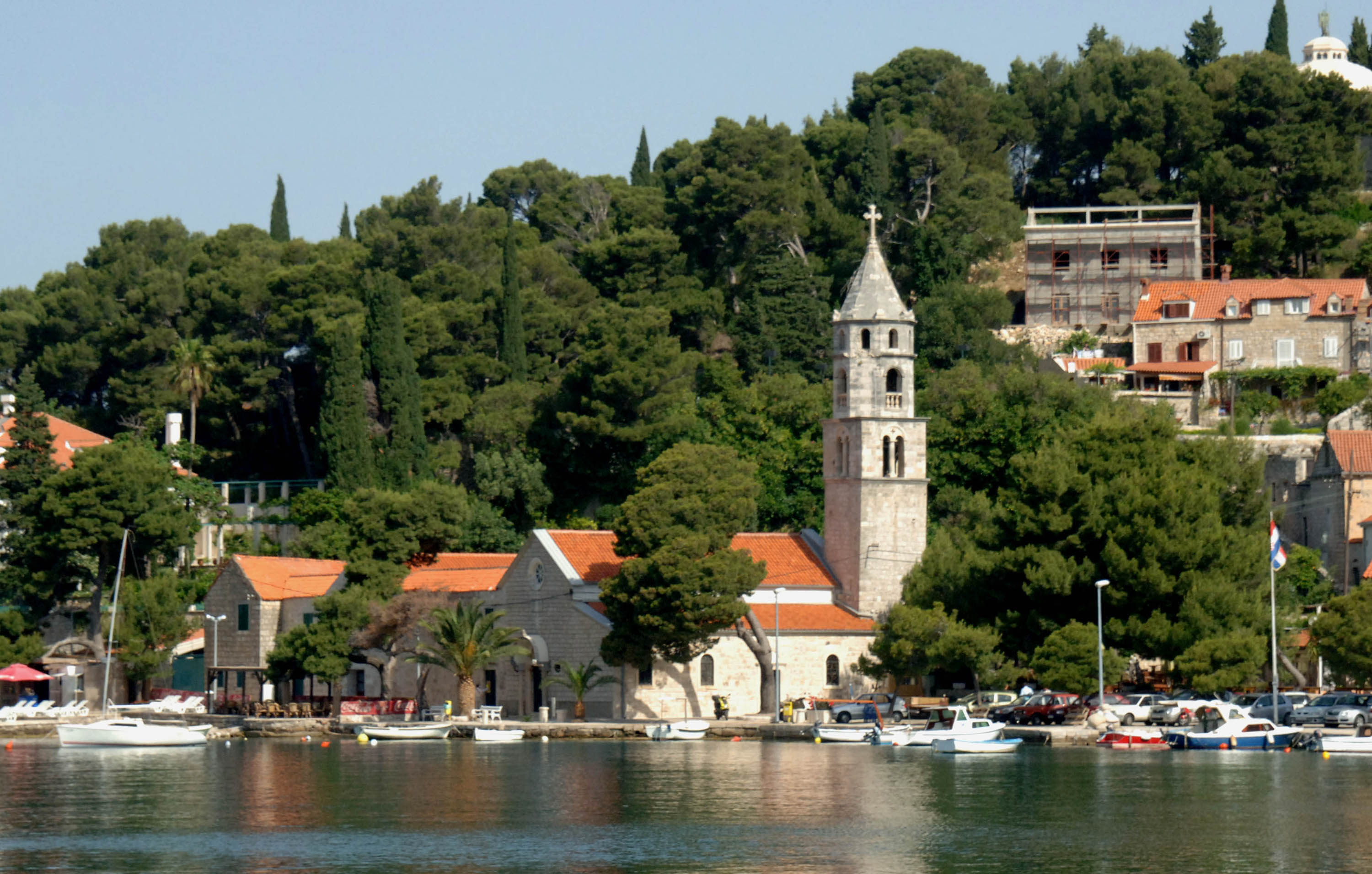
The Rat side is where Cavtat changes mood. Pines, sea air, cemetery walls, and the route toward the Račić Mausoleum create a more reflective rhythm. This is the walk for travelers who want light filtered through trees, occasional openings to the sea, and the sensation that the town is easing into contemplation. In summer it is one of the best late-afternoon options because shade matters. In shoulder season it becomes one of the most atmospheric circuits in the whole area.

Footwear does not need to be technical, but it should be sensible. There are roots, uneven stone sections, and enough slope to punish flimsy sandals. Families can do much of the route, though buggies may become awkward on certain stretches. The ideal version is unhurried: a pause at the monastery area, a climb to the cemetery, time at the mausoleum, then a slow return.
What makes this walk so strong is that it provides several different Cavtat experiences without ever feeling fragmented. You get pine shade, memorial architecture, sea outlooks, and the satisfying sensation of being slightly removed from the social harbour without ever being far from it. That mix is rare. In many coastal towns, the tranquil route and the culturally meaningful route are separate. In Rat, they overlap.
It is also one of the best routes for visitors who find the harbour alone a little too polished. Rat reintroduces texture. Walls, paths, trees, and changing levels make the town feel older and more layered. The walk contains more silence. Even in season, it offers relief from the visible social life below. For many walkers, this is the route that turns Cavtat from a pretty harbour settlement into somewhere with real internal depth.
Walk three: viewpoints and short climbs
Not every good walk in Cavtat is a loop. Some are small vertical corrections that change what you think you know about the town. A short rise above the harbour or toward the cemetery can suddenly reveal the structure of the settlement: the curve of the bay, the disposition of roofs, the positioning of villas and hotels, the way Rat and Sustjepan frame the inhabited core. These are useful walks for photographers, early risers, and architecture-minded travelers.
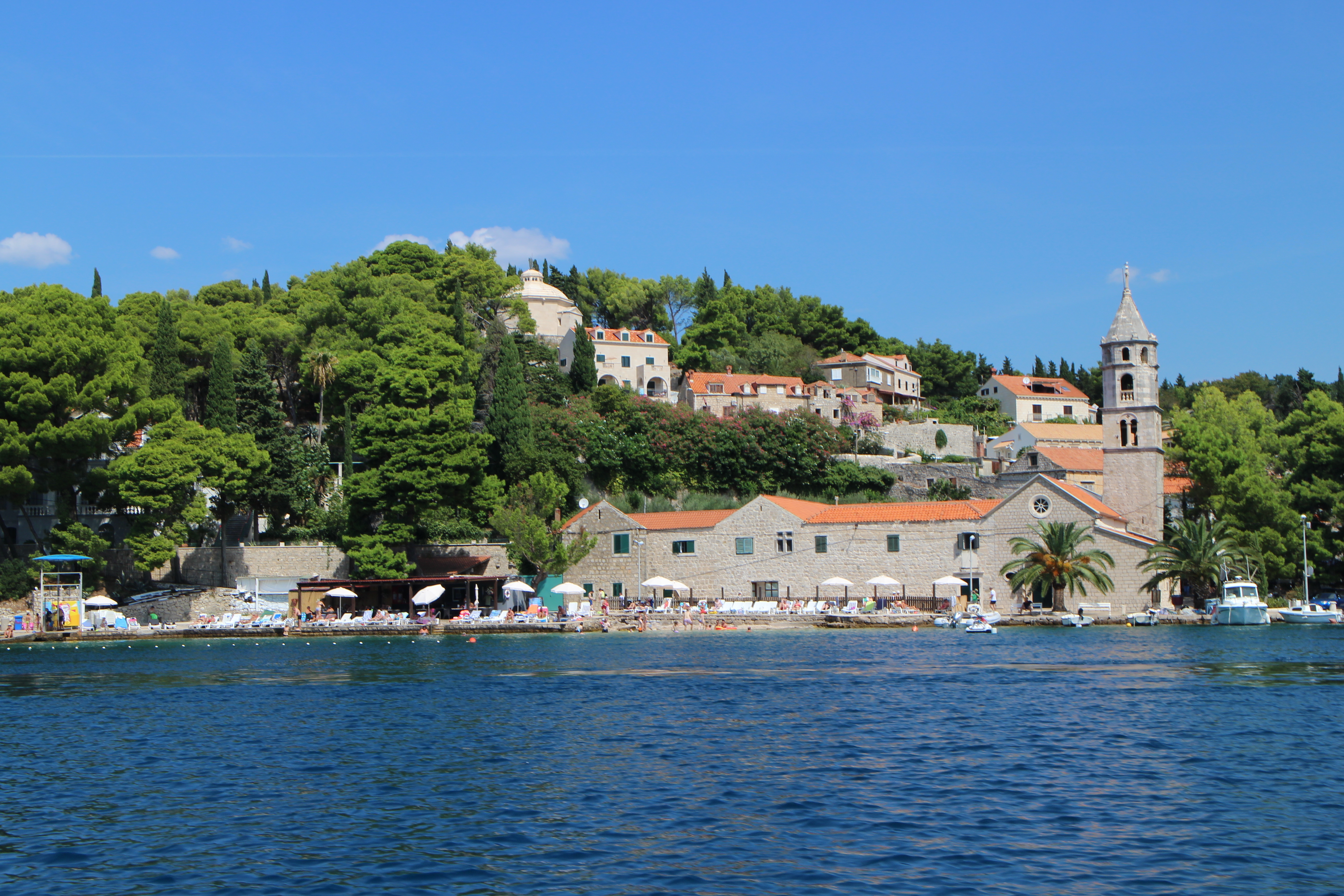
The practical advice is simple: go earlier or later in the day during summer. Midday climbs are possible but often unrewarding in heat. Off-season, the same rises become easier and more dramatic because the light is softer and the town quieter.
These short climbs are particularly worthwhile for visitors who like to understand place rather than merely move through it. From above, Cavtat stops being just a waterfront. You see how the built edge sits against the sea, how different hotel and villa zones relate to each other, and how the two peninsulas create the town’s spatial intelligence. If you are interested in photography, planning future walks, or simply making the rest of your stay more legible, these rises are unusually rewarding for the effort involved.
They are also an efficient solution for travelers with limited time. Even if you cannot devote hours to walking, a brief uphill detour can give you the kind of visual understanding that many destinations only reveal after far more strenuous movement. Cavtat is generous in that way. It does not ask much before offering perspective.
Walk four: the eastern side and local texture
The eastern stretches of Cavtat and the approaches toward smaller beaches and quieter residential areas offer a different sensation from the manicured harbour. They can feel less composed, sometimes more practical, occasionally less postcard-ready, which is precisely why they are worth doing. These routes are for repeat visitors who want to understand Cavtat beyond its most photographed face. They are also good if you want a swim stop folded into your walk in warmer months.

Because these routes are more open, shade can be limited. Carry water in high season. They work best in the morning, later afternoon, or in spring and autumn.
What the eastern side offers is honesty. You see more of how the town actually functions when it is not framing itself so deliberately for the visitor. There are edges that feel residential, small sea-entry points that reward curiosity, and stretches where the Adriatic becomes less theatrical and more ordinary in the best sense. Many repeat visitors value this enormously. Once the first impression of Cavtat has been absorbed, these more local-feeling routes keep the town interesting.
This is also a good route for travelers who want to combine movement with swimming but do not need a formally structured excursion. The best version is loose: walk until a bathing point looks appealing, swim, continue, rest, and return at a pace that suits the heat and your energy. Cavtat works well for this because the distances remain manageable even when the route becomes improvisational.
Walk five: combined transport-and-walk day routes
Once you have covered Cavtat itself, the next intelligent step is not necessarily a long hike but a combined route using local transport. Mlini is a good example: you can take transport one way and walk selected stretches, getting a broader feel for the Riviera without pretending you are doing a wilderness trail. A Dubrovnik day can also include a deliberately chosen walk rather than only monument-hopping.

This is where Cavtat’s geography helps. It is close enough to Dubrovnik for hybrid days and calm enough to return to afterwards. Readers shaping a car-free or low-friction stay may also find it helpful to compare these walking ideas with wider offers and transport-oriented planning on Cavtat Guide.
These hybrid days are ideal for travelers who enjoy walking but do not want every route to begin and end in the same visual language. The wider Riviera offers variation: different waterfronts, different scales of settlement, different kinds of shade and exposure. Cavtat becomes stronger, not weaker, when treated as a walking base in this larger context. You start to understand what is distinctive about it by seeing what nearby places do differently.
What makes a Cavtat walk good
More than almost anything, timing. Early morning is for clarity. Late afternoon is for atmosphere. Evening is for the harbour and easy loops. Midday in midsummer is for shade or short distances. Cavtat is forgiving, but not immune to heat. The other factor is intention. Are you walking to orient yourself, to cool down, to photograph, to think, to swim, to climb? The answer changes the best route.
This is why Cavtat works for walkers across many temperaments. Some want a stroller-friendly seafront. Some want pine shade and a view. Some want a short symbolic climb to the mausoleum. Some want to keep moving after lunch. The town can accommodate all of that without requiring serious logistics.
Bench placement, sea breeze, and the possibility of ending near water all matter more here than in many inland or urban walking destinations. A good Cavtat walk rarely feels sealed off from the rest of the day. You can interrupt it for a swim, fold it into lunch, shorten it without disappointment, or extend it if the light is good. That flexibility is one of the town’s quiet strengths.
Best for first-time visitors
Start with the harbour and old-core circuit, then add Rat once you understand the town’s layout and your own pace.
Best for photographers
Combine an early short climb with a later Rat walk and a harbor return at golden hour.
Best for repeat visitors
Explore the eastern side and add at least one hybrid Riviera extension such as Mlini or Dubrovnik.
Practical walking advice for real travelers
If you are visiting in July or August, the simplest advice is often the most useful: start earlier than you think. Cavtat’s routes are not hard in an alpine sense, but heat changes everything. A comfortable late-morning harbor walk can become draining by early afternoon if you add exposed stretches and insufficient water. Carry more than you think you need, especially if you plan to combine walking with swimming.
Footwear should match the day honestly. You do not need hiking boots, but you do need shoes that can cope with roots, sloping stone, and occasional uneven transitions. Flimsy fashion sandals are fine on the harbor. They are much less convincing on Rat or on any route that includes climbing and re-descent. Families should think in terms of patience rather than difficulty. A child who is happy with a harbour loop may not enjoy the same route once it becomes hotter, or longer than expected.
Another practical point is that walking in Cavtat is often better when left slightly under-planned. Know your general direction, yes, but allow time to stop. The town rewards hesitation: a better line of shade, an unexpected sea entry, a bench with more breeze than expected, a short rise that changes the whole logic of the route. Over-scheduling undermines the actual pleasure of the place.
Best practical formula: choose one social route, one shaded route, one viewpoint route, and one wider Riviera extension. That combination usually gives a fuller understanding of Cavtat than repeating the harbour alone.
Frequently Asked Questions
What is the best first walk in Cavtat?
The harbor and old-core circuit is the best first walk because it gives quick orientation with very little effort.
What is the best shaded walk in Cavtat?
The Rat peninsula loop is the strongest option for shade, filtered light, pine atmosphere, and a slower coastal rhythm.
Are Cavtat walks suitable for families?
Yes. The harbor is especially family-friendly, while Rat works well for many families if pace, footwear, and heat are managed realistically.
When is the best time of day to walk in Cavtat?
Early morning is best for clarity and lower heat. Late afternoon is best for atmosphere, shade, and the strongest coastal light.
Can Cavtat work as a walking base for the wider Riviera?
Yes. Cavtat is an excellent base for hybrid walking days that also include places such as Mlini or Dubrovnik.
Conclusion: let the town unfold at walking speed
The best walks in and around Cavtat are not the longest ones. They are the ones that match the town’s own intelligence: modest distances, clear transitions, changing light, useful shade, and the constant conversation between stone and water. Walk the harbour to orient yourself. Walk Rat to understand mood. Climb to see structure. Extend outward only after you have learned the pace of the place. That is how Cavtat makes the most sense: not rushed through, but unfolded.

For many visitors, that is the deeper charm of the town. Cavtat does not demand dramatic effort in order to become memorable. It only asks that you move through it attentively enough to notice how harbor, path, pines, church, cemetery, and sea all fit together. Walking makes those connections visible. And once you have seen them, the town feels larger, richer, and more deliberately composed than its modest scale first suggests.
Need help choosing the right experience?
Tell us your budget, dates, and travel style, and Cavtat Guide will help you choose the best experience, self-guided route, local plan, or wider Riviera extension.