

Cavtat is one of those places that can seem instantly intelligible and yet remain unread. Visitors often grasp the obvious facts quickly: a harbour, a pair of promenades, pines, hotels, nineteenth- and twentieth-century villas, a compact old core, a view that softens almost every hard edge. But architecture asks for a slower kind of attention. Once you begin looking at Cavtat in terms of plot, slope, wall, stair, roofline, harbour frontage, cemetery position and religious markers, the town becomes much more legible. It stops being simply pretty and starts to reveal how maritime life, family wealth, civic habit and inherited Dubrovnik-region building culture shaped a small Adriatic settlement over time.
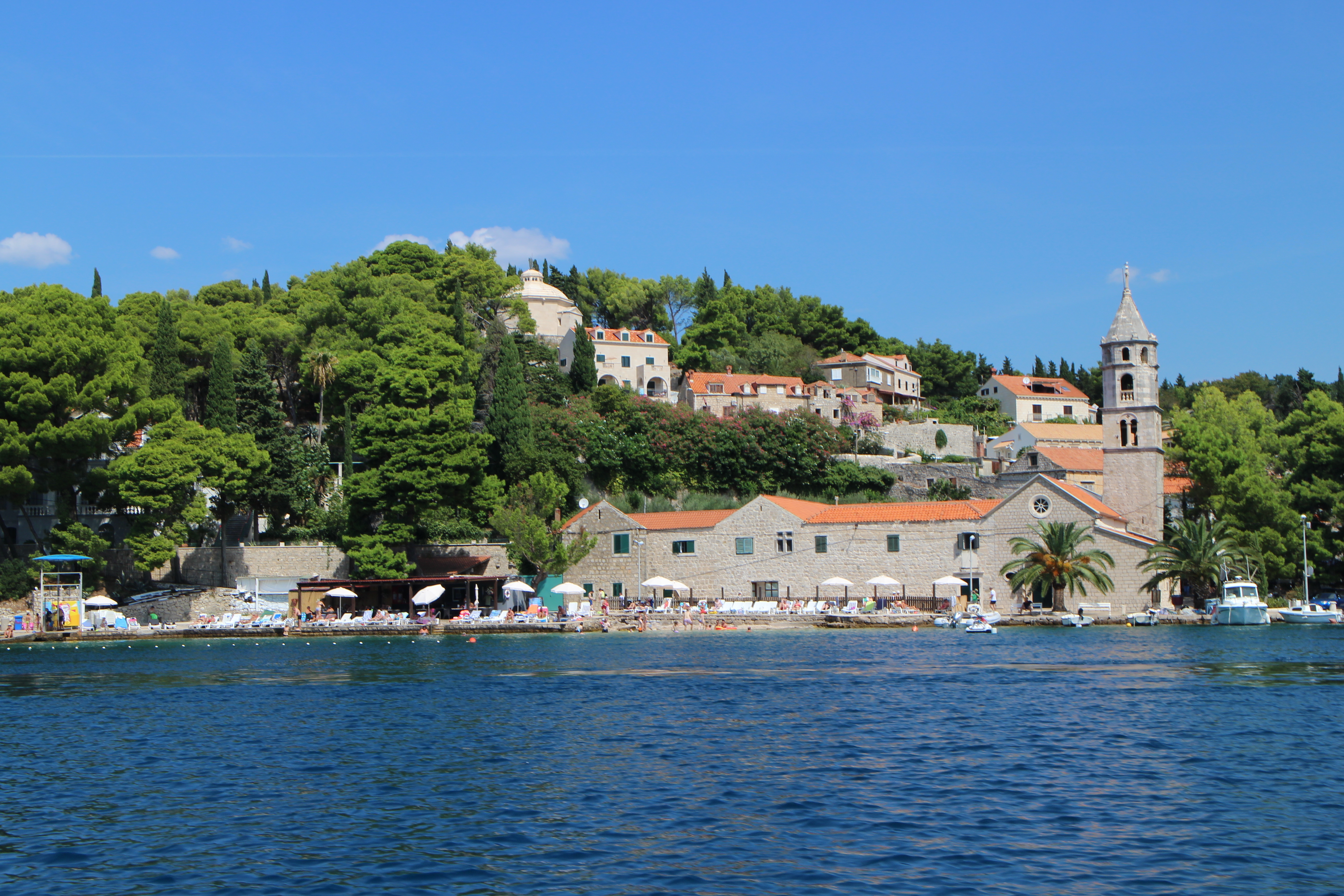
The key point is Cavtat rewards readers who want to understand form rather than just atmosphere. Its buildings are not random accumulations. They belong to a settlement logic: waterfront houses that negotiate trade and arrival, inland streets that compress shade and privacy, villas that display aspiration without abandoning local material language, monastic and ecclesiastical complexes that stabilise the town’s symbolic order, and funerary architecture that turns the outer peninsula into a zone of memory. In that sense, Cavtat is not only scenic. It is highly composed.
The first lesson: Cavtat is a town of edges
Many historic Adriatic settlements can be read through walls. Cavtat is better read through edges. The harbor edge is commercial and social; the shaded peninsula edges are slower and more reflective; the upper cemetery edge turns seaward and monumental. Architecture follows these conditions. Buildings do not simply occupy land; they define transitions between street and sea, house and sheltered court, public and private space.
That is why the waterfront matters so much. It is not only attractive. It teaches you how Cavtat performs openness. Facades facing the harbour tend to participate in public life more directly, while side lanes and upper approaches reveal a quieter grammar of steps, walls, shutters and terraces. One reason the town feels composed rather than chaotic is that these different edges remain recognisable.
Stone houses and the discipline of proportion
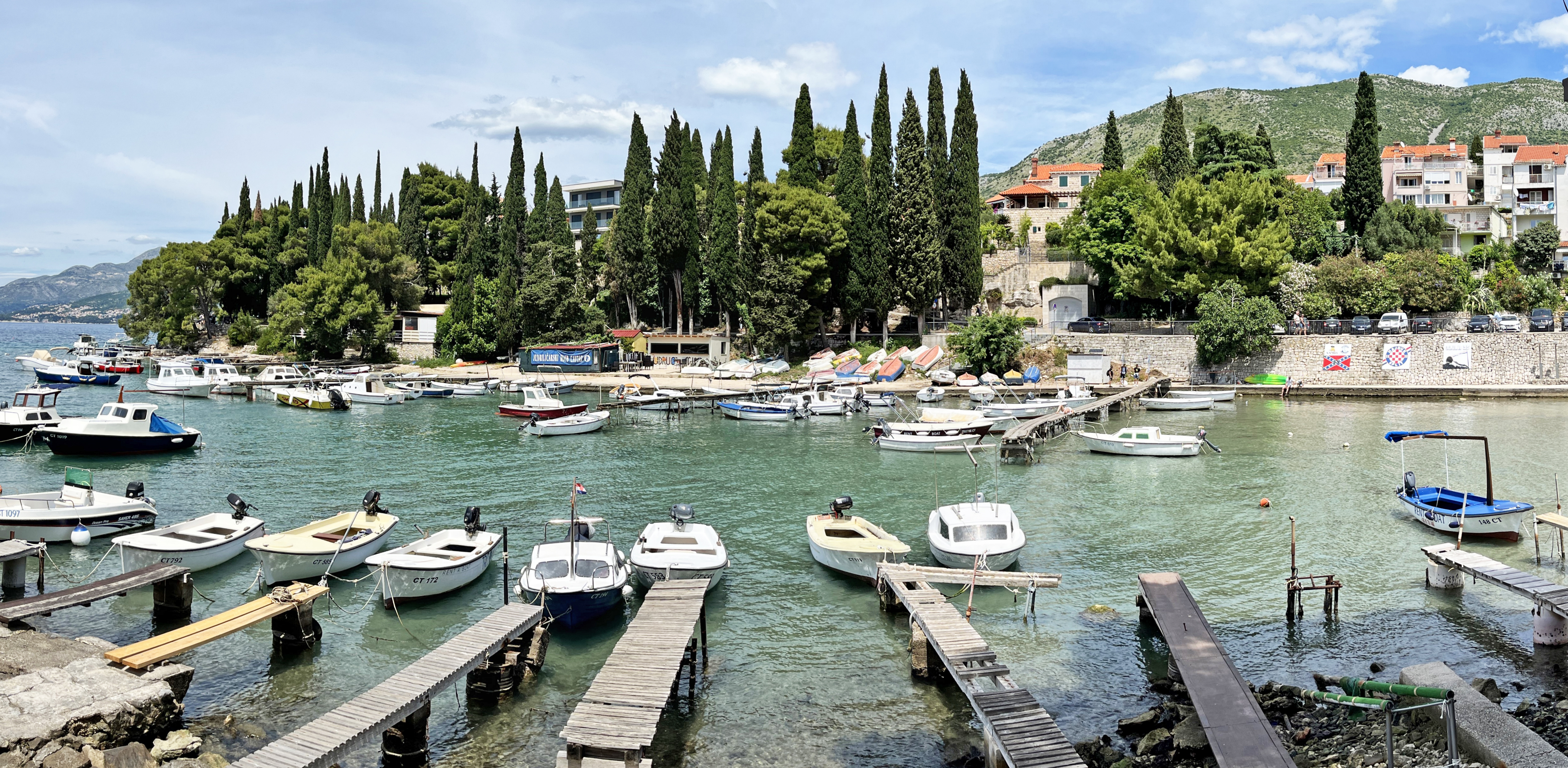
The everyday stone house remains the key unit of Cavtat’s visual identity. Even where later interventions or tourist adaptation are visible, the underlying discipline survives: thick walls, relatively compact openings, rooflines that relate to neighbors, modesty of footprint compared with later resort architecture, and a certain acceptance that shade is an architectural resource. These houses are not grand in isolation. Their force comes from repetition and proportion.
For travelers, that means looking less at individual embellishment and more at how houses hold the street. Notice how doors meet steps. Notice where a façade offers a bench, a lintel, a narrow balcony or a planted threshold. In Cavtat, built identity is often cumulative rather than singular. The town feels coherent because many ordinary structures obey related assumptions about massing and material.
Architectural layers a traveler can actually notice
| Layer | What to look for | Why it matters |
|---|---|---|
| Historic stone houses | Compact facades, shutters, thick walls, small urban plots | Show the durable grammar of local building |
| Villas and larger residences | Gardens, sea-facing terraces, broader openings | Express status, health culture and leisure aspirations |
| Sacred buildings | Bell towers, enclosure, symbolic siting | Structure memory and orientation |
| Modern hospitality buildings | Larger footprints, panoramic siting, resort circulation | Show the twentieth-century tourism shift |
| Cemetery and mausoleum zone | Commanding views, sculptural form | Turn the edge of town into a memorial landscape |

Villas, gardens and maritime prosperity
Cavtat’s villas reveal another layer of local history: the desire to live at the edge of the sea in a manner that is both representative and breathable. The villa tradition here belongs to a broader Dubrovnik-region culture in which maritime success, cosmopolitan experience and health-oriented coastal living all fed into architecture. A villa is not simply a bigger house. It usually reorganises the relationship between private life and view. Gardens, terraces, wider openings and more deliberate approaches announce that sea air and outlook have become part of the building program.
Not every Cavtat villa is historically equivalent, and visitors should avoid flattening them into one style. But together they show how the town adapted to phases of prosperity and reputation. They also help explain why Cavtat can feel more spacious than many walled Adriatic settlements. The presence of detached or semi-detached larger residences loosens the urban fabric without dissolving it.

One useful comparison point is the wider Dubrovnik culture of summer residences and gardens, whose Renaissance legacy remains one of the region’s most distinctive architectural phenomena. Cavtat is not a museum of those villas in the strict Dubrovnik sense, but it belongs to the same Adriatic world in which status often expressed itself through cultivated domestic settings facing light, sea and air.
Monasteries, churches and the symbolic map
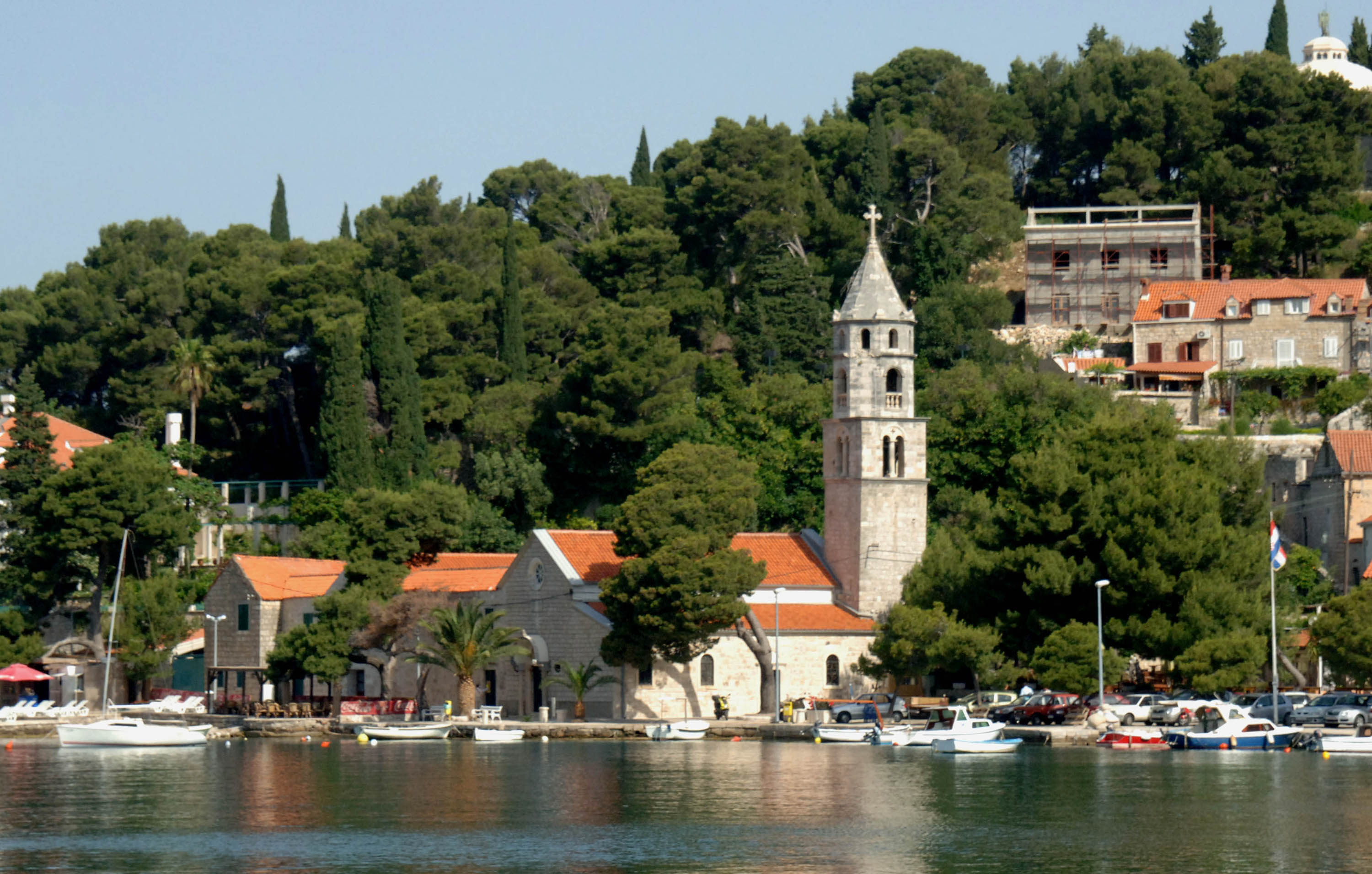
Architecture in Cavtat does not work only through residence. Sacred buildings provide the town’s symbolic map. St Nicholas anchors the parish centre; the monastery of Our Lady of the Snows establishes a western threshold; the Račić mausoleum gives Rat peninsula a memorial climax. These are not optional monuments. They explain why the town feels ordered. Even a visitor who never enters them still experiences their siting, vertical emphasis and spatial consequence.
The mausoleum matters especially because it shows architecture at its most self-conscious. Designed by Ivan Meštrović and completed in 1922, it binds sculpture and building into a single act of remembrance. In the overall reading of Cavtat, it functions almost like punctuation at the edge of the settlement: a final statement in stone where family history, faith and view come together.

How architecture and walking work together
Cavtat is unusually generous to the pedestrian observer because distances are short enough for architectural transitions to remain visible. You can feel the move from waterfront frontage to back lanes, from secular domestic fabric to sacred compounds, from low harbour movement to elevated memorial space. That is why walking is the right speed for understanding the town. A vehicle collapses too much. Architecture here is made legible by succession.
A useful route is to begin at the harbour, continue through the old core toward St Nicholas, climb through the western side toward the monastery, then loop to Rat and the mausoleum before returning along the shaded coastal path. This reveals not only buildings but the logic between them. Readers interested in self-guided movement may want to pair the experience with a broader sense of Cavtat’s layered identity and then revisit favorite stretches at a quieter hour.

Modern tourism and the challenge of scale
No honest architectural reading of Cavtat can ignore the impact of modern tourism. Larger hotel structures and twentieth-century hospitality planning altered the visual balance of the place, sometimes for better, sometimes at the cost of intimacy. Yet the town has retained more legibility than many coastal destinations because the historic core, promenades and peninsula walks still dominate the lived experience of most visitors. The older settlement has not been erased; it continues to discipline perception.
That balance is one reason Cavtat remains appealing to travelers who want beauty without total theatricality. The town has modern accommodation and infrastructure, but its strongest images still come from older stone, carefully placed religious buildings, modest domestic facades and a harbor line that remains human in scale.

Conclusion: seeing the town properly
To read Cavtat in stone is to recognise that architecture here does far more than decorate a view. It explains how the town grew, how it faced the sea, how it managed status, where it placed memory and why walking through it feels so coherent. Houses teach proportion. Villas speak of ambition and air. Monasteries and churches stabilise meaning. The mausoleum turns the edge into monument. Once you see those relationships, Cavtat stops being only a pleasant resort and becomes what it really is: a small Adriatic town whose built form still carries a precise social intelligence.
Need help choosing the right experience?
Tell us your budget, dates, and travel style, and Cavtat Guide will help you choose the best yacht charter, tour, property option, or local experience.