

Cavtat is often introduced through its harbor, its hotels and its position as a civilized alternative to the pace of Dubrovnik. Yet one of the best ways to understand the town is to begin with its churches. Sacred buildings in Cavtat are not ornamental leftovers from an older Europe. They are active carriers of art, memory, patronage, loss and civic identity. They store paintings, burials, vows, family histories and neighborhood geographies. For visitors, they also provide an unusually efficient way of reading the town’s scale. A church tells you where devotion gathered, where money was invested, where artists left marks, and where a community chose to remember itself in stone.
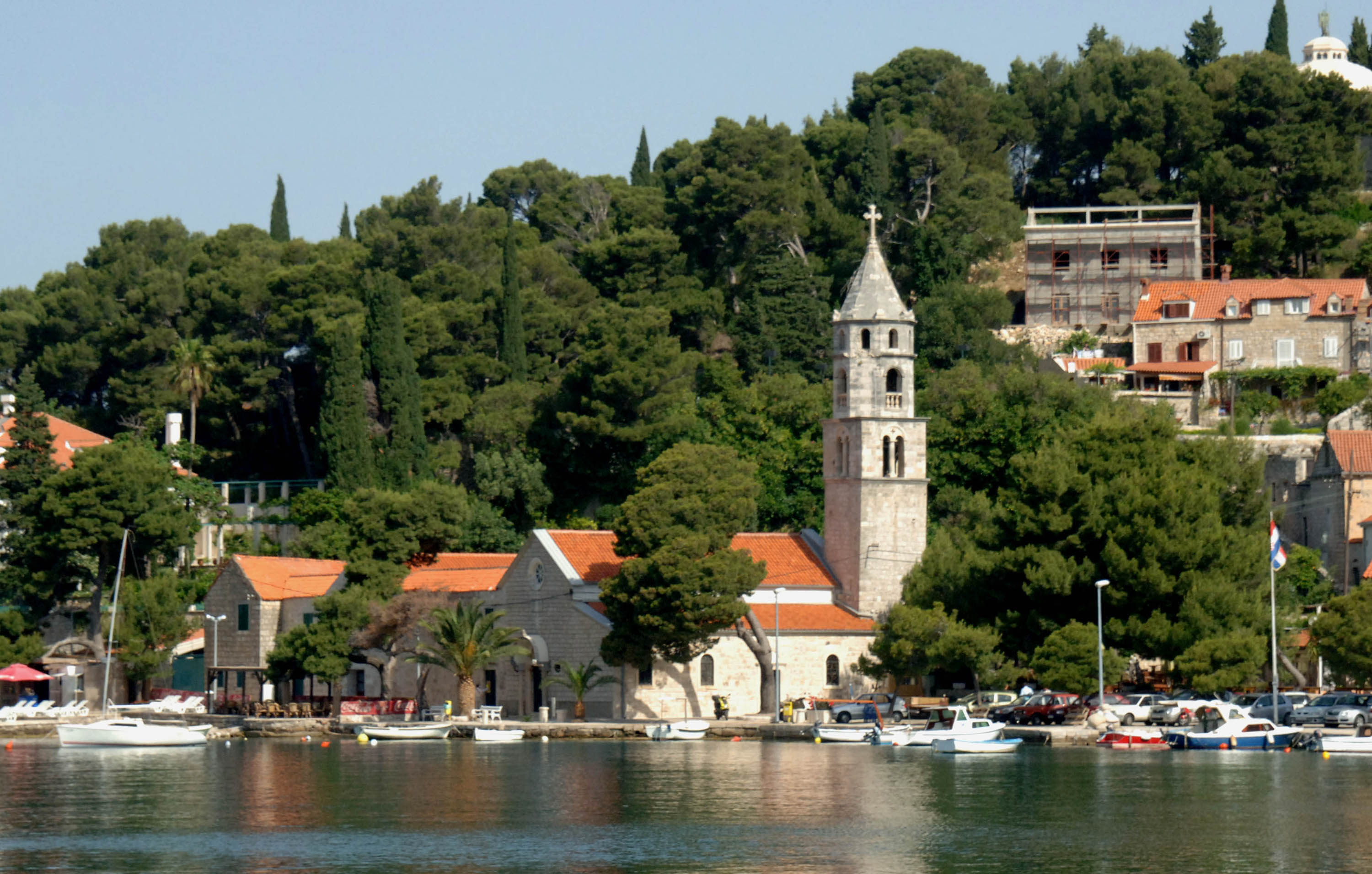
This matters in Cavtat because the sacred landscape is compact yet layered. The parish church of St Nicholas lies close to everyday town life. The Franciscan monastery and church of Our Lady of the Snows hold a western edge of the historic core. Above the town, at the cemetery on Rat, the Račić family mausoleum dedicated to Our Lady of Angels binds art and mourning in one of the most remarkable early twentieth-century monuments on the Adriatic. Between them, these places describe a complete civic-religious arc: parish life, monastic continuity and commemorative ambition.
How to read a church in Cavtat
A useful starting principle is that sacred spaces here should be read on three levels at once. First, as places of worship: they exist primarily for devotion, sacrament and prayer. Second, as repositories of art: altarpieces, sculpture, liturgical vessels and memorial commissions are not incidental. Third, as local archives: they preserve evidence of who mattered, what was feared, what was hoped for and how Cavtat positioned itself within the wider Dubrovnik and Adriatic world.
That triple reading helps visitors avoid two common mistakes. One is treating churches as a checklist of monuments. The other is reducing them to purely devotional sites without noticing their artistic and historical density. Cavtat rewards a slower middle approach. Step in quietly, look carefully, and let architecture and use speak together.

St Nicholas: parish, art and continuity
St Nicholas is the obvious starting point because it joins religion to daily life most directly. Official heritage material describes the church as fifteenth-century in origin, later remodelled more than once. The main altar preserves an early nineteenth-century work by Carmello Reggio, while four paintings of the Evangelists by Vlaho Bukovac from 1910 stand in the sanctuary area. Its church gallery, founded in 1952, contains paintings, sculpture and liturgical vessels. This combination is revealing. The parish church is not only where local worship happens; it is also where Cavtat stores a portion of its cultural capital.
For a visitor, that means St Nicholas works on both immediate and cumulative levels. Immediately, it offers the cool interior, the smell of stone and polish, the soft acoustic contrast with the street outside. Cumulatively, it gives evidence of patronage over centuries. A parish that sustains a gallery and major paintings has long understood religion as something materially and aesthetically enacted.
Practical logic for visiting sacred sites in Cavtat
| Site | Why it matters | Best visiting mindset |
|---|---|---|
| St Nicholas parish church | Core parish life, Bukovac paintings, church gallery | Short reflective visit during town exploration |
| Our Lady of the Snows | Monastic continuity, major artworks, historic western edge | Combine with Rat peninsula walk |
| Račić mausoleum / Our Lady of Angels | Meštrović’s total work of sculpture and architecture | Visit slowly and preferably outside peak heat |
| Associated cemeteries and chapels | Memory, family patronage, urban topography | Respectful, quiet observation |
Because St Nicholas sits so close to ordinary routes through town, it is often the church most likely to be entered impulsively. That is not a bad thing. Cavtat benefits from sacred buildings that remain integrated into movement rather than segregated from it.

Our Lady of the Snows: monastery, image and western threshold
If St Nicholas is the town’s parish heart, the monastery and church of Our Lady of the Snows offer a more layered encounter with Cavtat’s religious heritage. Official heritage descriptions place its foundation in 1484, with construction across the fifteenth and sixteenth centuries and later modifications from the eighteenth to the twentieth. The church preserves a late fifteenth-century altarpiece by Božidar Vlatković, a polyptych by the Dubrovnik master Vicko Lovrin from 1509–1510, and a lunette of Our Lady by Vlaho Bukovac from 1909.
That list is more than an inventory. It shows how a Franciscan site in Cavtat became a bridge between late medieval Dubrovnik painting, later monastic life and modern local cultural memory. The location matters too. Reached as part of the western edge of the historic core and the route toward Rat, the monastery feels slightly removed from the commercial front. That spatial shift sharpens attention. You are still in Cavtat, but in a more contemplative register.
The best way to visit is not to rush in as part of a panoramic circuit. Pause outside first. Notice how the complex sits against slope and sea. Then enter and look for the relationship between art and enclosure. Monastic sites often communicate through restraint; what appears plain at first can become richer after a few minutes of careful looking.
The Račić mausoleum: grief, patronage and modern monumentality
Above Cavtat, in the cemetery of St Rocco on Rat peninsula, the Račić family mausoleum dedicated to Our Lady of Angels changes the scale of the sacred conversation. The Museums and Galleries of Konavle describe it as the work of Ivan Meštrović, built in 1922; Meštrović’s own virtual exhibition material describes the project as executed from 1920 to 1922 and as his first realised sacral architectural work. Either way, what matters for the visitor is its extraordinary completeness. Architecture and sculpture are fused into a single act of memorial design.

The mausoleum is not a parish church in any normal sense. It is a family monument shaped by grief, status and artistic ambition. Yet it belongs fully within Cavtat’s religious heritage because it uses sacred form to transform private loss into public stone. This is where the town’s maritime wealth, Catholic visual language and twentieth-century artistic modernity meet. The result is one of the strongest reasons any architecture-minded traveller should walk uphill in Cavtat.
To experience it properly, come when you are not hurried. The ascent matters, the cemetery setting matters, and the change in sound matters. So does the view back toward the town. Sacred sites in Cavtat are often inseparable from their topography.

Sacred heritage as a way of moving through town
One of the pleasures of Cavtat is that sacred heritage naturally shapes a walking route. You can begin at St Nicholas, continue through lanes and waterfront edges, climb toward the monastery, and end at the cemetery and mausoleum. What looks at first like separate sightseeing stops becomes a coherent narrative about settlement, patronage and belonging. Even readers interested primarily in secular culture will find that the churches make the town more legible.
This is also why churches belong in any serious rainy-day or off-season itinerary. When weather turns, sacred interiors remain among the best places to recover proportion. They ask for little except attention. Combined with a visit to a broader understanding of Cavtat’s modern hospitality landscape or a stop at Bukovac House, they produce a fuller picture of the town than summer promenade life alone can give.

Conclusion: churches as the town’s memory system
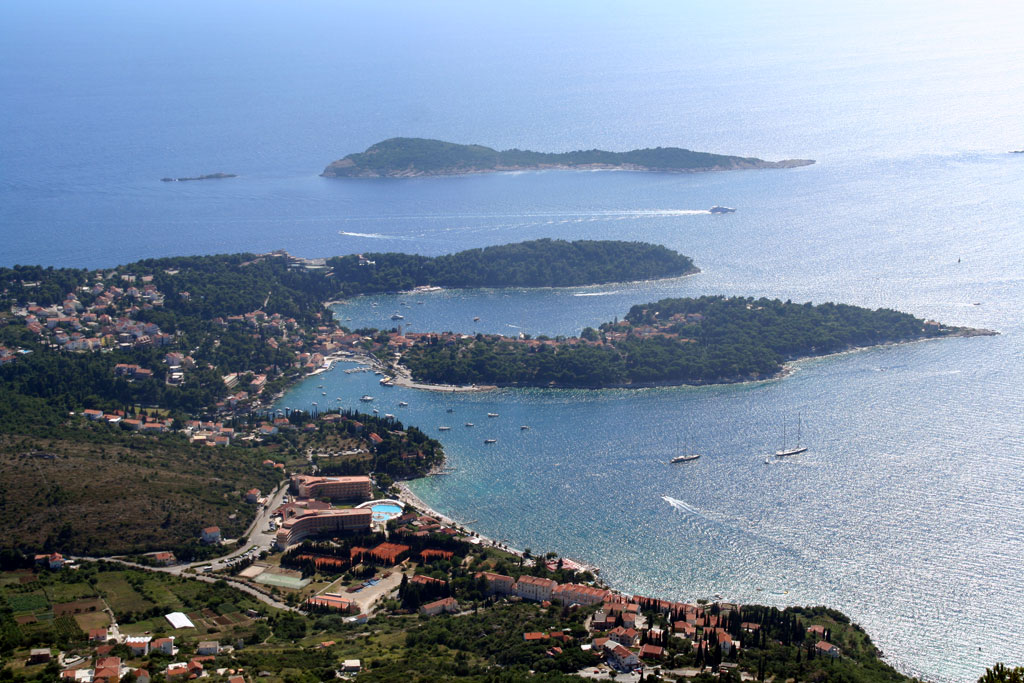
To visit Cavtat only as a resort town is to miss the system that gave the place depth. Its churches and related sacred sites are a memory system: they preserve art, transmit ritual, frame grief, mark neighborhoods and reveal the town’s hierarchy of meaning. St Nicholas anchors the parish present. Our Lady of the Snows extends the older monastic and artistic inheritance. The Račić mausoleum lifts private mourning into monumental form. Together they show that sacred stone in Cavtat is not passive backdrop. It is one of the main ways the town continues to know itself.

Need help choosing the right experience?
Tell us your budget, dates, and travel style, and Cavtat Guide will help you choose the best yacht charter, tour, property option, or local experience.