The idea of working from a yacht once belonged to aspiration more than practice. It suggested a laptop opened briefly on deck, a symbolic email checked at anchor, a holiday that could absorb one or two unavoidable interruptions. In Croatia, that picture is changing. Better onboard connectivity, improved charter design and a growing class of travelers whose work is portable have turned the concept into a more credible lifestyle product. But credibility depends on honesty. Not every yacht is suitable for work, not every route supports concentration, and not every client truly wants their holiday mixed so closely with professional life.
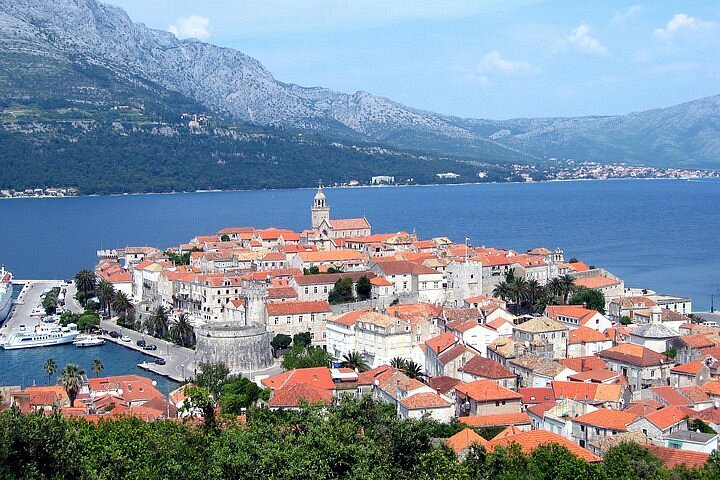
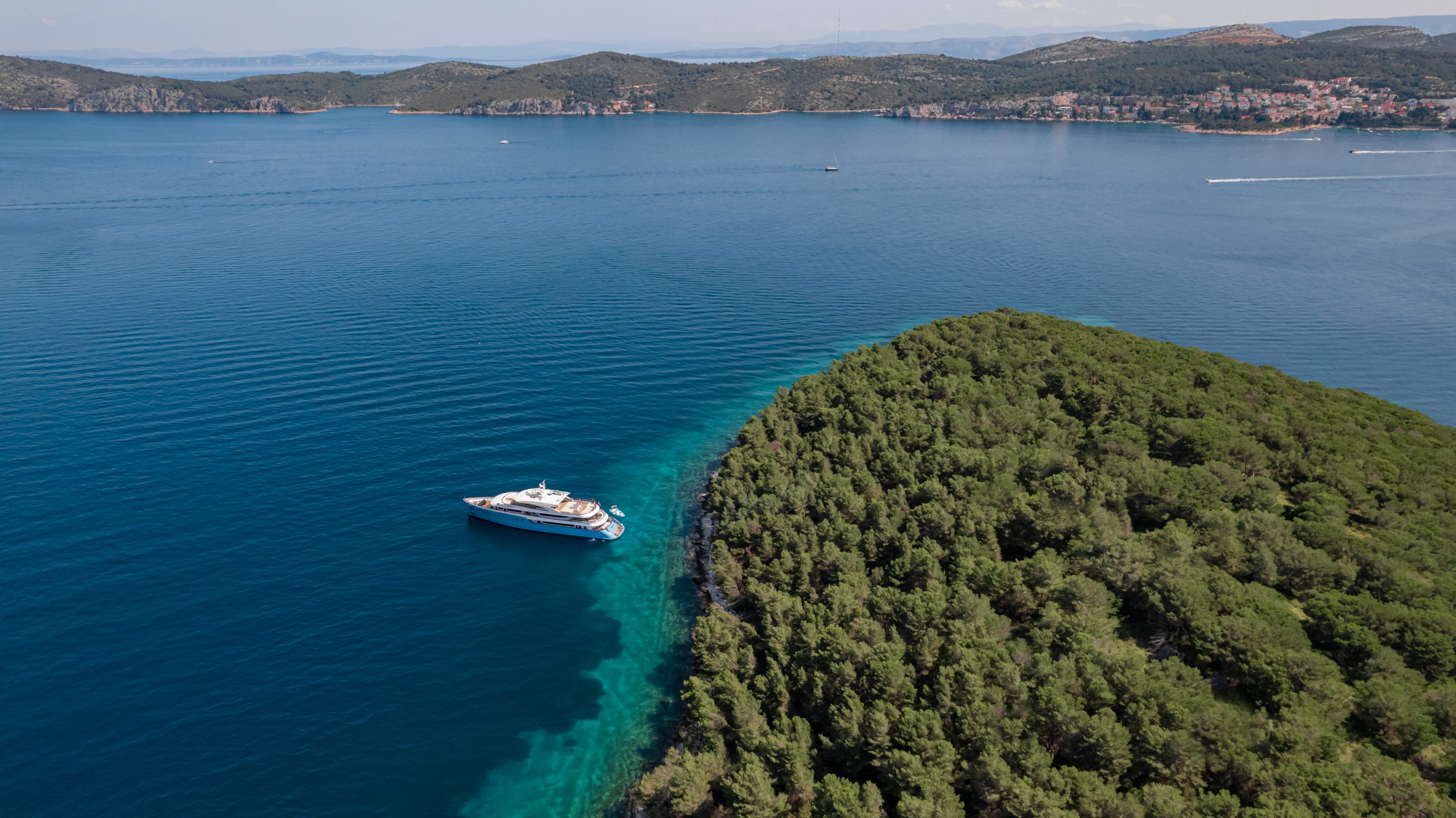
When the format succeeds, however, it speaks directly to a new Adriatic luxury. The appeal is not simply that one can answer messages while looking at the islands. It is that one can design a week in which work becomes bounded, controlled and softened by environment rather than dominant over it. A morning call from a quiet bay near Mljet, a late lunch under shade, an afternoon swim, a short planning session before sunset in Korčula: for some travelers, this is not a gimmick but a genuine recalibration of how travel time and working time relate.
Croatia is especially well placed for this emerging segment because its routes often allow moderate daily legs, marina access when needed and enough coastal infrastructure to support a hybrid way of moving. Yet it remains a product that must be designed carefully. The mobile Adriatic lifestyle is persuasive only when it is disciplined.
Why the trend is growing
Several forces have converged. Remote and flexible work remain embedded in parts of the global professional class. Travelers increasingly blend leisure with lower-intensity work obligations. Charter guests have become more explicit about connectivity requirements. Yacht operators have responded by improving onboard internet solutions and by presenting boats not only as holiday platforms but as temporarily livable spaces. In Croatia, where so much of the charter season coincides with periods when professionals can travel but not disappear entirely, the result is obvious: more clients are asking whether they can work from the yacht for at least part of the week.
The answer is yes, but with qualifications. Connectivity can be strong, yet should never be assumed uniformly offshore. The most successful work-from-yacht clients are those who do not require flawless, city-grade digital infrastructure every second of the day. They require reliability with intelligent backup planning. They also understand that the charter should be routed around windows of concentration and windows of release, rather than forcing the captain and crew to improvise around constant interruption.
What makes Croatia particularly attractive is that work and leisure can be separated within the same day without absurdity. The distances between many southern and central Adriatic points are moderate enough that the morning can hold work and the afternoon can hold movement or vice versa. That flexibility is central to the appeal.
| Requirement | What work-from-yacht clients need | Best product response |
|---|---|---|
| Connectivity | Reliable internet and sensible backup planning | Newer crewed catamarans and motor yachts are increasingly best placed. |
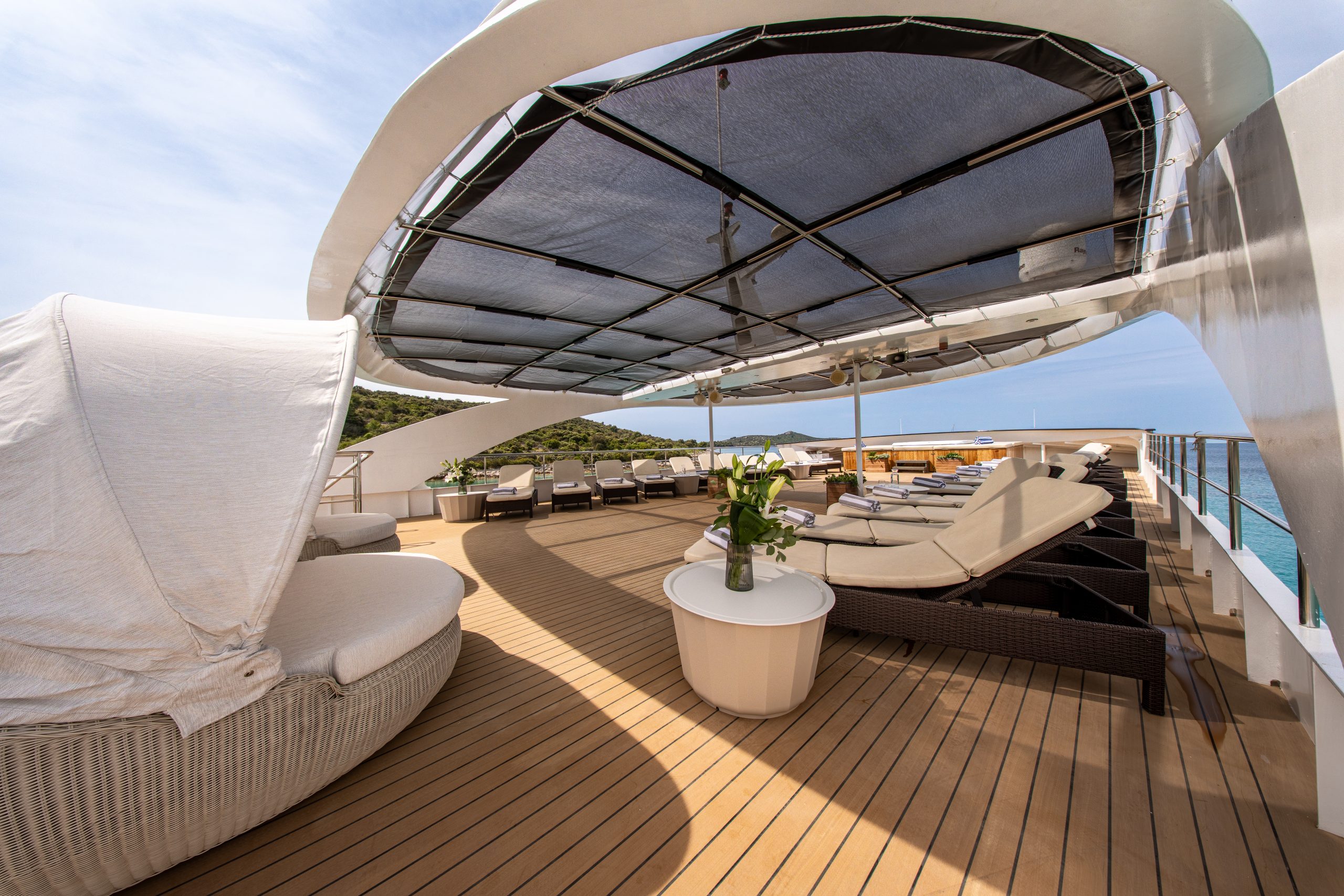
| Work zones | Quiet cabin, shaded deck or saloon table | Boats with layered indoor-outdoor living perform better. |
| Route pace | Fewer frantic passages, more predictable anchorages or marinas | Southern Adriatic routes with controlled distances are especially effective. |
| Lifestyle balance | Work that does not erase the holiday | Crew support and disciplined itinerary design are essential. |

Which yachts actually support the lifestyle
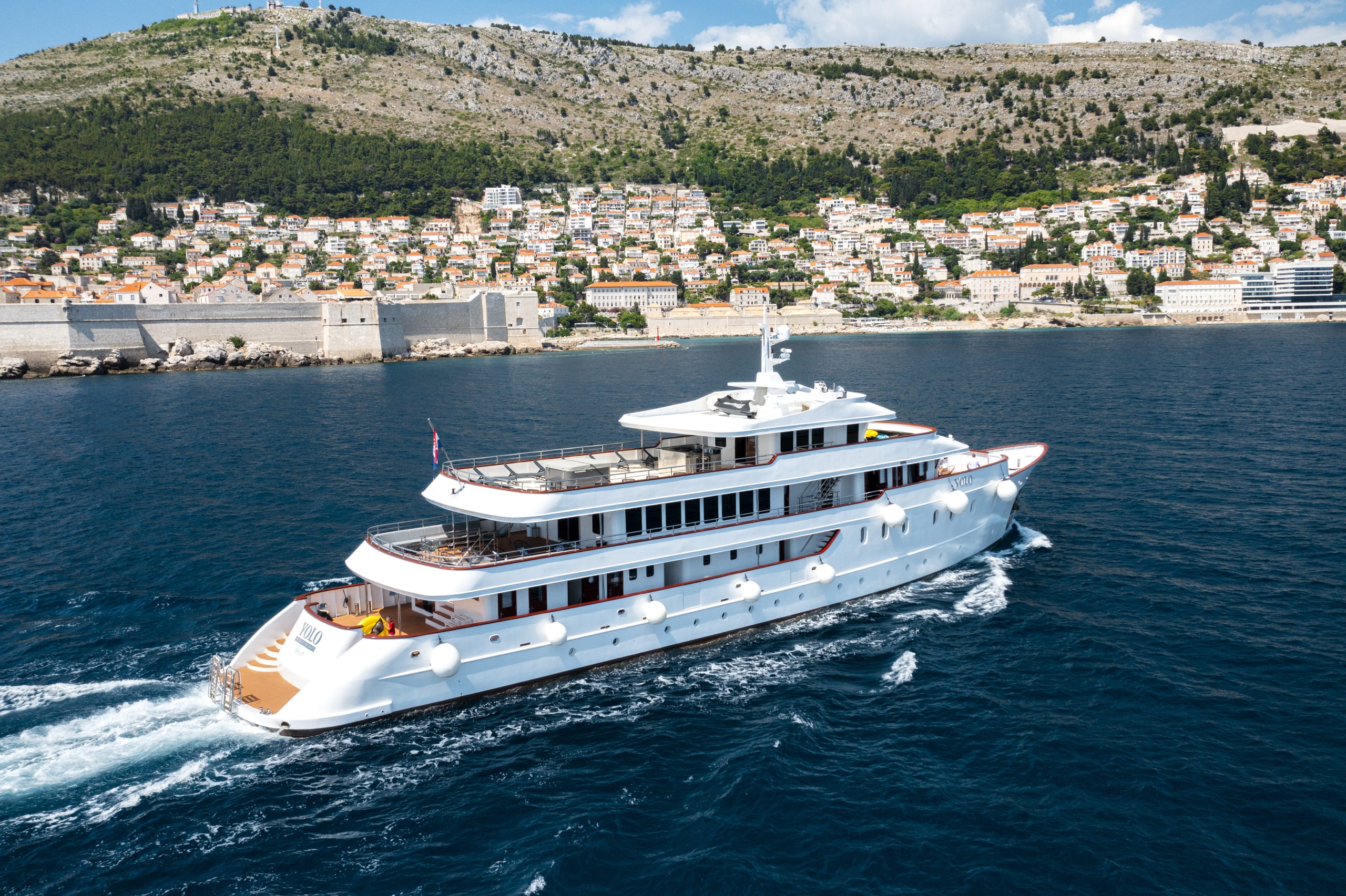
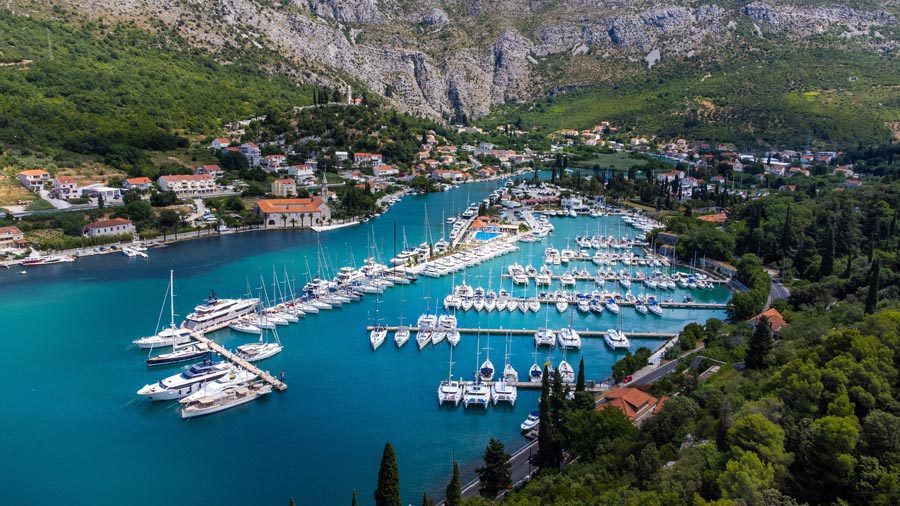
Catamarans and motor yachts are generally the strongest platforms for this style of travel. Catamarans offer broad saloons, multiple deck zones and a forgiving living plan that allows one guest to work while others rest or swim. Motor yachts can be even better for privacy, quieter interiors and more autonomous service arrangements, especially for senior professionals or couples who want work to remain almost invisible within the holiday. Gulets can support light work but are less naturally aligned to modern mobile routines unless the brief is modest. Sailing yachts tend to be the most niche option, suitable mainly for travelers who actively want sailing and can accept a more intimate, less office-like environment.
The design details matter. Shade matters. Table height matters. Cabin comfort matters. Reliable charging matters. Stable connectivity matters. So does the ability to retreat briefly from the social life of the yacht without making that retreat feel awkward. Work-from-yacht is not only a technological question. It is a spatial one.
The crews matter too. The best teams understand discretion. They help create rhythm around calls, meals and transit so that work neither dominates nor collapses into chaos. That is what turns a possible product into a sophisticated one.

Route planning for working travelers
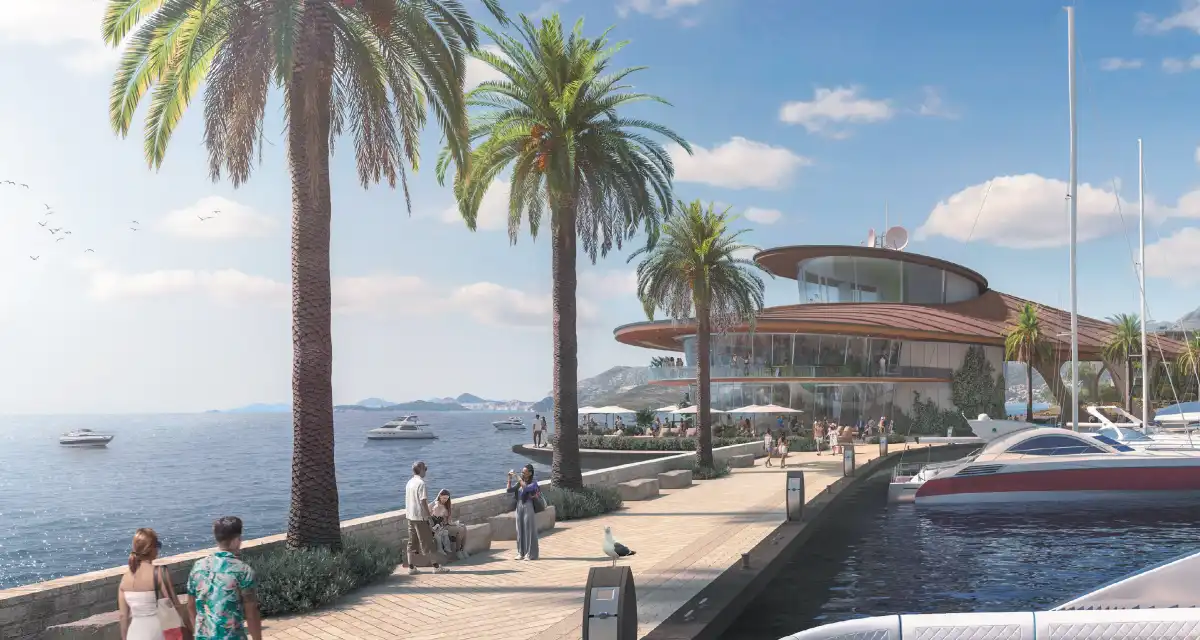
Route choice determines whether the idea succeeds. Southern Adriatic itineraries from Cavtat or Dubrovnik often work particularly well because they can be paced elegantly. A client can spend the morning anchored quietly, work until lunch, move for a moderate afternoon leg, and go ashore in the evening. Mljet, Korčula and select Elaphiti patterns are good examples of places where the scenery is restorative but the rhythm need not become operationally messy.
Why overambition ruins the concept
The greatest mistake is to design a work-from-yacht week as though it were a full-throttle holiday plus a full working week. That usually satisfies neither objective. The better model is a charter with bounded work windows, lower destination count and a stronger emphasis on environment. In other words, one should buy back quality rather than attempt to preserve maximum quantity.
Central Dalmatia can also work, particularly for clients who need better marina density and broader fleet options. Yet the more socially intense reputation of places like Hvar means the traveler must be clear whether the week is actually about working elegantly or merely claiming to do so while chasing the usual summer circuit.

Who this lifestyle is really for
The strongest clients for this category are founders, consultants, executives, creative professionals and location-flexible couples who do not need full office immersion every day but do need to remain lightly engaged. It also suits people transitioning between business and holiday: perhaps beginning with three working days on board and then turning fully into leisure, or extending a personal trip without entirely stepping away from professional obligations.
It is less suitable for guests whose work involves constant live coordination, high-security infrastructure or absolute intolerance for digital inconsistency. In those cases, the yacht risks becoming an inadequate substitute for proper office conditions. Luxury travel begins to break down when it pretends to solve a problem it cannot reliably solve.
For the right client, however, this is not compromise. It is liberation of a very contemporary kind. The Adriatic becomes not only a holiday setting but a more humane operating environment for a limited slice of work life.
Cavtat and the mobile Adriatic future
Cavtat is particularly persuasive in this emerging segment because it pairs easy arrival with a calmer atmosphere than Dubrovnik. For work-from-yacht travelers, that matters. The charter can begin from a place that feels peaceful and premium without requiring immediate immersion in a major tourist city. That supports concentration on day one and allows the itinerary to build outward intelligently.
Broader developments along the Dubrovnik Riviera also reinforce the sense that this coastline is moving toward a more integrated luxury ecosystem: yachting, second homes, upscale stays and an increasingly international class of semi-mobile professionals. Work-from-yacht sits comfortably within that ecosystem when handled well. It aligns with the idea that the Adriatic is not only a place to visit, but a place in which one might temporarily live well.
That is likely why the concept has staying power. It is not simply another post-pandemic novelty. It answers a real behavioral shift in how affluent travelers now use time.
Seasonality, timing and why the month changes the product
Croatia’s charter season also shapes how this product should be understood. June and September often flatter thoughtful travelers most because the water is warm, the service culture is fully awake and the coastline feels more breathable. July and August bring maximum social energy and the widest sense of the charter market as a summer stage, but they also demand more planning discipline. For the work-from-yacht model, seasonality changes not only price and availability but mood. The same boat can feel serene in late June and far more performative in mid-August, not because the product changed, but because the Adriatic did. Sophisticated clients recognise this and book accordingly.
Shoulder season is particularly interesting because it reveals whether the yacht product has real integrity. When the heat is softer and the coast less compressed, the focus falls more clearly on layout, service and route intelligence. Boats that rely too heavily on the noise of peak summer are less impressive then. Boats with genuine comfort, good crews and well-proportioned itineraries often become even better. This is one reason repeat Adriatic clients so frequently migrate towards June and September after an initial peak-season experience.
Booking windows matter too. The strongest boats, especially those with good crews and a reputation for being well managed, tend to be secured earlier than first-time clients expect. That is true for catamarans, motor yachts, gulets and specialist family or privacy-led products alike. The market is mature enough that quality is usually recognised well in advance. In editorial terms, The key point is a charter should be treated as a designed travel experience, not a last-minute commodity. The best version of the work-from-yacht model in Croatia is usually the version that was planned with foresight rather than assembled under pressure.

Common mistakes and the difference between visible and lived luxury
One of the most common mistakes clients make with the work-from-yacht model is assuming that visible luxury automatically produces lived luxury. In Croatia, the lived version is built from finer decisions: how long the sea legs feel, whether lunch is being taken in the right place, how sensibly harbor exposure is managed, whether the crew understand when to serve and when to disappear, and whether the route leaves room for mood rather than only movement. These choices may seem secondary beside the yacht’s appearance, but in practice they decide the quality of the week.
Another error lies in overprogramming. The Adriatic is seductive because there are so many plausible names to include: Dubrovnik, Cavtat, Hvar, Korčula, Mljet, Montenegro, Split and many smaller islands besides. Yet luxury rarely improves through accumulation alone. A charter that tries to prove its worth through relentless movement usually diminishes the yacht as a place to live. The better strategy is to allow one or two strong notes per day, then leave enough unscheduled space for water, conversation, reading, lunch and the simple pleasure of being at sea.
That is also why editorial framing matters. Travelers often book more intelligently when the product is described in human rather than technical terms. They need to know not simply what the boat has, but how the week will feel. The work-from-yacht model should be understood through lived rhythm: mornings, transitions, swim stops, dining, light, privacy, motion and the emotional temperature of arrival. That is how serious travel decisions are made.

Market context: why Croatia keeps sharpening the category
The broader Adriatic market gives additional context to the work-from-yacht model. Croatia has become one of Europe’s most legible charter destinations not only because it is beautiful, but because it supports multiple levels of sophistication at once. There are straightforward sailing weeks, heavily social routes, highly private itineraries, family-led charters, design-focused catamaran trips, heritage-driven gulet holidays and modern motor-yacht programs. This breadth makes Croatia unusually useful for comparison. It allows travelers to refine taste, not just consume scenery.
For that reason, the country increasingly attracts guests who are not merely renting a boat for the first time, but actively learning what kind of maritime traveler they are. Some discover that they value the sea itself; others discover that they value privacy, hosting, architecture, gastronomy or the elasticity of route. The work-from-yacht model sits within that wider education. It is not a standalone product category floating above context. It is part of a mature ecosystem in which Cavtat, Dubrovnik, Split, Hvar, Korčula and Montenegro each contribute different tones to the market.
This is also why the best charter content should avoid brochure language. The Croatian yacht landscape is now too developed, and its clients too informed, for empty superlatives to be useful. What serious travelers want is interpretation. They want to know what a yacht product represents, what kind of people tend to love it, where it works best, and how it speaks to the Adriatic itself. Any honest analysis of the work-from-yacht model has to start there.
Service, dining and the texture of the week
No serious Adriatic charter analysis is complete without acknowledging how strongly food, service and shore texture influence the perceived quality of the yacht itself. Guests do not separate these things as neatly as the trade sometimes does. They remember whether breakfast felt leisurely, whether lunch was taken in a bay that justified the extra hour at anchor, whether the crew read their appetite for privacy correctly, and whether evenings ashore were chosen with taste rather than habit. In Croatia this matters especially because harbor towns, konobas, waterfront restaurants and village promenades are not decorative extras. They are part of the charter product.
For the work-from-yacht model, the best results usually come from moderation and judgement. Not every lunch needs to be ashore. Not every dinner should happen on board. Not every swim stop deserves equal time. The crew and route must decide where the yacht should protect the guests from the coast and where it should introduce them to it. That calibration is the hallmark of maturity. A week that gets it right feels richer than one that simply offers more options.
This is also why repeat travelers often talk less about the yacht’s specifications than about the tone of the days: a perfectly judged lunch, a quiet arrival, a table set just so, a crew that anticipated the weather and the mood simultaneously. In other words, the yacht becomes excellent when the broader Adriatic experience around it has been curated intelligently. Work from yacht only becomes luxury when work is contained, the route is disciplined and the Adriatic still has room to feel like itself.
Conclusion
The rise of work-from-yacht travel in Croatia reflects a broader truth about modern luxury: travelers increasingly value formats that soften the borders between responsibility and freedom without erasing either. The Adriatic, with its moderate distances, strong fleet and beautiful but manageable routes, is a natural testing ground for that idea. Yet the product only works when it is planned honestly.
For readers of Cavtat Guide, the mobile Adriatic lifestyle deserves attention as a serious category rather than a slogan. Choose the right yacht, define realistic work windows, route with restraint, and the result can be deeply attractive. Choose poorly, and the week becomes a muddle of calls, transfers and compromised leisure. Croatia can support the former very well. That is why the category is likely to endure.
Need help choosing the right experience?
Tell us your budget, dates, and travel style, and Cavtat Guide will help you choose the best yacht charter, tour, property option, or local experience.