
The phrase ultra-private is used too casually in luxury travel. True privacy is not merely the absence of crowds. It is the feeling that one’s time, movement and attention are not being constantly claimed by the environment. In Croatia’s yacht market, high-end travelers increasingly expect this as a baseline. They do not simply want a beautiful vessel. They want a managed degree of invisibility: discreet embarkation, quiet crew competence, protected anchorages, carefully chosen harbour exposure and an itinerary that allows them to step in and out of public life on their own terms.
This is one reason yacht charters remain so compelling in the Adriatic. The region offers enough infrastructure for a comfortable high-end week, but also enough coastline, island fragmentation and atmospheric variation to create distance from the public rhythm of summer. A private villa can offer stillness; a private yacht offers stillness plus control of the horizon. For some travelers that is the decisive difference.
Yet privacy in Croatia is not automatic. Certain marinas are more public than others. Certain routes are more socially coded. Certain yacht types protect guest life more effectively. The modern high-end client knows this. They are not simply buying status. They are buying a controlled environment. That changes how the product should be understood.

What privacy means now
For many premium travelers, privacy no longer means isolation in the crude sense. They still want restaurants, old towns, beach clubs or selective events. What they do not want is relentless exposure. They want the power to choose when to be seen and when to withdraw. In yacht terms, that means a platform and route able to support both visibility and retreat. Croatia is well suited to this because its coastal pattern allows movement between lively harbors and quiet anchorages without absurd distances.
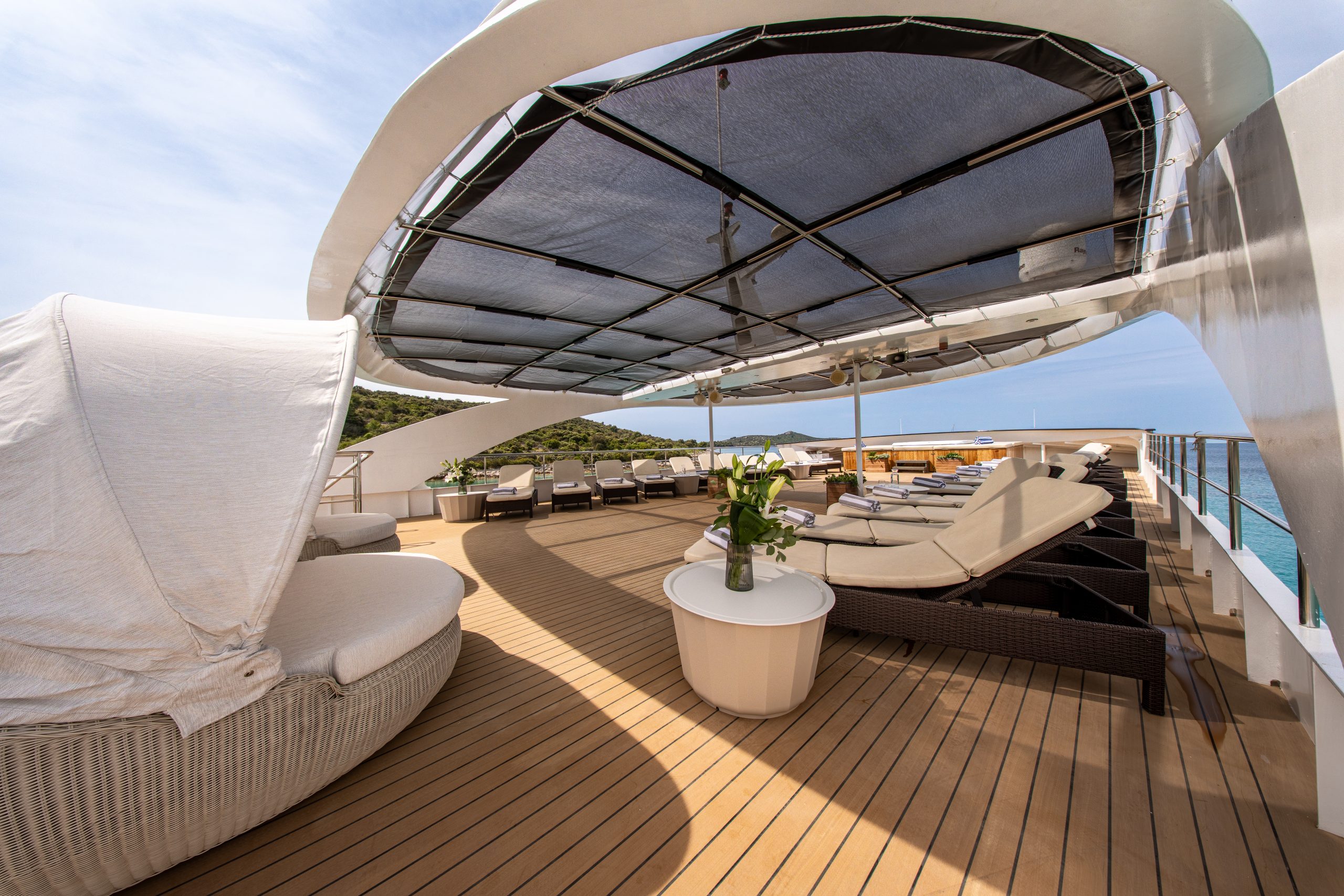
The high-end expectation has also shifted inward. Privacy now includes spatial and psychological privacy onboard. Separate guest and crew circulation, proper cabin insulation, shaded retreat areas, discreet service timing and the absence of operational clutter all matter. Luxury clients increasingly recognise that true privacy is as much about not having to register effort as it is about avoiding other people.
This changes the value equation. The most expensive-looking yacht is not always the most private. Sometimes the better product is the one with the wiser crew, the more intelligent route and the less performative style of service. Croatia has room for both social glamour and quiet prestige, but the second is becoming more influential among serious repeat clients.
| Expectation | What clients mean | Operational implication |
|---|---|---|
| Privacy | Not being constantly observed, photographed or interrupted | Route and berth choices must be as carefully planned as the yacht itself. |
| Discretion | Service without theatrical visibility | Crew quality and separation of spaces matter more than conspicuous luxury. |
| Control | Freedom to alter plans quickly | Motor yachts and top crewed platforms become especially valuable. |
| Calm prestige | Quality without social overexposure | Cavtat, southern anchorages and selective marina use can outperform busier hotspots. |

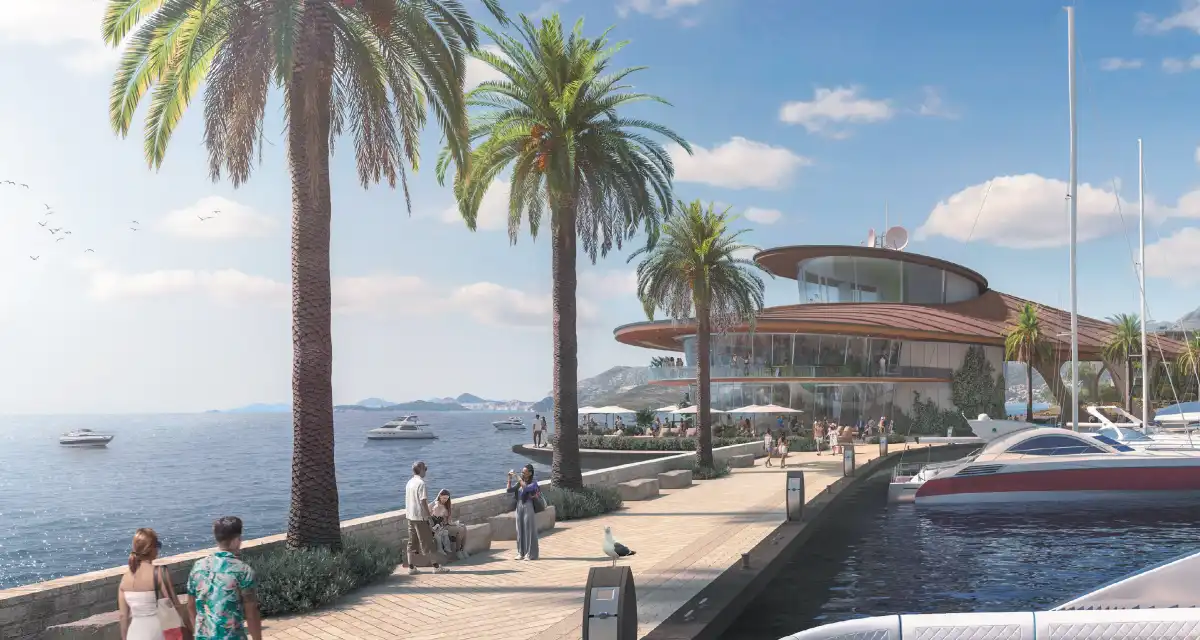
The geography of discretion in Croatia
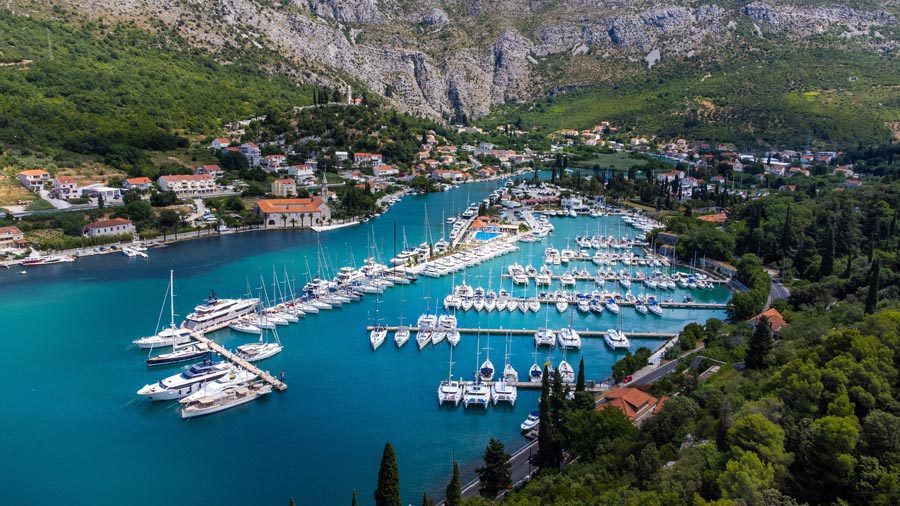
Some parts of the Croatian coast are naturally better at privacy than others. Hvar may be attractive for a moment of energy, but not always for a week of seclusion. Dubrovnik offers majesty, but also public intensity. By contrast, the spaces between the major names often hold the real value for privacy-minded clients: carefully chosen bays, less obvious lunch anchorages, quieter southern island patterns, elegant but less overexposed embarkation points such as Cavtat, and selective use of marinas rather than constant dependence on them.
Montenegro extensions can also appeal because they offer polished marina environments and strong service culture, but again the issue is not publicity versus secrecy in a simplistic sense. It is controlled exposure. A high-end charter may want one dramatic dinner ashore and three days of almost complete withdrawal. The route should make both possible.
That is why captains, brokers and editors who understand the southern Adriatic often place such emphasis on sequencing. Privacy is a route architecture. You do not discover it accidentally in August. You design for it.
Which yachts support ultra-private travel best
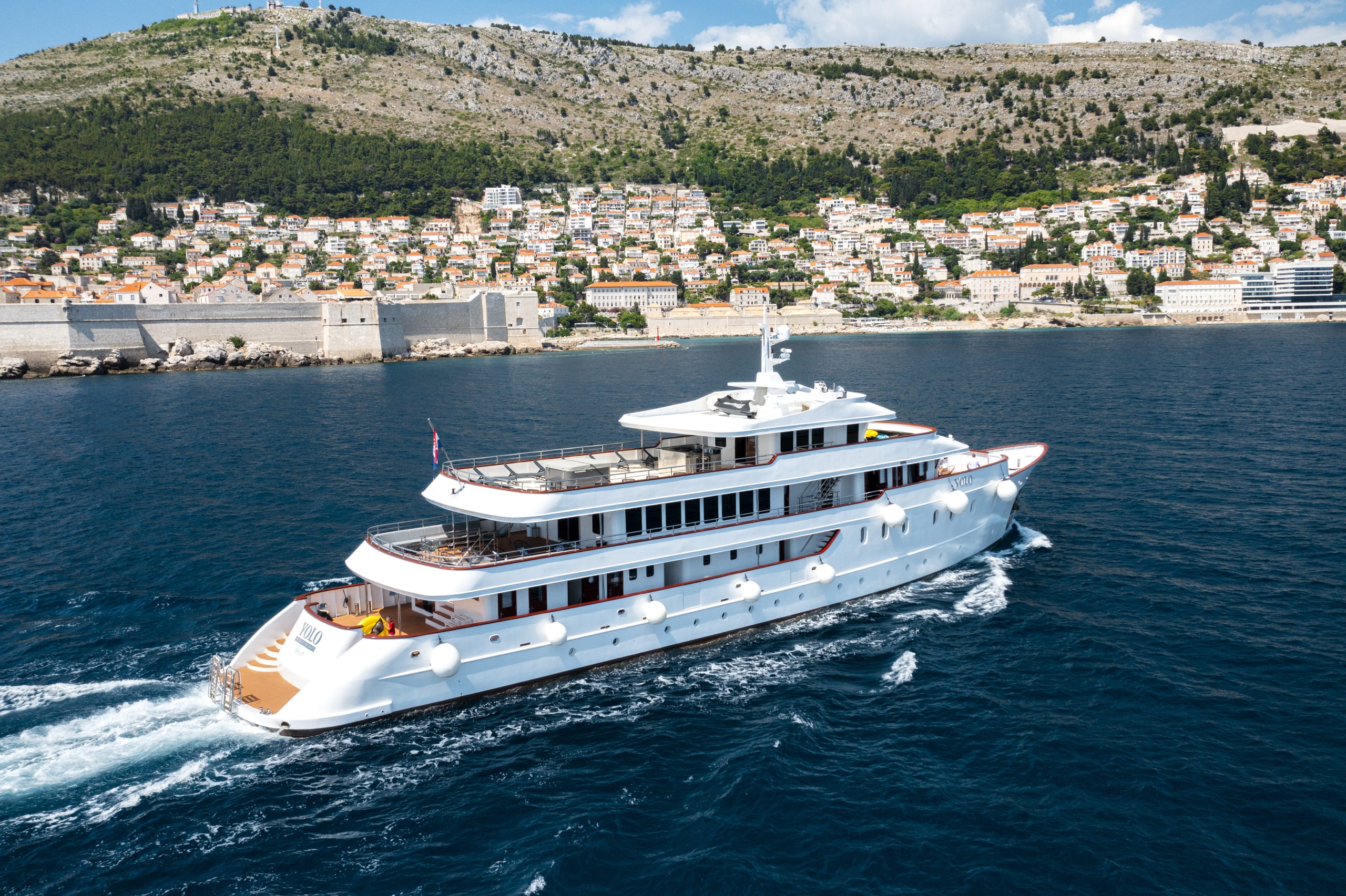
Motor yachts often dominate this category because they offer the strongest mix of speed, separation and route flexibility. They can reposition quickly, protect guest space more fully and support high service standards with minimal intrusion. Certain large catamarans are also increasingly persuasive, especially for guests who want privacy within a more open, lifestyle-led platform. Gulets can work beautifully for families or intimate groups who define privacy as shared retreat rather than technical seclusion. The yacht must fit the privacy style being purchased.
The importance of crew culture
Crew culture is decisive. An ultra-private charter requires service that is attentive without being present in the wrong way. Timing, tone, discretion and reading the room matter enormously. The best crews understand that the highest compliment is often that guests barely noticed how much was being managed on their behalf.
This is where repeat clients become highly selective. They understand that layout and machinery can be bought, but discretion is a human skill. Croatia’s best charter products increasingly compete on exactly this terrain.

Cavtat and the southern discreet-luxury model
Cavtat has growing significance within this conversation because it offers a lower-profile luxury threshold than Dubrovnik while preserving access to the same extraordinary waters. For clients prioritizing discretion, that is invaluable. They can begin in an elegant waterfront town, avoid some of the city’s immediate public compression, and then choose how much visibility the week should contain. That is a far subtler form of prestige than simply berthed display.
The wider Dubrovnik Riviera reinforces this model. It suggests a luxury environment that is polished but not overperformed, internationally legible but still capable of calm. In a Mediterranean landscape where some destinations now feel overexposed, that quality has commercial and emotional value. The ultra-private client is often searching for exactly this: not obscurity, but controlled relevance.
That makes Cavtat not merely a convenient base but a strategic one for this segment of the market.
What clients now expect beyond the obvious
Beyond privacy itself, high-end travelers now expect a quieter set of competencies: seamless transfers, custom provisioning, smart wine and dining judgement, onboard wellness capacity, good internet without conversation about it, strong tender handling, and route changes executed with minimal fuss. They also expect emotional intelligence. Some want a celebratory week. Others want recovery. Others want family time that feels protected from the outside world. The same yacht cannot deliver all these equally unless the crew and planning are exceptional.
Croatia’s strongest private yacht holidays therefore do not advertise themselves solely through gloss. They present themselves through precision. The more experienced the client, the more this matters. At the high end, taste increasingly reveals itself through what is omitted: noise, exposure, unnecessary spectacle and planning friction.
The future of ultra-private charter in Croatia will belong to operators and routes that understand this distinction.

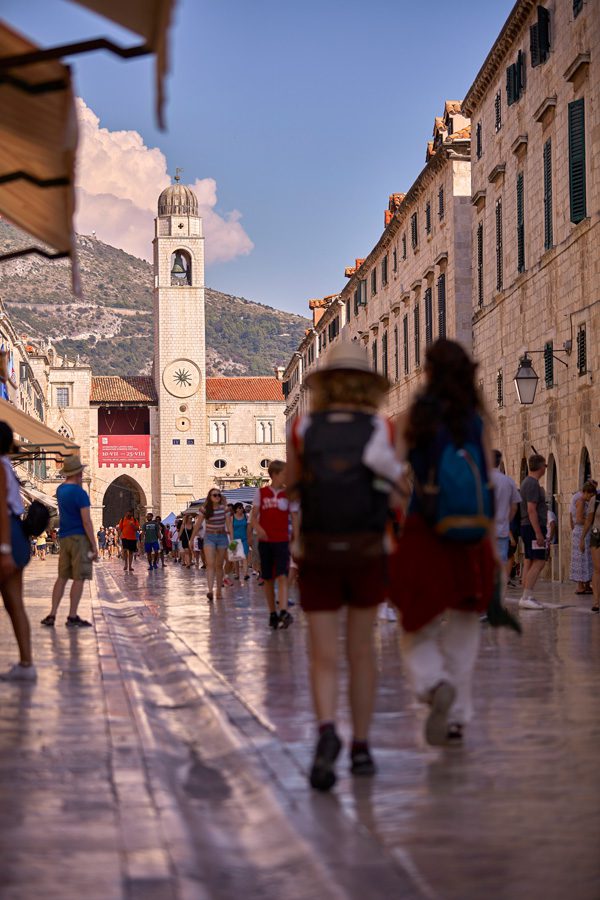
Seasonality, timing and why the month changes the product
Croatia’s charter season also shapes how this product should be understood. June and September often flatter thoughtful travelers most because the water is warm, the service culture is fully awake and the coastline feels more breathable. July and August bring maximum social energy and the widest sense of the charter market as a summer stage, but they also demand more planning discipline. For the ultra-private charter, seasonality changes not only price and availability but mood. The same boat can feel serene in late June and far more performative in mid-August, not because the product changed, but because the Adriatic did. Sophisticated clients recognise this and book accordingly.
Shoulder season is particularly interesting because it reveals whether the yacht product has real integrity. When the heat is softer and the coast less compressed, the focus falls more clearly on layout, service and route intelligence. Boats that rely too heavily on the noise of peak summer are less impressive then. Boats with genuine comfort, good crews and well-proportioned itineraries often become even better. This is one reason repeat Adriatic clients so frequently migrate towards June and September after an initial peak-season experience.
Booking windows matter too. The strongest boats, especially those with good crews and a reputation for being well managed, tend to be secured earlier than first-time clients expect. That is true for catamarans, motor yachts, gulets and specialist family or privacy-led products alike. The market is mature enough that quality is usually recognised well in advance. In editorial terms, The key point is a charter should be treated as a designed travel experience, not a last-minute commodity. The best version of the ultra-private charter in Croatia is usually the version that was planned with foresight rather than assembled under pressure.
Common mistakes and the difference between visible and lived luxury
One of the most common mistakes clients make with the ultra-private charter is assuming that visible luxury automatically produces lived luxury. In Croatia, the lived version is built from finer decisions: how long the sea legs feel, whether lunch is being taken in the right place, how sensibly harbour exposure is managed, whether the crew understand when to serve and when to disappear, and whether the route leaves room for mood rather than only movement. These choices may seem secondary beside the yacht’s appearance, but in practice they decide the quality of the week.
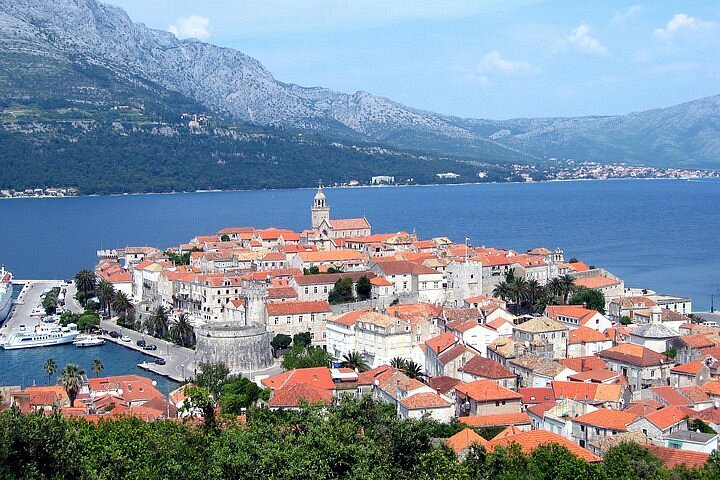
Another error lies in overprogramming. The Adriatic is seductive because there are so many plausible names to include: Dubrovnik, Cavtat, Hvar, Korčula, Mljet, Montenegro, Split and many smaller islands besides. Yet luxury rarely improves through accumulation alone. A charter that tries to prove its worth through relentless movement usually diminishes the yacht as a place to live. The better strategy is to allow one or two strong notes per day, then leave enough unscheduled space for water, conversation, reading, lunch and the simple pleasure of being at sea.
That is also why editorial framing matters. Travelers often book more intelligently when the product is described in human rather than technical terms. They need to know not simply what the boat has, but how the week will feel. The ultra-private charter should be understood through lived rhythm: mornings, transitions, swim stops, dining, light, privacy, motion and the emotional temperature of arrival. That is how serious travel decisions are made.

Market context: why Croatia keeps sharpening the category
The broader Adriatic market gives additional context to the ultra-private charter. Croatia has become one of Europe’s most legible charter destinations not only because it is beautiful, but because it supports multiple levels of sophistication at once. There are straightforward sailing weeks, heavily social routes, highly private itineraries, family-led charters, design-focused catamaran trips, heritage-driven gulet holidays and modern motor-yacht programs. This breadth makes Croatia unusually useful for comparison. It allows travelers to refine taste, not just consume scenery.
For that reason, the country increasingly attracts guests who are not merely renting a boat for the first time, but actively learning what kind of maritime traveler they are. Some discover that they value the sea itself; others discover that they value privacy, hosting, architecture, gastronomy or the elasticity of route. The ultra-private charter sits within that wider education. It is not a standalone product category floating above context. It is part of a mature ecosystem in which Cavtat, Dubrovnik, Split, Hvar, Korčula and Montenegro each contribute different tones to the market.
This is also why the best charter content should avoid brochure language. The Croatian yacht landscape is now too developed, and its clients too informed, for empty superlatives to be useful. What serious travelers want is interpretation. They want to know what a yacht product represents, what kind of people tend to love it, where it works best, and how it speaks to the Adriatic itself. Any honest analysis of the ultra-private charter has to start there.
Service, dining and the texture of the week
No serious Adriatic charter analysis is complete without acknowledging how strongly food, service and shore texture influence the perceived quality of the yacht itself. Guests do not separate these things as neatly as the trade sometimes does. They remember whether breakfast felt leisurely, whether lunch was taken in a bay that justified the extra hour at anchor, whether the crew read their appetite for privacy correctly, and whether evenings ashore were chosen with taste rather than habit. In Croatia this matters especially because harbor towns, konobas, waterfront restaurants and village promenades are not decorative extras. They are part of the charter product.
For the ultra-private charter, the best results usually come from moderation and judgement. Not every lunch needs to be ashore. Not every dinner should happen on board. Not every swim stop deserves equal time. The crew and route must decide where the yacht should protect the guests from the coast and where it should introduce them to it. That calibration is the hallmark of maturity. A week that gets it right feels richer than one that simply offers more options.
This is also why repeat travelers often talk less about the yacht’s specifications than about the tone of the days: a perfectly judged lunch, a quiet arrival, a table set just so, a crew that anticipated the weather and the mood simultaneously. In other words, the yacht becomes excellent when the broader Adriatic experience around it has been curated intelligently. High-end privacy in Croatia is not found by hiding from the Adriatic; it is found by deciding exactly how much of it to reveal, and when.
Conclusion
Ultra-private yacht holidays in Croatia are becoming more refined because travelers themselves are becoming more exacting. They want less intrusion, more control, better crew judgement and routes shaped around discretion rather than merely popularity. The Adriatic can provide this superbly, especially through the southern corridor and the quieter luxury language of places like Cavtat.
For readers of Cavtat Guide, the lesson is simple: privacy is not a marketing adjective. It is a charter discipline. Choose the right yacht, the right crew and the right geography, and Croatia becomes one of the Mediterranean’s most convincing environments for calm prestige. Choose poorly, and even the most expensive boat cannot protect the week. The highest-end clients now understand that clearly. The rest of the market is beginning to catch up.
Need help choosing the right experience?
Tell us your budget, dates, and travel style, and Cavtat Guide will help you choose the best yacht charter, tour, property option, or local experience.