Few decisions in the Croatian charter market generate more confusion than the choice between a sailing yacht and a catamaran. The comparison is often reduced to caricature: monohulls for purists, catamarans for comfort. That distinction is not wrong, but it is too thin to be useful for serious trip planning. In the Adriatic, the better question is what kind of holiday the client actually wants to live. The answer lies in how the boat shapes time, movement and mood.
Croatia is unusually revealing in this respect because its charter geography rewards both categories, but for different reasons. A sailing yacht heightens the poetry of passage. It makes the sea more present. You feel the route in your body and in the handling of the day. A catamaran, by contrast, transforms the same geography into an exercise in broad, comfortable living. It asks less of the guest as sailor and more of the boat as host. Both can be luxurious. The difference is in emphasis.
For Cavtat Guide’s readership, which often includes travellers comparing products rather than merely chasing the lowest rate, this distinction matters enormously. A beautiful yacht that does not match the tempo of the week is a planning error. The right choice is rarely ideological. It is contextual.

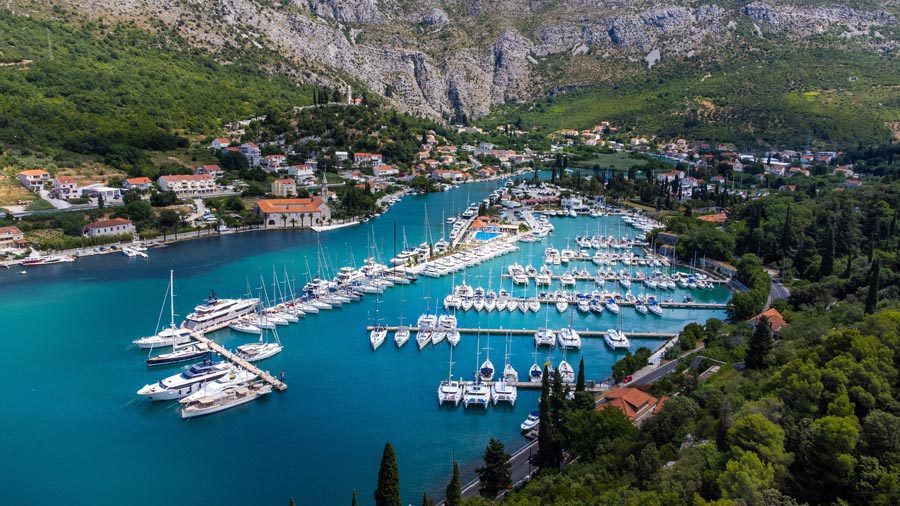
The case for the sailing yacht
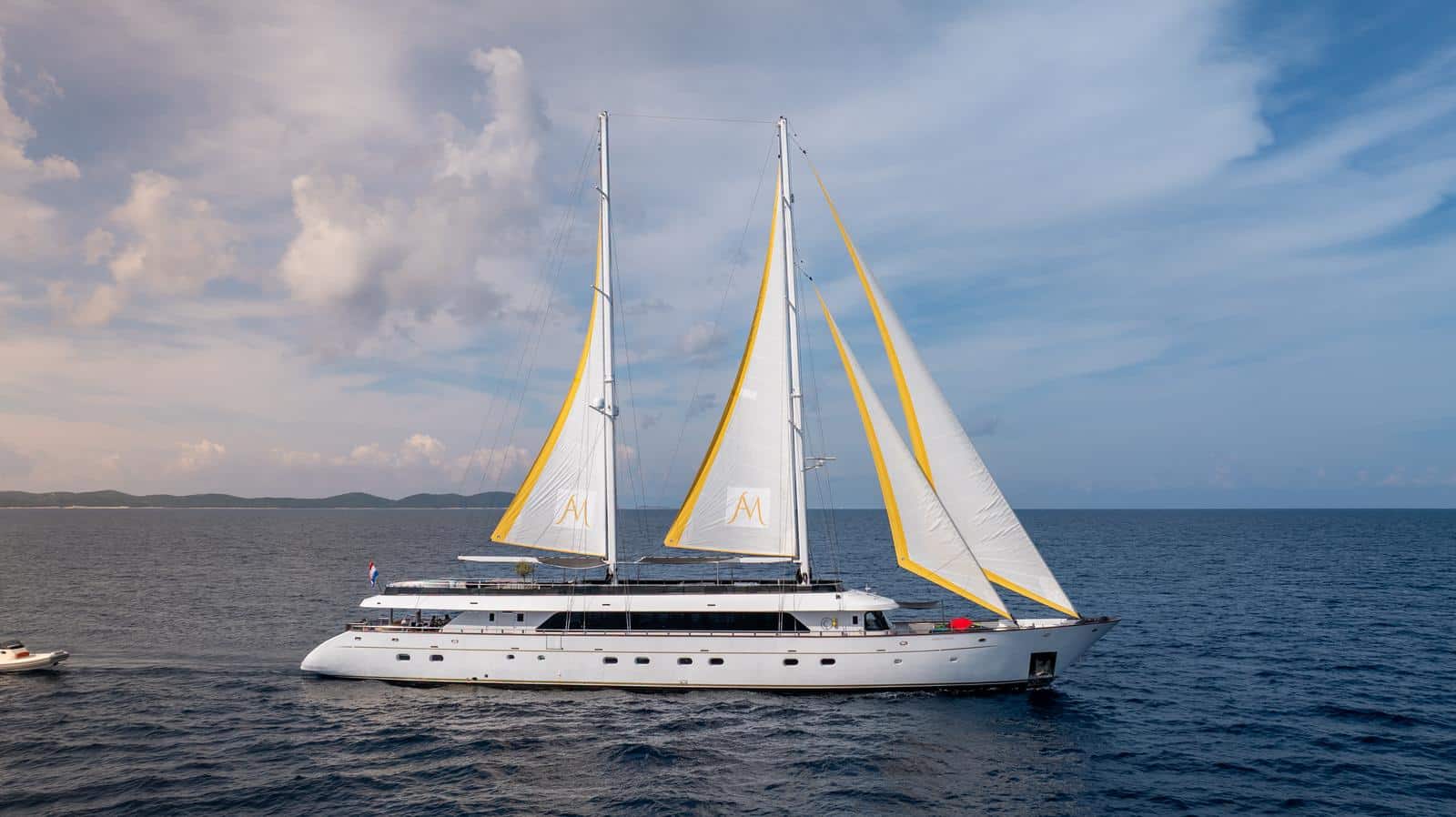
A good sailing yacht gives Croatia a more elemental quality. The coast stops feeling like a chain of stops connected by transport and begins to feel like a maritime landscape experienced under its own logic. The heel of the boat, the sound profile under sail and the discipline of the route all contribute to a stronger sense of journey. For couples, especially those drawn to romance in the older sense of the word, this can be deeply persuasive. For experienced sailors, it is often non-negotiable.
This style of charter suits clients who do not want the sea to become merely decorative. They want to feel it actively. They accept that cabins may be a little more compact, that movement onboard can require more awareness, and that the day may at times be shaped by wind and seamanship rather than by pure preference. In return they get authenticity of a kind that no floating villa can reproduce.
In Croatia, the sailing yacht is particularly strong in shoulder season and on routes where the pleasures of passage are part of the appeal. It can be wonderful around the Dubrovnik islands, through Korčula waters and across central Dalmatian sailing grounds. Yet it asks for a certain temperament. The guest must want sailing, not merely tolerate it.
| Criteria | Sailing yacht | Catamaran |
|---|---|---|
| Core appeal | The romance and purity of sailing | Space, stability and floating-villa comfort |
| Best for | Guests who care about the journey under sail | Guests who care about ease, sociability and relaxed island-hopping |
| Cabin and deck logic | More linear, often more intimate | Broader living areas and stronger separation |
| Croatia fit | Excellent for sailing-minded routes and couples | Excellent for families, mixed groups and first-time charterers |

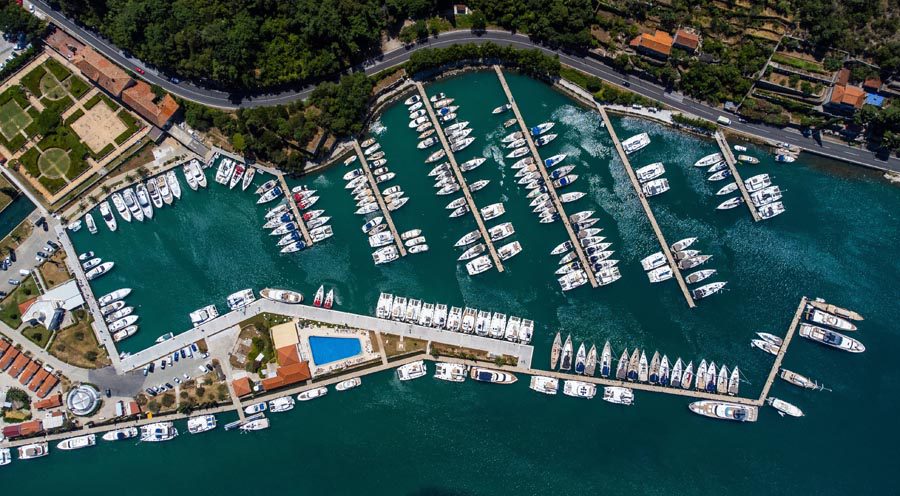
The case for the catamaran
The catamaran’s appeal begins with space but does not end there. It offers a more stable, hotel-minded and socially forgiving charter environment. Guests can move around with ease. Meals feel expansive. Cabins are usually more balanced. Outdoor zones are more usable simultaneously. For many parties, especially mixed groups and first-time charterers, this creates a form of luxury more immediately legible than sailing purity.
Croatia has done much to make this product compelling. The charter fleet has improved, crewed catamarans have become more refined, and the country’s sequence of short hops, anchorages and stylish harbours suits the format exceptionally well. In practical terms, many clients who say they want a sailing holiday actually want a catamaran holiday with a sailing backdrop. They want sea, islands and marinas without the tighter compromises of a monohull.
That is not a lesser desire. It is simply a different one. The catamaran has become dominant in many parts of the Adriatic because it fits how contemporary travellers use boats: as places to dine, lounge, swim, host friends and recover from the pressures of the year. It is less about mastery of the sea than about inhabiting it comfortably.
How route design changes the answer
The same client might choose a different platform depending on route. A sailing yacht can be superb on a couple’s itinerary built around calm passages, good weather windows and a genuine appetite for the experience of sailing. A catamaran may be the better answer on a family charter from Cavtat to Korčula or on a group week through Split and Hvar where social deck time matters more than the nuances of performance under sail.
Southern and central Adriatic differences
In southern Dalmatia, where routes from Cavtat or Dubrovnik often emphasize atmosphere, stone towns and moderate legs, both products can work beautifully. The question becomes whether the guest wants a more intimate romance or a more spacious ease. In central Dalmatia, where fleet density is higher and social expectations can be more active, catamarans often win because they absorb mixed agendas more smoothly. Yet sailing yachts remain powerful for travellers who want the sea itself to stay central.
This is why product selection should follow route logic, not precede it. One should first define how the week ought to feel, then choose the hull that produces that feeling.

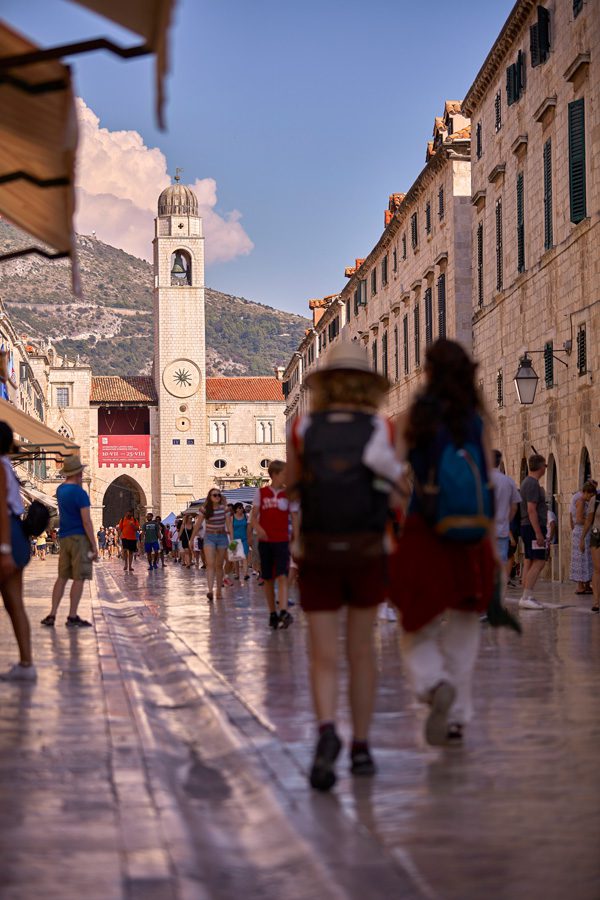

Comfort, privacy and who is travelling
The traveller profile matters as much as destination. A couple celebrating an anniversary may find a sailing yacht more emotionally resonant because it sharpens the sense of shared passage. A family with younger children will generally find a catamaran more comfortable. A group of friends may appreciate the social geometry of a catamaran, while a pair of confident, sailing-minded guests may see the very same geometry as excessive for their needs.
Privacy is also different in each category. Catamarans usually offer better separation and more forgiving circulation. Sailing yachts offer a more compact intimacy. Some guests experience that intimacy as charm; others experience it as compression. Neither response is wrong. They simply reflect different travel psychologies.
In luxury charter, the error lies in assuming that beauty is enough. Beauty matters, but fit matters more. A yacht must correspond to the group’s internal social structure. Croatia provides both products at strong levels. The decision lies in the people, not the brochure.
The financial and value dimension
Catamarans often appear more expensive at first glance, yet can represent better value for larger groups because of cabin layout and shared space. Sailing yachts may offer a more affordable entry into crewed or skippered charter, particularly for smaller parties. But value is never purely numerical. It depends on what the guests are trying to buy: intimacy, ease, comfort, sailing feeling, or broader social use of the yacht.
This is where first-time charterers often benefit from editorial guidance. They may imagine themselves as sailors when in fact they are lifestyle travellers, or they may fear a sailing yacht’s intimacy when they would in fact find it romantic and liberating. Croatia’s market is mature enough to support both fantasies and realities. The challenge is aligning them.
A good charter decision is one that leaves the guests feeling the boat amplified the destination. A poor one leaves them feeling they spent the week adapting to the boat instead.
Seasonality, timing and why the month changes the product
Croatia’s charter season also shapes how this product should be understood. June and September often flatter thoughtful travellers most because the water is warm, the service culture is fully awake and the coastline feels more breathable. July and August bring maximum social energy and the widest sense of the charter market as a summer stage, but they also demand more planning discipline. For the decision between monohulls and catamarans, seasonality changes not only price and availability but mood. The same boat can feel serene in late June and far more performative in mid-August, not because the product changed, but because the Adriatic did. Sophisticated clients recognise this and book accordingly.
Shoulder season is particularly interesting because it reveals whether the yacht product has real integrity. When the heat is softer and the coast less compressed, the focus falls more clearly on layout, service and route intelligence. Boats that rely too heavily on the noise of peak summer are less impressive then. Boats with genuine comfort, good crews and well-proportioned itineraries often become even better. This is one reason repeat Adriatic clients so frequently migrate towards June and September after an initial peak-season experience.
Booking windows matter too. The strongest boats, especially those with good crews and a reputation for being well managed, tend to be secured earlier than first-time clients expect. That is true for catamarans, motor yachts, gulets and specialist family or privacy-led products alike. The market is mature enough that quality is usually recognised well in advance. In editorial terms, The key point is a charter should be treated as a designed travel experience, not a last-minute commodity. The best version of the decision between monohulls and catamarans in Croatia is usually the version that was planned with foresight rather than assembled under pressure.
Common mistakes and the difference between visible and lived luxury
One of the most common mistakes clients make with the decision between monohulls and catamarans is assuming that visible luxury automatically produces lived luxury. In Croatia, the lived version is built from finer decisions: how long the sea legs feel, whether lunch is being taken in the right place, how sensibly harbour exposure is managed, whether the crew understand when to serve and when to disappear, and whether the route leaves room for mood rather than only movement. These choices may seem secondary beside the yacht’s appearance, but in practice they decide the quality of the week.
Another error lies in overprogramming. The Adriatic is seductive because there are so many plausible names to include: Dubrovnik, Cavtat, Hvar, Korčula, Mljet, Montenegro, Split and many smaller islands besides. Yet luxury rarely improves through accumulation alone. A charter that tries to prove its worth through relentless movement usually diminishes the yacht as a place to live. The better strategy is to allow one or two strong notes per day, then leave enough unscheduled space for water, conversation, reading, lunch and the simple pleasure of being at sea.
That is also why editorial framing matters. Travellers often book more intelligently when the product is described in human rather than technical terms. They need to know not simply what the boat has, but how the week will feel. The decision between monohulls and catamarans should be understood through lived rhythm: mornings, transitions, swim stops, dining, light, privacy, motion and the emotional temperature of arrival. That is how serious travel decisions are made.

Market context: why Croatia keeps sharpening the category
The broader Adriatic market gives additional context to the decision between monohulls and catamarans. Croatia has become one of Europe’s most legible charter destinations not only because it is beautiful, but because it supports multiple levels of sophistication at once. There are straightforward sailing weeks, heavily social routes, highly private itineraries, family-led charters, design-focused catamaran trips, heritage-driven gulet holidays and modern motor-yacht programs. This breadth makes Croatia unusually useful for comparison. It allows travellers to refine taste, not just consume scenery.
For that reason, the country increasingly attracts guests who are not merely renting a boat for the first time, but actively learning what kind of maritime traveller they are. Some discover that they value the sea itself; others discover that they value privacy, hosting, architecture, gastronomy or the elasticity of route. The decision between monohulls and catamarans sits within that wider education. It is not a standalone product category floating above context. It is part of a mature ecosystem in which Cavtat, Dubrovnik, Split, Hvar, Korčula and Montenegro each contribute different tones to the market.
This is also why the best charter content should avoid brochure language. The Croatian yacht landscape is now too developed, and its clients too informed, for empty superlatives to be useful. What serious travellers want is interpretation. They want to know what a yacht product represents, what kind of people tend to love it, where it works best, and how it speaks to the Adriatic itself. Any honest analysis of the decision between monohulls and catamarans has to start there.
Service, dining and the texture of the week
No serious Adriatic charter analysis is complete without acknowledging how strongly food, service and shore texture influence the perceived quality of the yacht itself. Guests do not separate these things as neatly as the trade sometimes does. They remember whether breakfast felt leisurely, whether lunch was taken in a bay that justified the extra hour at anchor, whether the crew read their appetite for privacy correctly, and whether evenings ashore were chosen with taste rather than habit. In Croatia this matters especially because harbour towns, konobas, waterfront restaurants and village promenades are not decorative extras. They are part of the charter product.
For the decision between monohulls and catamarans, the best results usually come from moderation and judgement. Not every lunch needs to be ashore. Not every dinner should happen on board. Not every swim stop deserves equal time. The crew and route must decide where the yacht should protect the guests from the coast and where it should introduce them to it. That calibration is the hallmark of maturity. A week that gets it right feels richer than one that simply offers more options.
This is also why repeat travellers often talk less about the yacht’s specifications than about the tone of the days: a perfectly judged lunch, a quiet arrival, a table set just so, a crew that anticipated the weather and the mood simultaneously. In other words, the yacht becomes excellent when the broader Adriatic experience around it has been curated intelligently. In Croatia, the choice between a sailing yacht and a catamaran is really a choice between two kinds of luxury: one rooted in passage, the other in ease.
Conclusion
Which charter product fits your Croatia trip depends on how you want the week to feel. Choose a sailing yacht when sailing itself is part of the romance, when intimacy appeals, and when the sea should remain active within the narrative. Choose a catamaran when space, stability, social comfort and gentle island-hopping matter most. Neither is inherently superior. Each is persuasive for the right travellers on the right route.
For readers exploring Cavtat Guide’s yacht coverage, the crucial step is to stop treating the decision as a technical comparison alone. It is a lifestyle choice shaped by route, group dynamic and personal taste. Croatia rewards both categories richly. The real sophistication lies in choosing the one that matches your idea of a holiday before you ever step aboard.
Need help choosing the right experience?
Tell us your budget, dates, and travel style, and Cavtat Guide will help you choose the best yacht charter, tour, property option, or local experience.