

Two bases, two very different travel moods: one built around harbour ease and sea access, the other around stone streets, late-night atmosphere, and historic immersion. The right choice depends less on geography than on how you actually want the days to feel.
Choosing where to stay near Dubrovnik is one of the most important decisions in a southern Croatia itinerary because your base changes the tone of the entire trip. In 2026, the two classic options remain Cavtat and Dubrovnik Old Town. They are geographically close, but emotionally and operationally they do very different work.
Cavtat offers air, ease, and a harbour-town rhythm that makes daily life simple. Dubrovnik Old Town offers immediate immersion, extraordinary architecture, and the privilege of waking inside one of Europe’s most recognisable historic settings. Both can produce an excellent holiday. Both can also disappoint if they are chosen for the wrong reasons.
This guide compares them honestly: atmosphere, transport, beaches, restaurants, pricing, who each area suits best, and why so many travellers who think they want Dubrovnik end up being happier when they sleep in Cavtat instead.
Useful next reads on Cavtat Guide
The simplest distinction: one is a harbour town, the other is a historic city core
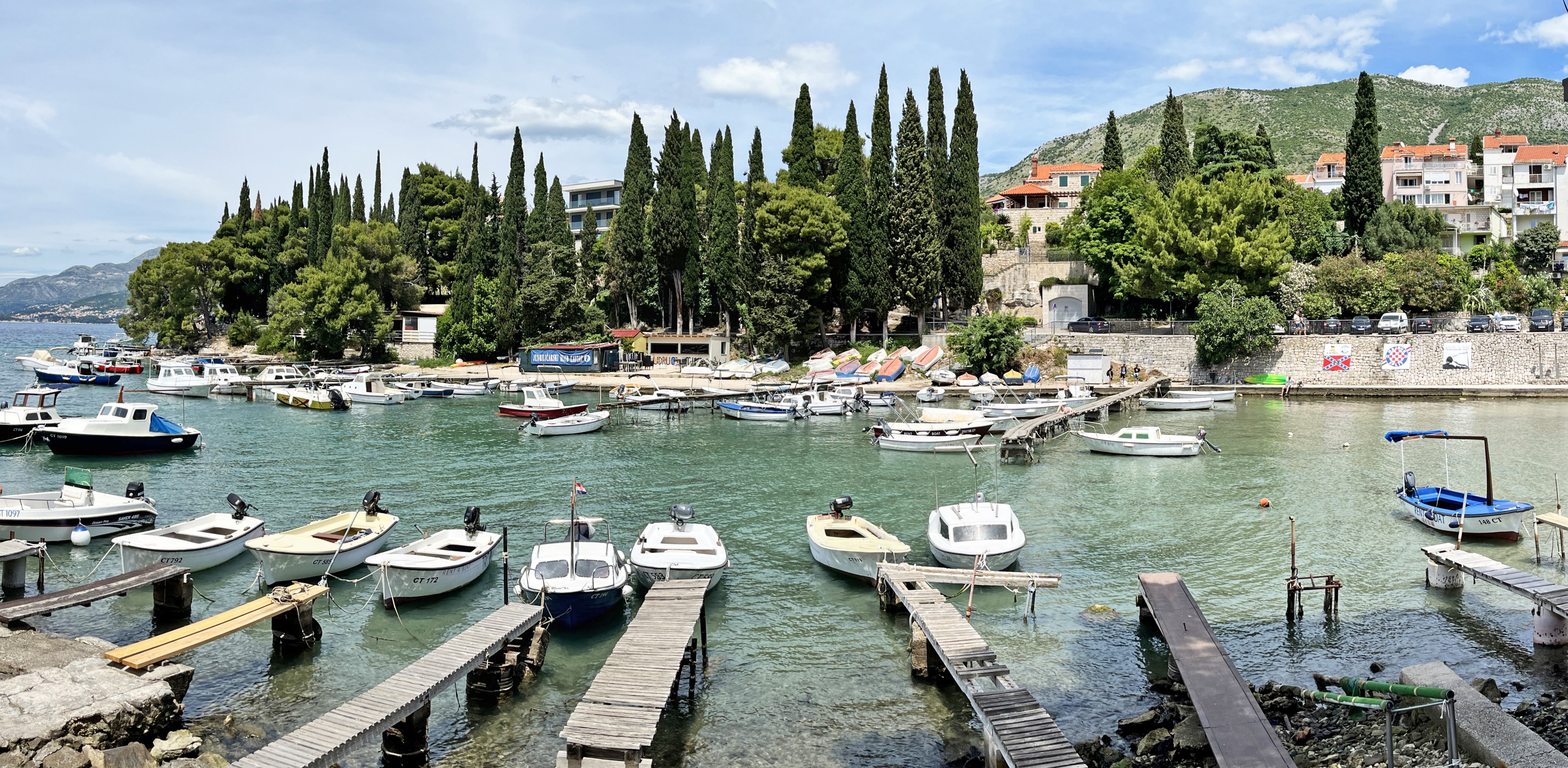
Cavtat is a living coastal town with a broad promenade, hotel zones, apartments, swimming points, and quick access to the airport. Dubrovnik Old Town is a compact walled city where the atmosphere is the point. If you stay inside or immediately beside the Old Town, you are choosing architecture, density, and the privilege of waking inside a place whose visual power is already part of Europe’s shared imagination. If you stay in Cavtat, you are choosing release.
Neither choice is inherently better. The right question is whether your holiday needs ease or intensity. Some travellers want to step from their door directly into medieval streets, high stone walls, and late-evening city drama. Others want to hear the sea, walk five minutes to a swim, and avoid the operational weight of the city every morning.
This is the real difference. Dubrovnik Old Town gives you concentration. Cavtat gives you room.
Why Cavtat is often the smarter base
Cavtat’s first advantage is logistics. It lies only a short drive from Dubrovnik Airport, so arrival and departure days are gentler. That matters more than many people admit, especially on trips of three to five nights. A base that saves you time at both ends of the holiday is not just more convenient. It changes the emotional quality of the stay.
The town also spreads out enough to feel breathable in high season. Even when the harbour is lively, you can move toward Tiha Bay or Rat Peninsula and find a quieter register within minutes. You are never entirely trapped inside one crowded frame.
Accommodation in Cavtat is practical in the best sense of the word. There are larger hotels, smaller guesthouses, apartments, waterfront positions, and quieter edges, yet the whole place remains compact once you are there. You can walk for dinner, swim before breakfast, and board a boat excursion without turning the day into a transport puzzle.
Another strength is psychological rather than purely geographic. Cavtat is easy to understand quickly. You arrive, take one harbour walk, and the town explains itself. You know where the centre is, where the swims begin, where the restaurants cluster, and how the place opens toward quieter edges. That ease is one of the reasons so many travellers start using Cavtat not as a backup to Dubrovnik, but as the deliberate first choice.
Who Cavtat suits best
Cavtat suits couples, repeat visitors to Dubrovnik, travellers using the airport intelligently, families who value space, and anyone planning to combine beach, boat, and day-trip time. It also suits remote workers and slower travellers because the town has enough life without demanding total sensory commitment every hour.
Most importantly, Cavtat suits people who want the Croatian coast to feel like somewhere they are living for a few days rather than merely consuming.
Why Dubrovnik Old Town is still worth choosing
There is no substitute for waking early inside Dubrovnik’s historic core before the day tightens. Staying in or beside the Old Town gives you access to the city’s best hours: morning stone light, quieter lanes, late-evening wandering, and the pleasure of returning on foot after dinner rather than treating the city as a timed excursion.
If your trip is centred on history, architecture, and first-time Dubrovnik immersion, the Old Town remains the most direct answer. It allows the city to shape your day from the beginning rather than appearing as a planned visit later.
The trade-off is operational. There are stairs, luggage complications, crowd density, premium prices, and less spontaneous sea access than many first-time visitors assume. Dubrovnik Old Town is a magnificent base for city travellers and a less forgiving base for people who imagine a simple beach holiday with easy dips in the water between meals.
There is also the question of pressure. Dubrovnik asks more of the body than people sometimes expect. You are walking on polished stone, dealing with vertical movement, and moving through one of the most photographed urban environments in Europe. That can feel thrilling for two or three nights. It can also become tiring if the whole holiday depends on urban intensity morning to night.
If you choose Dubrovnik Old Town, it should be because you want exactly what it gives: atmosphere on the doorstep, the city’s best hours on foot, and the feeling of being inside rather than beside one of the Adriatic’s great urban stages.
Atmosphere by time of day
Morning
Cavtat mornings tend to feel local and functional: coffee, swimmers, harbour staff, school or service routines in shoulder season, and a calm promenade before excursion hours. It is easy to begin the day well there.
Dubrovnik mornings can be exquisite if you are already inside the city. This is when the Old Town feels most generous and least burdened by its own fame. But that advantage belongs mainly to those sleeping there. Day-trippers and out-of-town visitors usually arrive just as the city is beginning to tighten.
Afternoon
Cavtat handles heat better because swimming is closer and movement is less compressed. Dubrovnik in mid-afternoon can still be spectacular, but it is often the hour when beauty and effort begin to collide, especially in summer.
Evening
Dubrovnik has the more dramatic evening atmosphere. Cavtat has the easier evening. Choose according to whether you want a memorable stage set or a place you can settle into night after night without negotiation.
This difference becomes more important the longer you stay. A short city stay can absorb nightly drama with ease. A six-night holiday often feels better when not every evening asks to be an event. Cavtat’s gift is repeatability. Dubrovnik’s is intensity.
Sea access and beaches: this is where Cavtat pulls ahead
Travellers planning a holiday with regular swimming usually find Cavtat the better base. Sea access is woven into the town rather than added awkwardly at the edges. You can step out for a quick morning swim, a late-afternoon dip, or a peninsula walk with sea ladders and shaded entries along the way.
Dubrovnik has beaches and swimming points, but they function more like defined urban amenities than part of the Old Town’s natural daily structure. They can absolutely be enjoyable, but they rarely feel effortless if you are based in the city core.
If beach quality matters deeply, read this comparison through a simple lens: Cavtat is easier for repeat, low-friction swimming. Dubrovnik works better when the city itself is the main event and the water is secondary.
This is especially relevant for families and couples who actually plan to enter the sea more than once. Cavtat lets swimming become part of the daily routine. Dubrovnik more often makes it one planned chapter within a city day.
Boat tours and excursions
Both bases can support boat tours, but they do so differently. Cavtat offers calmer departures and excellent access to shorter excursions such as the Blue Cave speedboat route or the Three Islands cruise. The harbour-town setting makes departures feel like part of the stay rather than an external logistical event.
Dubrovnik offers more departure volume and broader city excursion infrastructure. But in practice, if you are sleeping in Cavtat, use Cavtat departures where possible. Crossing into Dubrovnik early for a boat you could have boarded locally rarely improves the day.
Cavtat also tends to work better if your itinerary includes Montenegro or inland Konavle. The geography is simply cleaner. Dubrovnik Old Town makes more sense when the trip is structurally city-led, not region-led.
That is why Cavtat often performs better as an all-round base, while Dubrovnik performs better as a concentrated destination. The distinction is subtle, but once understood it makes planning much easier.
Restaurants and the rhythm of evenings
Dubrovnik wins on range, ambition, and special-occasion dining. Cavtat wins on consistency and repeatability. This distinction matters much more on stays longer than two nights.
In Dubrovnik, dinner can feel like an event every evening. That can be exhilarating for a short, city-centred trip. In Cavtat, dinner can become part of a comfortable daily ritual: a waterfront table, one drink, a harbour walk after. This is not a lesser pleasure. For many travellers it is the better one.
Travellers who want one or two more theatrical city dinners can easily make them work from Cavtat by planning a dedicated Dubrovnik day and lingering into the evening. That is often the sweet spot: city dining without city-based fatigue.
There is also a practical point. In Cavtat, the evening is less likely to dissolve into transfer planning. You eat, you walk, you are already where you need to be. In Dubrovnik, especially in peak season, dinner can sometimes carry more reservation pressure and more overall intensity. Again, neither is wrong. They simply produce different nights.
| Factor | Cavtat | Dubrovnik Old Town |
|---|---|---|
| Airport access | Excellent | Longer transfer |
| Historic immersion | Moderate | Exceptional |
| Easy swimming | Excellent | Moderate |
| Evening ease | High | Variable |
| Restaurant range | Good | Very broad |
| Best for short airport-linked stays | Yes | Less ideal |
| Best for first-time city immersion | Good support base | Yes |
How budgets behave differently in each base
Cavtat is not cheap in peak season, but value tends to read more clearly. You can often secure more space, easier access, and a calmer setting for the same or lower spend than central Dubrovnik. Dubrovnik Old Town pricing reflects uniqueness and demand. You are paying not only for the room but for the setting itself, and if the setting is the reason you came, that may be entirely justified.
Budget travellers should also think beyond the nightly rate. In Dubrovnik, everyday friction can generate extra spending: taxis, luggage help, premium food zones, and the temptation to solve tiredness with convenience purchases. In Cavtat, more of the holiday can happen on foot near your room.
The question is therefore not simply which base is cheaper. It is which base lets your budget work harder for the kind of trip you actually want.
For many travelers, Cavtat wins not because it is dramatically cheaper, but because the spend feels less punishing. You often get more breathing room, more sea access, and less daily friction for the money.
Transport logic and trip structure
Cavtat is particularly strong for travellers blending several priorities: one Dubrovnik day, one boat day, one local swim day, and one inland Konavle day. Dubrovnik Old Town is stronger when your trip is mostly about the city itself and you want to fit only one or two excursions around it.
For first-time visitors, one effective approach is this: stay in Cavtat if your trip is four nights or more and includes swimming, and stay in Dubrovnik Old Town if your trip is two nights built mainly around the city. For longer or more luxurious trips, combining both is often ideal.
If you are uncertain about transfers, arrival logic, or how to structure a first or final night, our Dubrovnik Airport guide remains the best practical companion to this comparison.
The biggest mistake travellers make is assuming they need to sleep in Dubrovnik to experience Dubrovnik properly. In reality, many people experience the city better when they visit it intentionally and recover somewhere else. That is precisely the role Cavtat plays so well.
Cavtat gives you room to breathe. Dubrovnik Old Town gives you a historic stage set. The right choice depends on whether ease or immersion matters more to this particular trip.
When a split stay is worth it
If you have five nights or more, a split stay can be excellent: two nights in Dubrovnik Old Town for architecture, museums, and late evenings, then three nights in Cavtat for sea, harbour life, and easier departures. This works especially well for travellers arriving late or flying out early, because Cavtat absorbs one end of the journey beautifully.
It also protects the trip from monotony. The Old Town remains dramatic. Cavtat remains restorative. Each place gets to perform its best function rather than being forced to do everything.
Split stays are especially persuasive for honeymoon-style itineraries, first visits to Croatia, or trips where you genuinely want both versions of the coast rather than trying to force one base to solve every need. The trick is not to split too aggressively. Two bases are usually enough. More than that and the holiday can start to feel like relocation rather than travel.
Quick decision guide
- Choose Cavtat if you want easier airport access, more regular swimming, calmer evenings, and a more breathable base.
- Choose Dubrovnik Old Town if you want maximum city immersion, iconic early and late city hours, and history on the doorstep.
- Choose both if you have enough nights and want the strongest version of each experience.
Conclusion: choose the base that matches your energy
Where to stay near Dubrovnik is ultimately a question of energy management. Cavtat is better for travellers who want water, ease, practical logistics, and a genuinely pleasant daily routine. Dubrovnik Old Town is better for travellers who want intensity, history, and the privilege of living briefly inside the city’s fabric.
Both can produce an excellent holiday. The mistake is not choosing one over the other. It is choosing a base whose demands do not match the trip you actually want to have.
For many travellers in 2026, the most intelligent answer remains Cavtat with deliberate Dubrovnik time rather than Dubrovnik by default. That does not make the Old Town less extraordinary. It simply means extraordinary is not always the same thing as sustainable for four or five consecutive nights.
If you choose with honesty rather than fantasy, both places reward you. Cavtat rewards calm and continuity. Dubrovnik rewards attention and appetite for intensity. Once you know which of those your trip needs most, the decision becomes much simpler.
Frequently asked questions
Is Cavtat too quiet if I want atmosphere?
Not if your idea of atmosphere includes a working harbour, evening promenades, and repeatable good dinners. Cavtat is quieter than Dubrovnik Old Town, but not empty or sleepy in season. It simply expresses atmosphere in a less theatrical, more liveable way.
Is Dubrovnik Old Town difficult with luggage?
It can be. Steps, pedestrian-only sections, and access limitations are real considerations, especially in hot weather or with larger suitcases. That does not make the Old Town a bad choice, but it does mean arrival and departure need more planning than many first-time visitors expect.
Which base is better for a honeymoon-style trip?
That depends on the style of honeymoon. If you want dramatic architecture, evening glamour, and city immersion, Dubrovnik Old Town is powerful. If you want harbour calm, sea access, and a slower luxury rhythm, Cavtat may be the better fit. Many couples do best with a split stay.
Where is better if I have an early flight?
Cavtat, almost always. Its proximity to the airport reduces stress and protects the final evening from becoming a transport calculation. That advantage is one of the clearest practical reasons travelers choose Cavtat even when Dubrovnik remains part of the plan.
Can I visit Dubrovnik easily if I stay in Cavtat?
Yes. Dubrovnik is close enough for a properly focused day trip, and that is one of Cavtat’s greatest strengths. You gain city access without having to sleep inside the city every night.
Is Cavtat cheaper than staying in Dubrovnik Old Town?
Often yes in overall value terms, though not always by a dramatic margin. The larger difference is usually what you receive for the spend: more space, easier logistics, and simpler access to the sea. Dubrovnik Old Town’s premium reflects the rarity of the setting itself.
Which base is better without a car?
Both are possible without a car, but Cavtat is particularly easy because daily life stays compact and airport logistics are simple. Dubrovnik Old Town also works car-free, though you need more patience with arrivals, luggage, and city movement.
What if I want both beaches and history?
That is exactly when Cavtat often wins. You can sleep by the sea, swim repeatedly, and still visit Dubrovnik properly as a dedicated city day. It creates a more balanced holiday than forcing every need into the Old Town itself.
Need help choosing the right experience?
Tell us your budget, dates, and travel style, and Cavtat Guide will help you choose the best yacht charter, tour, property option, or local experience.