You can learn quite a lot about Croatia before you understand a single historical date properly. You can learn it from the way a morning coffee extends beyond efficiency, from the way fish is presented without ornament, from the fact that the finest table by the sea does not necessarily try to turn itself into a spectacle. For a foreign visitor, the Croatian table is not merely a dining surface. It is one of the clearest places where the country’s values become visible. Along the southern Adriatic, especially in Cavtat and Dubrovnik, food and hospitality reveal a society that prizes duration, clarity, measured generosity and a strong sense of place. Travelers often arrive expecting a pretty coast and decent seafood. They leave having discovered a grammar of behaviour: how long one stays, how one shares, how a meal belongs to the day rather than interrupting it.

The key point is so much tourism language has flattened Mediterranean food into the same vague promise of freshness and conviviality. Croatia deserves better than that. Its table culture is not interchangeable with every other coast. It contains Mediterranean ingredients, certainly, but it is shaped by Adriatic geography, by older Central European habits of order and timing, and by a history in which port cities, small bays and inland agricultural routes all fed the same littoral world. The result is not a flashy cuisine of endless reinvention. It is something more persuasive: a table that often communicates confidence by refusing to overperform.
Coffee first, and not only for caffeine
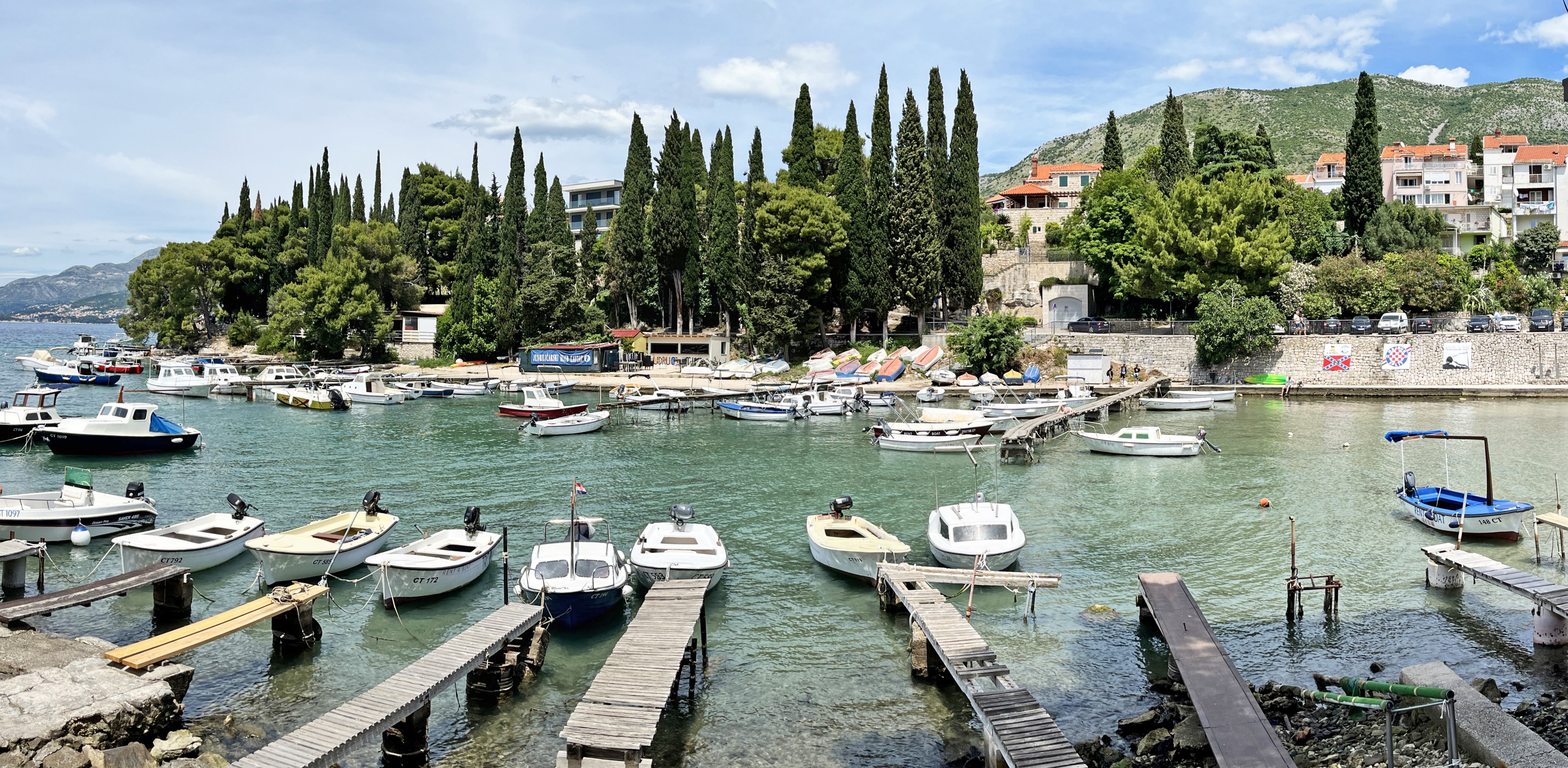
The first foreign misunderstanding usually happens in the morning. Visitors see coffee as a functional decision: where to take it, how quickly to finish it, whether there is time before the day’s real activity begins. In coastal Croatia, the coffee is frequently one of the real activities. This is not because it is always the best coffee of your life, though it may be very good. It is because morning coffee occupies a recognised social interval. It allows a person to appear in public without yet surrendering to urgency. On a Cavtat waterfront terrace, this can be one of the most revealing scenes in the region. The sea is present, boats are idle or just stirring, older residents take up their usual positions, and visitors begin to realise that the day here is not designed to be consumed as quickly as possible.
For foreigners from more hurried cultures, this can feel almost radical. The coffee is neither aggressively romanticised nor treated as disposable fuel. It is ordinary, and precisely for that reason culturally significant. The table says: sit first, then decide. Watch before acting. Let the town become legible. This attitude helps explain why places such as Cavtat are so useful as entry points into Croatia. A harbour coffee there can teach a visitor more about the country than an overstuffed afternoon programme.
| Table habit | What it tends to reveal about Croatia |
|---|---|
| Long morning coffee | Public life values presence and observation, not just speed |
| Simple fish preparation | Confidence in ingredients often matters more than culinary theatrics |
| Late, social dinners | Meals help structure the day rather than merely filling hunger gaps |
| Terrace seating facing the waterfront | The sea remains part of social orientation, not only scenery |
The lesson of seafood: less performance, more trust
One of the pleasures of eating along the southern Adriatic is that seafood often arrives in a register of quiet self-assurance. Grilled fish, squid, mussels, octopus, scampi and shellfish do not need much rhetorical support. Olive oil, herbs, citrus, greens, potatoes or chard may accompany them, but the prevailing principle is not maximal complication. It is calibration. Visitors who come searching for culinary fireworks may miss the point on the first night. The local table persuades differently. It asks whether the fish is good, whether the setting suits the meal, whether the company has time, whether the sea remains somewhere in view or at least in thought.
This is where foreign visitors begin to sense a larger Croatian value: balance. The same principle that makes Cavtat’s waterfront feel well judged also shapes many of the region’s best meals. Nothing insists too loudly. The dish does not need to shout about localness; it simply is local. Service need not stage intimacy; it can be calm, competent and attentive. A table overlooking the harbour does not need excessive decoration because the setting already carries its own authority.
That is one reason why articles such as Cavtat Guide’s feature on fish in Cavtat Bay and guide to feasting in Cavtat feel useful beyond recommendation. They frame the meal as interpretation. For a foreign reader, this is essential. Food in Croatia is not a side category to scenery. It is one of the main ways place identity becomes tangible.

Lunch, shade and the intelligent middle of the day
Travelers who know only resort logic often assume the middle of the day should be packed with activity. The Croatian coast suggests another possibility. Midday can be a period of intelligent contraction: a meal, some shade, less movement, a restoration of balance after the brightness of late morning. This is not laziness. It is climate literacy. It is also social intelligence. The day in southern Croatia is often better when it includes a deliberate pause. Lunch can therefore become more than nutrition. It acts as a hinge between the visual appetite of the morning and the sociable return of the evening.
Cavtat makes this particularly clear because the town offers so many natural thresholds between walk, swim, table and promenade. A visitor may begin with coffee, move into a harbour circuit, take a boat or a swim, and then arrive at lunch with genuine readiness rather than hunger imposed by schedule. The town’s scale encourages meals to feel embedded in place. Dubrovnik can offer excellent versions of the same pattern, but there the density of the old city sometimes turns lunch into strategic refuge. In Cavtat it more often feels like continuation.
Why the terrace matters
The terrace is one of the defining spaces of coastal Croatia, but foreigners sometimes misunderstand it as mere décor. In reality, the terrace reconciles several local priorities at once: shade, sea air, sociability, observation and duration. It permits public life without crowding, conversation without theatrical enclosure. The orientation of tables matters. On the southern Adriatic, people often want to face movement, water, light or the passing social world. A good terrace is not just comfortable. It places the guest inside the town’s rhythm without overwhelming them.
Hospitality through steadiness
Foreign visitors often use service style as a cultural index, sometimes too simplistically. Croatia can confound those expectations. Warmth is present, but it is not always overtly advertised. A waiter may not perform conversational exuberance, yet the table is paced correctly, recommendations are sensible, and the meal is allowed to unfold at human speed. This can feel more respectful than hyperactive service cultures in which friendliness is constantly verbalised. The Croatian table often extends welcome through steadiness. You are not rushed because there is no need to rush you. You are left room because the meal belongs to more than throughput.
This approach can take a day or two for foreigners to appreciate. Some initially read reserve where there is simply composure. But once adjusted, many travelers find the experience unusually dignified. They are not being managed for speed; they are being trusted with time. The same emotional logic appears throughout the region, from harbour cafés to more polished hotel terraces. It is part of what makes the southern Adriatic feel globally sophisticated without feeling generic.

What meals reveal about geography
Food also helps foreigners understand Croatia’s mixed identity. Along the coast, the flavors are recognisably Mediterranean, yet the social choreography around them often feels more structured than visitors expect. The meal is relaxed, but not chaotic. The table is generous, but not excessive. This blend mirrors the country itself: Adriatic in light and produce, shaped also by inland habits, border histories and civic seriousness. The coast is not a detached pleasure zone. It is tied to a wider Croatian world, and the table carries traces of that wider world in portion, timing, bread, sweets, wine and ritual.
Even the most casual waterfront lunch therefore contains cultural information. It tells you how the place understands appetite, time, company and setting. It tells you whether the sea is treated as spectacle or neighbor. It tells you whether tradition is being sold as costume or lived as ordinary competence. In southern Croatia, the best tables often reveal that tradition is most convincing when it does not over-explain itself.

Cavtat and Dubrovnik at table
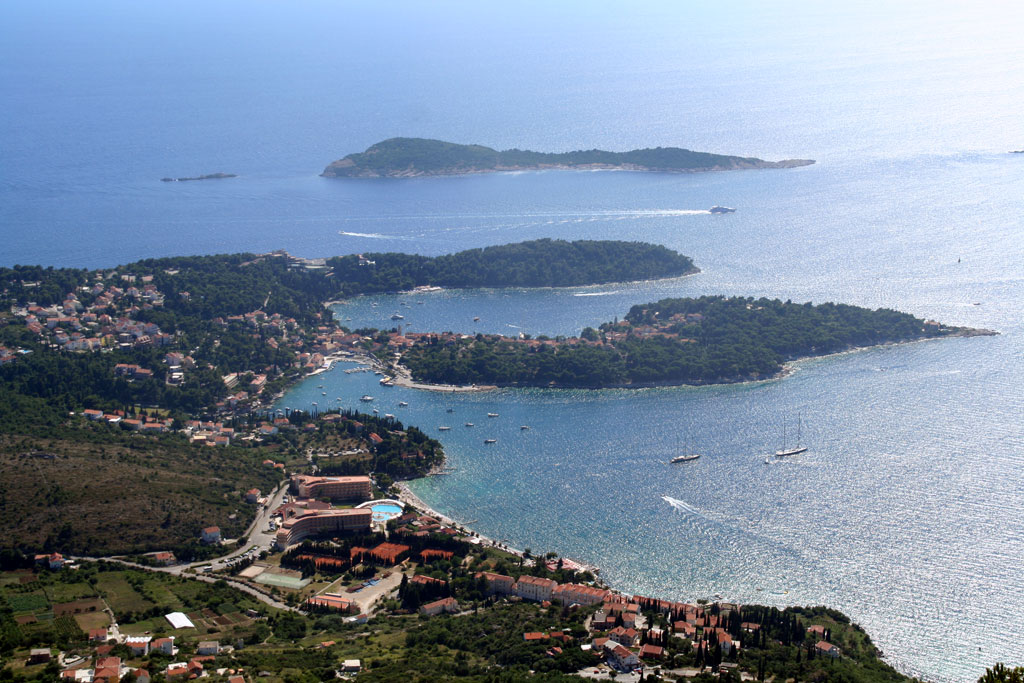
There is, however, a real difference between dining in Dubrovnik and dining in Cavtat, and that difference mirrors the broader contrast between the two places. Dubrovnik can offer grandeur, urban drama and historical atmosphere compressed into a single meal. The old city turns dinner into part of a larger civic theatre. Cavtat, by contrast, often offers the luxury of ease. A table by the harbour can feel as if it belongs naturally to the day that preceded it. Neither experience is superior in every case. They teach different versions of Croatian coastal life. One says: history and the international world meet here. The other says: this is how sea, town and appetite coexist when the volume is lower.
The most intelligent visitor will use both. Let Dubrovnik show how food operates inside fame and urban splendor. Let Cavtat reveal how the Croatian table behaves when it is closer to routine, habit and waterfront continuity. In that pairing, the foreign visitor begins to understand something profound: Croatian hospitality is not only about being served. It is about being placed, however briefly, inside a way of organising life.
What the Croatian table finally teaches
What the Croatian table finally teaches a foreign visitor is that pleasure here is rarely severed from structure. Meals are enjoyable because they are timed well, set well, scaled well and allowed to breathe. Food tastes better because the day around it has not been overfilled. Service feels better because it respects the meal’s natural shape. The sea matters not only because it supplies ingredients, but because it informs the whole atmosphere of eating on the coast. If you begin in Cavtat, you may understand this earlier. If you continue to Dubrovnik, you see how the same logic survives under greater pressure and visibility.

For many travelers, this becomes one of the deepest reasons Croatia stays with them. They remember a fish dish, a terrace, a harbour view, a coffee, a dessert, perhaps a glass of local wine. But what they are really remembering is an education in proportion. The Croatian table teaches them to stop rushing beauty, to give meals their rightful place, and to see hospitality not as performance but as carefully managed ease. In a travel culture obsessed with highlights, that lesson feels almost corrective. It is also, unmistakably, Croatian.

Beyond recommendation culture
There is a final lesson here for foreign visitors who plan obsessively. Not every useful food experience can be reduced to a ranking or a reservation target. On the Croatian coast, context changes the meal: the weather, the hour, the table position, the harbour mood, the fact that you arrived by boat or on foot, the amount of time you have left yourself. Recommendation culture tends to flatten all of that into lists. A more intelligent approach is to understand the table as part of the place. That is why one unhurried lunch in Cavtat can sometimes feel more revealing than a more prestigious dinner taken under pressure elsewhere.
Once visitors grasp that, they stop asking only where to eat and begin asking how to eat here. The answers are simple but surprisingly transformative: do not rush the coffee, take lunch seriously, let the terrace do some of the work, trust uncomplicated seafood, and treat the meal as one of the day’s central acts rather than an obstacle between attractions.
On this coast, appetite is also orientation.
Need help choosing the right experience?
Tell us your budget, dates, and travel style, and Cavtat Guide will help you choose the best yacht charter, tour, property option, or local experience.