Some countries impress and then recede. Croatia often does something stranger. It remains in the mind in fragments that refuse to flatten into a single explanation: morning coffee on a harbour edge, the white severity of Dubrovnik’s stone in full light, a late swim before dinner, the smell of pine above the sea, the quiet social choreography of a waterfront at dusk, the feeling of having been somewhere both composed and warm. Foreign travelers frequently return home unable to explain exactly why the country keeps resurfacing in thought. They mention beauty, food, islands, history. All of that is true, but it is not the whole answer. Croatia stays because it arranges experience with unusual intelligence. Along the southern Adriatic, and especially through the complementary atmospheres of Cavtat and Dubrovnik, visitors encounter a coastal life that is not only attractive but emotionally coherent.

That coherence is easy to underestimate in an age of image-first tourism. We are trained to evaluate destinations by instant visual return. Croatia succeeds on those terms with suspicious ease. Yet what lingers afterwards is not usually the image alone. It is the way the image was inhabited. The promenade in Cavtat matters because people actually use it in a recognisable local rhythm. Dubrovnik’s walls matter because the city behind them still feels structured by real civic memory rather than only by consumption. A meal matters because it fit the day instead of interrupting it. This combination of beauty and behavioral credibility gives the country unusual afterlife in memory.
Beauty is only the first hook
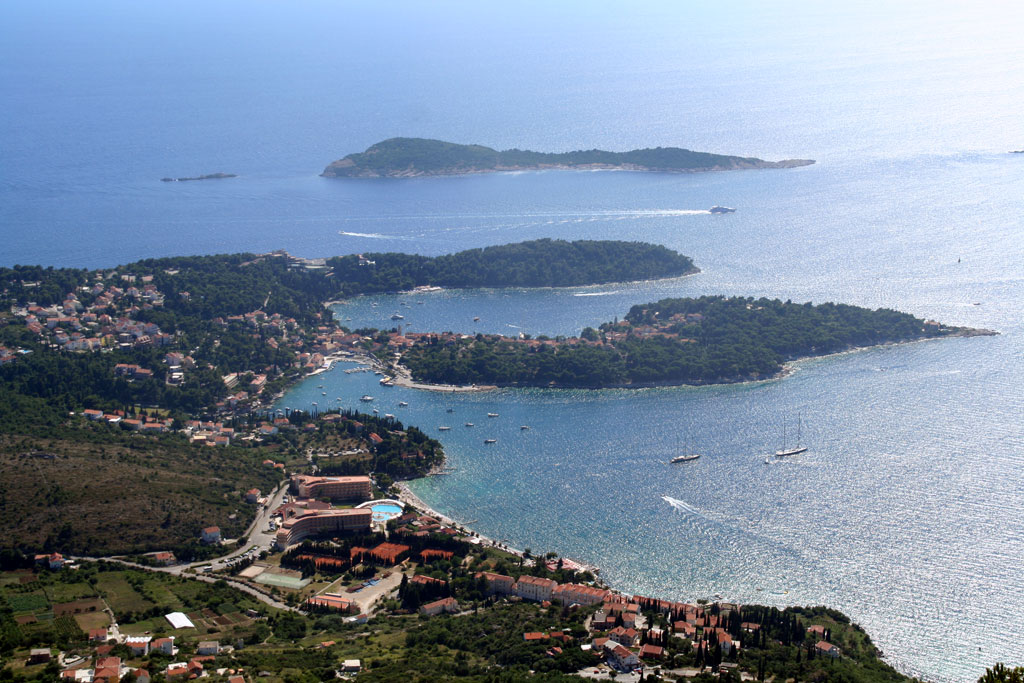
First-time visitors often assume that Croatia’s appeal will prove mainly visual. They arrive ready to admire clear water, elegant harbours and old stone. They are right to expect that, but visual admiration alone rarely explains emotional return. The countries that stay with people tend to offer a second layer: a sense that the place has its own internal logic. Croatia has this in abundance. In Cavtat, the harbour curve, promenade, hotel terraces, pines and moored boats form a world that is easy to enter and difficult to forget because it feels proportionate. In Dubrovnik, the old city, fortifications and maritime edges create an intensity that continues to echo because it seems historically justified rather than merely photogenic.
Balance is an underrated reason destinations stay with us. When a place is proportionate, memory can hold it whole. Cavtat in particular benefits from this. It is large enough to be layered, small enough to remain graspable, elegant enough to delight and ordinary enough to feel lived. A foreign visitor can hold the town in memory not as a collection of attractions but as a complete atmosphere: waterfront, shade, church, hotel, promenade, cove, table, dusk. Few places are this memorable without being exhausting.
| What travellers remember first | What often makes Croatia endure |
|---|---|
| Blue water and stone towns | The felt rhythm of daily life around them |
| Dubrovnik’s dramatic setting | The coexistence of grandeur and lived civic order |
| Seafood and terrace dining | The way meals are paced and embedded in the day |
| Island and harbour imagery | The maritime logic that connects places and experiences |
Cavtat’s particular kind of memory
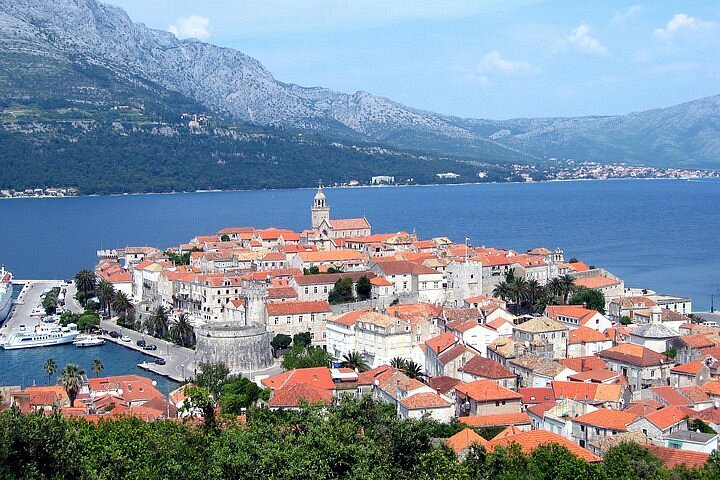
Of all the places on the southern Adriatic, Cavtat may be one of the most quietly adhesive in memory because it does not force itself into importance. There is no need to announce it as a secret or a revelation. Its strength lies in repeatability. A foreign visitor can walk the same harbour several times and receive a slightly different emotional impression each time: tranquil in the morning, lucid in late afternoon, more sociable by evening. This subtle changeability makes the town memorable in a deep way. Rather than one overwhelming scene, it provides a set of related moods that settle into the mind together.
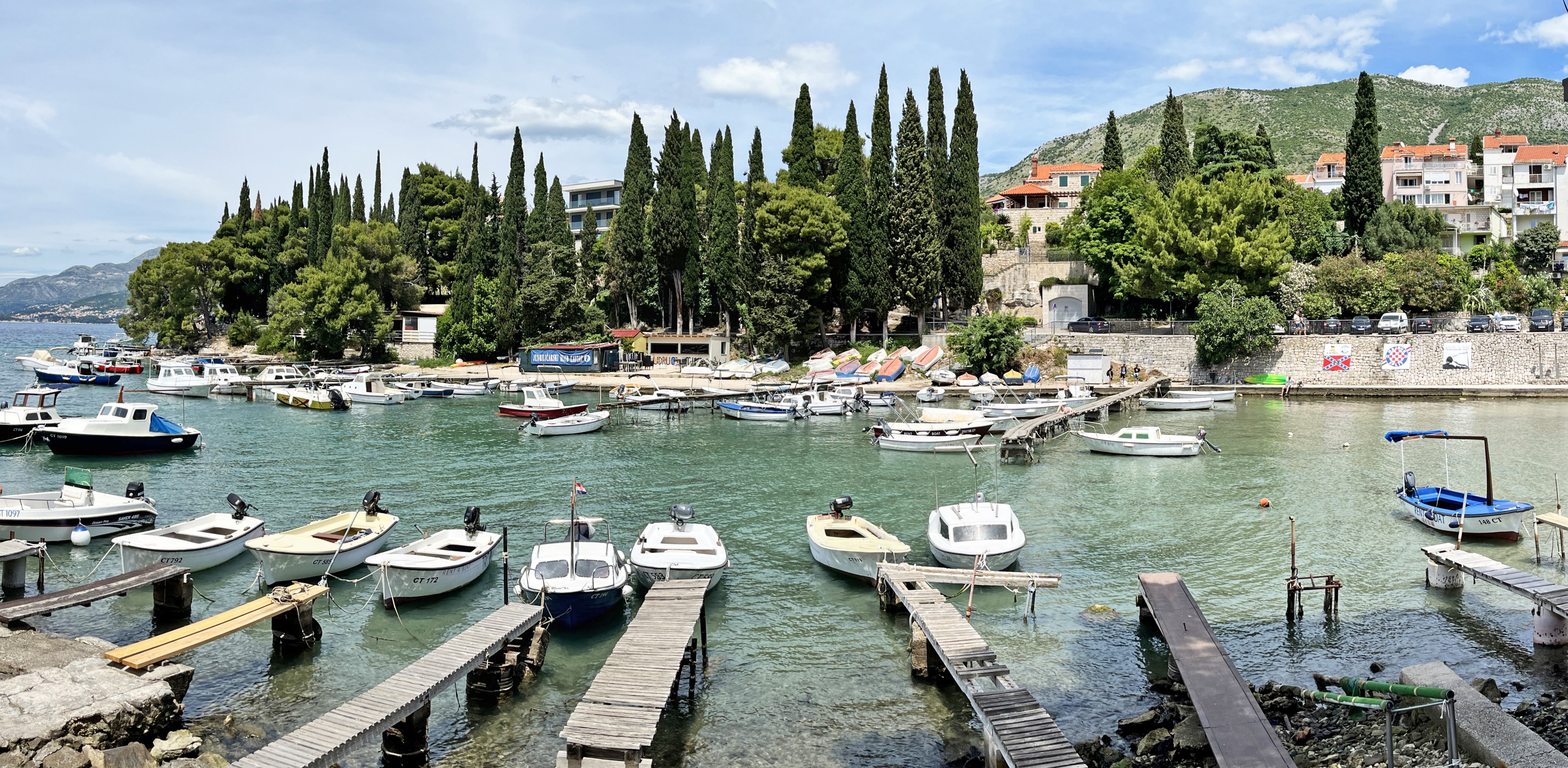

That memory is reinforced by ease of arrival. The short journey from airport to waterfront means that many visitors associate Cavtat with relief. They remember the moment of deceleration: the sudden appearance of the bay, the first terrace, the sense that the Adriatic is now near enough to set the terms of the day. Dubrovnik Airport transfer guide captures part of this logic by treating arrival as more than logistics. The psychology of arrival matters. Places we associate with regained composure often remain disproportionately important in memory.
Why smaller places often endure more deeply
Large famous cities frequently dominate recollection, but smaller places often endure more intimately. Dubrovnik may become the headline memory; Cavtat becomes the inhabitable one. It is where the traveler remembers how they felt between headlines: what it was like to sit, swim, walk, eat and watch the light move across the water. This difference is important. A trip is not made only of major moments. It is also made of intervals. Croatia is especially good at filling intervals with meaning.
Dubrovnik: memory under pressure
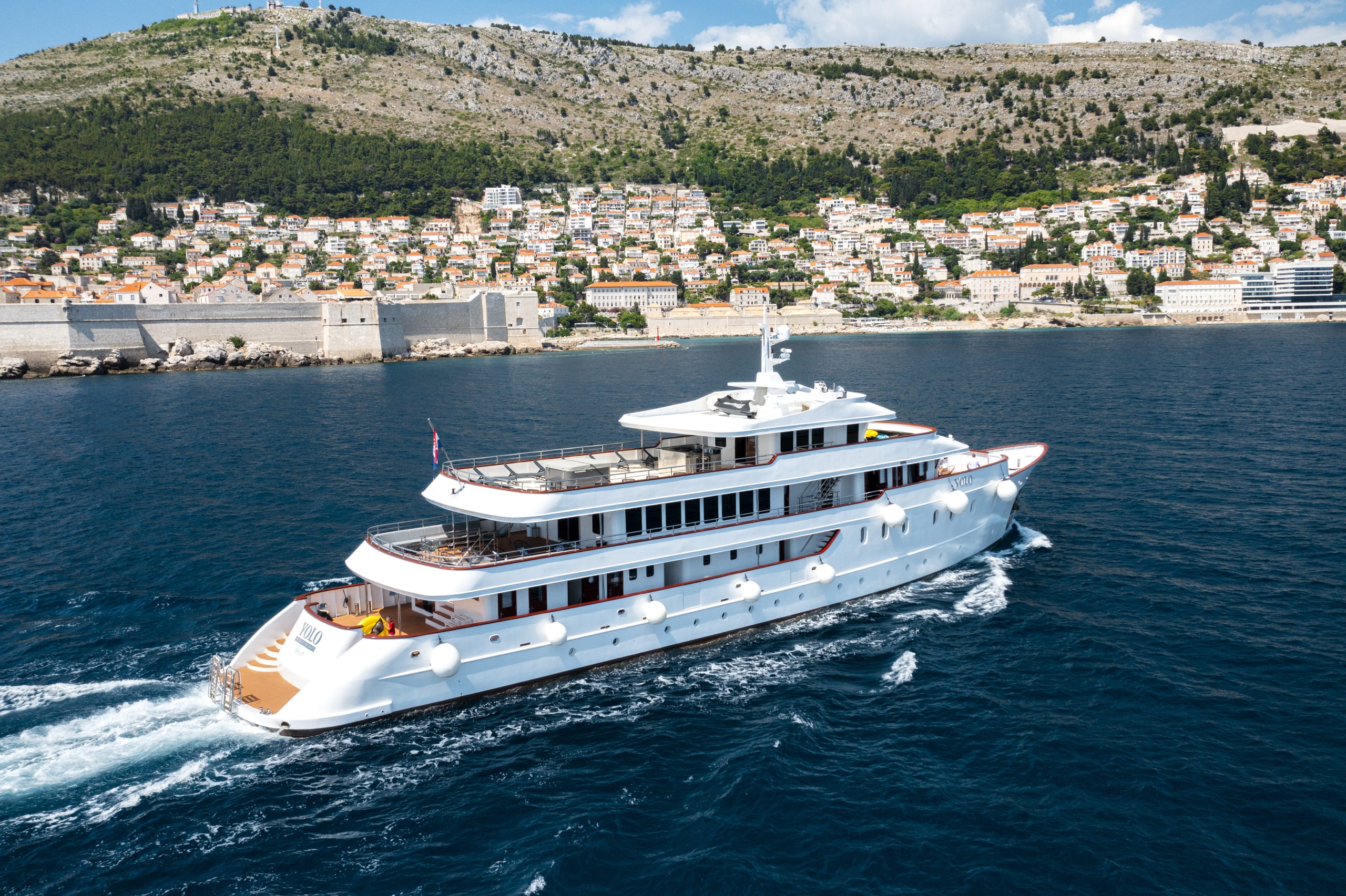
Dubrovnik stays for different reasons. It can imprint almost violently. The old city, recognised by UNESCO and presented in the official Dubrovnik destination materials through its history and civic grandeur, confronts the visitor with one of Europe’s strongest urban images. Yet what makes Dubrovnik memorable is not simply fame. It is the tension between renown and reality. The city is globally desired, but it still has texture: a port, bells, stairs, changing light, service rhythms, urban fatigue, local persistence. Memory keeps returning to Dubrovnik because the city remains legible as a real place despite the pressures of being seen so much.
This is also why some travelers find that Dubrovnik improves in recollection. During the trip, the city may feel intense, crowded or emotionally demanding. Later, what remains is often the extraordinary clarity of its form and the sense that one stood inside a city whose historical seriousness had not been erased by popularity. Even a winter impression, of the sort described in Cavtat Guide’s Dubrovnik in February guide, can attach itself strongly to memory because the city in quieter conditions becomes almost architectural in the mind: a place of stone, sea and civic concentration.

The memory of meals and water
Food is another reason Croatia lingers. Travelers often remember the coast through meals because the meals are unusually well integrated with place. A fish lunch by the water in Cavtat, a terrace dinner in Dubrovnik, a dessert after an evening promenade, a coffee that took longer than planned: these are not isolated pleasures. They are scenes in which appetite, setting and pace align. The country’s food rarely needs to overwhelm the visitor with complexity. It endures because it felt right where it was eaten.
This is one reason the site’s own food-centred pieces, such as Fish in Cavtat Bay and Feasting in Cavtat, matter as part of a broader editorial portrait. They remind readers that Croatia communicates through the table as surely as through architecture. The memory of the country is often made not at a monument but at a meal taken at the right hour in the right light.
Water reinforces these impressions. The Adriatic is not a mere visual border in Croatian memory; it is the medium through which days are organised. Swimming before dinner, watching excursion boats return, taking a short harbour transfer, or looking back at shore from a small vessel all imprint differently from landlocked tourism. This maritime rhythm, visible in excursions such as the Blue Cave trip or the three-island cruise, gives travelers a sense of movement that is gentle but unforgettable.

Why Croatia resists summary
Part of Croatia’s staying power lies in the fact that it resists easy summary. Is it Mediterranean? Certainly, but not only. Is it Central European in its order and civic feeling? Often, yes, but not in a way that cancels the coast’s looseness and sensuality. Is it relaxed? At times. Is it serious? Also. Foreign travelers remember it because the country does not fit neatly inside one borrowed category. Cavtat can feel intimate and marine, Dubrovnik formal and grand, yet both belong clearly to the same southern Adriatic intelligence. The traveler senses a nation positioned at several cultural intersections at once.
This complexity gives memory something to work on. The mind returns because it has not finished the place. Travelers replay the trip in order to interpret it better. Why did the coast feel calmer than expected? Why did public space seem so composed? Why did the meals feel more substantial than the menus alone would suggest? Why did Cavtat make such an impression despite its modest scale? These are not questions one asks of destinations that are fully consumed on contact. They are questions one asks of destinations that continue to generate meaning afterwards.
Return as part of the Croatian experience
Many travelers find that Croatia almost invites return not by marketing promise but by incompletion. The first visit is often enough to produce attachment, but not enough to satisfy interpretation. One wants to see Dubrovnik in another season, to spend longer in Cavtat, to stay at a different hotel, to take another boat route, to understand the table more deeply, to compare midday in one town with evening in another. Reviews such as Cavtat Guide’s pieces on Hotel Croatia and Hotel Albatros contribute to this by showing that even within a small area, perspective changes experience. Croatia is not exhausted by one configuration.
That desire to return is not simply consumer appetite for more sunshine. It is a sign that the country succeeded in offering a world rather than a set of highlights. The traveler sensed a way of life, however briefly, and would like another look at it. This is a deeper achievement than simple satisfaction. It is closer to fascination.
Why it stays
Why, then, does Croatia stay with travelers long after they leave? Because it rarely gives them only one thing. It gives the eye beauty, the body a different rhythm, the table a clear role, the sea a practical and emotional presence, and the mind a place that remains partly unresolved in the best sense. Cavtat and Dubrovnik together sharpen this effect. One town teaches the visitor to slow into Croatian life; the other shows the historical concentration and grandeur that life grew beside. Seen together, they create a memory architecture strong enough to survive distance.
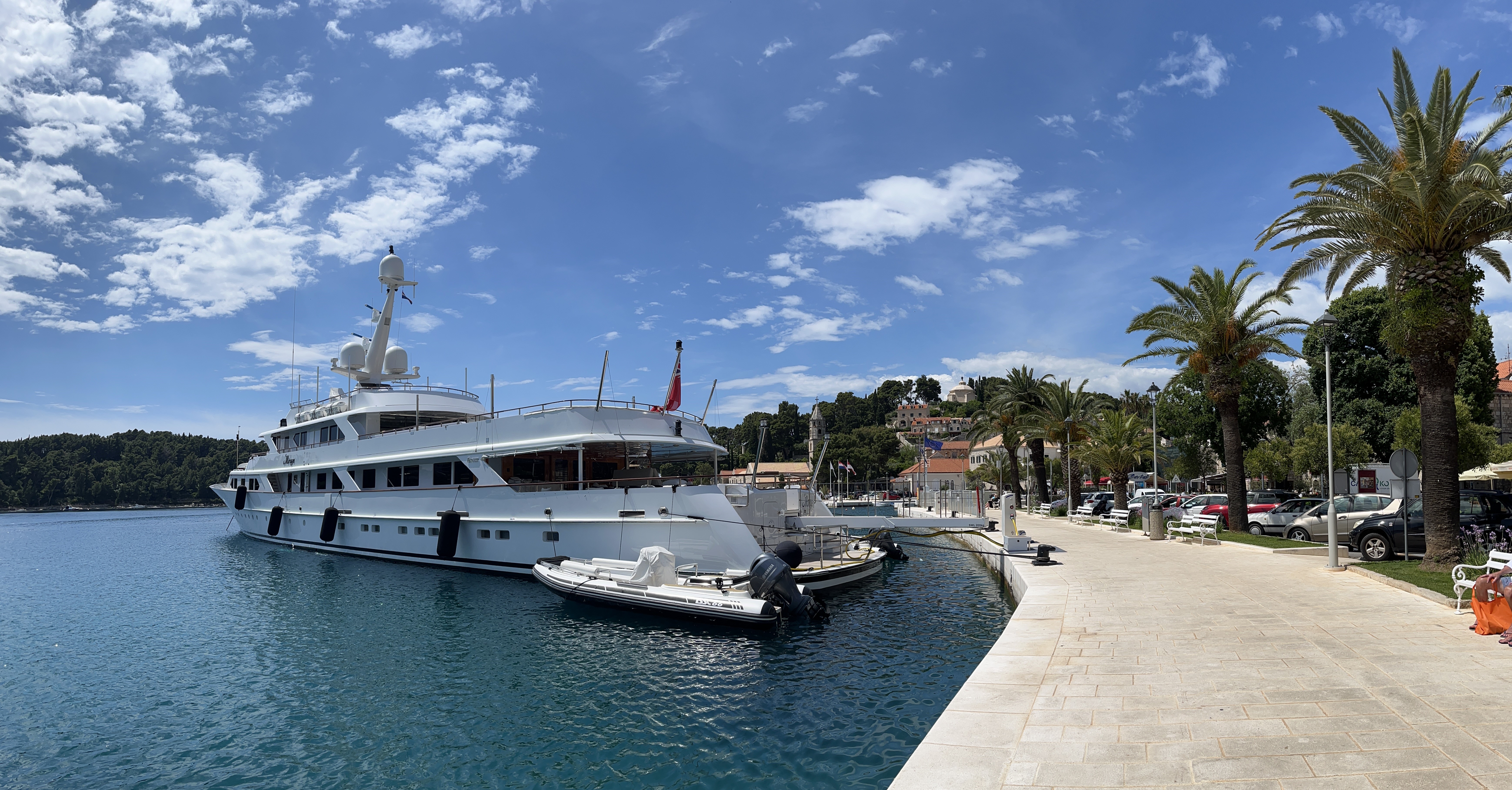

Travelers often believe they will remember the obvious peaks. In Croatia they do, but they also remember the intervals: the walk back from dinner, the harbor before breakfast, the second coffee, the shade, the ferry view, the silence after a swim, the exact texture of a stone street when the crowds thin. These details endure because they belong to a place that knows how to organise pleasure without emptying it of meaning. That is why Croatia stays. It leaves travelers not only with images, but with a revised sense of how a day by the sea might be lived.

After the trip, what returns first
Often it is not the famous monument that returns first in memory but a smaller, more lived detail: a line of boats in Cavtat, a terrace turned towards the water, the way Dubrovnik’s stone reflected late light, a plate of fish that seemed exactly suited to the weather. These details matter because they prove the trip had atmosphere, not just itinerary. They show that Croatia entered the traveler’s mind as a way of being in a place, not merely as a list of things completed.
That distinction explains the country’s unusual durability. Many destinations can offer beauty. Fewer can teach a foreign visitor a new pace and have that pace survive the flight home. Croatia often does.
And once that new pace has been felt, even briefly, travelers tend to look for it again elsewhere and notice how rarely it is offered with such grace.
Need help choosing the right experience?
Tell us your budget, dates, and travel style, and Cavtat Guide will help you choose the best yacht charter, tour, property option, or local experience.