

Cavtat is usually introduced through light, colour and shoreline, yet one of its most arresting stories begins with a voice. Tino Pattiera, born in Cavtat in 1890 and remembered there again with increasing seriousness today, belonged to that early twentieth-century generation of performers who linked provincial birthplaces to continental stages. For readers of Cavtat Guide, his life matters for more than local pride. It shows how this small Adriatic town sat inside larger European circuits of education, ambition, art and memory; it explains why Cavtat’s cultural inheritance has never been only picturesque; and it offers a richer way of seeing the place beyond the waterfront. To walk through Cavtat with Pattiera in mind is to understand that the town has produced not only painters, jurists and patrons, but also a tenor whose career reached Dresden and Berlin before returning, with age and history, to the stone streets of home.
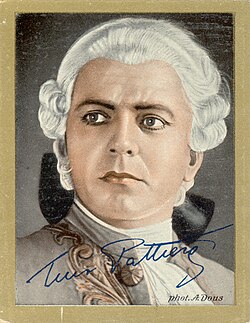
The outline of the biography is clear enough. Pattiera was born in Cavtat, later studied in Prague, and emerged as an important tenor associated above all with the great German-speaking houses of the period. Sources connected to the Dubrovnik Symphony Orchestra’s festival in his name describe him as a significant name of European and world opera in the first half of the twentieth century, and the surviving discography confirms the scale of his reputation. Yet biography alone is not the point. What makes Pattiera compelling now is the contrast between scale and setting: a singer formed on the margins of empire who became central to repertoires usually narrated from the perspective of Vienna, Berlin, Milan or Dresden. Cavtat was not a footnote to that story. It was the beginning of it.
A Cavtat childhood before the age of mass tourism
To place Pattiera properly, it helps to recover the Cavtat of his youth. This was not the leisure-town familiar to today’s summer visitors, nor the hotel-and-transfer base that often appears in practical travel writing. It was a port settlement with older Dubrovnik habits, maritime connections and an educated civic culture shaped by the long afterlife of the Republic and the experience of Austria-Hungary. Families moved between sea, trade, schooling and public service. Ambitious young people looked outward. In such towns, talent did not necessarily remain local for long. It was tested elsewhere, but it carried local accents with it: family discipline, multilingual awareness, social ambition and an understanding that prestige had to be earned abroad.
The deeper one looks into Cavtat’s historical biographies, the more one finds a pattern of departure rather than isolation. Baltazar Bogišić studied and worked across Europe. Vlaho Bukovac made his name far from home before his house became one of Cavtat’s defining cultural addresses. The Račić family translated maritime wealth into architectural patronage. Pattiera belongs in that same sequence of outward motion. He does not sit awkwardly within Cavtat’s history; he confirms a long local habit of connecting a small place to much larger worlds.
From student life to the operatic profession
Accounts of Pattiera’s youth often mention Prague, and that matters because Prague in the late nineteenth and early twentieth century offered more than formal education. It offered contact with a sophisticated musical environment. Many great performers are described retrospectively as inevitable, but operatic careers never are. They depend on hearing, sponsorship, discipline, timing and repertoire. Pattiera’s route appears to have involved not only talent but a decisive encounter with professional musical circles that recognised the unusual quality of the voice. The legend of discovery survives because it makes narrative sense: the young man from Cavtat, heard in a wider urban setting, suddenly seen for what he could become. Even when biography compresses such moments, the structural truth remains. He belonged to a generation for whom mobility and patronage could transform destiny.

Once inside the profession, Pattiera did what serious singers must do: he found roles, houses and audiences that suited the instrument. Contemporary and later descriptions emphasize the dark, heroic quality of the tenor. In practical terms that meant the Italian repertory suited him especially well, even when his career unfolded strongly in German cities. He was celebrated in Dresden, associated with the Royal Saxon Court Opera, and later connected with Berlin. This is not trivial name-dropping. Dresden before the catastrophes of the mid-century was one of Europe’s major operatic centres, a city where standards were exacting and reputations were not granted lightly. To succeed there was to pass a hard artistic test.
The repertoire that made the voice legible
Opera history is often written through composers and conductors, but singers are remembered through the fit between instrument and role. Pattiera’s name remains attached to heroic and lyric-dramatic repertory that depended on line, stamina and dramatic color. The surviving recordings cannot give the full experience of a live stage personality, yet they offer enough to hear why audiences cared. There is breadth without slackness, metal without crude force, and a sense that the vocal line is always trying to travel through the phrase rather than merely land notes. That is one reason older singers with fragmentary discographies still matter: even across limited audio technology, character gets through.
Listening today requires a small historical adjustment. Early recordings flatten theatrical scale and strip performance from architecture, costume and audience response. Pattiera’s art was formed for the house, not the algorithm. A tenor in that era was judged not simply by sound in isolation but by projection, stage presence, linguistic command, musical temperament and the physical reality of filling a large room. That is why older descriptions repeatedly return to his popularity in Dresden. A city does not adopt a singer of that kind on archival prestige alone. It responds to the total event.
Dresden, Berlin and the wider map of prestige
When a regional publication writes about a figure such as Pattiera, there is always a temptation to overcompensate: to turn local affection into exaggerated myth. It is more convincing to be exact. Pattiera was not a decorative provincial curiosity occasionally tolerated by the major houses. He was a recognised tenor within them. The Dresden connection is repeatedly affirmed by reliable musical and institutional sources, and the later festival material from Dubrovnik still foregrounds that chapter because it remains central to his standing. Berlin, too, belongs to the story, and with it the interwar world in which opera was both elite culture and mass fascination. Before radio, film and recording redistributed celebrity, the opera house was one of Europe’s great engines of public glamour. Pattiera’s success therefore had social as well as musical meaning.

For modern travellers, this wider map offers a useful corrective. Cavtat is often marketed as gentler than Dubrovnik, a place of slower dinners, sea swims and easier evenings. All of that can be true. But the town has also long been tied to cosmopolitan aspiration. Maritime families, educated collectors, touring painters and internationally active singers all belong to the same civic texture. Pattiera’s biography proves that the cultural history of Cavtat cannot be reduced to local folklore alone. It was shaped by circulation: ships, schools, languages, correspondence and performance.
Why opera mattered so much in Pattiera’s era
To understand the scale of Pattiera’s achievement, readers also need to remember what opera meant between the wars. It was a prestige form, certainly, but also a public language of feeling and status. Cities invested in it. Critics wrote about it with heat. Audiences followed singers with a fervour now reserved for film stars and elite athletes. For a tenor to become especially beloved in a major house meant something more than professional competence. It meant recognisability, authority and charisma. Pattiera’s popularity in Dresden suggests not merely that he was respected, but that he formed part of the emotional memory of a city’s musical life.
| Stage of Pattiera’s story | Why it matters |
|---|---|
| Cavtat origins | Places him within the outward-looking cultural history of the southern Adriatic. |
| Studies beyond home | Shows how education and mobility opened the route from local talent to professional art. |
| Dresden success | Confirms that he was judged at a genuinely high European level. |
| Berlin presence | Extends his reputation beyond one city and into the wider interwar operatic world. |
| Later remembrance in Cavtat | Turns biography into living cultural memory rather than archival nostalgia alone. |
War, rupture and the fragility of artistic fame
No account of Pattiera should pretend that operatic celebrity is stable. The twentieth century was brutal to reputations built in one political and technological order and then forced to survive into another. Wars destroyed institutions, dispersed audiences and changed the media through which voices were remembered. Some singers remained legible through abundant recordings; others survived only in fragments, reviews and institutional memory. Pattiera belongs partly to that second category. His name endures, but not with the effortless immediacy of singers who entered later recording culture under better archival conditions. That makes local remembrance more important, not less. Towns such as Cavtat often become the custodians of artists whom larger systems no longer narrate fully.

There is also something fitting in the partiality of his afterlife. Opera itself is an art of disappearance: a live voice fills a room, moves people, and then vanishes. Recordings preserve evidence, not total experience. Pattiera’s return to Cavtat’s public story therefore has a certain moral clarity. Rather than claiming impossible completeness, it asks residents and visitors to do something simpler and more serious: to recognise that a world-class artistic life once began here, and to read the town differently because of it.
How Cavtat remembers him now
Recent cultural programming in the destination has helped restore Pattiera to visibility. The Cavtat–Konavle tourist board’s costumed storytelling programs explicitly reintroduce him to visitors, while the Dubrovnik Symphony Orchestra’s festival named for Tino Pattiera places him inside a more formal musical frame. This double remembrance is useful. One form is civic and popular, encountered in the street or on an evening walk. The other is institutional and artistic, linking memory back to performance. Together they suggest a mature way of handling local heritage: neither embalming it nor trivialising it.

That kind of remembrance also benefits travellers. Cavtat has no shortage of visible attractions. You can climb to the Račić Mausoleum, visit the Bukovac House, read the waterfront menus, swim off Rat, or follow our own Cavtat seasonal guide for a broader planning framework. But cultural understanding deepens when a place is populated by names. Pattiera gives visitors one more name worth carrying. Suddenly the walk is not only scenic. It is biographical.
What a modern visitor can do with this story
The most rewarding way to approach Pattiera in Cavtat is not to hunt for a single commemorative object and tick it off. It is to combine spaces. Start in the older centre where the town’s civic scale is still legible. Pass the Bukovac House, whose own story reminds you that Cavtat repeatedly sent talent out into Europe and received memory back. Continue upward towards the Račić Mausoleum, where patronage, mourning and art converge above the bay. In the evening, attend a concert if there is one, or at least allow the town to become quieter around you. Then listen to Pattiera. Not as background music, but as a way of hearing what it means for a voice from here to have once travelled so far.

There is no need to force sentiment. Cavtat is not valuable because it produced famous people; rather, famous people help explain why the town has long carried more depth than its size suggests. Pattiera matters because he expands the frame. He reminds readers that Adriatic places were never culturally sealed. Their histories were made through departures, returns and reputations earned elsewhere.
A tenor, a town and the scale of memory
In the end, Pattiera’s story is about proportion. A small town can hold large cultural consequences. A singer can become internationally admired and yet depend, decades later, on local institutions and local curiosity to remain audible. A travel publication can do more than recommend itineraries; it can restore scale to places whose complexity is too often flattened by summer shorthand. Tino Pattiera deserves that restoration. So does Cavtat. To remember him seriously is not to add a decorative anecdote to the destination. It is to recognise that this Adriatic town once gave Europe a tenor, and that the echo of that fact still changes the way the place should be read.
For readers planning a stay, that is perhaps the final value of the biography. It complicates pleasure in the right way. The sea remains the sea; dinner remains dinner; children still jump from the stones and boats still cross the bay. But beneath that holiday surface lies an older, denser map of education, migration, patronage and artistic ambition. Tino Pattiera belongs to that map. Once you know it, Cavtat becomes harder to reduce, and far more worth returning to.
Need help choosing the right experience?
Tell us your budget, dates, and travel style, and Cavtat Guide will help you choose the best yacht charter, tour, property option, or local experience.