

Foreigners rarely arrive in Croatia with a blank mind. They arrive carrying categories borrowed from somewhere else: Greece for islands, Italy for old stone, the south of France for yachts, the Balkans for complexity, central Europe for order, and the Mediterranean for ease. Croatia receives all of these projections, and then quietly disrupts them. That disruption is one of the reasons the country has such unusual staying power in memory. Visitors discover that they were not wrong to expect beauty, but they were often wrong about the terms on which beauty would be offered. Croatia does not unfold like an endlessly accommodating holiday set. It reveals itself as a country of edges and manners, one in which coastal pleasure is balanced by discipline, where hospitality is often understated, and where places such as Cavtat and Dubrovnik can look instantly intelligible while remaining emotionally unread for several days.
The key point is misunderstanding shapes the visitor’s experience almost as much as the destination itself. Some travelers come expecting dramatic cheapness and are surprised by the confidence of pricing in desirable coastal areas. Others imagine a loose, improvisational beach culture and encounter instead a social environment with stronger codes than they anticipated: where public space has hierarchy, where lunch still matters, where coffee is a duration rather than a transaction, and where the most satisfying days often involve fewer activities than people planned. In other words, Croatia tends to replace fantasy with texture. What foreigners get wrong is not that the country is beautiful, historical or maritime. What they get wrong is how those qualities are lived.
Misconception one: Croatia is simply another Mediterranean coast
This is perhaps the most common error because it is so understandable. The sea is unmistakably Mediterranean. So are the stone towns, the shutters, the shade, the habit of evening promenading and the centrality of seafood. Yet the atmosphere can feel noticeably different from other famous coasts. Croatia is often quieter in manner, tidier in its public surfaces and more restrained in the performance of leisure. Even in summer, many towns retain a sense that they belong first to residents and only second to visitors. A foreigner who spends time in Cavtat usually feels this quickly. The waterfront is open and sociable, but not theatrical. There is style, but it is rarely pushy. You are invited in, though not courted at every second.
The practical implications are significant. Travelers who expect the coast to function as a pure leisure machine may not immediately understand the importance of timing. In Croatia, certain pleasures depend on respecting the day as locals shape it. Morning has a cleaner, quieter beauty than late morning rush. Midday heat is not an error in the program but a signal to retreat, eat or slow down. Evening social life is not merely nightlife; it is often the return of the town to itself. The coast rewards those who adapt to this rhythm. Those who insist on running their own timetable can end up seeing the scenery while missing the culture.
| Common foreign assumption | What travellers often discover |
|---|---|
| Croatia is a bargain coast | Its most desirable Adriatic towns price themselves with growing confidence |
| The atmosphere is carefree and improvisational | There is a strong sense of order, timing and personal reserve |
| Dubrovnik explains the whole country | Dubrovnik explains one brilliant part of it, but places like Cavtat reveal the everyday grammar |
| Hospitality equals overt warmth | Hospitality may arrive through efficiency, steadiness and calm professionalism |
Misconception two: Dubrovnik is the whole story
There are sensible reasons why foreigners use Dubrovnik as shorthand for Croatia. The city is visually commanding, internationally famous and historically formidable. The official Dubrovnik destination page presents the city through culture, heritage and recognisable grandeur, while UNESCO’s account of the Old City of Dubrovnik confirms its place in the top tier of European urban monuments. But the city can also distort foreign understanding when it becomes the only lens. Dubrovnik teaches scale, defence, maritime power and the consequences of fame. It does not always teach how Croatia breathes on an ordinary day.
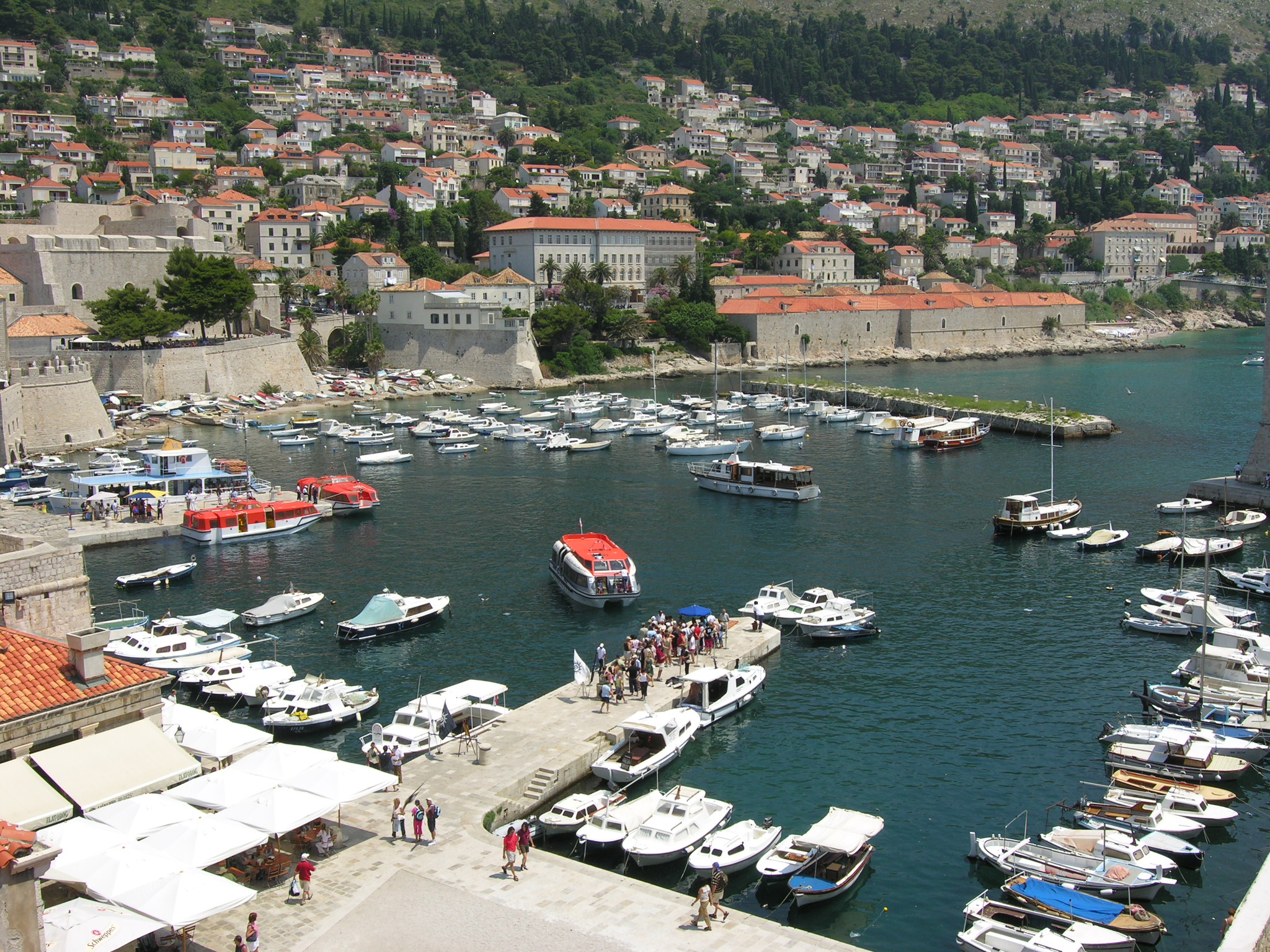
This is why Cavtat matters. Just south of Dubrovnik, and close enough to arrival routes to feel immediately relevant, it offers a corrective to monumental interpretation. Here, the visitor sees a town where elegance coexists with domestic rhythm, where coastal walking is not an attraction but an everyday practice, and where the sea is both visual pleasure and practical neighbor. A stay in Cavtat does not replace Dubrovnik; it recalibrates it. After several days on this smaller waterfront, a foreign visitor returns to Dubrovnik better able to read the city: to distinguish between living fabric and curated fame, between urban theatre and local habit.
That recalibration can happen through very simple acts. A transfer from the airport, as outlined in Cavtat Guide’s Dubrovnik Airport transfer piece, already teaches a lesson about geography. The whole southern Adriatic feels interconnected: airport, bay, harbour, old town, excursion pier, hotel terrace, island route. Croatia here is understood through sequences and thresholds rather than through isolated highlights. Foreigners who slow down enough to notice these transitions end up grasping much more than those who move directly from one iconic viewpoint to another.
Misconception three: Croatia is all surface beauty
The camera certainly encourages this misconception. Few places photograph as cleanly as the southern Croatian coast. Yet if one spends any time in Cavtat or Dubrovnik beyond peak viewing hours, it becomes obvious that the attraction lies not only in appearance but in arrangement. Stone, sea, church towers, pine shade, harbour edges and café terraces are ordered into a coherent public realm. That coherence has historical roots. Dubrovnik was a maritime republic of remarkable seriousness, and the broader region has long been shaped by trade, defence, seafaring and border awareness. Even in resort-facing areas, there remains a sense that life here has been organised by more than pleasure.
For foreigners, the difference becomes visible in the use of public space. Benches are occupied with purpose. Waterfront walks are social but not chaotic. Terraces feel observed rather than anonymous. One does not need to romanticise this. It is simply true that many Croatian coastal towns still possess a stronger civic texture than travellers expect. That texture influences mood. You feel held by a place rather than merely entertained by it. In Cavtat, where the town curves around the harbour and invites repeated circuits, this sensation can be especially pronounced.
What foreigners notice after three days
After three days, most visitors begin to revise their assumptions. They notice that Croatians are often friendly but not overly demonstrative with strangers. They notice that a coffee can occupy an absurdly long and entirely rational amount of time. They notice that sea access matters more than beachfront branding. They notice that style is not absent, only less loudly monetised than elsewhere. They notice that there is a difference between tourist fullness and local sociability. Above all, they notice that the most attractive Croatian places are often attractive because they retain control over their own pace.
Misconception four: food is secondary to scenery
Many first-time visitors underprepare for the table. They assume the sea will dominate memory and meals will merely support the itinerary. In fact, Croatian food often teaches the visitor how the country thinks. Dalmatian cooking, especially along the southern coast, is frequently at its best when it declines to over-explain itself. Fish, olive oil, greens, octopus, shellfish, bread, wine, citrus, herbs and desserts such as fritule do not need theatrical reinvention to feel convincing. What matters is sequence, setting and confidence. The table can be generous without becoming ostentatious. It often expresses the same values as the landscape: clarity, restraint, duration.
Foreign visitors learn quickly that the meal is not a logistical interruption between swims and viewpoints. It is one of the principal ways local life announces itself. Articles such as Cavtat Guide’s Cavtat dining feature and fish-focused guide to Cavtat Bay are useful because they frame dining as cultural orientation rather than mere recommendation. The guest who takes lunch seriously begins to understand the country faster than the guest who eats hurriedly and keeps moving.
Misconception five: Croatia reveals itself immediately
Perhaps the deepest misunderstanding is temporal. Foreigners often assume that a destination this visually legible must also be culturally legible at once. Croatia resists that assumption. It is one of those countries that become more persuasive after initial admiration has settled. You may arrive pleased by the coast and leave moved by something harder to name: the mixture of reserve and care, the seriousness beneath the beauty, the way sea, shade and stone set the speed of the day. Cavtat is often where this belated recognition begins. Because it is modest in scale and generous in atmosphere, it gives visitors enough repetition to start noticing patterns. Each walk along the harbour reveals a little more.
This is also why travelers return. The pull is not just sunshine or sea, though those matter. It is the feeling that Croatia did not finish with you the first time. You sensed order and hospitality, but only partly grasped their terms. You sensed history, but mostly as presence rather than data. You sensed that the country stood at an intersection of worlds, but could not yet describe how. Return visits solve that slowly. A winter stay in Dubrovnik, a longer week in Cavtat, an island day reached by boat, or even a more deliberate hotel choice, whether the broad-terraced confidence of Hotel Croatia or the different register explored in the Hotel Albatros review, can all refine the picture.
What they discover instead
What foreigners discover instead of their easy assumptions is a country built on balance. Croatia is coastal but not merely beachy; elegant but not insubstantial; warm but not always effusive; historical but not trapped in historical self-display. Its southern Adriatic towns, especially Cavtat and Dubrovnik, show this with unusual clarity. One offers monument and renown, the other scale and emotional readability. Together they teach the visitor that Croatia is best understood not through a single superlative but through a series of adjustments: slower than expected, more structured than expected, more maritime, more dignified, more nuanced.
That, finally, is what foreigners get wrong about Croatia. They think it will be easy to summarise. It is not. It is better than that. The country makes a stronger argument in person than in slogan form, and the places that educate most effectively are often those that combine beauty with legibility. Cavtat does this almost perfectly. It does not cancel the glamour of Dubrovnik or the appeal of the wider coast. It shows why those things matter by placing them inside a calmer frame. Once you have felt that frame, the country stops being a beautiful surprise and becomes something rarer: a place whose behavior begins to alter your own.
Seeing beyond the itinerary
There is also a practical side to these corrected perceptions. Travelers who stop treating Croatia as a checklist destination make better decisions on the ground. They leave room between airport arrival and dinner. They understand why a harbour swim or a late coffee may be more revealing than one more transfer. They use smaller excursions to deepen context rather than to maximise volume. Cavtat is particularly effective in this respect because its scale permits revision without friction. You can realise, on your second evening, that you have been moving too fast and change course immediately. A waterfront walk, a seat under pines, an unhurried lunch, or a boat view back towards Dubrovnik can restore the ratio between seeing and understanding.
That is why the most intelligent first-time itinerary for the southern Adriatic is rarely the most crowded. It should include space for the harbour at different times of day, for one deliberate meal, for the visual drama of Dubrovnik and for the quieter social accuracy of Cavtat. It should allow the foreign visitor to watch the country behave, not just display itself. Once that happens, many earlier assumptions dissolve without drama. Croatia does not need to argue against them. It simply continues being itself until the visitor notices the difference.
Need help choosing the right experience?
Tell us your budget, dates, and travel style, and Cavtat Guide will help you choose the best yacht charter, tour, property option, or local experience.