

Updated for 2026
Cavtat is often described as Dubrovnik’s quieter neighbour, but the phrase is too flat for what the town actually offers. In practice, Cavtat works because it gives visitors something increasingly rare on the Adriatic: sea access, beauty, restaurants, culture, airport convenience, and excursion options without forcing every day into crowds or constant logistical effort. This guide brings the town into the same premium editorial format as the yacht features, with a clearer structure, stronger visual hierarchy, and a more deliberate sense of how Cavtat should actually be used in 2026.
Main takeaway: The best way to experience Cavtat is not to treat it as a quick add-on to Dubrovnik, but as a complete coastal base with walks, sea access, culture, food, and easy excursion logic.
Best for: couples, families, repeat Croatia visitors, and travellers who want the Adriatic without constant crowd pressure.
Best planning logic: give Cavtat its own mornings and evenings, then build Dubrovnik, boat trips, and Konavle around it.
Top Things to Do in Cavtat in 2026: The Complete Local Guide
Cavtat is often introduced as Dubrovnik’s quieter neighbour, but that description is too narrow to explain why so many travellers end up preferring it. In 2026, Cavtat remains one of the smartest bases on the Dubrovnik Riviera: close to the airport, easy to navigate on foot, lively enough for long summer evenings, and calm enough to feel restorative after a day of transfers, tours, or time inside Dubrovnik’s stone lanes.
That matters because most visitors are not really looking for “quiet” in the abstract. They are looking for a place that removes friction. Cavtat does exactly that. The harbour is legible, the swimming is close, the walking is immediate, the day trips are manageable, and the food-and-sea relationship feels integrated rather than staged. It is one of the rare places on this coast where you can do less and still feel that the holiday is full.
The town is not built around one blockbuster sight. Its strength lies in sequence: harbour first, then peninsula, then a swim, then a church or museum, then lunch, then a boat departure or an inland drive, then back to the waterfront for the evening. Once you understand that structure, Cavtat becomes much more than a pleasant place to sleep near Dubrovnik. It becomes one of the most usable destinations on the southern Adriatic.
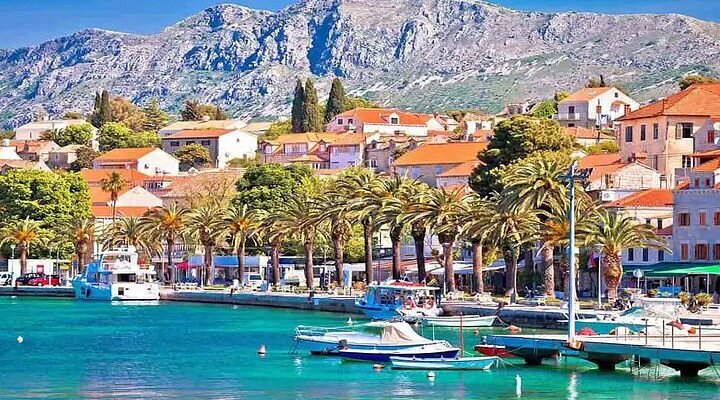
The right mindset: Cavtat works best when you treat it not as a side note to Dubrovnik, but as a complete base for swimming, walking, culture, food, and sea-led days.
Begin with the harbour, because Cavtat makes sense from the water inward
The practical and emotional centre of Cavtat is the harbour. If you arrive from Dubrovnik Airport, the smartest first move is not to rush into a packed itinerary but to walk the waterfront from one end to the other. You immediately understand the town’s proportions: a compact old core, excursion boats tied up near the central quay, restaurant terraces opening toward the bay, and a promenade broad enough for a proper evening walk without pressure.
Families appreciate the space because children can move without the constant anxiety of traffic. Couples appreciate it because the view keeps changing fishing boats, tenders, church stone, terraces, evening light, and the low hills of Konavle behind the coast. This is also where Cavtat reveals its main practical advantage. It is easy to read. You are not trapped in a maze of decisions. In one first pass, you understand where dinner will make sense, where the swims begin, where the boat departures happen, and which side of the town feels more social or more subdued.
Cavtat also works as a study in pace. Dubrovnik asks more of your attention; Cavtat gives some of it back. That is why readers planning a wider southern Dalmatia itinerary often start with Cavtat Double Crown 2026, then use the town as the practical base for beaches, boats, and day trips.
What to notice on your first pass
Look at the way the harbour curves. The western side feels more public and social, with excursion points and café seating. The eastern side opens more gently toward Tiha Bay and the larger hotel zone. In between sits the old-town fabric: stone houses, steps, church frontage, and pockets of shade. The geography is small enough to learn in one afternoon and varied enough to stay interesting for several days.
Walk Rat Peninsula for the version of Cavtat locals know best
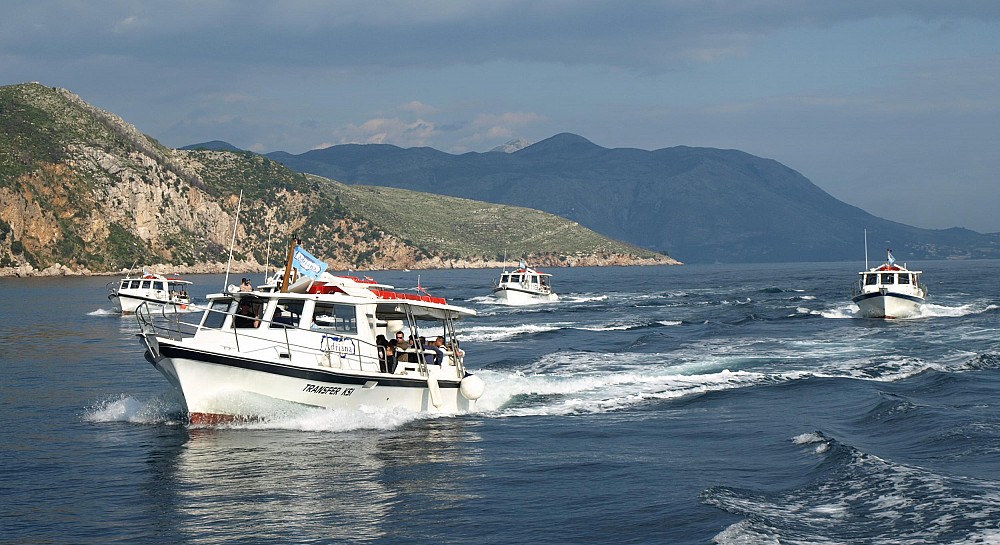
If there is one activity that separates a rushed visit from a good one, it is the coastal walk around Rat Peninsula. This pine-covered headland is where Cavtat becomes less of a harbour town and more of a landscape. Paths trace the shoreline, passing ladders into the sea, rock platforms for sunbathing, and occasional benches facing open water.
In high summer, go early. Between seven and nine in the morning, the peninsula is at its most convincing: swimmers entering clean deep water, shade still holding under the trees, and almost no organised noise. Later in the day it still works, but the morning version explains Cavtat more clearly. It shows you that the town’s greatest amenity is not one designed object, but immediate access to sea, shade, and proportion.
For strong swimmers, content creators, or travellers who simply dislike crowded beaches, the peninsula offers a better answer than the central waterfront. It is not a sandy-beach experience. It is a Cavtat experience: stone underfoot, sea access by ladder or step, and the sense that the town’s best asset is a sequence of edges and viewpoints rather than a single “headline” beach.
How long to allow
A full, unhurried loop with swimming stops takes ninety minutes to two hours. A simple walk without stops takes closer to forty minutes. The route is ideal before breakfast, before dinner, or after returning from a half-day excursion. That flexibility is exactly why it matters. It fits around the rest of the trip instead of monopolising it.
See Cavtat’s cultural side rather than treating it as a beach stop
Travellers sometimes underestimate how much culture fits into Cavtat’s small footprint. The most significant single sight is the Račić Mausoleum, designed by Ivan Meštrović and set above the town in the cemetery precinct. Even visitors with no specialist interest in sculpture usually respond to the setting: pale stone, measured ornament, and a commanding view back toward the harbour. The uphill walk is short but worth timing outside the hottest part of the day.
Bukovac House matters just as much if you want to understand Cavtat’s place in Croatian cultural history. Vlaho Bukovac was born here, and the museum introduces a more domestic and intellectual dimension to a town too often summarised only by sea views. Together, the mausoleum and Bukovac House make a strong half-day cultural circuit. Add St Nicholas Church, a slow coffee on the waterfront, and the old lanes behind the promenade, and Cavtat begins to feel far more substantial than its size suggests.
If this side of the town interests you, continue with our essay on Vlaho Bukovac, our profile of Baltazar Bogišić, and our feature on the women of Cavtat.
Eat with Konavle in mind, not only the menu in front of you
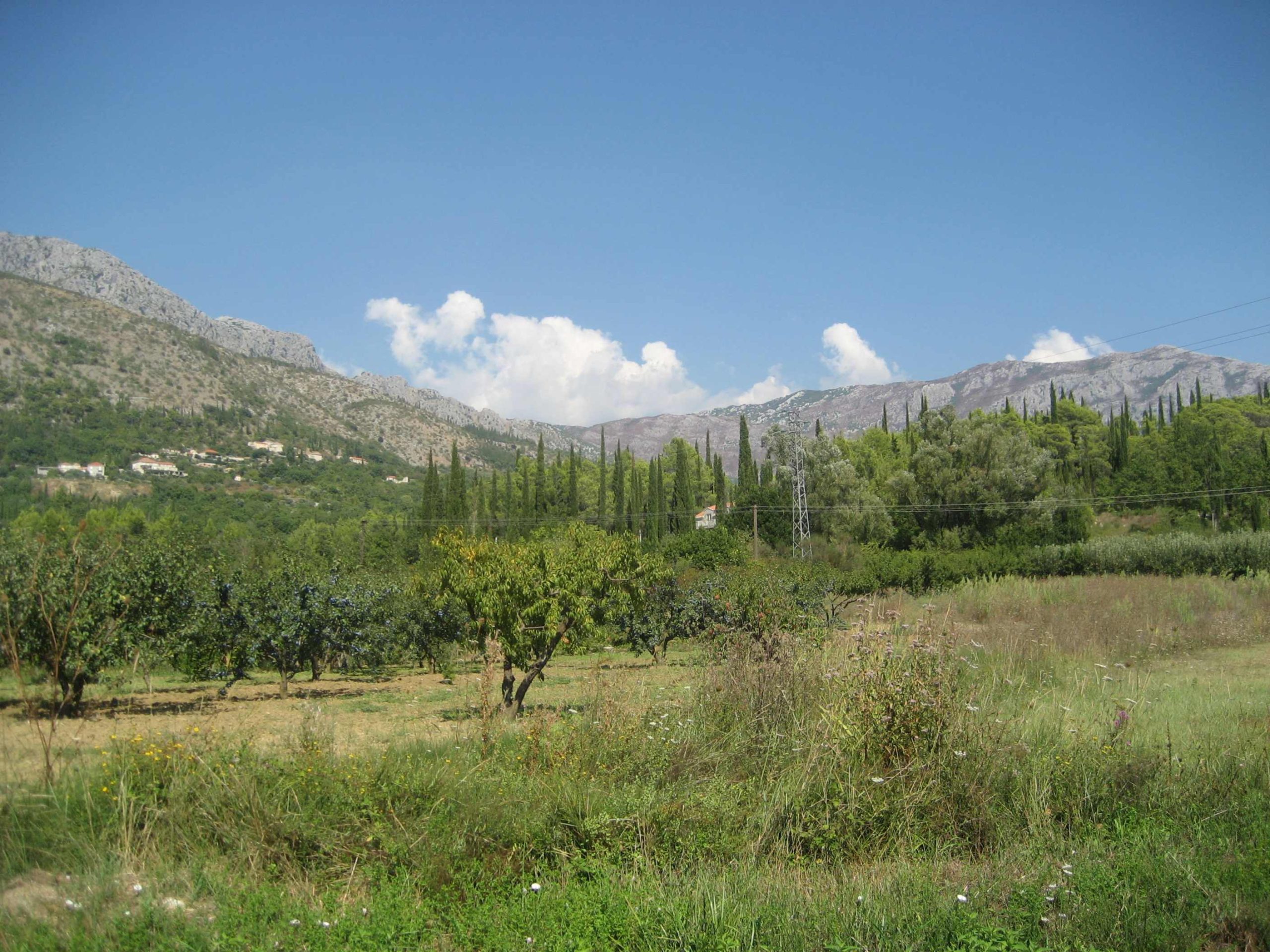
Cavtat’s food makes more sense when you think beyond the promenade. Behind the coast lies Konavle, one of southern Croatia’s most productive rural areas. Olive oil, seasonal vegetables, local wine, herbs, and meat traditions move from inland fields to coastal kitchens. On the maritime side, the catch matters too, and anyone trying to decode local species should read our guide to fish in Cavtat Bay before ordering.
The best approach is not to chase a single famous dish, but to eat by time of day. Lunch suits grilled fish, risotto, or a salad near the water. Dinner is better for a slower meal with wine and a more deliberate choice of seafood or meat from Konavle. If you are staying several nights, vary your setting: one meal directly on the promenade, one slightly back from the waterfront, and one in the Konavle hinterland if you have transport.
For a fuller inland food-and-landscape version of the day, pair Cavtat with our Konavle wine country guide.
Use Cavtat as a launch point for boat days
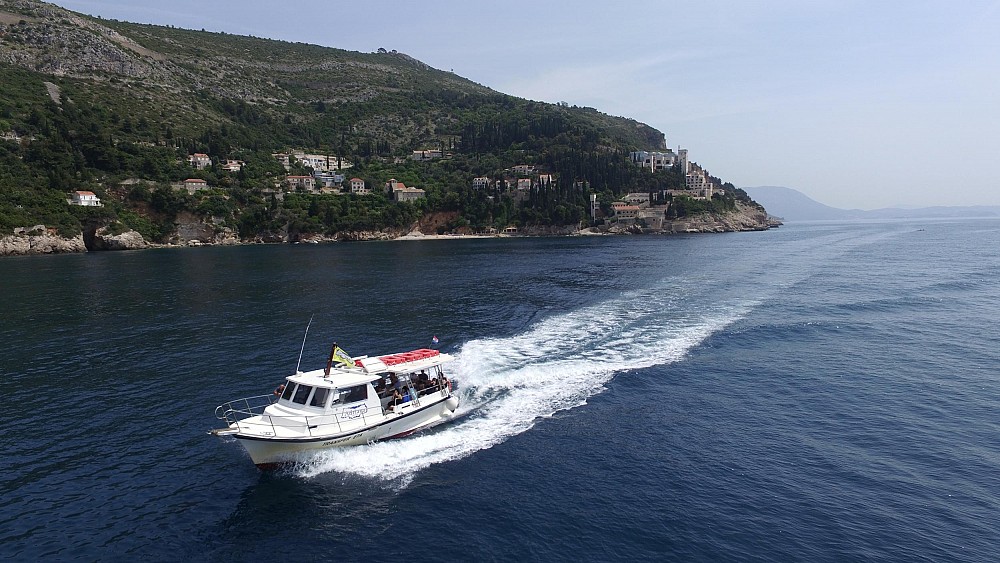
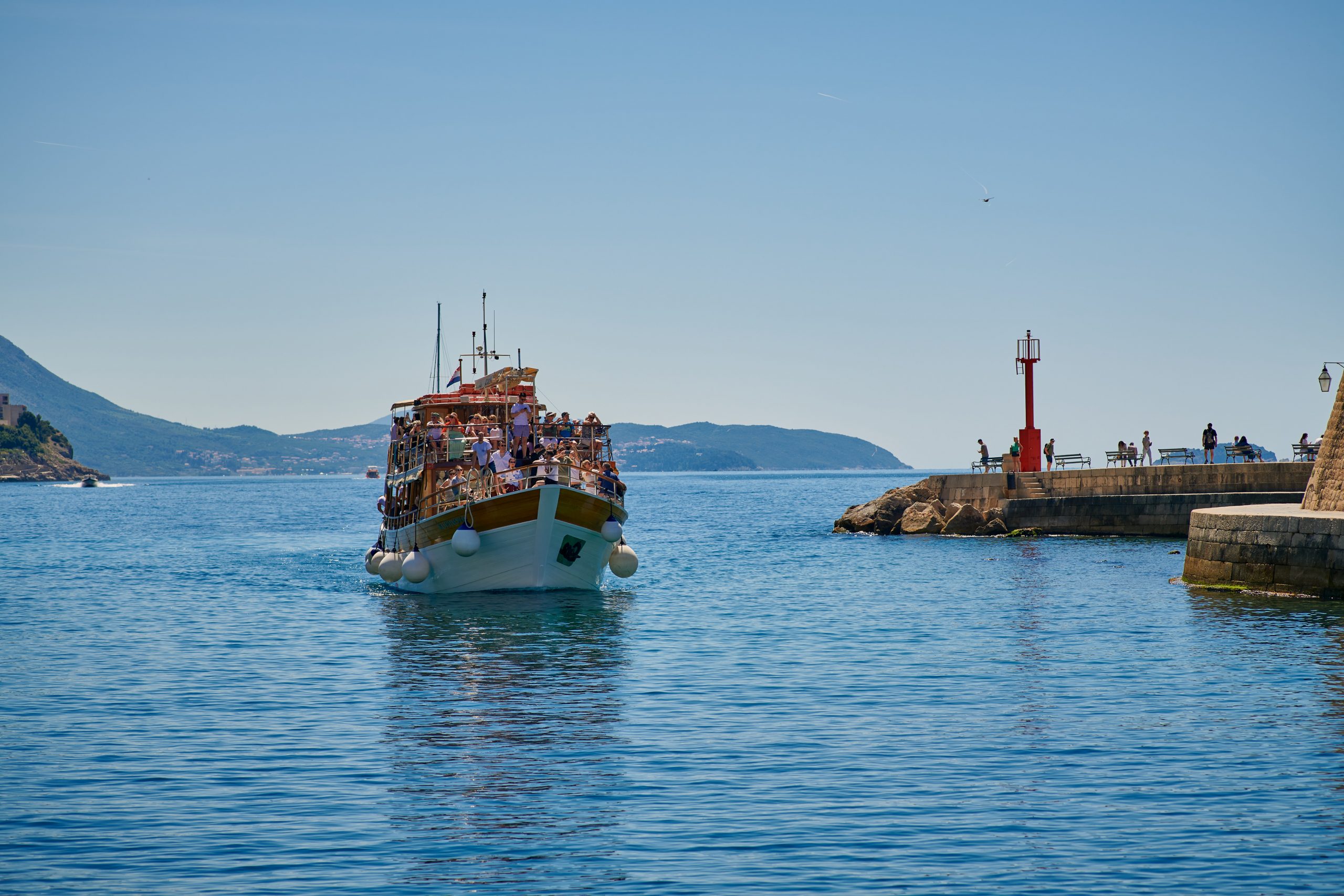
Cavtat’s harbour is not decorative; it is operational. Boats leave for coastal panoramas, island swims, and full-day excursions. For many travellers, the most efficient excursion is the half-day Blue Cave and islands circuit, especially when time is limited. Our article on the Cavtat Blue Cave and Elaphiti speedboat tour explains who it suits best: travellers who want open-water movement, multiple swim stops, and a stronger sense of coastline than a conventional bus excursion can provide.
Full-day island cruising is different. The Three Islands cruise is better for travellers who want a slower pace, time onshore, and a more social full-day format. The key difference is energy. A speedboat trip is sharper and shorter; an island cruise is softer and longer. Travellers who simply want a clean marine link into the city should compare the Regular Water Taxi to Dubrovnik, while those wanting a shorter scenic sea chapter might prefer the Dubrovnik Panorama Cruise.
When to choose a boat day
Choose a boat day after your first orientation walk rather than on the day you arrive. Cavtat is one of those towns that rewards one grounded evening before you start moving again. It sounds minor, but it changes the quality of the whole trip.
Plan your swimming properly: Cavtat does not depend on one beach
Visitors looking for a classic long sandy beach will usually travel elsewhere, but that does not mean Cavtat lacks good swimming. The town offers different sea-access formats rather than one dominant beach. Žal Beach is the most straightforward choice for travellers who want easier entry and services nearby. Rat Peninsula is better for strong swimmers and those who like depth, rock platforms, and shade. Tiha Bay is calmer and often suits travellers staying on that side of town who want a short morning swim without crossing the centre.
This variety is one of Cavtat’s underrated strengths. You can swim differently each day without repeating the same scene. That matters on longer stays, particularly in hot weather when swimming becomes less an event and more part of the day’s structure. Travellers who want a broader comparison should also read our guide to the best beaches near Cavtat and Dubrovnik.
| Activity | Best time | How long | Who it suits |
|---|---|---|---|
| Harbour and old town walk | Morning or evening | 1 hour | All visitors |
| Rat Peninsula coastal loop | Early morning | 1.5 to 2 hours | Walkers and swimmers |
| Račić Mausoleum and Bukovac House | Late morning | 2 to 3 hours | Cultural travellers |
| Blue Cave speedboat | Half-day | 4 hours | Short-stay visitors |
| Three Islands cruise | Full day | 8 to 9 hours | Families and relaxed groups |
Add sea activities if you want Cavtat to feel more kinetic
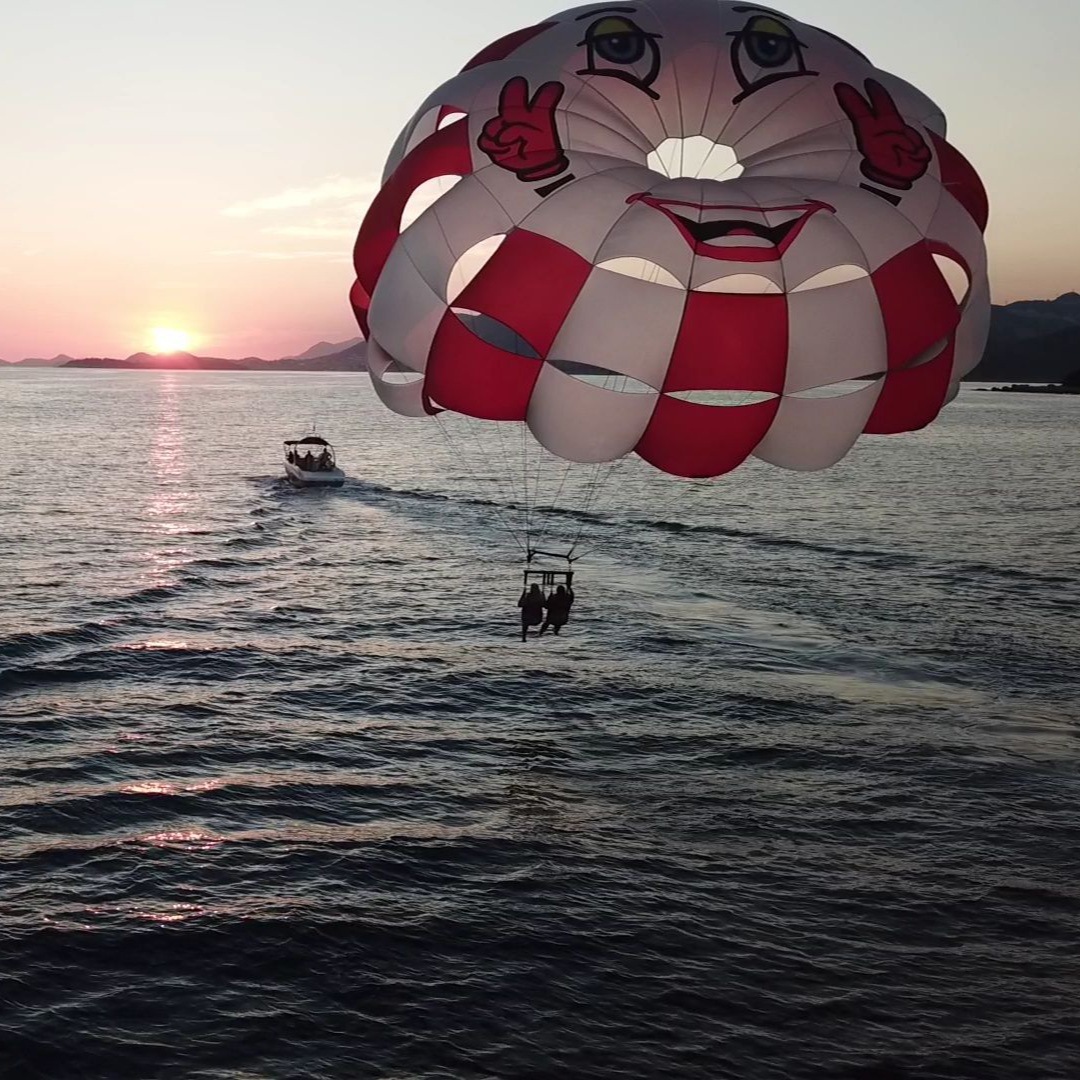
Not every traveller wants their marine time to take the form of a cruise. Cavtat also works well for shorter, more adrenaline-led experiences, particularly in summer when the harbour and bays are fully active. Cavtat Parasailing is the clearest choice for visitors who want height, view, and a short memorable jolt rather than a half-day commitment. Jet Ski Safari suits travellers who want more open-water movement, while Crazy UFO Inflatables works well for younger groups and families looking for something lighter and more playful.
These experiences are best treated as add-ons rather than as the whole logic of the town. Cavtat is strongest when its active and quiet sides remain in balance: walk in the morning, activity later, harbour dinner in the evening.
Take Dubrovnik as a nearby city, not as a reason to ignore Cavtat
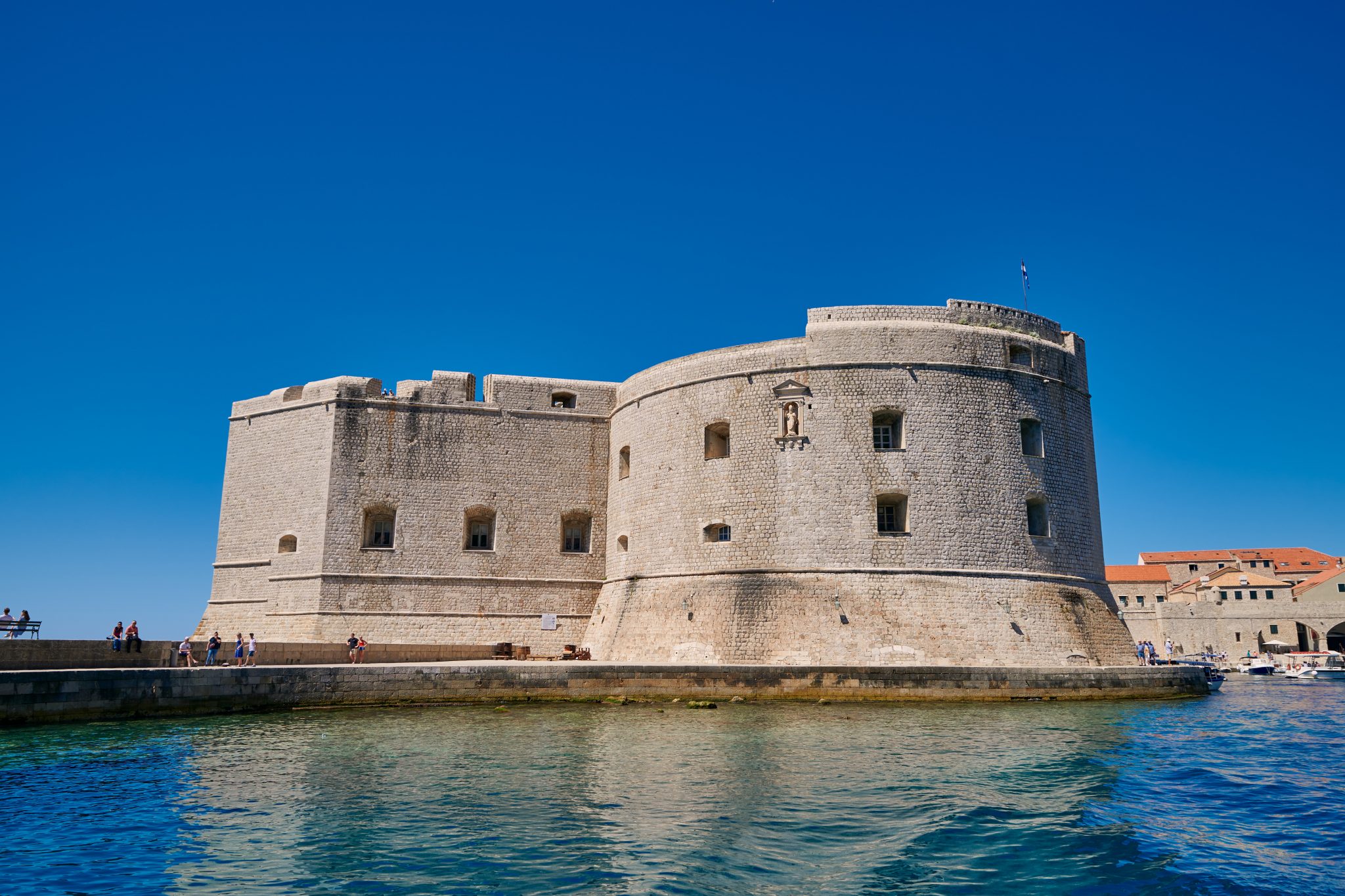
One of Cavtat’s great advantages is its relationship to Dubrovnik. The city is close enough for a focused visit, whether by bus, taxi, private transfer, or boat in season. Yet that same proximity tempts some travellers to sleep in Cavtat while spending every day elsewhere. That is usually a mistake.
Dubrovnik deserves a proper dedicated day; Cavtat deserves proper mornings and evenings of its own. The most useful pattern is simple: one full Dubrovnik day, one full boat day, one Cavtat-and-swimming day, and one inland or island day trip if your schedule allows. That avoids the common error of turning a coastal holiday into a sequence of transfers. Cavtat works best when it is not reduced to accommodation.
For the wider base decision, use our Cavtat vs Dubrovnik comparison. For excursion logic beyond the town itself, continue with the best day trips from Cavtat and Dubrovnik.
Take a day inland to Konavle if you want the trip to feel more complete
One of Cavtat’s strategic advantages is that the coast opens directly into Konavle. If Dubrovnik gives you urban drama and the harbour gives you sea movement, Konavle gives you spacing, fields, village roads, wineries, and a slower agricultural logic that makes the whole region feel more complete. Even a simple inland lunch can change the tone of the stay.
This is especially useful on longer trips. After one boat day and one city day, many travellers need a change in texture. Konavle provides it without requiring a major expedition. It rounds out the holiday and makes the coast feel less one-dimensional.
A very workable 4-night Cavtat structure:
Day 1: arrival, harbour walk, easy swim, dinner on the promenade.
Day 2: Rat Peninsula in the morning, Bukovac House or Račić Mausoleum later, relaxed evening.
Day 3: full or half-day boat excursion.
Day 4: Dubrovnik day trip or Konavle lunch and return for sunset.
Practical advice that improves the trip
Transfers
Because the airport is only a short drive away, arrival planning is straightforward. The most useful resource for first-time visitors is our Dubrovnik airport transfer guide, which breaks down the trade-offs between taxi, pre-booked car, and other options.
Seasonality
July and August are liveliest, warmest, and most expensive. June and September usually offer the best balance of swimmable sea, working excursion schedules, and slightly easier evenings. Shoulder-season travellers get more out of Cavtat’s walking and cultural side, while high-summer travellers get more out of its swimming and boat logic.
How many nights
Two nights is enough to understand the basic layout. Four to five nights is where Cavtat becomes genuinely satisfying. A week works well if you want to combine Dubrovnik, boat excursions, and Konavle without changing hotels.
Conclusion: the best things to do in Cavtat are not all sights
The strongest Cavtat itineraries combine movement and stillness: a harbour walk, a peninsula swim, a cultural stop, a fish lunch, a boat day, a late drink by the quay. That mixture is why the town performs so well in 2026 for travellers who want southern Croatia without the friction of a more crowded base.
Cavtat’s appeal is not built on exaggeration. It is built on proportion, access, and rhythm. Do the obvious things well, leave room for sea and evening light, and the town does the rest. Travellers who try to cover Cavtat in two hours usually miss the point. Travellers who let it shape the tempo of the trip often leave feeling they found the better base, and sometimes the better memory too.
Frequently asked questions
Is Cavtat worth staying in rather than visiting for a few hours?
Yes, especially if you value having a real base rather than a single sightseeing stop. The town reveals itself through repetition: morning coffee, a late swim, one boat departure, one quiet evening, then a second day when the peninsula and harbour begin to feel familiar. Travellers who only pass through often see the promenade and leave without understanding how practical and restorative Cavtat is as a place to sleep.
How many days do you need in Cavtat?
Two nights is the minimum if you want more than a superficial impression. Four nights gives proper room for one Dubrovnik day, one boat trip, and one unstructured Cavtat day. A week works well for travellers combining swimming, filming, slower meals, and Konavle excursions without changing hotels.
Is Cavtat better for families or couples?
It works for both because the town’s strengths are broad rather than niche. Families appreciate the compact layout, repeatable swimming, and low-stress evenings. Couples appreciate the harbour atmosphere, easy walks, sea views, and calmer rhythm than Dubrovnik. The town is less oriented toward nightlife than toward comfort and setting.
Can you do Cavtat without a car?
Yes. Cavtat is one of the easiest places on this coast to enjoy without hiring a car. Airport transfer is simple, the centre is walkable, swimming points are close, and many boat excursions leave directly from the harbour. A car becomes useful mainly for deeper Konavle exploration or more independent regional touring.
What is the biggest mistake visitors make in Cavtat?
They use it only as a sleeping base while spending every day elsewhere. Cavtat is strongest when you allow it some protected time of its own. One harbour evening, one peninsula walk, and one unhurried swim will usually tell you more about the Dubrovnik Riviera than another rushed transfer ever could.
Need help choosing the right Cavtat experience?
Tell us your dates, budget, and travel style, and Cavtat Guide will help you choose the best boat tour, private charter, sea activity, or local day plan for your stay.