

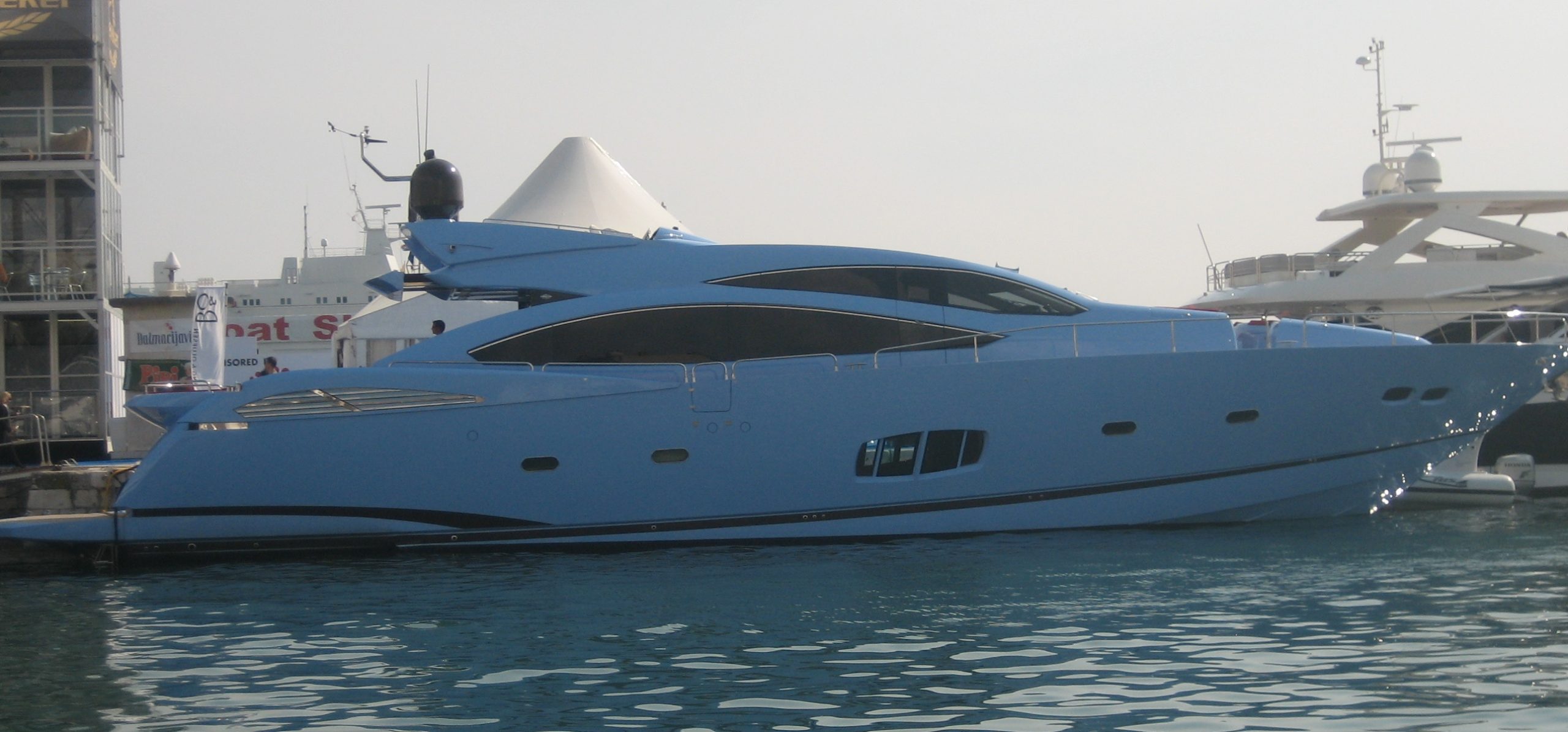
The most interesting yachts of 2026 are not necessarily the loudest or the most gadget-heavy. They are the ones in which technology disappears into atmosphere. That may sound paradoxical in an era defined by AI, connectivity, smarter propulsion conversations and ever more elaborate guest systems, but it is precisely the point. Modern luxury increasingly values technologies that reduce friction without demanding attention. On board a yacht, that means climate control that feels intuitive, connectivity that works without drama, lighting that supports rest, itinerary planning that adapts to conditions, and design that lets people relax rather than admire complexity from a distance.

For the yachting industry, this represents a meaningful change of emphasis. During earlier phases of the superyacht era, innovation often arrived as visible spectacle: bigger televisions, more dramatic toys, flashier entertainment systems, ever more complicated controls. In 2026, many affluent guests are moving in the opposite direction. They want the yacht to feel serene, intuitive and context-aware. They still appreciate technical sophistication, but only when it supports a cleaner, calmer guest experience. In other words, the best technology now works by not acting like technology.
That shift carries direct relevance for Croatia and the southern Adriatic. The region’s competitive opportunity lies in offering a yachting environment where smart systems, understated design, strong service and elegant geography reinforce each other. Croatia does not need to become a laboratory for techno-theatre. It needs to become a place where modern yacht expectations can be met gracefully, from marina infrastructure and digital support to the actual feeling of life on board.
The smart yacht is becoming an invisible platform
When people speak about smart yachts in 2026, they often begin with dashboards, apps, remote monitoring, predictive maintenance or AI-assisted systems. All of those matter. Yet from the guest point of view, intelligence is more simply measured. Does the yacht adapt well to the day? Does the lighting feel right at breakfast and at bedtime? Can a meeting take place without awkward improvisation? Is music easy to control? Can the crew respond quickly because systems are integrated rather than fragmented? Are weather and route decisions supported by information rather than guesswork?
The future yacht is not one that shows off its systems. It is one that lets guests forget those systems exist.
This is why smartness and quiet luxury are converging. The luxury client no longer wants to be trapped inside a demo. They want an environment that seems to understand them. That may involve sensor-based climate management, more sophisticated AV integration, route-planning tools, provisioning software, environmental monitoring, or back-of-house operational intelligence. But the guest experience should register only as calm and confidence.


For yacht builders and designers, this has encouraged a subtler philosophy of innovation. Instead of asking how to add another feature, the better question is often how to subtract a point of irritation. Better insulation, improved crew flow, stronger shading, more flexible furniture, cleaner charging integration, better tender boarding, easier storage for watersports, more restful cabins and lighting that can change mood without becoming theatrical: these details are where many guests now feel the difference between old moneyed display and contemporary sophistication.
AI, itinerary intelligence and the new concierge logic
Artificial intelligence in yachting is still in its early practical phase, but the direction is clear. The most immediate value is not in replacing human judgement. It is in improving preparation. Better weather modelling, preference tracking, provisioning support, route optimisation, maintenance forecasting and concierge coordination can all make the charter experience smoother. In 2026 the winning operators will not be those who advertise AI most loudly, but those who use it to make service more precise.

A broker armed with stronger itinerary intelligence can recommend a route that suits a family’s actual pace. A captain can anticipate berth pressure or weather windows more effectively. A crew can remember dietary and wellness patterns without carrying the burden of pure manual recall. A concierge can organise land experiences that feel coherent rather than generic. None of this removes the need for human taste. It sharpens it.
This matters particularly in Croatia, where the appeal of the coastline depends heavily on route quality. The Adriatic rewards intelligent pacing. Short passages can be a strength, but only if they are assembled into a narrative that feels balanced. A badly planned Croatian charter can feel fragmented. A well-planned one can feel almost impossibly efficient. Technology that improves that planning has direct commercial value.

Sustainability is moving from branding to operations
Few words have been stretched more thinly in luxury travel than sustainability. By 2026, sophisticated guests can usually tell when it is being used as decorative language. What they increasingly respect instead is operational seriousness. On yachts this means candid conversations about fuel use, hull efficiency, routing, waste management, water systems, material sourcing, refit choices, shore-power infrastructure and the realities of hybrid or lower-impact propulsion.

The industry is still some distance from a universal technical solution. Large yachts remain complex, energy-intensive assets. But the conversation has matured. Clients are more willing to ask good questions. Builders and foundations are more willing to discuss lifecycle thinking. Operators understand that sustainability is increasingly part of brand resilience, not just public relations. A vessel or charter company does not need to pretend it has solved the environmental equation. It does need to show that it is taking the question seriously.
| Technology or design area | Why it matters in 2026 | Guest-facing benefit |
|---|---|---|
| Integrated connectivity | Supports hybrid work and reliable communication | Less stress, more flexibility |
| Route intelligence | Helps optimise weather and passage planning | Smoother charters, better use of time |
| Efficient energy systems | Reduces waste and operational burden | Quieter, cleaner onboard environment |
| Adaptive lighting and climate | Supports sleep and mood | Improved wellness and comfort |
| Back-of-house digital tools | Improve crew coordination and provisioning | Service feels effortless rather than rushed |
For Croatia, this creates two strategic opportunities. The first is infrastructural. Marinas that invest in cleaner operations, smarter booking systems, better power solutions and more efficient guest handling can stand out in a highly competitive basin. The second is narrative. Croatia can present itself as a sensible place for future-facing yachting precisely because its cruising geography rewards efficiency. Shorter legs, adaptable itineraries and a wide range of shore experiences make it easier to deliver a lower-friction, lower-waste style of charter than some longer-range Mediterranean circuits.
Quiet luxury has design consequences
It is tempting to reduce quiet luxury to a visual trend: muted palettes, pale oak, linen textures, less chrome, fewer logos. Those aesthetics matter, but they are only the surface expression of a deeper preference. Quiet luxury at sea means that design serves behaviour. Materials should age well. Layouts should support conversation. Outdoor spaces should genuinely invite use. Cabins should restore, not merely impress. Crew should be able to move without constantly crossing guest space. The yacht should feel composed rather than busy.
This philosophy suits the Adriatic better than a more aggressive party-market identity. Around Cavtat and Dubrovnik, the most appealing luxury proposition is often a restrained one: mornings at anchor, cultured lunches ashore, elegant movement between town and bay, evenings that feel intimate rather than staged. A yacht designed around quiet luxury supports that mood naturally. One designed for maximum spectacle can feel curiously out of place.
There is a similar lesson for shore-side hospitality. Waterfront hotels, clubs and residences that serve yacht guests do not need to mimic yacht interiors, but they do need to understand the same values: light, privacy, calm acoustics, efficient transfers, good air, good bedding, credible wellness and staff who know when not to over-explain. The future of yachting is therefore partly architectural. It extends beyond the hull.
Connectivity is now part of hospitality
For many guests, digital reliability has shifted from technical requirement to emotional one. Knowing that a message can be sent, a call can be joined, a file can be downloaded or an onward transfer can be adjusted removes ambient anxiety. This does not make a charter less escapist. It makes it more usable. In 2026, many of the world’s highest-performing travellers want boundaries, not disappearance. The yacht that gives them those boundaries elegantly is the one that feels modern.

This is particularly relevant for Cavtat, where proximity to the airport and to Dubrovnik’s wider hospitality ecosystem makes shorter, more flexible yacht use increasingly plausible. The old model assumed a formal week-long charter as the main premium product. The emerging model includes long weekends, hybrid work-leisure use, owner extensions around hotel stays, and charters that begin or end with a land-based component. Reliable connectivity helps make those formats credible.

What smart, quiet luxury means for Croatia
Croatia’s real advantage is that it can absorb these changes without distorting its identity. It does not need to become a flashier market to feel relevant. It can become a better organised one. Smarter marina systems, stronger digital concierge layers, more refined wellness partnerships, better technical support and a more deliberate premium-shore product would all reinforce what the region already does well. The objective is not noise. It is confidence.
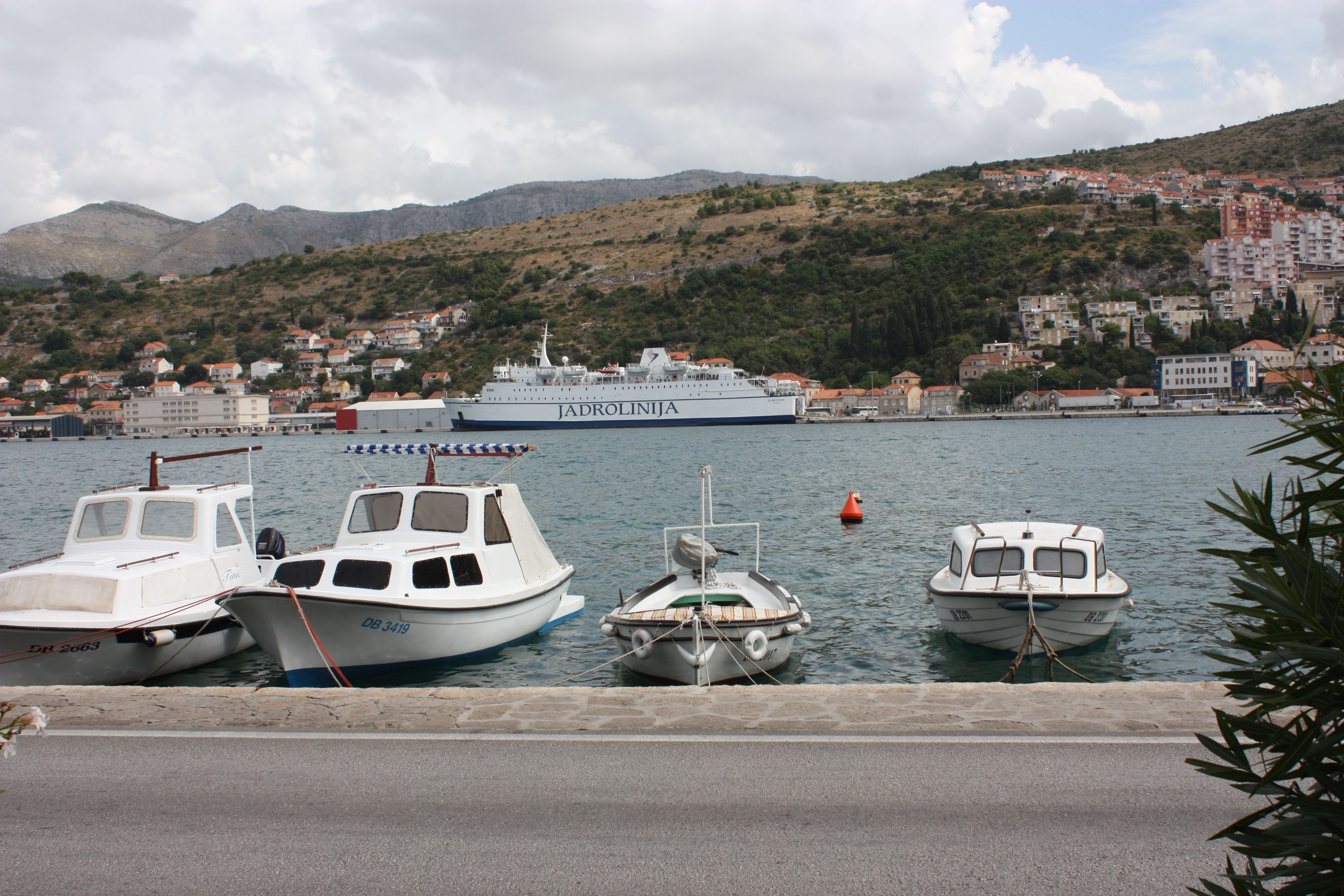

That confidence should be especially visible in the southern Adriatic. Cavtat and Dubrovnik together offer a persuasive frame for the next onboard experience: an internationally recognised arrival point, immediate access to calmer water, a compact luxury geography, and the ability to combine high culture with genuine retreat. With the right marina and service evolution, the area can become not just a beautiful route segment, but a preferred setting for how future-facing yachting actually feels.


In the end, smart yachts and quiet luxury are two versions of the same idea. Both ask how life on board can become more intuitive, more restful and more intelligently tailored to the guest. In 2026 that is where value is concentrating. The vessels, marinas and destinations that understand this will not simply look current. They will feel current. That is a far harder achievement, and a far more durable one.
The next premium differentiator may be trust in the technical layer
There is another reason these shifts matter. As the onboard environment becomes more integrated, the premium guest increasingly judges whether the yacht feels trustworthy. Does everything work first time? Can the crew troubleshoot quickly? Do transfers, charging points, speakers, tablets, water toys, wellness equipment and shore arrangements all behave as expected? Trust of this kind is rarely celebrated in marketing copy because it seems too basic. In reality it is one of the strongest emotional foundations of modern luxury. A guest relaxes when systems stop demanding attention.
For Croatia, this is a useful reminder that future relevance will depend as much on technical reliability as on atmosphere. A marina with polished communications, orderly arrivals, good power, helpful staff and strong local support can feel dramatically more premium than one with similar berths but weaker execution. The same applies to the network around the yacht: drivers, provisioning partners, wellness practitioners, restaurants and local guides all contribute to whether the destination reads as sophisticated. The future of the onboard experience is therefore also the future of the shore-side operating culture that surrounds it.
That is why the best yachts in 2026 feel almost modest in their competence. They do not insist on being admired. They let the guest inhabit the day. Croatia has every reason to align itself with that mood. The Adriatic is at its most persuasive when it feels ordered, elegant and deeply usable. Smart systems, better marinas and quieter luxury are simply the contemporary tools for delivering that enduring emotional result.
In practical terms, that gives the southern Adriatic a chance to become a preferred proving ground for future-facing hospitality at sea. Not because every yacht there will be experimental, but because the region can reward operators who blend restraint, intelligence and comfort. A market that values quiet confidence over noisy innovation is well suited to a coastline that already communicates calm.
Guests remember these subtleties instinctively. They may never ask what software coordinates the lighting scenes or how route data was processed, but they remember whether the yacht felt restful, whether the crew seemed prepared and whether the transition between sea and shore felt natural. That is the real test of the future onboard experience.
Need help choosing the right experience?
Tell us your budget, dates, and travel style, and Cavtat Guide will help you choose the best yacht charter, tour, property option, or local experience.


