Updated for 2026
Ruđer Bošković belongs among the most ambitious intellectual figures ever to emerge from the eastern Adriatic. Born in 1711 in the former Republic of Ragusa, he became a Jesuit, astronomer, mathematician, natural philosopher, diplomat and poet whose career carried him through Rome, Paris, Vienna, London and Milan. Yet he should never be treated merely as a universal genius detached from place. Bošković was formed by the educational discipline, diplomatic habits and outward orientation of Dubrovnik’s historic culture. The small Adriatic republic that produced merchants, envoys and scholars also produced a mind capable of thinking on a continental scale. In Bošković, Dubrovnik’s old civic intelligence entered the eighteenth-century republic of science.
What continues to fascinate is not only the range of his accomplishments, impressive though that range remains. It is the way his life reveals the connection between a small Adriatic polity and the larger systems of Catholic learning and Enlightenment science. He belonged to the Society of Jesus, yet his work crossed many intellectual frontiers. He wrote on optics, astronomy, geodesy and the structure of matter. He advised on practical problems, joined diplomatic missions and became known across scholarly Europe under the Italian form Ruggero Giuseppe Boscovich. He is therefore both local and transnational, Ragusan and European, devout and experimental. Few lives reveal Dubrovnik’s complexity as clearly.
At a glance
Born: 1711, Dubrovnik (then the Republic of Ragusa)
Died: 1787, Milan
Known for: astronomy, mathematics, natural philosophy, diplomacy, poetry
Order: Society of Jesus
Latin/Italian form of name: Ruggero Giuseppe Boscovich
Dubrovnik, family and formation
Bošković was born to Nikola Bošković, a merchant, and Paola Bettera, from a well-connected Ragusan family. That household background already reflects the texture of old Dubrovnik society: mercantile, Catholic, multilingual and deeply integrated into wider Adriatic networks. The city in which he grew up retained habits inherited from the republic at its height—serious schooling, rhetorical polish, diplomatic awareness and a clear understanding that small states survive by intelligence more than force.
Education came early and mattered greatly. The Jesuit environment of Dubrovnik, and later the larger educational world of the Society of Jesus, offered him both structure and ambition. Jesuit pedagogy in the eighteenth century was demanding, literary, mathematical and disciplined at once. It cultivated argument, memory, style and breadth. In Dubrovnik, the young Bošković encountered not a provincial backwater but a rigorous gateway into the Catholic intellectual world. That is why references to the old Collegium Ragusinum are more than local antiquarian detail. They mark the institutional threshold through which one of Europe’s most original scientific minds first passed.
When he moved to Rome and entered the Society of Jesus more fully, he stepped into a network rather than a void. The Jesuit order offered libraries, mathematical training, correspondence, observatories and a culture in which learning could still aspire to universality. Bošković flourished there because he possessed both the mental agility and the social polish to do so. Those qualities—calculation and diplomacy—are often treated separately, but in his case they belonged together.
A polymath in the eighteenth century
His career unfolded in an era when it was still possible, if increasingly difficult, for a single thinker to range widely across the sciences and humanities. He worked on planetary orbits, the shape of the Earth, geodesy, optics and questions about the constitution of matter. He also wrote poetry and undertook diplomatic service. To modern specialists, this breadth can seem almost implausible. Yet the eighteenth century still rewarded synthetic minds able to move between mathematics, philosophy and practical problems. Bošković excelled precisely because he could combine abstraction with application.
Among his most famous works is the Theoria Philosophiae Naturalis, first published in 1758 and later expanded. The book offered a highly original account of matter and forces, often described as anticipating later ways of thinking about atomic structure and fields. One should avoid reducing this to the blunt claim that Bošković simply “invented modern physics” in advance. Historical precision is more useful than retrospective mythmaking. What matters is that he proposed an intellectually daring model of nature that impressed later readers and demonstrated how far a Dubrovnik-born Jesuit could travel within European science.
He also contributed to astronomy and measurement in practical ways, including work connected with terrestrial positions, planetary calculation and geodesy. Here again one sees a key feature of the age: science was not merely speculation but an instrument of statecraft, navigation, mapping and imperial competence. Bošković belonged fully to that world of practical exactitude.
Between Rome, Paris and the laboratories of reputation
His reputation spread because he moved through institutions that mattered: the Collegium Romanum, scientific academies, diplomatic circles and the urban networks of learned Europe. He was elected a Fellow of the Royal Society and interacted with leading intellectuals of his time. Yet unlike some pure court savants, he remained visibly marked by Jesuit formation and by the rhetorical manner of a man from Dubrovnik. His writings could be technically demanding, but his career also depended on persuasion, correspondence and social tact.
The Jesuit problem and the politics of knowledge
No life like Bošković’s can be understood apart from the fortunes of the Society of Jesus. The Jesuits were among the great educational and intellectual powers of the Catholic world, yet by the mid-eighteenth century they faced mounting political attack. He therefore lived through an age in which scientific work could not be cleanly separated from ecclesiastical and state pressures. His identity as a priest and Jesuit was not incidental to his career. It shaped the routes through which he worked and the crises he had to survive.
This makes him especially interesting now, because modern readers often assume a crude opposition between religion and science. His life refutes that simplification. It shows instead how Catholic institutions could sustain advanced scientific work, even while political pressures eventually destabilised the very order that had nourished such work. His biography is therefore also a chapter in the history of institutions.
His diplomatic assignments and negotiations in various European settings further underline that science in his world was entangled with politics. Measuring meridians, advising on structures, corresponding with courts and scholars, and representing learned authority all belonged to the same ecosystem. He was not a laboratory recluse. He was a public intellectual before the phrase existed.
| Year | Event | Why it matters |
|---|---|---|
| 1711 | Born in Dubrovnik | Places him in the civic and educational world of the late Ragusan republic. |
| 1720s–1730s | Jesuit formation and studies in Rome | Gives him the intellectual discipline that shaped his entire career. |
| 1758 | Publication of Theoria Philosophiae Naturalis | Secures his place among the major scientific thinkers of the century. |
| 1761 | Election to the Royal Society | Confirms his recognition in the broader European scientific community. |
| Late career | Work in Italy and association with Brera | Shows his continuing importance in astronomy and learned institutions. |
| 1787 | Died in Milan | Ends a career that remained associated with Dubrovnik despite its vast geographical reach. |
Science, style and the eighteenth-century public sphere
Bošković also mattered because he could write and speak with authority in a period when learned reputation depended as much on style as on discovery. The eighteenth century was full of technical debate, but it was also an age of letters, academies, patronage, salons and public argument. A thinker needed to persuade institutions as well as equations. His rhetorical polish—partly Jesuit, partly Ragusan—made him unusually effective in this environment.
His mobility across courts and academies should therefore be read not as a random series of appointments but as the circulation of a learned persona. He could present himself as mathematician, priest, adviser or philosopher according to circumstance without ceasing to be any of them. This adaptability echoes a deeper Dubrovnik skill: the ability of a small polity to survive by reading context accurately and changing register without surrendering substance.
That is one reason his story still feels relevant. It demonstrates that intelligence is social as well as analytical. A theorem may be exact, but a scientific career also depends on institutions, language, alliances and public trust. He mastered that larger ecology of knowledge.
Memory, naming and regional identity
The persistence of his name in schools, institutes, statues and public culture raises an instructive question: why has Bošković remained so useful to later generations? Part of the answer is obvious—he was brilliant. But another part is symbolic. He allows Dubrovnik and Croatia more broadly to claim a place in the history of science that is not sentimental but earned. In him, the region finds a figure who belongs to European intellectual history without qualification.
For Dubrovnik in particular, he broadens the cultural map. The city is often presented through diplomacy, architecture and tourism. Bošković adds scientific prestige to that repertoire. He reminds readers that the republic’s discipline could produce not only statesmen and merchants but thinkers capable of addressing the structure of the cosmos. That expansion of scale is one of his lasting gifts.
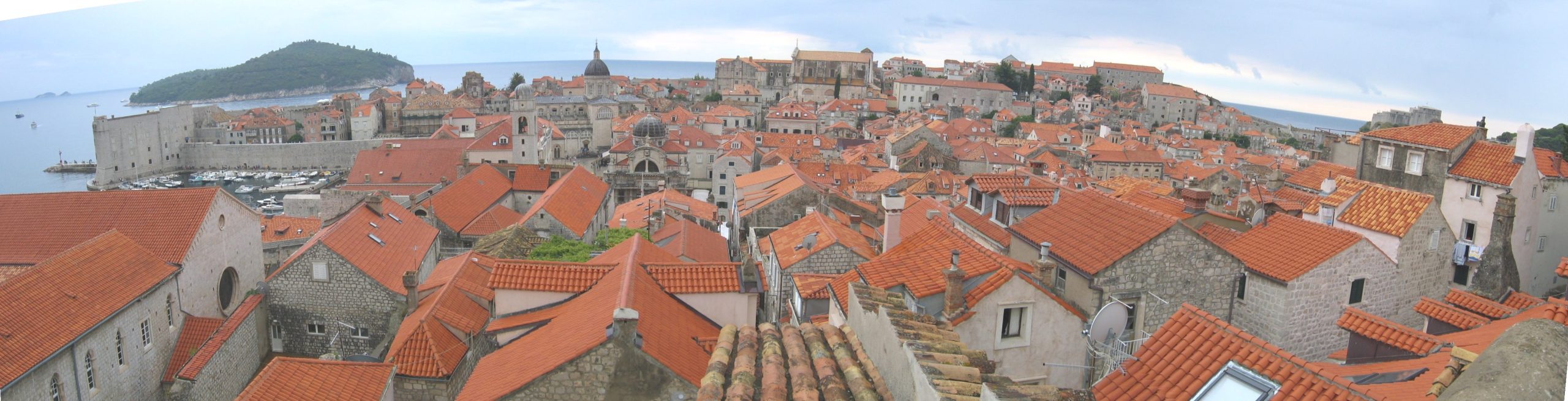
To walk through Dubrovnik with Bošković in mind is therefore to see more than heritage. It is to see a city that once invested enough in education and intellectual seriousness to send one of its sons into the central debates of his century. That perspective changes the place. It makes the stones feel not only old, but mentally ambitious.
Why Dubrovnik mattered to him
It is tempting to treat Dubrovnik as merely the birthplace of a mind that quickly belonged elsewhere. That would be too simple. The republic’s culture mattered because it specialised in the education of elites for life beyond the city. A small maritime state had to cultivate articulate, mathematically competent and diplomatically agile people. Bošković was an extreme expression of that tradition, not an exception to it. He carried Ragusan habits of intellect into institutions far larger than Dubrovnik itself.
He also remained part of the region’s symbolic economy. Later generations in Dubrovnik, Croatia and beyond repeatedly returned to his name because he proved that the city’s historic contribution was not only commercial or diplomatic but scientific. For a place so often romanticised through walls and sunsets, Bošković is a necessary corrective. He insists that Dubrovnik belongs in the history of ideas as well as in the history of monuments.
Encountering Bošković today
Modern travellers encounter Bošković in fragments: a school name, a plaque, a museum reference, an airport, a statue, a textbook. Those fragments can feel thin unless one restores the life behind them. The airport at Dubrovnik bearing his name is a particularly vivid example. Most passengers pass through it without asking why an international gateway to the region honours an eighteenth-century Jesuit scientist. Yet the choice is apt. He too was a gateway figure: someone through whom Dubrovnik connected to worlds much larger than itself.
Anyone already exploring the region through practical pieces such as our wider introduction to Cavtat or our feature on Marin Držić can use Bošković as a reminder that these places have long been routes of exchange rather than static destinations. His life belongs to the same geography of movement, only at a higher intellectual altitude.
Why he still matters
He remains compelling because he embodies a kind of seriousness that modern culture often claims to admire while rarely understanding: intellectual ambition rooted in discipline, institutional formation and wide curiosity. He refused narrowness. Mathematics, astronomy, philosophy, poetry and diplomacy could still speak to one another in his work. That breadth did not make him superficial. It made him proportionate to his age.
His continuing relevance also lies in the questions his life raises. What kind of educational culture allows a small city to produce a continental mind? How do religious institutions shape scientific innovation? What happens when knowledge depends on both precision and social tact? How does a peripheral polity enter the centre of European thought without losing its identity? These are not antiquarian issues. They remain visible wherever smaller places seek intellectual authority in larger systems.
He also reveals a Dubrovnik that many visitors never see. Behind the city’s stone beauty stood an educational and civic culture capable of producing one of Europe’s notable scientific minds. To recognise Bošković is therefore to recognise that the history of the Dubrovnik region is not only scenic and political; it is also intellectual. It helped generate knowledge.
The central truth of his life is that a small Adriatic republic could train a mind large enough for the universe. That is not a slogan but a historical fact. Anyone who wants to understand why Dubrovnik mattered in Europe should look not only at its diplomats and fortifications but at the Jesuit from the city who thought about stars, forces and the shape of the Earth—and carried Ragusan intelligence with him wherever he went.
He further complicates the geography of genius. Europe’s intellectual map is often drawn from capitals outward. Bošković forces that map to bend back toward Dubrovnik. The city was not merely a recipient of ideas generated elsewhere; through him, it became a point of origin. That fact should change how the region is read.
In that sense Bošković is not only a scientist from Dubrovnik. He is evidence that Dubrovnik itself belonged to the infrastructure of European thought.
Planning a history or science-focused visit to Dubrovnik?
Tell Cavtat Guide your dates and interests. We will help you build a cultural itinerary around Bošković’s legacy, the old Collegium Ragusinum and the deeper intellectual layers of the Dubrovnik Riviera.