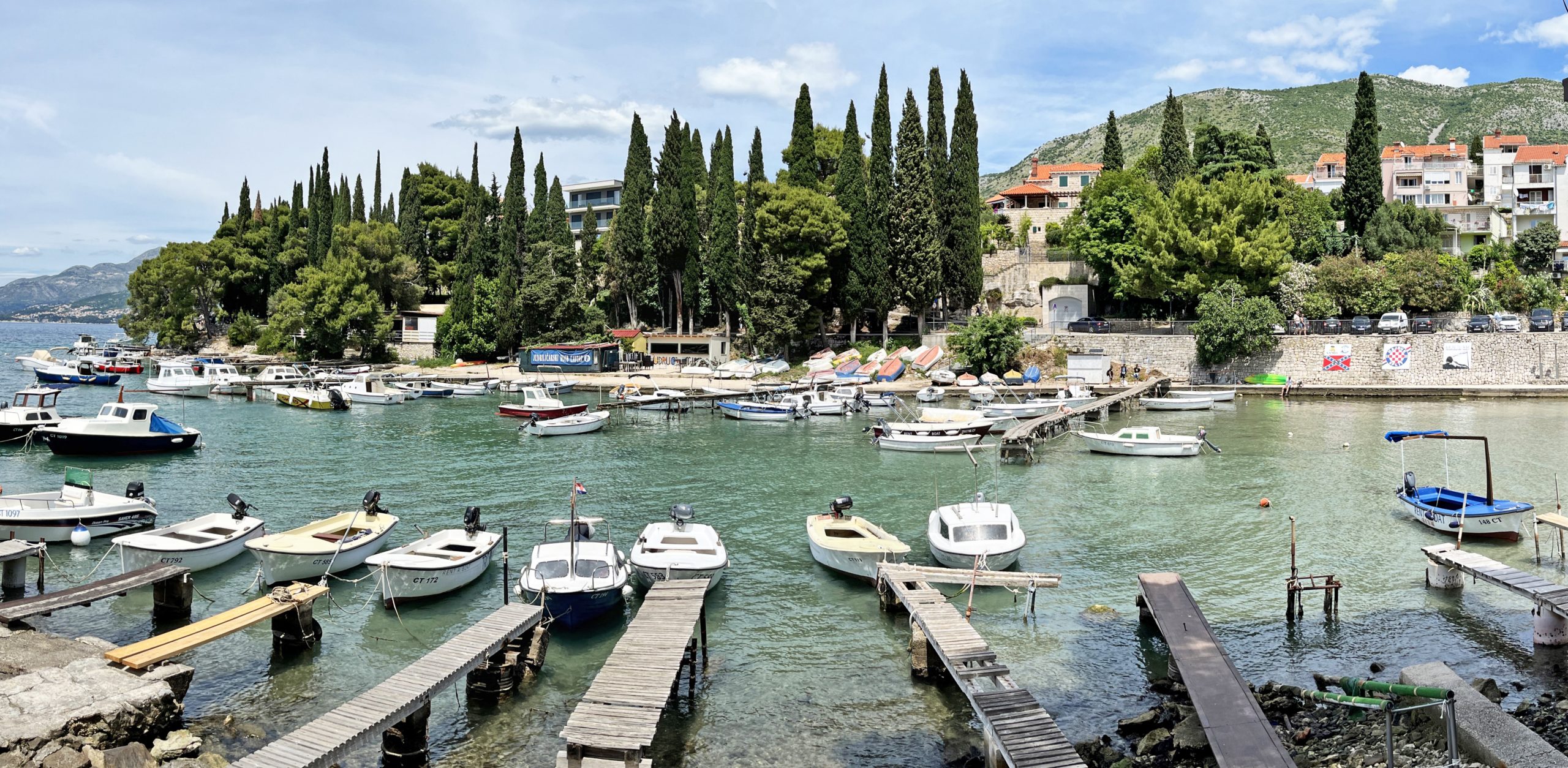
I did not begin to understand Croatia in Dubrovnik, on a wall, or in a brochure photograph. I began to understand it in Cavtat, on a morning when the harbour was almost quiet enough to hear cutlery being arranged on café tables and ropes tapping the side of a boat. For many first-time visitors, Croatia arrives in the imagination as a coast: blue water, pale stone, islands, boats, sunlight. That is not wrong, exactly. It is simply insufficient. The real introduction happens when the scenery stops behaving like scenery and starts behaving like a lived place. Cavtat, small enough to be walked without hurry and layered enough to resist easy summary, does something important for foreigners. It gives shape to the emotional logic of the country. Here, in the southern Adriatic, one starts to see that Croatia is not simply Mediterranean leisure in a different language. It is a disciplined, coastal, historical society whose warmth often reveals itself through rhythm rather than performance.
That difference matters. A great deal of travel writing still treats Croatia as a handsome surprise: more elegant than expected, safer than assumed, more cultivated than a beach destination ought to be. Yet what first-time foreign visitors often miss is that the country does not introduce itself all at once. It asks for patience. The sea is immediate, but the culture is gradual. You notice first the cleanliness of the waterfront, then the attention paid to morning coffee, then the way older residents occupy benches as if public space were still genuinely public. Only after that do you begin to understand why the coast feels both relaxed and somehow composed. The southern Adriatic has beauty in abundance, but its greater power lies in arrangement: how the promenade meets the harbour, how houses sit above the water, how cafés invite lingering without pushing for spectacle.
Cavtat is unusually good at translating those details into feeling. On the official Cavtat and Konavle Tourist Board site, the region is presented through sea, heritage and the idea that life here can be a simple pleasure. That phrase sounds promotional until one spends time in the town and realises how much of local daily life is built around moderation rather than excess. The point is not to fill every hour. The point is to inhabit it properly. For foreigners arriving from louder, faster or more aggressively curated destinations, this can feel unfamiliar. The harbour does not shout for your attention; it organises it. The result is that you are calmed before you know why.
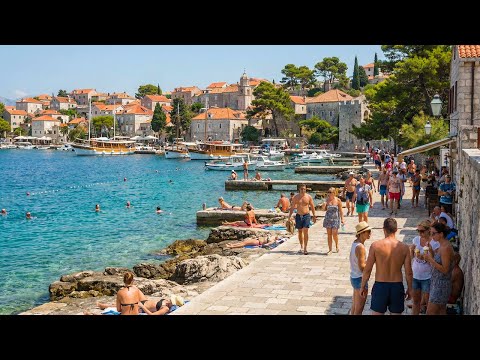
Croatia appears slowly
Many destinations reward the fast glance. Croatia, especially in its southern coastal towns, rewards the second and third look. A first-time visitor stepping into Cavtat after landing nearby at Dubrovnik Airport may initially register convenience: the airport transfer is short, the sea arrives quickly, and the whole town seems to fit the fantasy of an elegant Adriatic arrival. Yet convenience is not the same as understanding. What changes the experience is staying long enough to notice that the town lives by habits rather than attractions. Morning belongs to coffee, walking and provisioning. Midday contracts into shade, lunch and practical retreat. Early evening is when the waterfront regains its social depth. This is not staged local colour; it is a civic rhythm.
That rhythm helps explain why Croatia often feels different from the Mediterranean that many travelers expect. In some coastal destinations elsewhere, the entire urban performance bends towards the visitor. In Cavtat, the visitor is welcome, but the town does not entirely reformat itself around them. Residents still move according to local tempo. Families still claim the promenade. Conversations still unfold with the calm confidence of people who are not auditioning their lifestyle for foreign approval. To an outsider, this can feel reserved at first, then deeply reassuring. You are not in a resort version of life. You are near life itself.
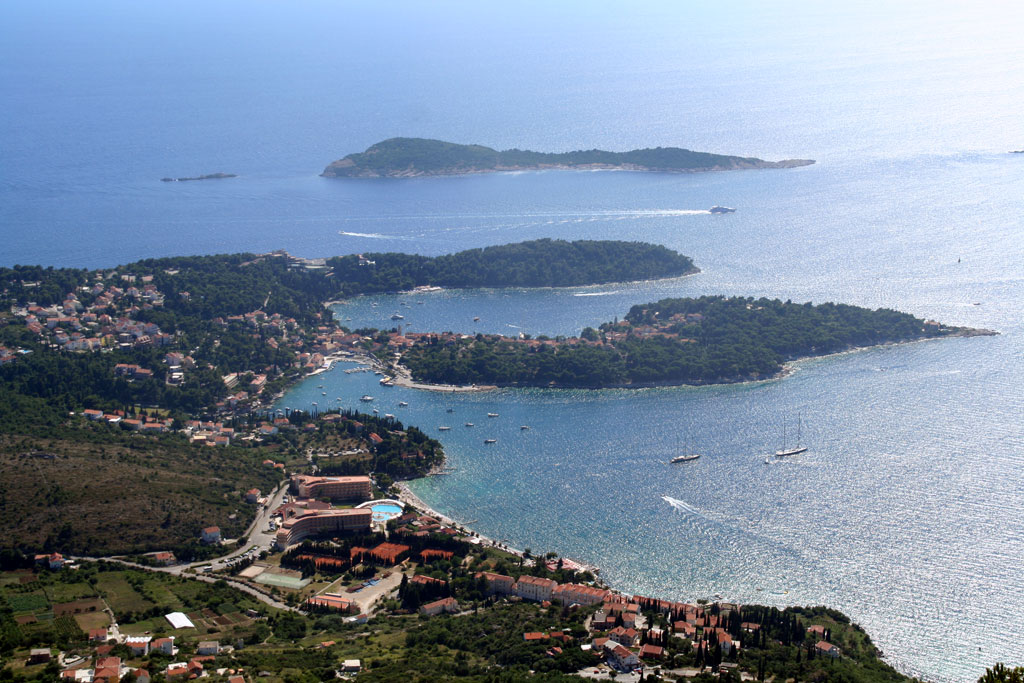

| What a first-time visitor expects | What Cavtat usually reveals instead |
|---|---|
| A polished Adriatic postcard | A working waterfront where locals and visitors share the same daily stage |
| A beach escape near Dubrovnik | A slower lesson in Croatian coastal behaviour, hospitality and timing |
| Constant animation | Intervals of quiet, shade and measured social life |
| Mediterranean spontaneity | A blend of warmth and structure shaped by Central European habits and maritime routine |
Why Cavtat teaches balance
Proportion may sound like an odd word for travel, but it is one of the most useful. In Cavtat, almost everything is in proportion: the waterfront to the buildings behind it, the cafés to the passing footfall, the marina activity to the domestic calm of side streets, the mild glamour of the setting to the practical ease of moving through it. For a foreign visitor, this balance is quietly educational. You begin to see that Croatian coastal towns are not merely pretty. They are legible. They have edges, centres, pauses and transitions. A promenade is not just somewhere to stroll; it is a social instrument. A shaded terrace is not only photogenic; it is a place where time can be arranged.
This is one reason why the town can be a better first teacher of Croatia than somewhere more overwhelming. Dubrovnik is an extraordinary city, and its UNESCO status is entirely deserved; the UNESCO entry for the Old City of Dubrovnik makes clear the depth of its historical significance. But grandeur can be distracting. In a place as globally famous as Dubrovnik, first-time visitors may spend much of their attention on scale, crowd management and the mechanics of being in a renowned place. Cavtat offers a more intimate entry point. It lets a foreigner grasp how Croatia feels before asking them to interpret what Croatia means.
That feeling is tied to the Adriatic itself. Sea here is not only recreational. It determines outlook, spacing, tone and even conversation. People look out to measure weather, arrivals, departures and light. Boats are not just leisure assets; they are evidence of continuity with older coastal habits. Even a casual harbour watch reveals how maritime awareness survives inside contemporary tourism. You see service boats, transfers, fishing traces, excursion traffic, private craft, swimmers and walkers all occupying a single visual field. The waterfront is therefore not a decorative border. It is the town’s moving front room.
The first day tells you more than the itinerary
One of the best ways to understand this is not to rush into a list of sights. Walk the promenade once in the morning, once in late afternoon and once after dinner. On the first pass, you notice light and layout. On the second, you begin to register social use: who sits where, which tables fill first, which parts of the harbour remain calmest. By evening, the place acquires emotional depth. The town does not become louder so much as fuller. Cavtat’s gift to the newcomer is precisely this capacity to become more intelligible with each circuit.
That is also why articles such as Cavtat Guide’s own Dubrovnik Airport transfer guide and Hotel Croatia review are useful not only for planning but for orientation. They help explain the practical geography of arrival and the ways visitors actually inhabit the area. What matters is not simply where to sleep or how to transfer. What matters is how quickly one can move from transit mode into local rhythm. In Cavtat, that threshold is unusually short. A foreign visitor can arrive stressed and be looking at moored boats within the hour. Such immediacy shapes perception before the mind has time to harden into tourist defensiveness.
Hospitality without theatre
Foreigners often misuse the word hospitality because they equate it with visible enthusiasm. Croatia, by contrast, can be hospitable in a quieter register. Service is often efficient before it is expressive. Warmth may arrive through competence, memory and steadiness rather than overt charm. In Cavtat, one feels welcome less because everyone performs delight and more because the town seems prepared for human life. There are benches where you want them, paths that make sense, terraces with proper views, harbours that still function as harbours, and staff who tend to value calm professionalism. This is not universally true in every establishment, of course, but it is one of the coastal habits foreigners begin to recognise.
That style of welcome can surprise visitors from places where service is more openly conversational or more aggressively monetised. Here, the exchange is often gentler and less rhetorical. You are not always asked whether everything is amazing. Instead, someone makes sure it works. There is, paradoxically, a great deal of care in this restraint. It allows the guest to settle. It gives dignity to both sides of the interaction. And it reflects a larger truth about Croatia: many of its finest qualities are offered plainly, without insisting on their own significance.
Food plays a role in this education. The coast does not teach through elaborate ceremony so much as repetition: coffee taken properly, fish prepared without fuss, bread that anchors the table, olive oil that does not need explanation, dessert arriving as punctuation rather than spectacle. Cavtat Guide’s own feature on feasting in Cavtat and guide to fish in Cavtat Bay point towards this culture of the table. What the foreign visitor learns is not merely what to order. It is that meals in Croatia often reveal local values: seasonality without fuss, seafood without overstatement, conversation paced to suit the meal rather than the bill.

A country between worlds
It is tempting to describe Croatia only as Mediterranean, but Cavtat complicates that label in a useful way. The coast has southern light, maritime habits and terrace culture, certainly. Yet the town also carries a discipline of space, a neatness of public life and a seriousness about order that many foreigners read as Central European. This combination is one reason the country lingers in the mind. It feels open without being chaotic, elegant without becoming performative, relaxed without ceasing to be organised. The visitor senses two traditions meeting: Adriatic sensuality and continental self-command.
Cavtat makes that duality visible because it is neither a village fantasy nor a grand urban stage. It sits between scales. It can absorb a morning swim, a marina glance, a church bell, a coastal walk and a polished dinner without any of those things cancelling the others out. In a single day, the foreign visitor can experience Croatia as landscape, settlement, routine and conversation. That density is rare. It is why the town often converts people who arrived intending only to use it as a base.
For those curious about extending that understanding, the most revealing excursions are often marine ones. A day on the water, whether through a blue cave speedboat route or a more relaxed island cruise such as the ones explored in Cavtat Guide’s Blue Cave feature and Elaphite cruise review, clarifies that the coast is a network rather than a line. Croatia is experienced in passages as much as in destinations. You learn its logic by moving across water, not merely by looking at it.
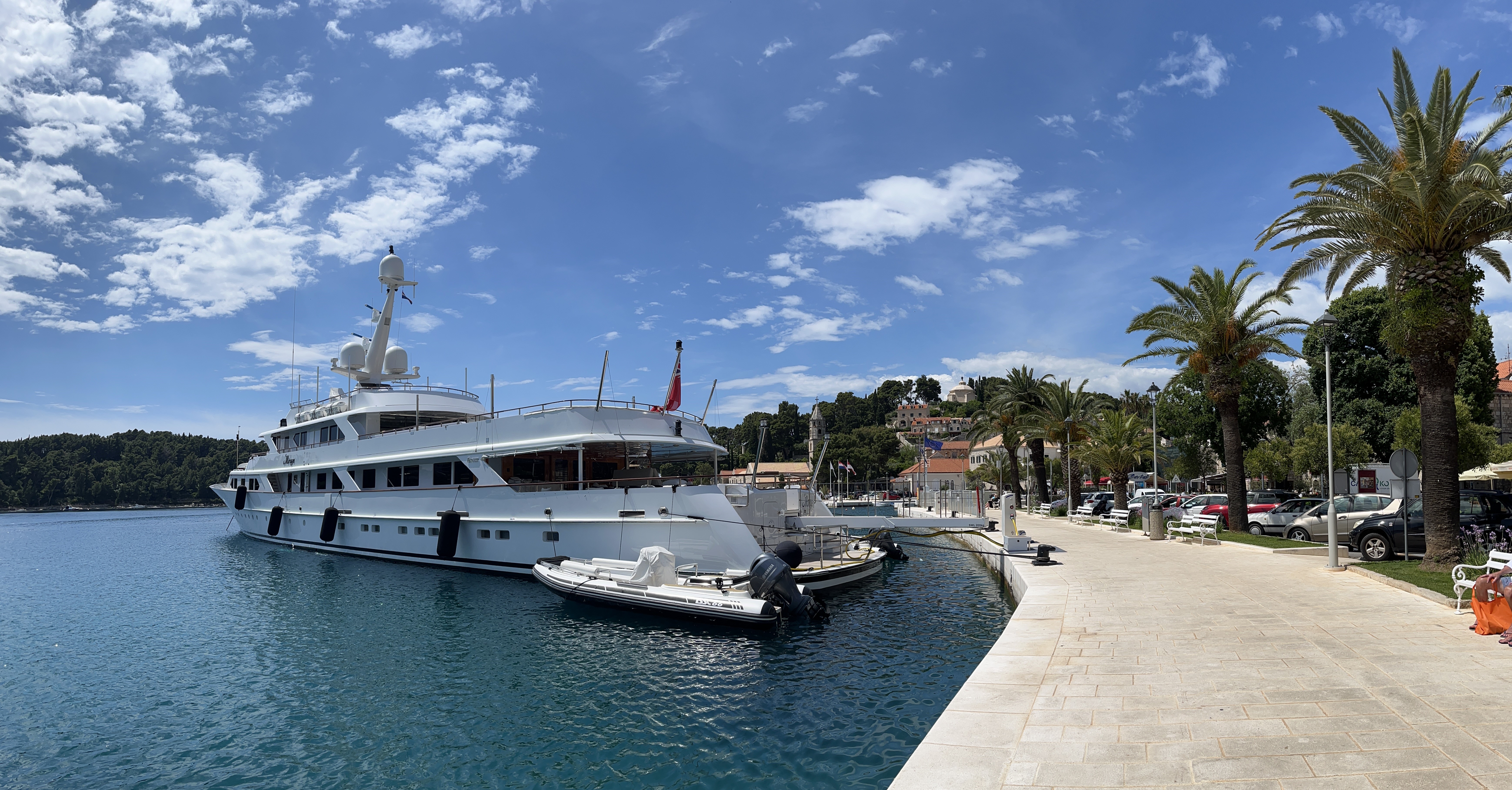

Why understanding begins here
My first real understanding of Croatia began in Cavtat because Cavtat replaced image with atmosphere. It taught me that the country is not simply scenic but measured; not simply warm but dignified; not simply Mediterranean but mixed, layered and self-possessed. It taught me that beauty here rarely stands alone. It is supported by timing, habit, public order, marine awareness and a table culture built on confidence rather than display. This is why foreigners often struggle to explain, after returning home, what exactly stayed with them. The answer is not one monument or one beach. It is an arrangement of life.
Eventually, many travelers will continue to Dubrovnik, and they should. The city remains one of Europe’s great historical experiences, and even in winter the atmosphere can be unusually lucid, as the site’s guide to Dubrovnik in February suggests. But I suspect the strongest introduction to the country still begins where arrival is gentler, the sea is nearer, and the distinctions are easier to feel. Cavtat does not merely please the eye. It trains the visitor to notice properly. And once that happens, Croatia stops being a postcard coast and becomes what it really is: a deeply inhabited Adriatic civilisation in which proportion, memory and everyday grace still organise the day.

Need help choosing the right experience?
Tell us your budget, dates, and travel style, and Cavtat Guide will help you choose the best yacht charter, tour, property option, or local experience.