Updated for 2026
Main takeaway: Crewed sailing yachts remain Croatia’s defining charter format because they deliver clarity, grace, and a truer relationship with the sea than many larger, noisier alternatives.
Best for: travellers who value flow, atmosphere, privacy, and route intelligence over pure feature inflation.
Best route logic: Start in Dubrovnik or Cavtat, then move through Šipan, Mljet, Korčula, and Hvar for a week that feels rich rather than rushed.
Crewed sailing yachts in Croatia continue to command serious attention because they solve the charter equation cleanly. They do not try to distract guests from the sea with excess. They use the sea properly. They turn movement into pleasure, timing into atmosphere, and geography into structure. In a market crowded with floating hotels and attention-seeking platforms, that discipline has become more persuasive, not less.
The point is not nostalgia. Nobody paying for a high-level Croatia yacht charter is looking for sentimentality dressed up as luxury. They are looking for an experience that holds together. They want mornings that feel unforced, passages that feel elegant rather than tedious, and evenings that arrive with the right amount of theatre. They want the yacht to support the week, not dominate it. That is precisely where the sailing yacht remains formidable.
Croatia rewards this format because the Adriatic is unusually well suited to it. Distances are manageable. Islands feel distinct without being punishingly far apart. One week can include wooded anchorages, old stone towns, social harbors, vineyard lunches, and quiet swims without turning into a logistical exercise. On the right yacht, the coast does not feel like a checklist. It feels composed.
That is why the discussion should begin with fit, not with spectacle. The central question is never which yacht is “best” in the abstract. The real question is what kind of week the group wants to live through, and whether the vessel strengthens that ambition or undermines it.

Why sailing yachts still hold their ground
Most charter advertising reduces the experience to fragments: polished teak, a plunge from the swim platform, a well-staged dinner under a pink sky. None of that is wrong. It is simply incomplete. The value of a yacht charter is not found in isolated moments. It is found in the sequence. How the day begins. How smoothly the group moves from breakfast to passage to anchorage to shore. How little friction the guests feel, even while the operation itself remains complex.
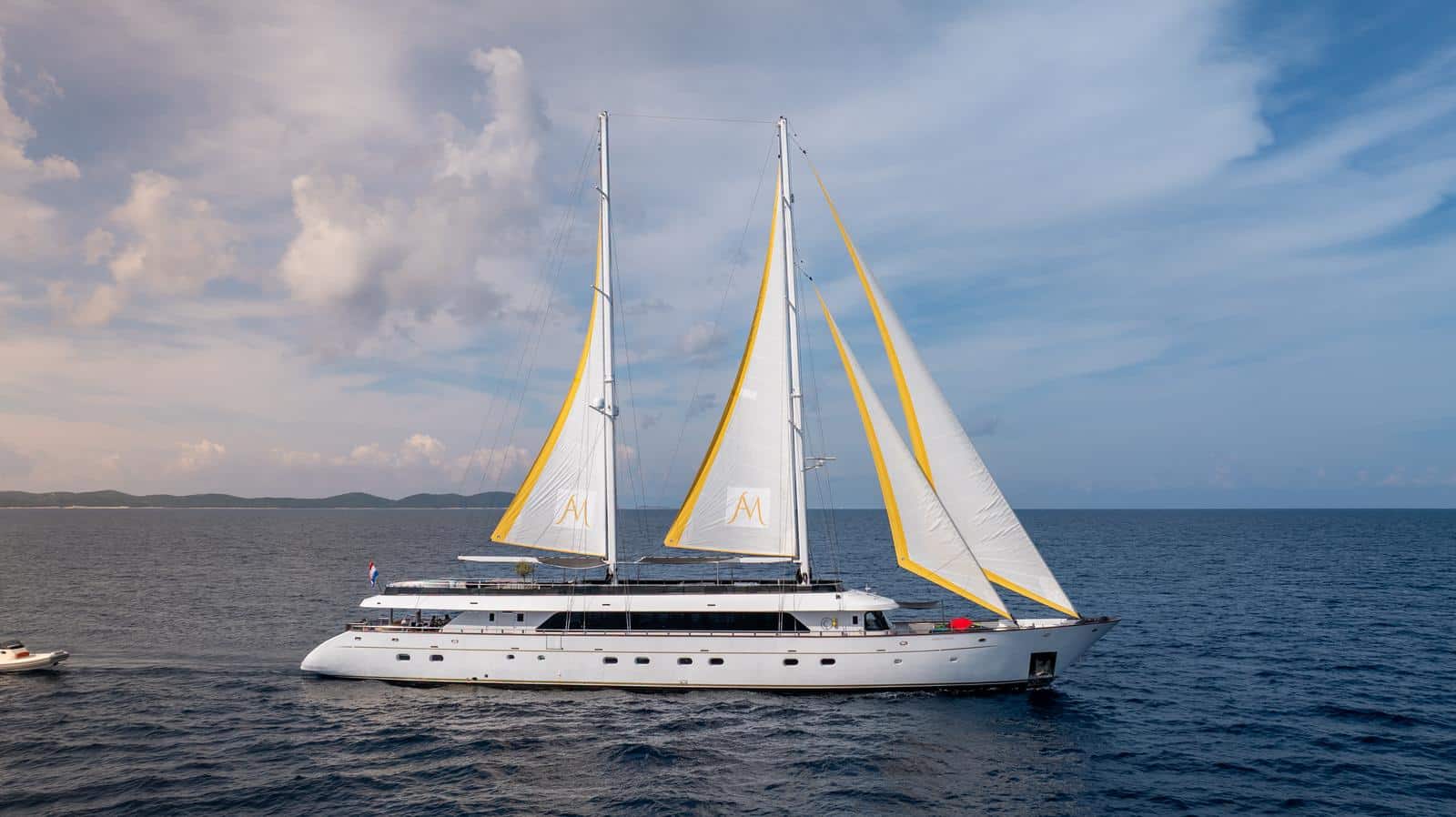
Sailing yachts still dominate the Adriatic imagination because they preserve that sequence better than many larger formats. They do not sever the guest from the water. They let the sea remain active in the experience. You notice the route. You feel distance properly. You understand arrival. The charter acquires shape.
That distinction matters more than ever. The market now offers everything from toy-heavy superyachts to large-scale Croatian event platforms with gyms, saunas, cinemas, jet skis, splash zones, and enough deck activity to fill a beach club. For certain groups, those vessels are exactly right. But they often create a different proposition altogether: less voyage, more venue. Less maritime pleasure, more managed entertainment.
There is nothing inherently wrong with that. The problem begins when travelers confuse one type of luxury with another. The guest who wants privacy, pace, and horizon is not buying the same week as the guest who wants a social stage for thirty people. Croatia works because it can accommodate both. It performs best when clients understand the difference before they sign.
What clients are truly choosing: not only a yacht, but a social temperature, a service rhythm, and a way of inhabiting the Adriatic.
The yacht is not the backdrop. It is the editor.
One of the most useful ways to understand charter is to stop thinking of the yacht as accommodation. A yacht is not a villa that moves. It is an operating environment. It edits the week. It determines how guests circulate, where they gather, when privacy becomes possible, and whether a day at sea feels expansive or cramped.
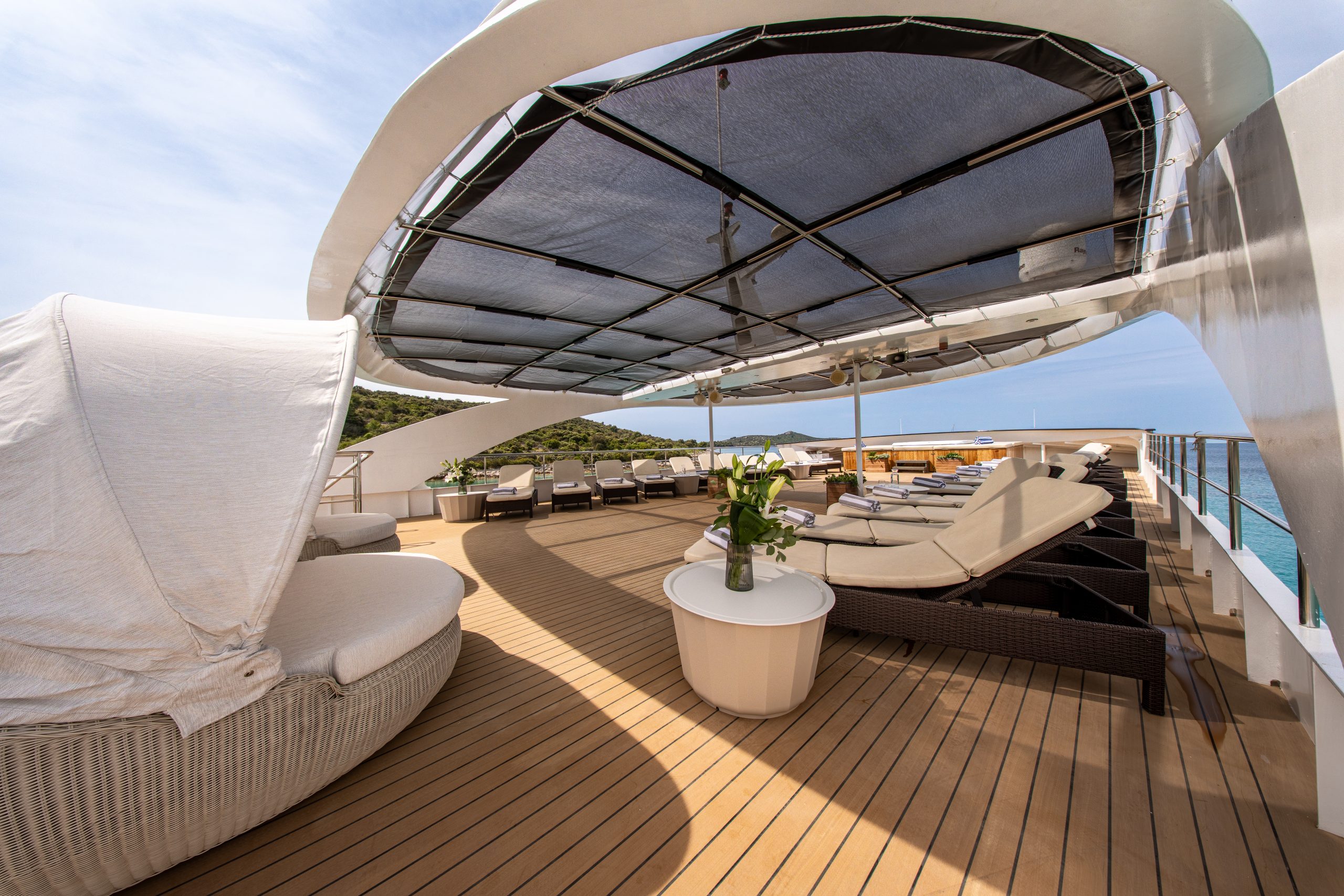
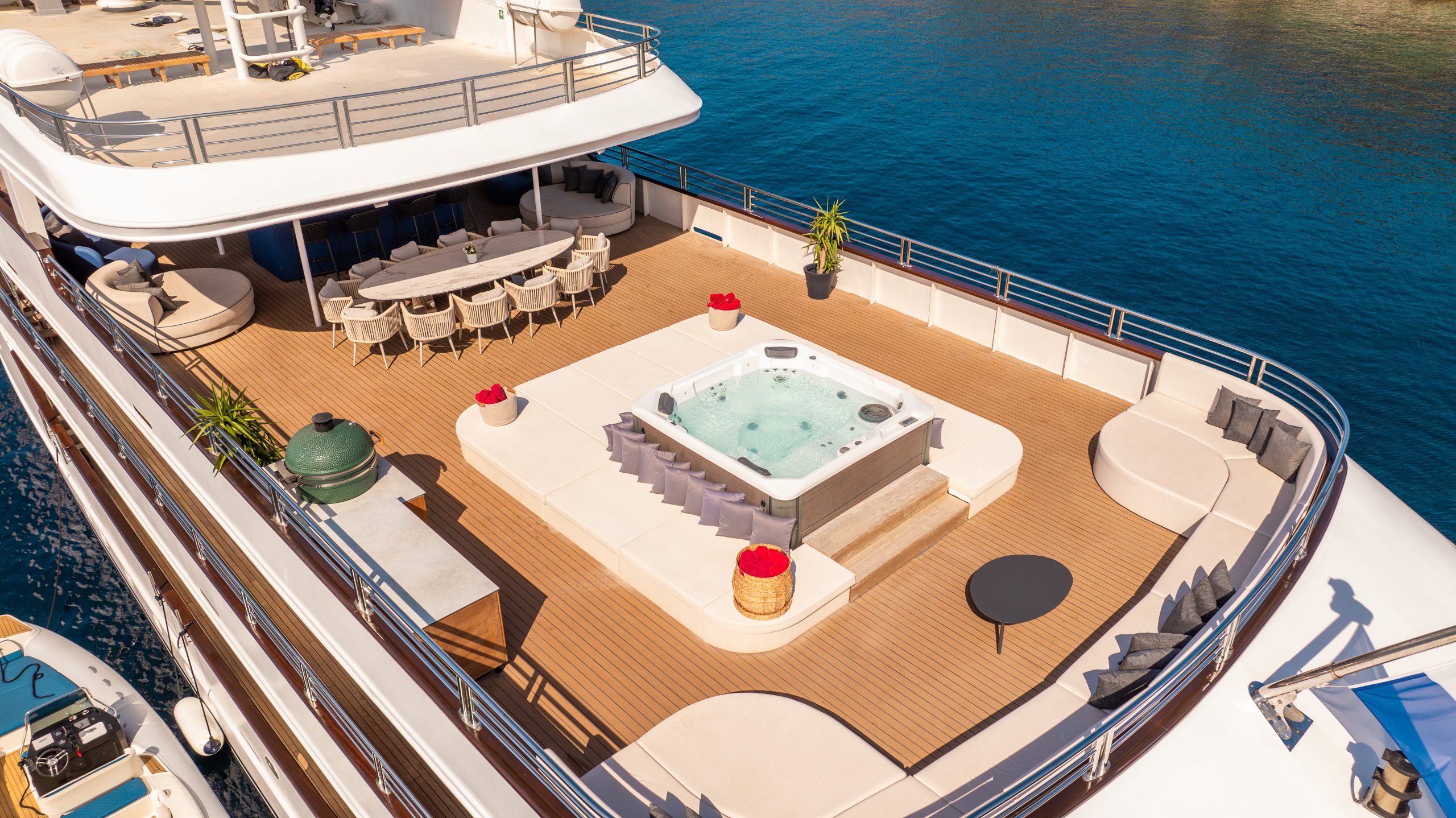
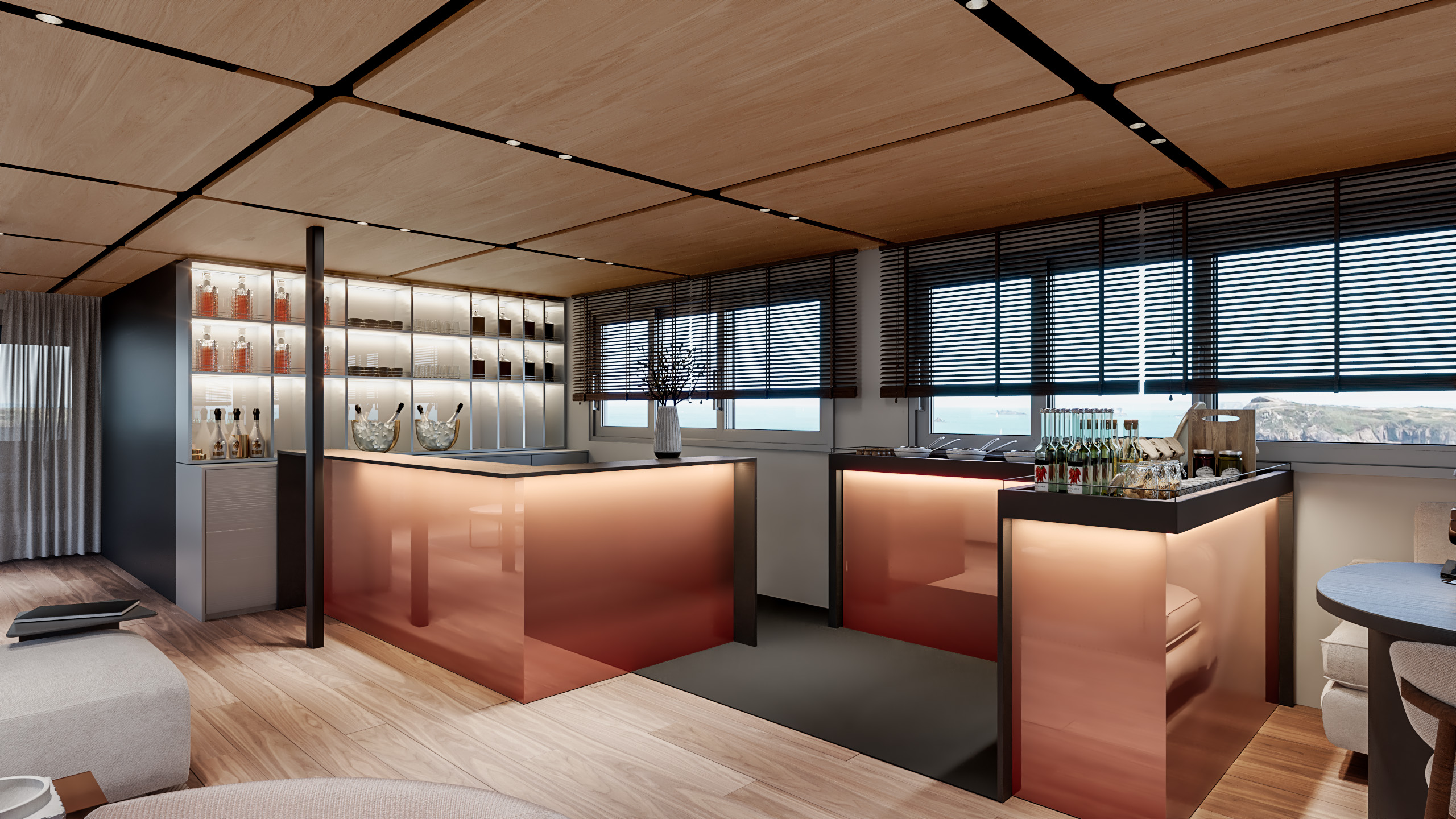
That is why apparently small differences in layout become decisive over seven nights. A broad upper deck changes afternoon life. A genuinely private cabin configuration changes sleep, mood, and patience. A well-designed aft deck can hold breakfast, coffee, late lunch, and aperitifs without ever feeling repetitive. On a weak yacht, those same hours blur together. On a strong one, they unfold.
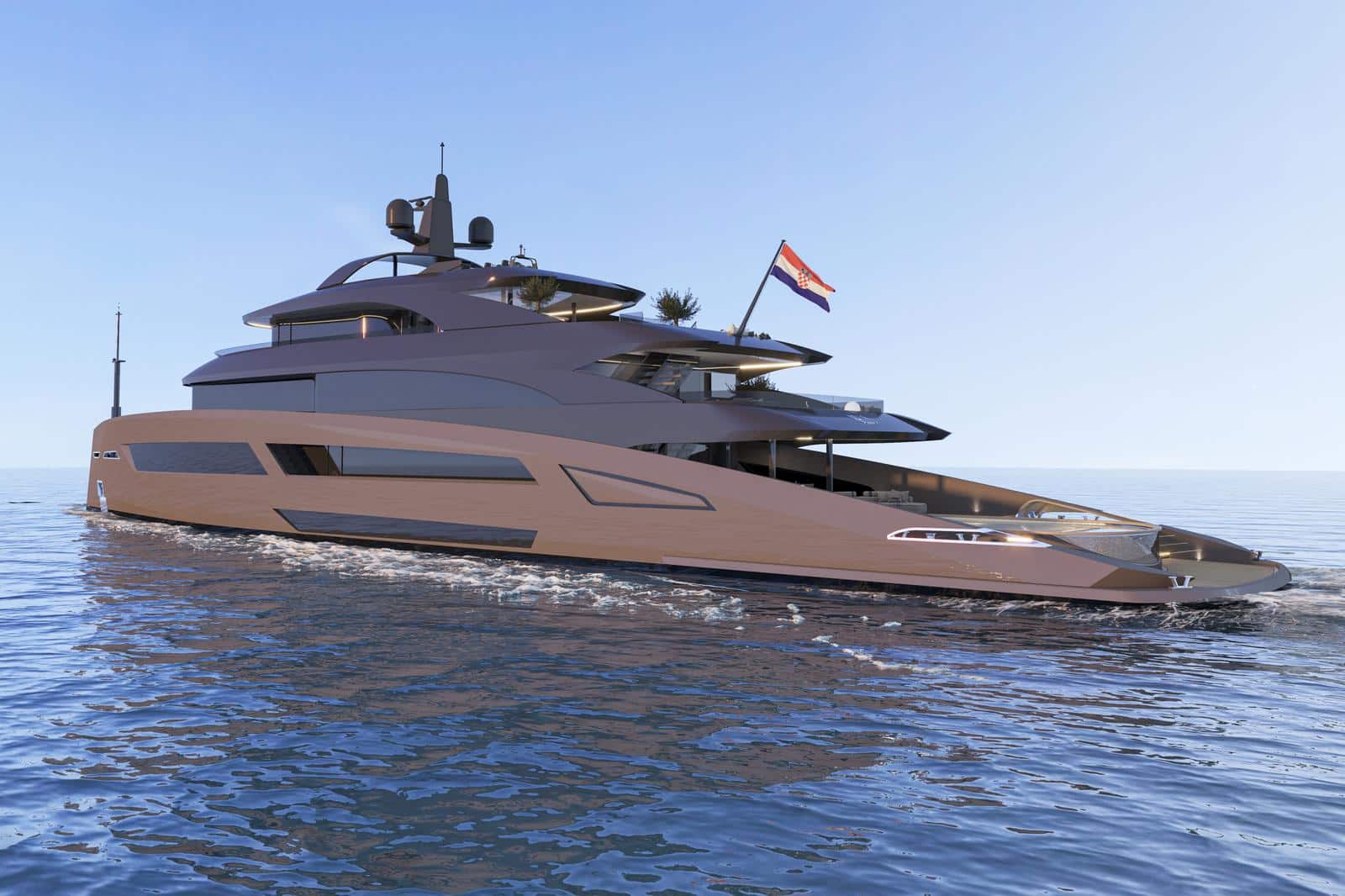
Consider Premier. It appeals to guests who want the yacht itself to carry a significant part of the trip. The multiple deck zones, more residential comfort, and stronger privacy logic make it convincing for multigenerational travel or mixed groups who need different moods at the same time. The point is not just comfort. It is composure.
Nocturno offers a different answer. With only twelve guests in six cabins, it reduces noise in every sense. Circulation is quieter. Service becomes more exact. Meals feel less like operations and more like occasions. For travelers who instinctively value discretion, this is not a minor distinction. It is often the deciding one.
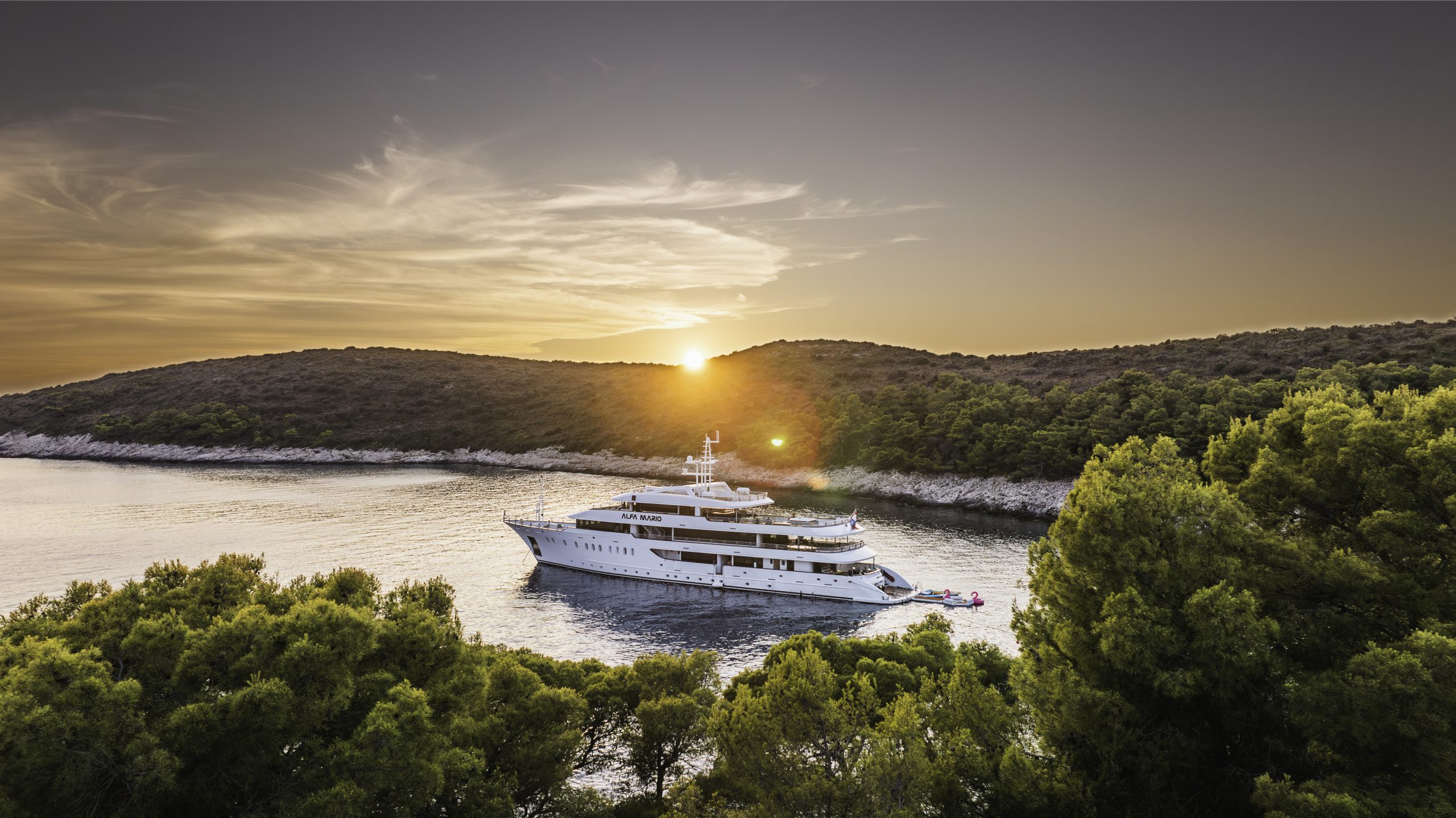
Then there are the larger Croatian statements. Alfa Mario shows how a high-capacity yacht can still feel coherent when the deck plan, staffing, and leisure infrastructure are robust enough to absorb the group properly. Yachts such as Karizma answer a longstanding charter problem from the opposite end: how to keep a large private party together without splitting the week across multiple vessels or dulling the hospitality standard to compensate for scale.
Bellezza deserves separate attention because not every charter asset is measurable in a specification sheet. Character matters. Timber, texture, and the visual warmth of a custom-built wooden yacht can give a trip memory that more polished, more expensive, more technically accomplished vessels sometimes fail to leave behind. Atmosphere is not secondary. In Croatia, it can be the whole point.
Reference yachts and the kind of week they create
Looking at current Croatian examples is useful because it forces the conversation away from brochure language and towards actual charter logic. The question is not whether one yacht is larger or more expensive. The question is what sort of living it encourages.
Premier
Premier works best for guests who want the yacht to feel like a refined private residence at sea. It offers strong spatial separation, generous deck life, and a sense that guests can be together without being on top of one another. That makes it especially persuasive for families, hosts travelling with parents and children, or groups who need both sociability and retreat.
Nocturno
Nocturno is the antidote to overbuilt chartering. It is for travelers who do not need to announce luxury in order to enjoy it. The guest count is lower, the service ratio stronger, the mood more composed. People used to excellent hotels often respond well to it because they immediately understand the premium attached to quiet competence and understated privacy.
Alfa Mario
Alfa Mario belongs to the large-group end of the market, but its value is not simply that it can take more guests. Its value is that it can do so without collapsing into chaos when well crewed and well matched. For celebration-heavy charters, extended families, corporate hospitality, or milestone departures, it solves scale with real leisure depth.
Bellezza
Bellezza reminds clients that luxury is not always about modernity. Some charters are remembered less for having the largest sun deck or the most water toys, and more for having a distinct soul. On this coast, where the line between glamour and generic styling can be thin, that matters.
| Yacht | Guests | Price | Best for |
|---|---|---|---|
| Premier | 22 | from €87,000/week | Residential comfort, multigenerational ease, private family travel |
| Alfa Mario | 32 | from €110,000/week | Large celebrations, extended private groups, stronger leisure infrastructure |
| Karizma | 36 | upper large-group tier | High-energy departures, social density, bigger onboard momentum |
| Nocturno | 12 | €85,000–€99,000/week | Low-density luxury, quieter service, privacy-led charters |
Price, of course, dominates the discussion and is often the least intelligently handled part of it. The base rate is not the finished number. It is the starting point. Guests need to account for VAT where applicable, running costs, food and beverage provisioning, port fees, and the general logic of onboard consumption. On many fully crewed yachts, APA sits at around 30% and covers those variable expenses.
This is not a warning. It is simply the real structure of private charter. Sophisticated clients usually prefer this honesty because it allows the week to be designed properly rather than sold as fantasy. The question is never just whether one yacht costs more. The question is what kind of week that higher figure actually buys.
The right yacht does not simply carry the route. It gives the route shape, meaning, and pace.

The crew is where luxury becomes real
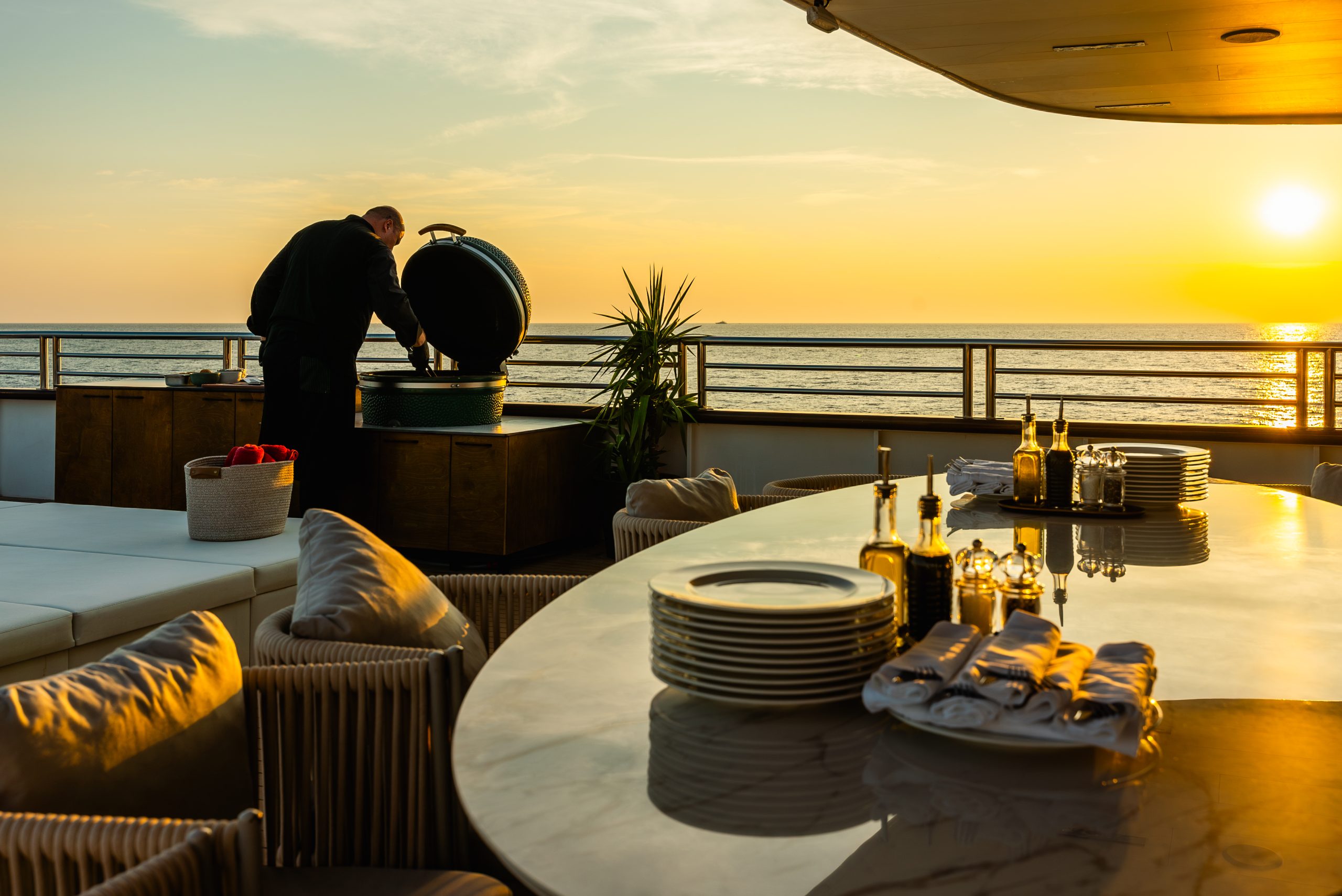
If the yacht provides the framework, the crew determines whether the charter actually works. This is where experienced charterers focus their attention, because they know that luxury at sea is not theatrical. It is operational. It is the absence of delay, confusion, stiffness, and visible effort.
On the best Croatian charters, luggage disappears without instruction. Towels are reset before anyone asks. Lunch slides by twenty minutes because the anchorage is too perfect to leave. A glamorous but unsuitable harbor is quietly dropped from the plan because afternoon swell will make dinner ashore more trouble than it is worth. That kind of judgement does not look dramatic. It feels expensive in the only way that matters: it protects the guest from friction.
The published crew ratios on leading yachts tell their own story. Nocturno’s nine-person team for twelve guests signals intense attention. Premier’s larger operating structure reflects the demands of delivering consistent comfort at scale. Alfa Mario’s staffing reminds clients that large-group charter only works when the yacht can sustain galley output, deck operations, housekeeping, toy management, and service simultaneously.
This is why serious travelers ask practical questions rather than decorative ones. Is the captain deeply familiar with the southern Dalmatian circuit? Can dietary restrictions be handled elegantly rather than defensively? How quickly can the crew launch and recover toys? Is the Wi-Fi good enough for half a day of calls if necessary? Smoothness is built. It never appears by accident.

Why Croatia works so well as a charter country
Not every coastline deserves the same kind of yacht. Croatia does. The Adriatic is unusually forgiving for private charter because it offers contrast without punishing transit. Guests can move enough to feel the journey, yet rarely so much that the week becomes passage-heavy. That balance is one of the country’s greatest advantages.
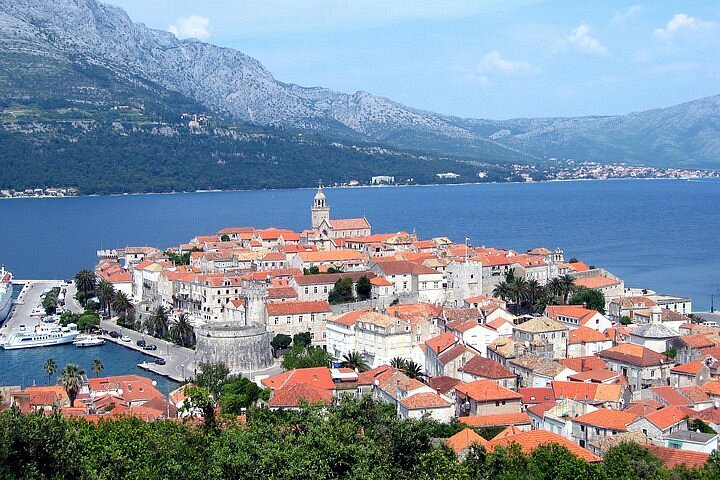
A southern route beginning in Dubrovnik or Cavtat can move through Šipan, Mljet, Korčula, and Hvar without feeling mechanically planned. Each stop changes the mood. Šipan softens the pace. Mljet restores it. Korčula brings structure, architecture, and a civic note. Hvar sharpens the social edge. The result is not monotony in blue and white. It is a progression.
But itinerary design is not a map exercise alone. It is shaped by the yacht. A vessel with heavier toy infrastructure often encourages longer anchorage time and a more swim-platform-led day. A sailing-oriented charter privileges passage and horizon. A large-format group yacht requires ports that are simpler operationally and easier for dinner reservations, transfers, and guest handling ashore. A smaller, more intimate yacht can improvise more freely.
That is why the vessel should determine the route, not the other way around. Too many itineraries are built as if every yacht can deliver the same kind of week. They cannot. A strong charter begins with the right floating environment, then lets geography follow from that choice.


Dubrovnik and Cavtat are not interchangeable beginnings
Where the charter begins matters more than many first-time clients realise. Dubrovnik and Cavtat may share an airport orbit, but they do not create the same emotional start to the trip.
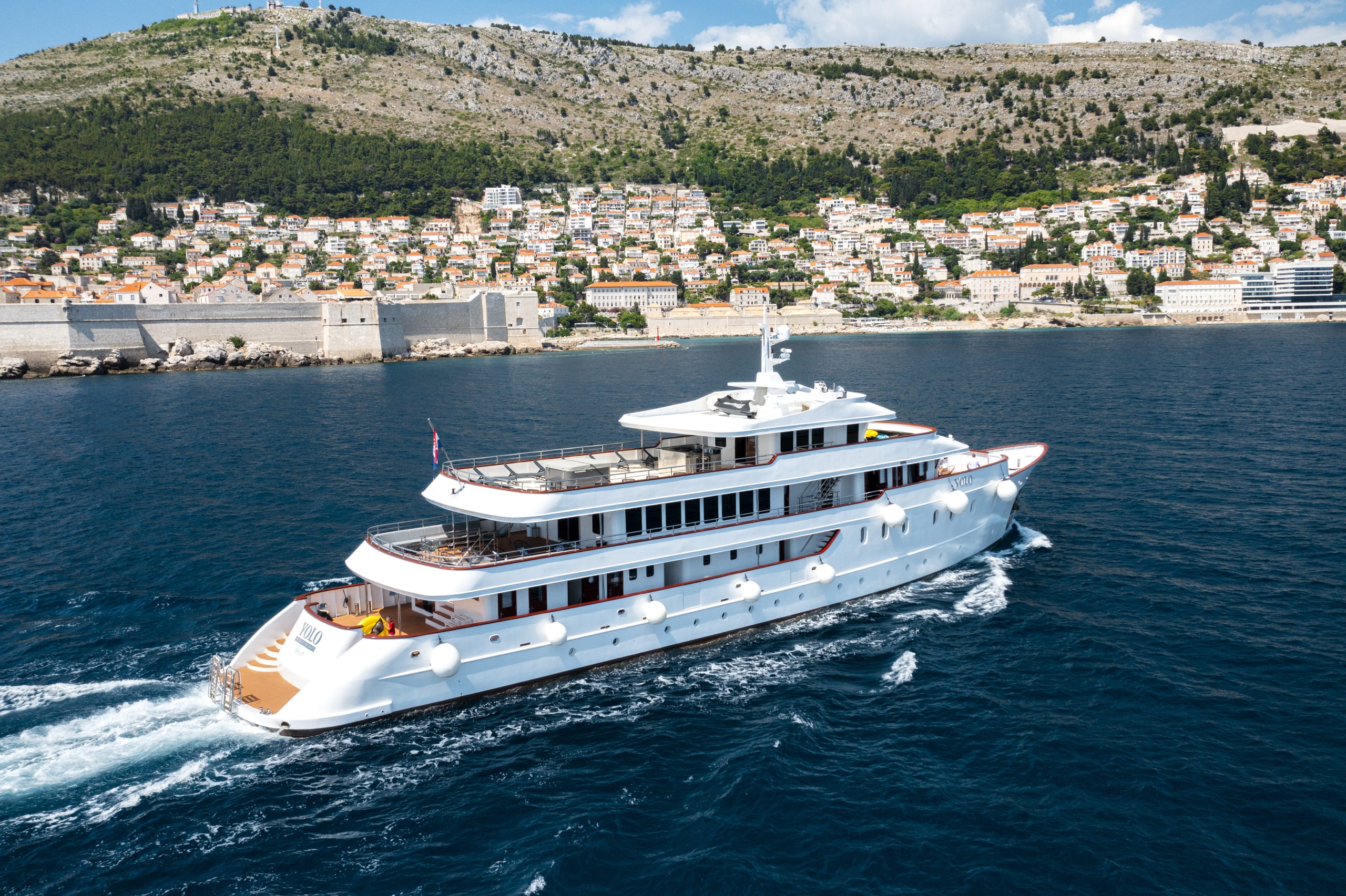
Dubrovnik is dramatic, prestigious, and visually loaded from the outset. For some guests, that is exactly the desired opening move. They want arrival to feel ceremonial. They want the charter to begin under the shadow of one of the Mediterranean’s most recognizable cities. There is obvious value in that.
Cavtat offers a different kind of luxury. It is calmer, more measured, and far less performative. It allows guests to land, transfer, and settle without feeling dragged immediately into the pressure of a famous destination. For many high-end travellers, that softer first step is not a compromise. It is the more intelligent choice.
From an editorial perspective, Cavtat should be understood as a gateway of tone. It gives the week room to breathe before the larger symbols of the southern Adriatic appear. It also works beautifully as a final-night strategy for guests who want one last polished dinner ashore without plunging straight back into Dubrovnik’s busier cadence.

What sophisticated travelers still get wrong
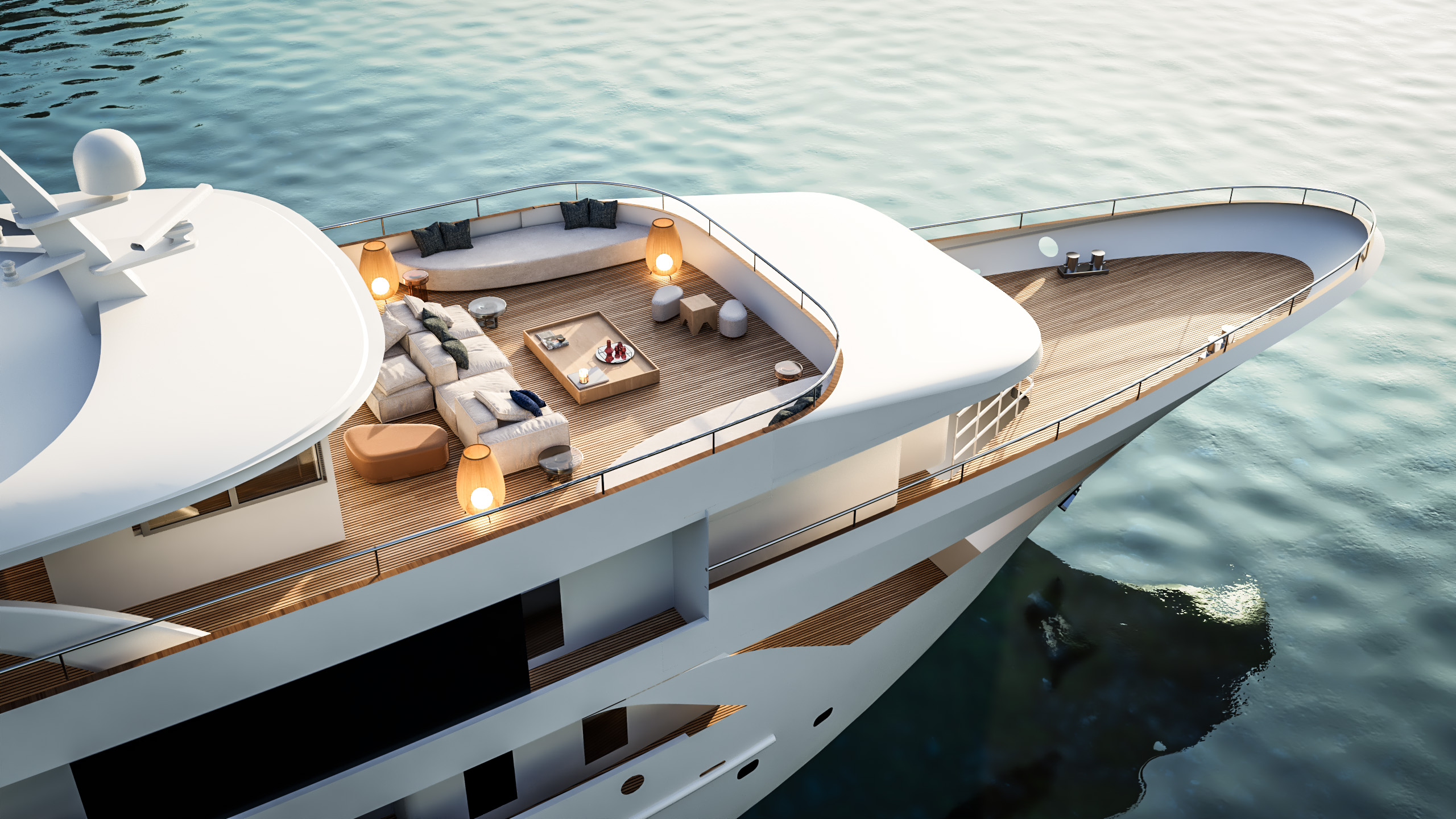
The most common error is to approach yacht selection as if it were a hotel search. Travelers look for the single most visually impressive option and assume the rest will sort itself out. But yachts are not static properties. They are moving systems. A stunning vessel can produce a mediocre week if the social density, crew style, or route logic clash with the people on board.
A quieter group of twelve may be far better served by Nocturno than by a much larger, more theatrical yacht whose strengths they will not actually use. Conversely, a wedding-adjacent family departure can become dramatically easier on a larger format vessel simply because the logistics of keeping everyone together are solved from the beginning. The correct yacht is not always the prettiest one. It is the one whose structure matches the ambition of the group.
There is also a persistent misunderstanding around sailing itself. Some travelers assume that choosing a more maritime charter automatically guarantees a more authentic Croatian week. Sometimes that is true. Sometimes it simply means they have chosen a romance whose practical consequences they do not actually want. The honest editorial answer is that the best charters sit at the intersection of desire and tolerance: how much motion, spontaneity, shore time, toy usage, and service formality the group genuinely enjoys.
This is where specification sheets reach their limit. Premier’s balconies are facts. Alfa Mario’s leisure depth is a fact. Bellezza’s atmosphere is real. But facts do not choose for the traveler. They only describe the options. Good editorial guidance exists to translate those facts into outcomes before the contract is signed.


Why this still matters for Cavtat Guide readers
Readers moving through Cavtat Guide are usually somewhere between aspiration and action. They are close enough to real charter planning for details to matter: airport access, embarkation mood, group fit, the difference between one yacht and another, and how a sailing week can connect with other Adriatic experiences such as wine touring, island dining, or a final night ashore in Cavtat. This is where editorial guidance earns its place. It turns luxury from an attractive blur into a sequence of clear decisions.
Croatia remains unusually strong because it does not force a false choice between beauty and practicality. The routes work. The islands are culturally legible. The scenery changes quickly. The food is strong. The yacht fleet is now mature enough to serve very different kinds of traveler, from the privacy-first client to the host managing a large celebratory departure. That breadth is rare, and it is one of the reasons Croatia continues to hold real weight in the charter market.
The sailing yacht remains central to that appeal because it expresses the country properly. It is elegant without being static, luxurious without becoming inert, and flexible without collapsing into vagueness. It lets the coast do what it does best.
Conclusion
Crewed sailing yachts still define the Adriatic charter because they remain the cleanest expression of what private yachting in Croatia should be. They preserve movement, atmosphere, and proportion. They allow the route to matter. They give luxury shape instead of simply giving it volume.
For some groups, the answer will be Nocturno, where privacy and polish govern the week. For others, it will be Premier, whose residential comfort and stronger separation suit families and mixed groups beautifully. Larger departures may find the right fit in Alfa Mario, Karizma, or Bellezza, each solving scale through a different lens.
The point is not that one yacht wins universally. The point is that Croatia now offers enough depth for the correct choice to be genuinely specific. That specificity is what turns casual browsing into real readiness. Once travelers understand the difference between a platform and a voyage, between feature count and charter coherence, between Dubrovnik theatre and Cavtat composure, they stop shopping in the abstract.
They begin choosing properly. And in yachting, that is where the real journey starts.
Planning a Croatia yacht charter?
Tell Cavtat Guide your dates, group size, and preferred route style, and we will help you identify the right yacht, the right starting point, and the right Adriatic rhythm.