

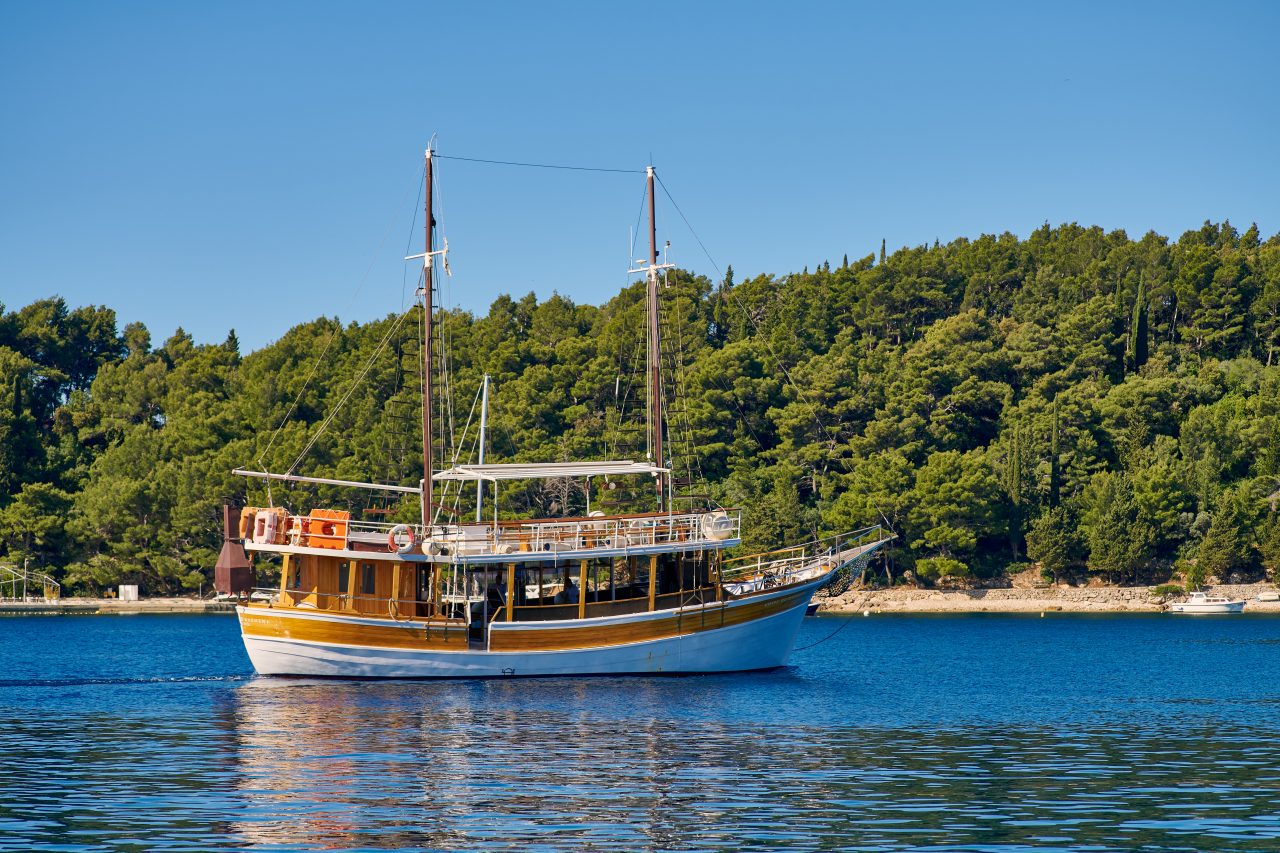
Cavtat has long lived in Dubrovnik’s shadow, which is precisely why it is more interesting in 2026 than many louder addresses on the southern Adriatic. The town sits only a short transfer from Dubrovnik Airport and within easy reach of the Old Town, yet it keeps a different rhythm entirely: a promenade rather than a queue, harbour light rather than stone-stage spectacle, and evenings built around dinner, swimming and conversation rather than crowd management. This year, with fresh international attention following coverage that placed Cavtat among Europe’s standout coastal destinations, the town has moved from afterthought to considered choice. The point is not that Cavtat replaces Dubrovnik. It is that it allows travellers to use Dubrovnik more intelligently, while gaining a more liveable base of their own. That distinction matters.


Why Cavtat’s position matters more in 2026
Travel decisions on the Dubrovnik Riviera are still too often made through a false binary: either stay inside Dubrovnik’s orbit and accept pressure, or stay farther away and lose convenience. Cavtat disrupts that equation. Dubrovnik Airport is around six kilometres away, while Dubrovnik itself is roughly twenty kilometres to the north depending on the route taken. In practical terms, that means arrival days are simpler, departures are less punishing, and spontaneous half-day movements remain realistic. A guest landing in the late afternoon can often be checked in and walking the waterfront quickly instead of spending the first evening in transit. For short breaks, that is not a small advantage; it can rescue the trip’s first and last days. Official and local tourism sources continue to frame Cavtat as the heart of the Konavle municipality, which is accurate not only administratively but strategically as well. It sits at the hinge between coast, countryside, airport and city.
That balance has become more valuable as travellers in 2026 seem increasingly less interested in friction disguised as atmosphere. Many visitors still want Dubrovnik’s history, walls and museums, but fewer want to sleep inside a system shaped heavily by cruise rhythms, excursion surges and premium old-town logistics. Cavtat offers the opposite sort of luxury: not grandiosity at every turn, but calm. You can still take a boat, bus or car to Dubrovnik when it suits you, then return to somewhere that breathes. For travellers who care about how a place functions, not simply how it photographs at noon, that is a serious advantage.
The harbour atmosphere: small scale, properly measured
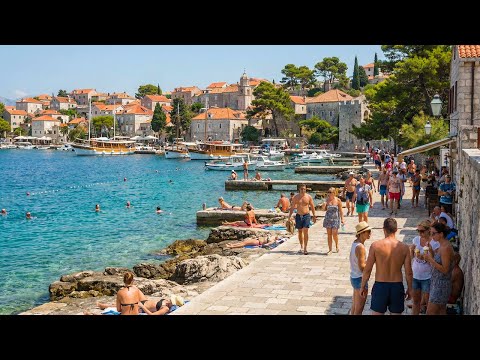
The harbour is the town’s social anchor. It is not monumental and does not need to be. Cafés, boats, hotel guests, local walkers, day-trippers and evening diners share the same edge of water in a way that remains legible. That word matters. In many over-visited coastal settings, one loses the sense of how the place is actually organised. In Cavtat, the whole plan reveals itself quickly: the palm-lined front, the curve of the bay, the hotels on the peninsula, the church above the roofs, the side streets that fold back into residential life. Because the place is compact, even first-time visitors feel oriented early. They understand where breakfast happens, where boats depart, where a swim is possible, and where dinner is best left until later in the evening.
The waterfront also benefits from a different social mood than Dubrovnik’s Old Town. It is not empty; in season, it can be lively. But the energy is horizontal rather than compressed. Families drift. Couples pause for a drink. Transfer guests become staying guests. Locals still use the promenade. There is enough traffic to feel alive, but usually not enough to strip the setting of grace. This is why the town suits travellers who want intelligence over noise. Nothing in Cavtat demands that you treat your holiday like a campaign.
Walkability and the value of an easy place
Walkability is often thrown around lazily in travel writing, but in Cavtat it is genuinely central to the stay. One can move between harbour, hotels, swimming points, museum stops and dinner without planning the day around taxis. The promenade around the Rat peninsula remains one of the town’s simplest pleasures: pines, stone edges, glimpses back to the bay, and enough benches and pauses to make it a usable route rather than a scenic obligation. That matters to older travellers, to families with grandparents, to couples on short breaks, and to anyone who would prefer not to convert every evening into a transport problem.
It also changes how one spends money. In places where movement is inconvenient, small decisions become expensive and exhausting. In Cavtat, a guest can return to the room to change, go back out for a swim, stop for an aperitif, and choose dinner later without logistical drama. The result is a more civilised use of time. Even travellers staying at larger properties such as Hotel Croatia or those considering Hotel Albatros still remain within a town-scale environment rather than an isolated resort bubble.
The hotel landscape: different budgets, different expectations
Cavtat’s accommodation offer in 2026 works because it is varied without feeling incoherent. At the upper end, Hotel Croatia still gives the town its most substantial resort presence, with the sort of bay-facing scale that works for guests who want pools, spa facilities, conference-grade infrastructure and an address that can absorb a longer stay. That does not mean it is automatically right for everyone. Some travellers will prefer a smaller hotel or apartment within easy reach of the harbour, particularly if their trip is built around eating out, swimming, and taking day trips rather than spending much time inside the property.
The middle market is where Cavtat often performs especially well. Travellers can find places that are close to the action without being trapped by it, and because the town is compact, being slightly uphill or a few streets back rarely feels punitive. The crucial decision is not five-star versus three-star; it is whether you want resort infrastructure, harbour immediacy or apartment flexibility. That is a more useful question. Cavtat suits travellers who understand that accommodation should serve the trip rather than dominate it.
| Traveller type | Why Cavtat works | Possible drawback |
|---|---|---|
| Short-break couples | Fast airport access, evening promenade, easy Dubrovnik day trips | Those wanting nightlife will find it restrained |
| Families | Simple walking layout, boat options, beach and pool combinations | Peak-summer restaurant demand can require planning |
| Older travellers | Comfortable seafront pace, benches, compact centre | Steeper streets behind the front may still matter |
| Remote workers on a shoulder-season stay | Calmer base with city access | Winter operating hours are thinner than summer |
Boat trips, sea access and day-trip logic
One of Cavtat’s strongest arguments is how well it handles sea-based days without forcing visitors into a full charter mindset. Local departures make it easy to spend a day on the water, whether that means a relaxed island circuit or a faster speedboat outing. Cavtat Guide’s own reporting on the Blue Cave and Elaphiti speedboat trip and the Adriana Cavtat Elaphite cruise captures this well: the town is not simply a place to sleep, but a workable marine departure point. For travellers who want sea texture without the administrative weight of a full yacht week, this is the sweet spot.
There is also an emotional shift that happens when a destination gives you options from the harbour itself. Days feel less pre-scripted. You can decide on an island outing in the morning, a swim from the rocks in the afternoon, or a Dubrovnik visit if the weather changes. That flexibility is not glamorous in brochure language, but it is the mark of a good base. Places that travel well are places that let you correct the itinerary without losing the day.
Dining, waterfront life and the value of staying for the evening
Cavtat is at its best after day visitors thin out and before late summer dinner service peaks. The light softens, the harbour becomes less transactional, and the town begins to justify the decision to stay rather than merely visit. Meals matter here. A lunch stop can be pleasant, but dinner is what gives the place its shape. Readers interested in a deeper treatment can follow Cavtat Guide’s own food coverage through the guide to fish in Cavtat Bay and the Michelin-leaning Cavtat dining overview. The key is not to chase a single famous table blindly. It is to match the meal to the day. Waterfront seafood after a swim is one thing; a more formal dinner after a day in Dubrovnik is another.
Cavtat also rewards travellers who know how to modulate expectations. The point is not that every meal will redefine Adriatic cooking. The point is that the town offers enough reliable, well-situated dining to support a holiday that feels coherent. Breakfast can be easy. Lunch can be light. Dinner can be by the water without requiring a tactical operation. That is worth more than one overhyped reservation.
Who Cavtat suits, and who should stay elsewhere
Cavtat suits readers who care about proportion. It suits travellers arriving for four nights who want one or two serious Dubrovnik days and the rest spent more softly. It suits couples who like waterside evenings, families who value an intelligible layout, and return visitors who no longer need the city walls outside the window to feel they are in the right region. It also works for people making seasonal choices. In shoulder season especially, the town can feel intelligent, calm and grown-up rather than underpowered.
It will not suit everyone. Travellers who want Dubrovnik’s full historical immersion from first coffee to midnight walk should still consider staying in or near the city. Those seeking a broad nightlife field will find Cavtat too quiet. Visitors who want a dense shopping offer or constant urban stimulation are likely to find its scale limiting by the third or fourth evening. But these are not failures of the destination. They are simply matters of fit.
Cultural depth in a place that could otherwise be mistaken for scenery
Cavtat is fortunate in having just enough culture to prevent the waterfront from becoming the whole story. The Bukovac House, the Račić Mausoleum and the town’s lingering traces of maritime and civic history are not equivalent to Dubrovnik’s institutional density, but they give the place ballast. That matters because Cavtat’s prettiness can obscure its seriousness. Once travellers recognise that the town has biography as well as shoreline, they tend to use it differently. They stay another hour in the morning. They walk one street back from the water. They understand that the place is inhabited, not staged.
Visitors wanting a deeper regional frame can also use Cavtat as a hinge into Konavle, whether for wineries, village lunches, or scenic drives. In that sense the town behaves almost like an editorial introduction to the region: polished enough to welcome, connected enough to broaden the trip, and calm enough to let detail emerge.
Conclusion: the smart base on the Dubrovnik Riviera
In 2026 Cavtat deserves serious attention not because it is louder than it used to be, but because travellers have become better at valuing what it already offers. It is close to the airport, close to Dubrovnik, linked to Konavle, comfortable on foot, generous with sea access and civilised in the evening. Recent recognition has merely accelerated what careful visitors already understood. Cavtat works best for people who do not confuse intensity with quality. It gives them room, pace, harbour life, and a strategic base from which the whole southern edge of Croatia becomes easier to enjoy. On the Dubrovnik Riviera, that is not a compromise. It is often the better decision.
Need help choosing the right experience?
Tell us your budget, dates, and travel style, and Cavtat Guide will help you choose the best yacht charter, tour, property option, or local experience.


