Buying Property in Croatia: What Foreign Buyers Need to Know An editorial guide to the Croatian buying process, taxes, ownership rules and the realities of purchasing coastal property. buying property in Croatia, foreign buyers Croatia, Croatia real estate process, Croatia property tax
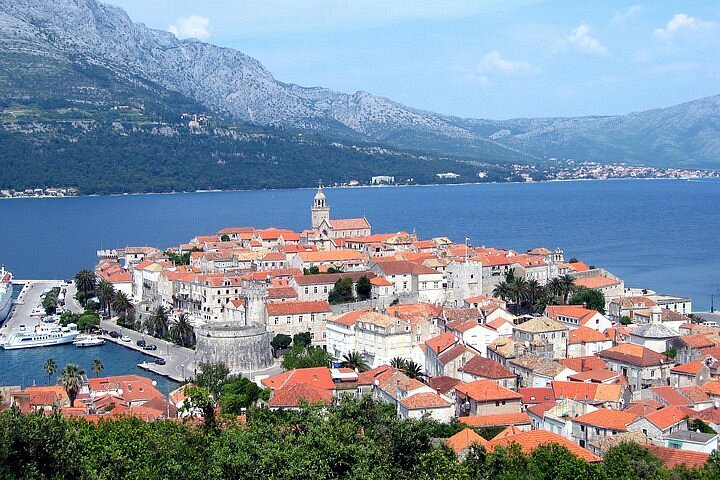
For many foreign buyers, Croatia first arrives as a travel memory: a limestone harbor at dusk, a terrace above the Adriatic, the easy logic of a boat replacing a car for the afternoon. Only later does the ownership question appear. What would it mean not merely to visit the coast, but to belong to it in some durable way? In Croatia, that question quickly becomes more practical than many first-time buyers expect. The market can be seductive, but ownership is built on land books, cadastral records, municipal planning, tax treatment, access rules and, above all, careful verification. That is not a flaw in the country. In many ways it is the reality that makes good purchases feel solid once completed. As a foreigner, one of the first things you discover is that buying in Croatia is not simply about choosing a view. It is about learning how the state records property, how local lawyers interpret risk, and how regional differences affect value. The most intelligent buyers arrive with some romance and leave with an appetite for paperwork. The strongest transactions balance both.

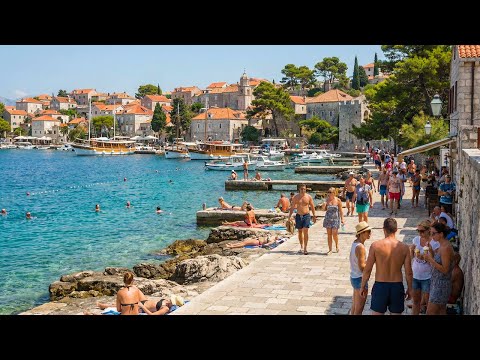
The best Croatian purchases are rarely the fastest ones; they are the ones where beauty survives due diligence.
Why Croatia attracts foreign buyers in the first place
There are easier places to understand quickly, but few in the Mediterranean combine scenery, relative safety, maritime culture, heritage towns and a broad range of ownership formats as convincingly as Croatia. The coastal market stretches from restored stone houses to contemporary villas, from apartment houses with seasonal income potential to land parcels whose value depends on what local planning rules allow. Buyers are not all seeking the same thing. Some want a second home within reach of an airport. Some are comparing short-term letting potential. Others are thinking in terms of family succession: a house to hold for twenty years, not two.
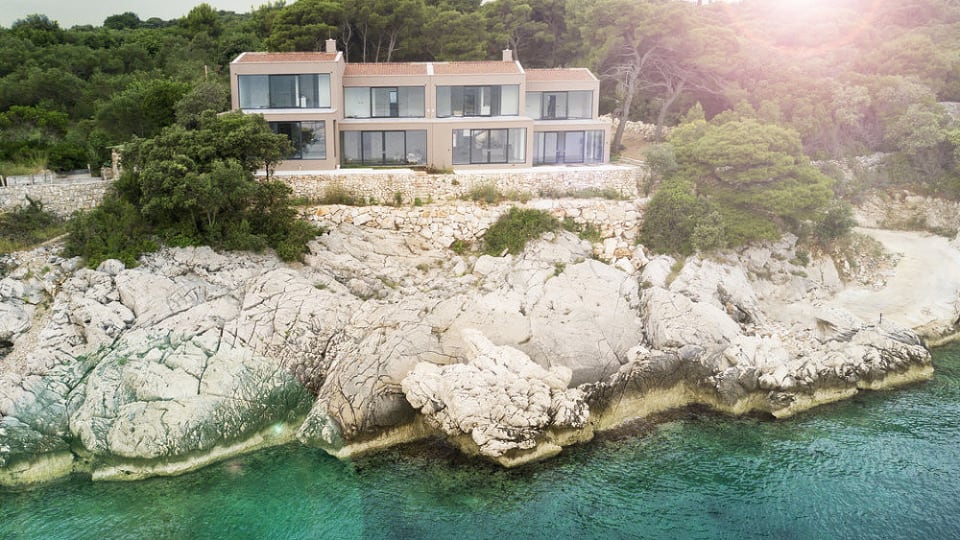
That variety is visible even in the Cavtat Guide property selection. A title such as Seafront Stone Villa — Dubrovnik represents one side of the market: heritage appeal, water proximity and the premium placed on direct visual contact with the sea. Building Land with Sea View — Obod / Dubrovnik Approach illustrates another logic altogether: value tied less to finished lifestyle and more to planning potential, approach roads, utility access and long-term upside. Between those poles sit properties such as Prestigious Sea View Villa — Dubrovnik and Mansion in Dubrovnik, Cavtat — Private Estate Scale, which speak to buyers who are not simply acquiring shelter but a form of Mediterranean positioning.
What unites these choices is that Croatia still rewards disciplined selection. Location matters, certainly, but so do slope, orientation, parking, marina access, legal history, neighborhood rhythm and the length of the drive from an airport in August. Foreigners sometimes think of the legal process as an obstacle course. In practice, it is better understood as a filter that separates charming ideas from durable assets.
The legal process: what actually happens
At a basic level, the Croatian purchase process tends to move through familiar stages: finding a property, carrying out due diligence, agreeing a price and terms, signing a contract, paying the relevant tax and registering ownership. Yet the details matter more than the outline. Buyers need a competent Croatian lawyer who will not merely process documents but actively interrogate them. The central questions are simple. Is the seller properly registered? Are the land registry and cadastral records aligned? Are there encumbrances, disputes, unrecorded rights of way, or planning inconsistencies? If the property has been altered, were those works authorized?
For built assets, legal confidence depends on documentary consistency. A beautiful villa can become a stressful purchase if extensions, terraces, docks or annexes have a complicated status. That is one reason a case-study property such as Historical Seaside Mansion — Dubrovnik Heritage Residence should be read not only for atmosphere but for documentary depth. Heritage settings can be extraordinary, but they often require more patient review of conservation constraints, renovation history and usage permissions. By contrast, a newer-format asset such as Seafront Apart-Home — Near Dubrovnik may raise different questions: unit configuration, income assumptions, parking, servicing and the reality of maintenance at scale.
Land books, cadastre and reality on the ground
Foreign buyers quickly learn two Croatian words that determine the tone of the entire purchase: zemljišne knjige and katastar, the land register and the cadastral record. These should not be treated as abstract bureaucracy. They are the legal map against which the physical property is judged. Where records align and the situation on the ground matches the documentation, confidence rises. Where they diverge, more work is required. Good advisers do not panic at discrepancies; they explain them, quantify their implications and indicate whether they can be cured.
This is also why buyers should visit more than once. A property can feel immaculate in travel mode and less convincing when examined as an owner: How is waste managed? Where does one park in high season? Does the road function after heavy rain? Are neighboring parcels likely to change? The legal process is strongest when it is paired with observational seriousness.
EU and non-EU buyers: what changes
Nationality still affects the route into ownership. EU citizens generally move through a more straightforward framework when acquiring property in Croatia. Non-EU buyers may face reciprocity rules or additional approvals depending on the type of asset and the treaty relationship between Croatia and their home jurisdiction. The exact position should always be checked at the time of purchase, because administrative interpretation matters. The practical lesson is not that non-EU buyers should be discouraged; rather, they should begin with legal verification before negotiating emotionally around a specific house.
For many foreign clients, the real distinction is not only EU versus non-EU but private use versus mixed use. A buyer considering occasional rental income will need to think about licensing, tax treatment, local management and whether the property itself lends neatly to guest operations. A discreet home and an efficient hospitality asset are not always the same thing. Stone Apartment House Dubrovnik Investment Asset demonstrates how different that operational logic can be from, say, the residential privacy implied by Mansion in Dubrovnik, Cavtat Private Estate Scale.
Taxes, fees and the cost of getting it right
Foreign buyers often focus on headline asking price, but the more revealing figure is total acquisition cost. In Croatia that can include property transfer tax where applicable, legal fees, notarial costs, translation or certification expenses, agency commission depending on structure, and later holding costs such as utilities, management, insurance and maintenance. None of these are uniquely alarming by Mediterranean standards. What matters is transparency. A disciplined budget gives buyers room to solve problems rather than react to them.
Land purchases require additional caution because future building costs, consultant fees and infrastructure works can dwarf the original parcel price. The Cavtat Guide listing Building Plot on Koločep Approved Villa Position is useful as an editorial example precisely because it invites the right questions. Approval in principle matters, but so do utility connections, access for construction, retaining walls, drainage and the true cost of building on an island. The same applies to Private Island Opportunity Dubrovnik Region, where scarcity may be obvious but development reality needs colder arithmetic than the phrase private island encourages.
Registration, patience and the culture of ownership
Once the transaction is signed and tax obligations are addressed, registration is what turns intention into ownership. Serious buyers should not treat registration as an afterthought. The point of the process is not simply to possess keys but to secure title properly. Croatian ownership culture still places immense weight on documentary certainty, family continuity and physical stewardship. Houses are not only assets here. They are often repositories of local memory, economic strategy and intergenerational ambition.
That is why foreigners who buy well in Croatia usually do so by slowing down. They stop seeing the coast as a backdrop and begin reading it as a working environment: ferry timetables, municipal planning, caretaker reliability, moisture management in winter, olive pruning, marina options, road access and seasonal staffing. Buying property in Croatia is not hard in the abstract. Buying the right property, for the right purpose, in a way that remains comfortable five years later, requires seriousness. The reward is that the country still offers homes and sites that feel both beautiful and structurally meaningful.
How foreign buyers should think about advisers
In Croatia, advisers do more than process paperwork. A good lawyer, surveyor or planner becomes an interpreter of local reality. Foreign buyers often imagine that once a property has good photographs and a plausible title story, the rest is procedural. In fact, the decisive value of expert help lies in asking the questions a foreigner would not know to ask. Which municipal office has jurisdiction? Does a terrace align with approved plans? Has a family inheritance issue been fully settled? Is a mooring assumed rather than documented? Local advisers earn their fee by turning assumptions into facts.
This matters even more on the coast because the most desirable properties often have layered histories: additions made over time, changing uses, inherited shares, old stone structures adapted for modern living, or plots whose apparent simplicity hides a more complex cadastral story. Foreign buyers should therefore build an advisory team before urgency appears. The correct moment to find a strong lawyer is not after a problem emerges but before one falls in love with the house.
There is also a cultural advantage to being well advised. Negotiations become calmer. Expectations are framed realistically. Sellers and agents take the buyer more seriously. In a market where emotion can rise quickly, competence has a cooling effect. That does not reduce pleasure; it protects it. One of the quiet strengths of buying well in Croatia is that, once the process is complete, the house can be enjoyed without a residue of uncertainty. That peace of mind is itself a form of value.
At a glance
| Issue | What buyers should verify | Why it matters |
|---|---|---|
| Title and seller identity | Land registry extract, ownership chain, encumbrances | Confirms who can legally sell and whether claims exist |
| Built area and alterations | Permits, usage status, actual built form | Reduces risk of post-purchase legal surprises |
| Land parcels | Zoning, access, utilities, topography | Determines whether development is viable rather than theoretical |
| Ownership route | EU/non-EU position, reciprocity, approvals | Affects timing, structure and legal strategy |
| Operating costs | Tax, maintenance, management, insurance | Defines the true annual cost of ownership |
Croatia rewards buyers who combine desire with discipline. The coast can seduce quickly, but ownership works best when the romance of limestone harbors and pine-covered bays is matched by documentary clarity, tax awareness and a sober understanding of how a property will actually be used. For foreigners, the question is not simply whether Croatia is worth buying into. It is whether one is prepared to buy in the Croatian way: carefully, locally advised and with enough patience to make the result feel permanent.
Need help choosing the right experience?
Tell us your budget, dates, and travel style, and Cavtat Guide will help you choose the best yacht charter, tour, property option, or local experience.