

Why one small Adriatic harbour moved from repeat-visitor secret to one of Europe’s most discussed coastal names in 2026 and why the real story is not the awards themselves, but the kind of calm, legible seaside rhythm travelers now value far more than spectacle.
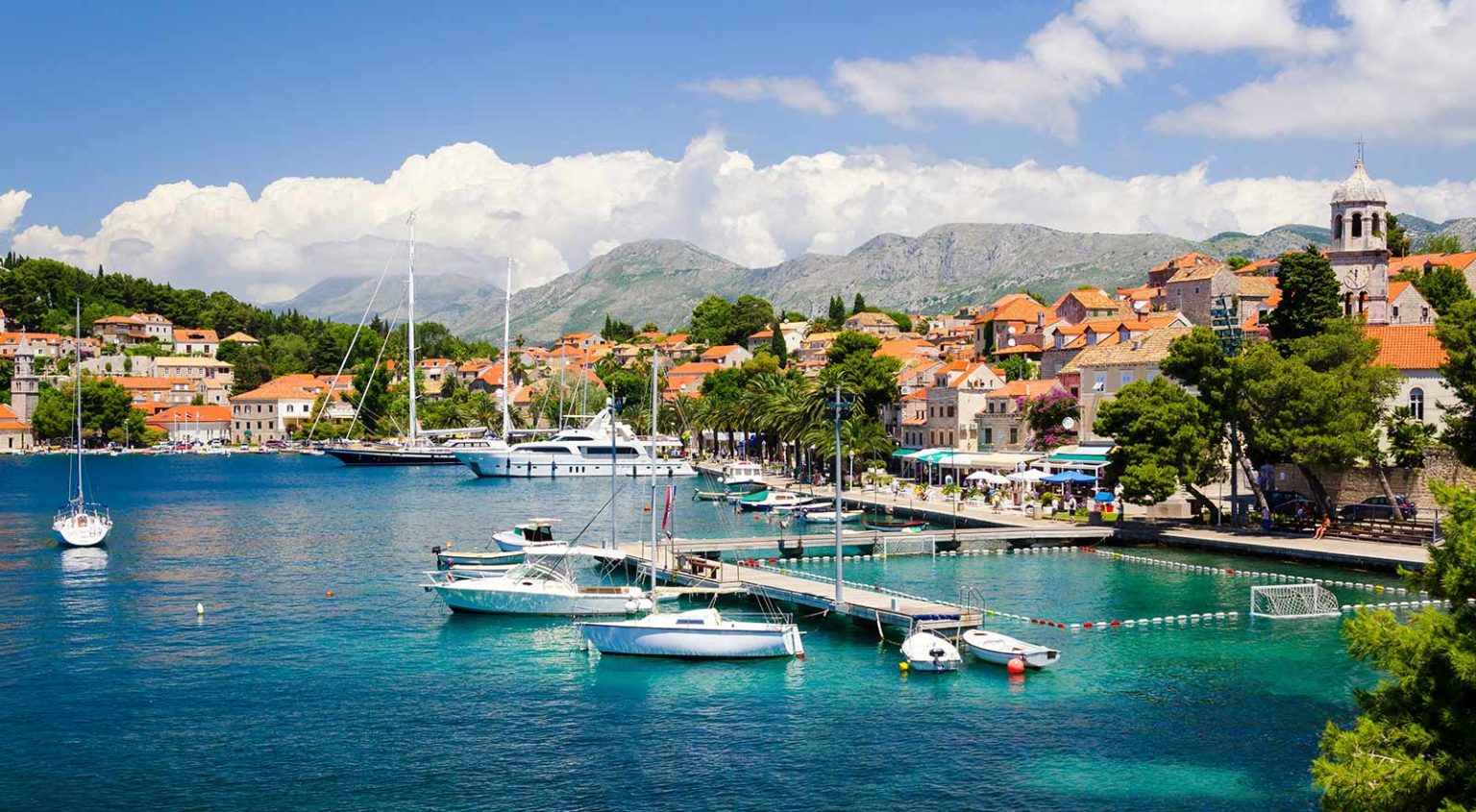
Cavtat does not usually make its case through spectacle. It works by persuasion. The harbour settles rather than shouts. The promenade loosens your shoulders. The air, especially in the morning, feels somehow cleaner than your schedule. For years that was part of the town’s charm and part of its commercial limitation. People who knew it returned. People who did not often treated it as a logistical footnote to Dubrovnik — the place near the airport, the calmer cousin, the town you pass through before the “real” destination begins.
Then January 2026 arrived with unusual clarity. Cavtat appeared in major international travel coverage as one of Europe’s standout coastal escapes for the year. It was also publicly crowned with one of the continent’s most flattering travel superlatives: a beautiful coastal destination title broad enough to put it into the mainstream imagination, but specific enough to confirm that something meaningful had shifted. The point was not that Cavtat had suddenly become attractive. The point was that the wider travel world had finally found the right language for a place that had already been working quietly at a high level.
The real story of 2026 is therefore not just a story about awards. It is a story about timing, legibility, and the kind of coastal travel people increasingly want. Cavtat did not reinvent itself. It simply arrived at the exact moment more travelers began looking for something it already did exceptionally well: sea without chaos, elegance without pressure, access without overexposure, and a slower kind of sophistication that many louder Mediterranean destinations have spent away.
Why this matters
Cavtat in 2026 is not important because it became different. It is important because it became easier for outsiders to understand. Travelers looking for a Dubrovnik Riviera base now see much more clearly what return visitors had already learned: Cavtat is not an overflow choice. It is often the smarter one.
What the double recognition actually means
Travel awards are often overused in destination marketing, and sophisticated readers know that. A badge alone proves very little. But occasionally a title lands because it captures something that was true before the award appeared. Cavtat’s 2026 recognition matters for precisely that reason.
The first distinction placed the town among Europe’s notable coastal escapes for the year. That kind of recognition is valuable because it is comparative. Cavtat was not praised in isolation. It was elevated in a crowded European field filled with louder names, longer-established reputations, and larger tourism machines. To be selected in that context suggests not merely scenic beauty, but a coherent travel proposition.
The second distinction matters in a different way. “Most beautiful coastal destination” is not subtle language. It is broad, emotionally legible, and easy for international audiences to understand. Awards of that kind can flatten nuance, but they can also accelerate discovery. A traveler who might previously have skipped past Cavtat while scanning Croatia now stops. Curiosity enters. And once curiosity enters, Cavtat tends to do the rest of the work itself.
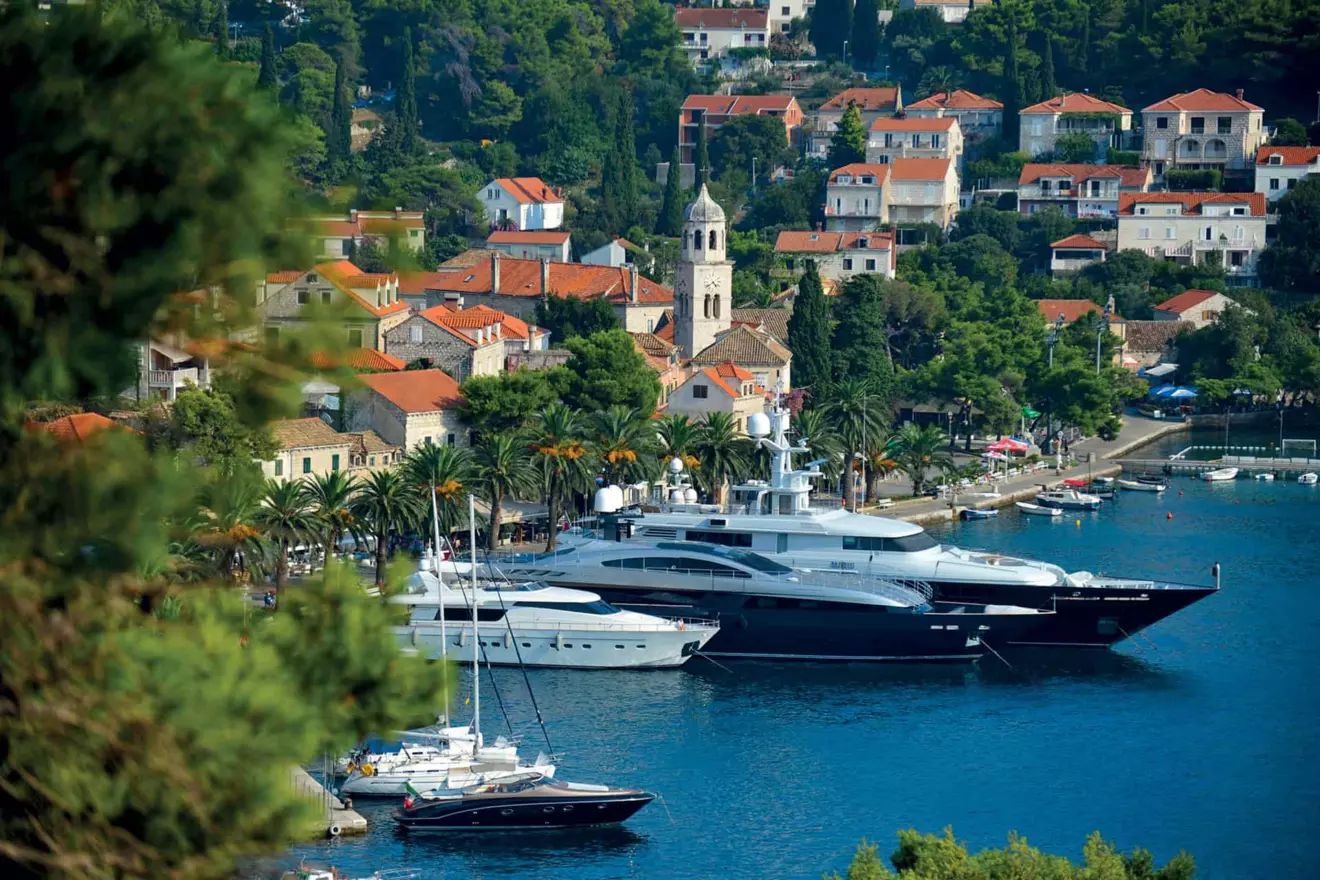
That is why the 2026 story should not be reduced to publicity. It is a public recognition of structural strengths that were already in place: proximity to Dubrovnik without surrender to Dubrovnik’s pressure; airport access without airport ugliness; a promenade culture that still feels human; and a town whose best qualities become clearer the longer you stay rather than thinner the more you consume.
The thing nobody measures properly: pace
Every serious destination has assets that fit easily into comparison tables. Airport distance. Hotel count. Restaurant supply. Water quality. Beach access. Cavtat can perform well on all of those. But the strongest element in its favor remains one that resists neat quantification: pace.
That word sounds soft until you travel enough to understand how decisive it becomes. Pace determines whether a coastal holiday feels restorative or merely decorative. It decides whether mornings begin in tension or in air and light. It shapes how often you have to problem-solve, how much of the day gets spent moving between your own intentions and other people’s demand, and whether dinner feels like a continuation of the day or a recovery from it.
Cavtat’s great advantage is that it keeps the day open. You can swim before breakfast, walk after lunch, go into Dubrovnik if you want theatre, return for dinner if you want calm, and never feel that your surroundings are forcing a performance from you. That is not an accidental charm. It is part of the town’s operating logic.
There is an old Mediterranean cliché that true luxury is space and time. In many destinations that phrase has become too abstract to be useful. In Cavtat it still feels practical. The town gives you room in the schedule. It removes minor frictions before they become major ones. It allows a day to remain breathable.
Why Cavtat feels especially relevant in 2026
It is difficult to understand Cavtat’s rise without understanding what has happened to coastal travel more broadly. Across Europe, popular waterfront destinations have become more expensive, more self-conscious, and in some cases more exhausting. The old promise of the coast that life there would automatically feel lighter no longer reliably holds. Too many places now require tactical movement, reservation choreography, transfer management, and crowd avoidance strategies just to remain tolerable in peak season.
Cavtat benefits from this shift because it offers a cleaner answer to a modern question: what if a coastal holiday was actually easy? Not simplistic. Not underwhelming. Simply easy in the right places.
- Arrival is short and intelligible.
- The town is walkable.
- The sea is central rather than distant.
- Dubrovnik remains accessible without dominating the stay.
- The daily rhythm does not collapse when you do less.
Those qualities matter more now than they did a decade ago because travelers have become more alert to friction. They may not always name it directly, but they feel it immediately. Cavtat’s 2026 prominence is in part a result of this collective recalibration. People are no longer looking only for beauty. They are looking for beauty that still works.
Cavtat versus Dubrovnik: not a rivalry, a solution
The most common misunderstanding about Cavtat is that it exists in permanent comparison with Dubrovnik. This is the wrong frame. Cavtat is not trying to defeat Dubrovnik on cultural weight, scale, or symbolic presence. It wins in a different category.
Dubrovnik remains one of Europe’s great urban coastal experiences. It is visually extraordinary, historically dense, and emotionally immediate. It is also intense. The city can be crowded, expensive, and physically demanding in ways that matter much more once you are no longer consuming it as a day trip but living inside its pressure for several nights.
Cavtat solves that problem elegantly. It allows travelers to access Dubrovnik while sleeping somewhere calmer, greener, flatter, and more breathable. It transforms Dubrovnik from an environment you must constantly manage into one experience within a larger, better-balanced itinerary.
| Question | Cavtat | Dubrovnik |
|---|---|---|
| Daily rhythm | Calm, harbour-based, breathable | High-energy, dense, visually intense |
| Airport logic | Excellent | Good, but less seamless |
| Best for | Balanced stays, repeat visitors, low-friction travel | Short cultural immersion, first-time iconic stays |
| Evenings | Promenade calm, waterfront dinners, easy walks | City theatre, atmosphere, reservation pressure |
| Who gains most | Families, couples, multi-stop travelers, strategic planners | Travelers prioritising symbolic address over daily ease |
The smartest travelers on this stretch of coast increasingly understand the relationship properly. They do not ask whether Cavtat is “better” than Dubrovnik. They ask whether Cavtat is the better base. In many cases, especially in 2026, the answer is yes.
The airport advantage is not a footnote. It is part of the luxury.
Dubrovnik Airport sits only minutes from Cavtat. This sounds mundane until you have done enough Mediterranean travel to understand how much emotional value short transfers create.
It changes the first day. It changes the last day. It changes how willing you are to take shorter trips, how late you can arrive without wasting the whole evening, and how little psychological energy gets burned before the holiday has properly begun.
A smart Cavtat arrival in 2026 can look like this: land around midday, transfer quickly, check in, shower, take a first walk, swim, then dinner on or near the waterfront. That is not a fantasy sequence. It is a realistic first day. And in a region where many travelers still lose the opening hours of their trip to traffic, parking, or post-arrival fatigue, that matters.
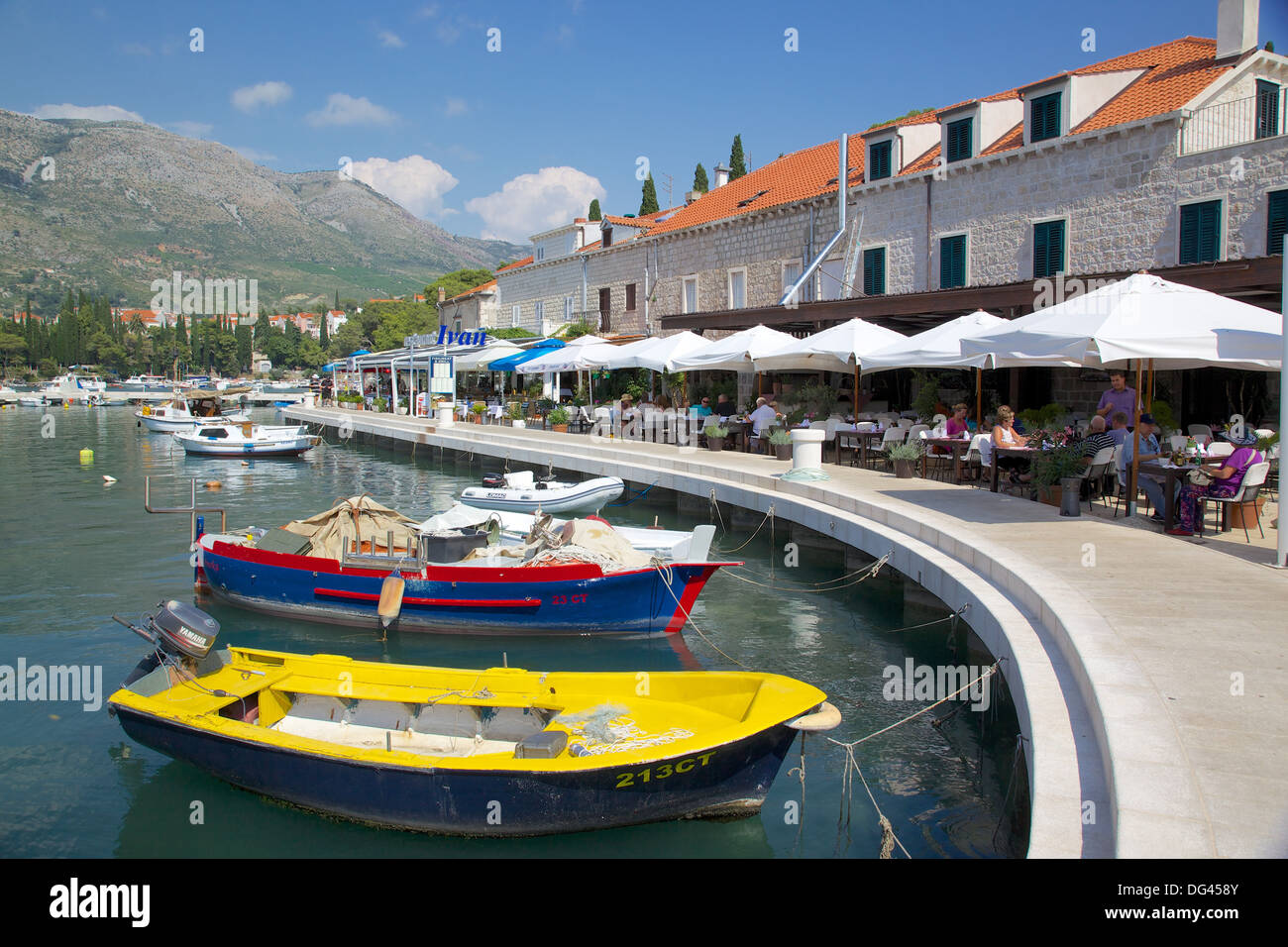
For departures, the same logic applies. A final night in Cavtat often produces a much calmer exit than a final night inside a more pressured city base. In practical travel terms, that is one of the easiest upgrades you can give yourself.
Start planning your Cavtat stay
What to actually do in Cavtat
Cavtat’s greatest tactical strength is that it does not require a heroic itinerary. A good stay here can be built from a small number of high-quality habits rather than a large number of expensive experiences.
A strong day in Cavtat might include:
- an early swim before the waterfront fully wakes,
- a coffee or light breakfast by the harbour,
- a late morning walk around the peninsula,
- one well-chosen boat or excursion day during the stay,
- and a slow evening built around the promenade rather than around transport.
The town does not punish simplicity. In fact, it rewards it. That is one reason Cavtat works across different budgets and travel styles. You can spend significantly here if you want to. You can also travel lightly and still feel that the destination is doing most of the work for you.
Can Cavtat be glamorous? Yes. Does it depend on glamour? No.
Part of Cavtat’s strength in 2026 is that it can absorb prestige without becoming brittle. Yachts on the promenade, refined dinners, polished hotels and high-end sea days all fit comfortably into the town’s image. But they are not the only mode in which the place functions well.
You can have a clearly luxurious stay here. You can also have a simple one, structured around swimming, walking, one good meal and strategic day trips. Both versions work because Cavtat’s appeal is not purely performative. It lives in the town’s natural balance of sea, accessibility, and scale.
This is a surprisingly rare quality on the Mediterranean now. Too many places feel convincing only at one price level or within one style of traveler performance. Cavtat remains legible across a wider range of experiences, which is part of why 2026 recognition landed so cleanly. The town already knew what it was. The market finally noticed.
Value, but not in the simplistic sense
It is fair to say that Cavtat often feels more financially manageable than Dubrovnik, especially once Dubrovnik’s visibility begins compressing availability and pricing. But financial comparison alone misses the deeper point.
Cavtat’s real value is functional and emotional. It reduces:
- transport stress,
- crowd management,
- decision fatigue,
- arrival-day waste,
- and the sense that every pleasant evening must be earned through prior logistical suffering.
The best travel value is not always the lowest room rate. It is the destination that gives you the highest-quality day for the least amount of friction. Cavtat performs extremely well on that measure, which is one reason the town feels more relevant rather than less as coastal Europe becomes more commercially pressured.
When to come: the shoulder-season advantage
If you want to understand why Cavtat’s 2026 story has traction, come when the town is under less strain. The strongest window remains May to June and September to October.
These periods tend to offer:
- warmer water without peak compression,
- a better balance between activity and calm,
- more forgiving restaurant and transport dynamics,
- and a version of the town that feels closer to its natural character.
July and August still have their place, especially for travelers who want stronger social energy and longer hot days. But if the goal is to experience the quality that the 2026 awards are really recognising ease, sea, and composure shoulder season is where Cavtat reads most clearly.
Quick planning notes for 2026
- Best months for balance: May–June and September–October.
- Best strategy for Dubrovnik: stay in Cavtat, visit Dubrovnik in early or late blocks.
- Best use of the town: one real sea day, one promenade evening, and plenty of unforced time.
- Best mindset: let Cavtat set the tempo instead of trying to over-schedule it.
Who Cavtat suits best in 2026
No destination is for everyone, and Cavtat’s strength comes partly from not pretending otherwise. The town suits travellers who understand that the highest form of coastal pleasure is not always intensity. It is often control over intensity.
Cavtat is especially strong for:
- couples who want atmosphere without constant performance,
- families who need easy movement rather than dramatic logistics,
- multi-stop travelers combining Dubrovnik, Montenegro, or Konavle,
- repeat Adriatic visitors who already know they do not want every hour to feel like a public event,
- first-time Croatia travelers who want a softer introduction to the region.
If that sounds like your category, Cavtat often exceeds expectations. If you want relentless social pressure, maximal nightlife, or the sense of sleeping inside a globally famous postcard, you may still prefer Dubrovnik. But even then, Cavtat remains an intelligent way to structure part of the trip.
Frequently asked questions
Is Cavtat better than Dubrovnik?
Not in every category, and that is the wrong comparison. Dubrovnik remains stronger for concentrated historic drama and symbolic urban impact. Cavtat is often better as a base because it offers sea, calm, and airport ease while keeping Dubrovnik easily reachable.
How far is Cavtat from Dubrovnik Airport?
Only a short drive. That proximity is one of Cavtat’s strongest practical advantages and a major reason the town works so well for shorter stays and calmer first and final travel days.
Is Cavtat expensive?
It can absolutely support a high-end stay, but it does not require one in order to feel rewarding. Compared with Dubrovnik, many travelers find Cavtat more balanced in both cost and daily ease.
Can you do boat trips from Cavtat?
Yes. That is one of the town’s strongest assets. Cavtat works well for day cruises, shorter sea experiences, and as a departure point for a broader Adriatic rhythm.
Is Cavtat good for first-time visitors to Croatia?
Very much so. It gives newcomers a clear introduction to the southern Adriatic without forcing them to manage the full intensity of Dubrovnik from the first day onward.
The real meaning of the double crown
The strongest part of Cavtat’s 2026 story is not that it won recognition. It is that the recognition feels accurate. Too many destination awards exaggerate a promise the place cannot consistently deliver. Cavtat’s 2026 praise works because it reflects an existing truth.
The town already had the ingredients:
- ease,
- sea,
- balance,
- good access,
- and a slower kind of sophistication.
What changed in 2026 was not the product. It was the visibility. The wider travel world became more willing to reward places that still function well at a human scale, and Cavtat was perfectly positioned for that moment.
Final note
Small coastal towns do not often receive two major travel headlines in the same month. When they do, it usually means one of two things: either the marketing became louder than the place, or the wider world finally caught up to what was already there. Cavtat belongs firmly in the second category.
It is still the same harbour. The same promenade. The same light across the water. The same combination of pines, boats, easy arrivals, swimmable days, and evenings that do not need much improvement.
What changed in 2026 is that more travelers now have a name for the feeling Cavtat creates and more reason to take that feeling seriously.
If you are coming this year, the smartest move is still the simplest one: come in shoulder season if you can, keep the schedule breathable, and use Cavtat as your base for doing the southern Adriatic properly.
Related reading on Cavtat Guide
- Cavtat on a Budget: Affordable Boat Trips and Self-Guided Adriatic Days
- Cavtat vs Dubrovnik: Where Should Yacht Travelers Stay?
Need help choosing the right experience?
Tell us your budget, dates, and travel style, and Cavtat Guide will help you choose the best yacht charter, tour, property option, or local experience.